
Rain, Hail or Shine
It's a common misconception that Tanzania experiences just two seasons: wet and dry. It has, in fact, four: the short dry season, the long ‘Masika’ rains, the long dry season, and the short ‘Vuli’ rains. The Vuli begins in November and ends around mid-January. While it's not as intense as the Masika season, it still brings substantial rainfall. In Mafinga, for example, the Vuli contributes approximately 330mm of rainfall over a span of ten weeks. To put that into perspective, London accumulates about 585mm over the course of an entire year. Understanding these weather patterns and how they impact the construction industry in Tanzania is important, as it dictates the planning and execution of projects like building the warehouse.
Concrete Decisions
Significant amounts of concrete were required for completing the warehouse slab, though the water brought by the Vuli rains influenced our construction process.
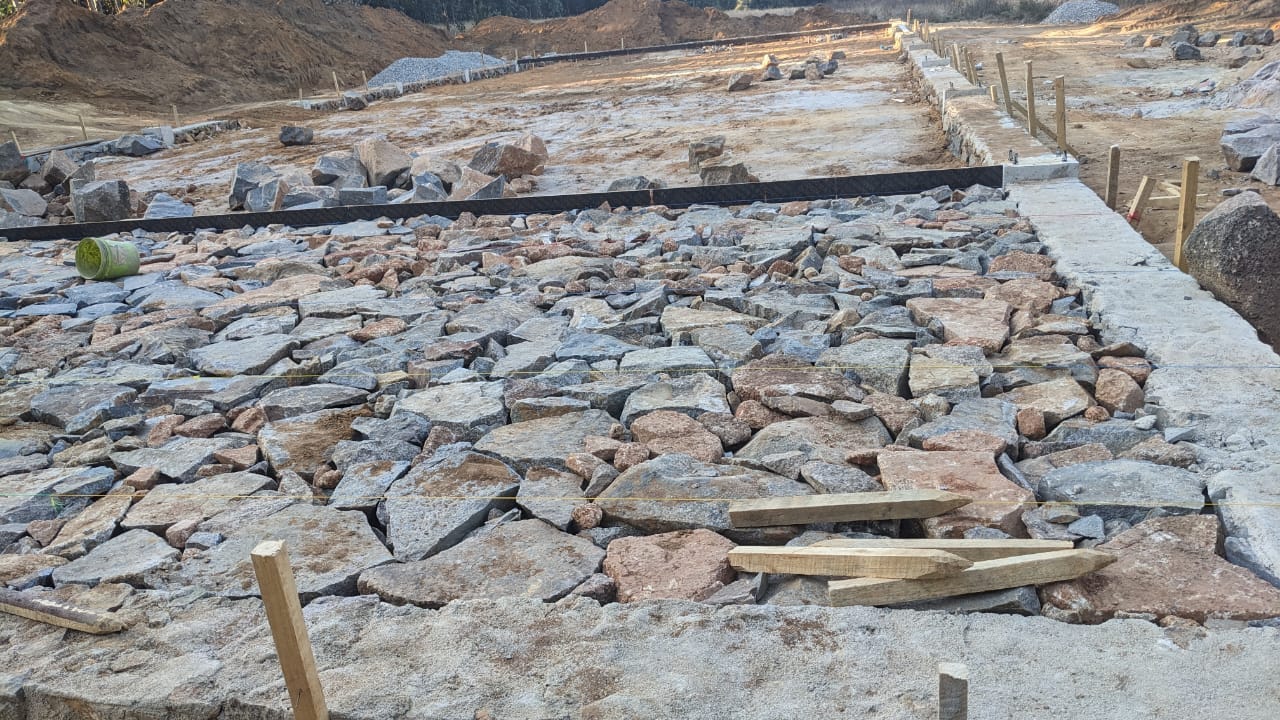
First, concrete begins to set and lose workability soon after mixing. While off-site mixing in large batches was considered, the risk of transportation delays that could compromise the pour's viability was too high. Hence, on-site mixing was chosen.
Secondly, it is crucial to shield fresh concrete from rain to maintain the water-to-cement ratio. Excess moisture can lead to structural weakness through cracks and defects by disrupting the hydration process and causing uneven curing. Thus, preserving the specified moisture content is essential for optimal strength and durability in concrete structures.
Counterintuitively, this necessitated constructing the roof first to prevent additional moisture from compromising the concrete.
A (Predictable) Race Against Time
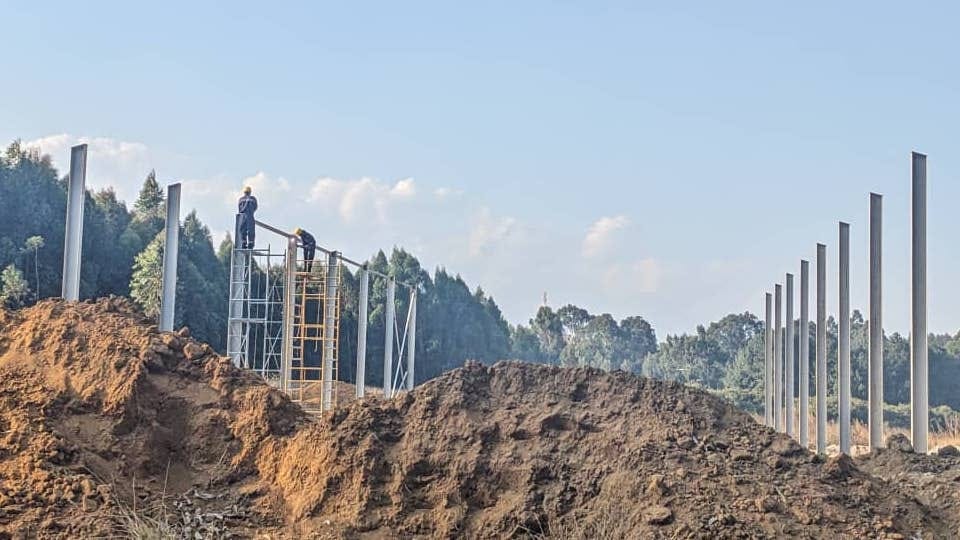
With the column footings in place, erecting the roof was straightforward, covering an area of about 750m². This coverage prior to pouring the concrete slab was critical, in case an unexpected, early torrential downpour wrecked the setting process.
During the Vuli, it's not uncommon for more than 8mm of rain to fall within an hour. On a 750m² roof, this would result in approximately 6,000 litres of water cascading off the warehouse edges. Furthermore, the warehouse's location on a slope means that substantial volumes of water seeping downhill could threaten the foundation. Therefore, it's essential to construct deep drainage trenches, with their timing carefully planned to avoid disrupting on-site vehicle movement. The predictability of the rainy season is beneficial, allowing for the installation of gutters well in advance of its onset.
Shoot the Breeze
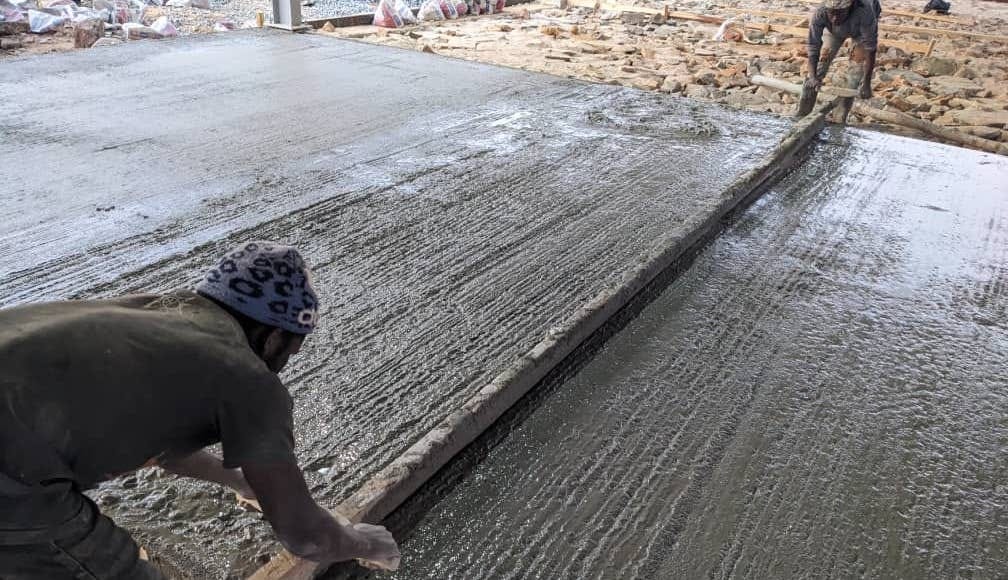
A key design choice for the warehouse was to keep it partially open, rather than fully enclosed. This decision was partly influenced by the need to move large quantities of green waste in, and then subsequent large quantities of biochar, out of the warehouse.
Moreover, Mafinga can get hot. With summer temperatures hovering consistently in the mid 30C, coupled with the heat generated by the dryer and pyrolysis machine, the space would become unbearable without expensive cooling systems installed. A much simpler, cheaper, and equally effective solution would be to leave the warehouse open utilising the natural breeze to regulate the temperature within the working environment.
In Tandem
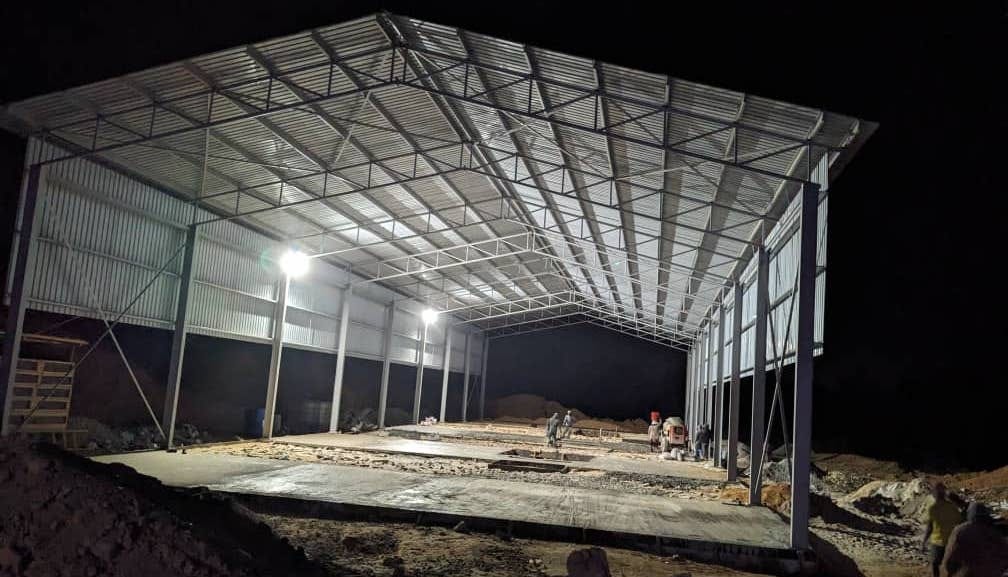
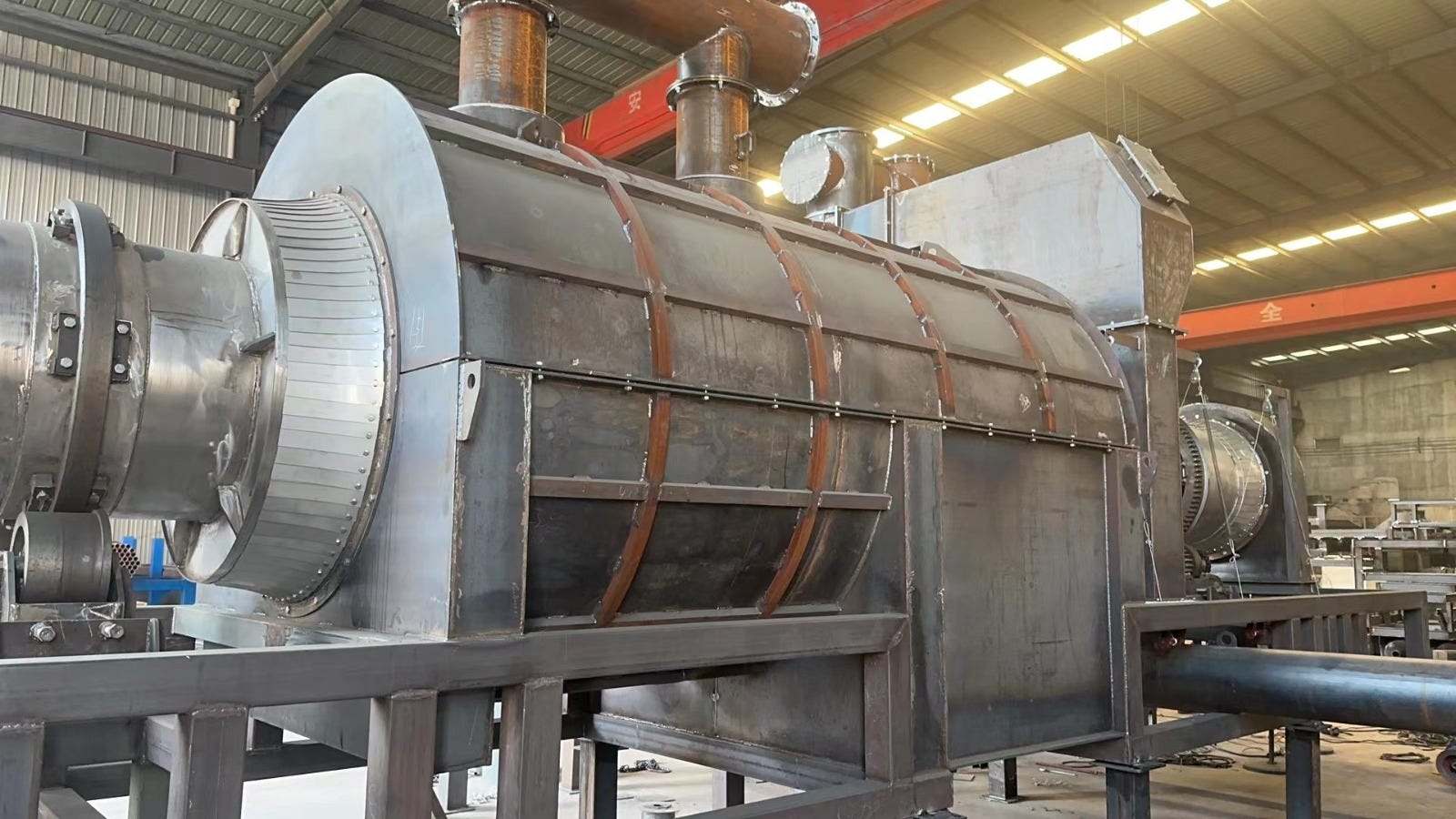
In tandem with the construction of the warehouse, the biochar reactor was built off-site. Once completed, it needed to be inspected and shown to be operating correctly. The sheer size and complexity of these reactors made them difficult to transport, making pre-shipment checks crucial. Additionally, the installed sensors were set to monitor various parameters such as carbon sequestration levels and the chemical profiles of each biochar batch, providing insights into potential applications.
During the inspection, the reactor hummed along nicely! The test feedstock was successfully converted to biochar, and the sensors reported precisely what was occurring throughout the entire process. Pleased with how the machine was performing, like a Meccano set, the reactor was carefully dismantled. From there, it made its way across the seas, arriving at the port of Dar es Salaam, before being transported in a series of containers on trucks down to site.
Up next in Field Notes…
Pulling apart something is easy. Putting it back together again, that’s always a greater challenge! The machine will be arriving in five large sea containers whereby we’ll need to unload the kit, move the heavy parts into place, and then start piecing that giant Meccano set together again.
No posts
Comments
Nothing yet. Say the first thing.
Sign in to join the conversation.