
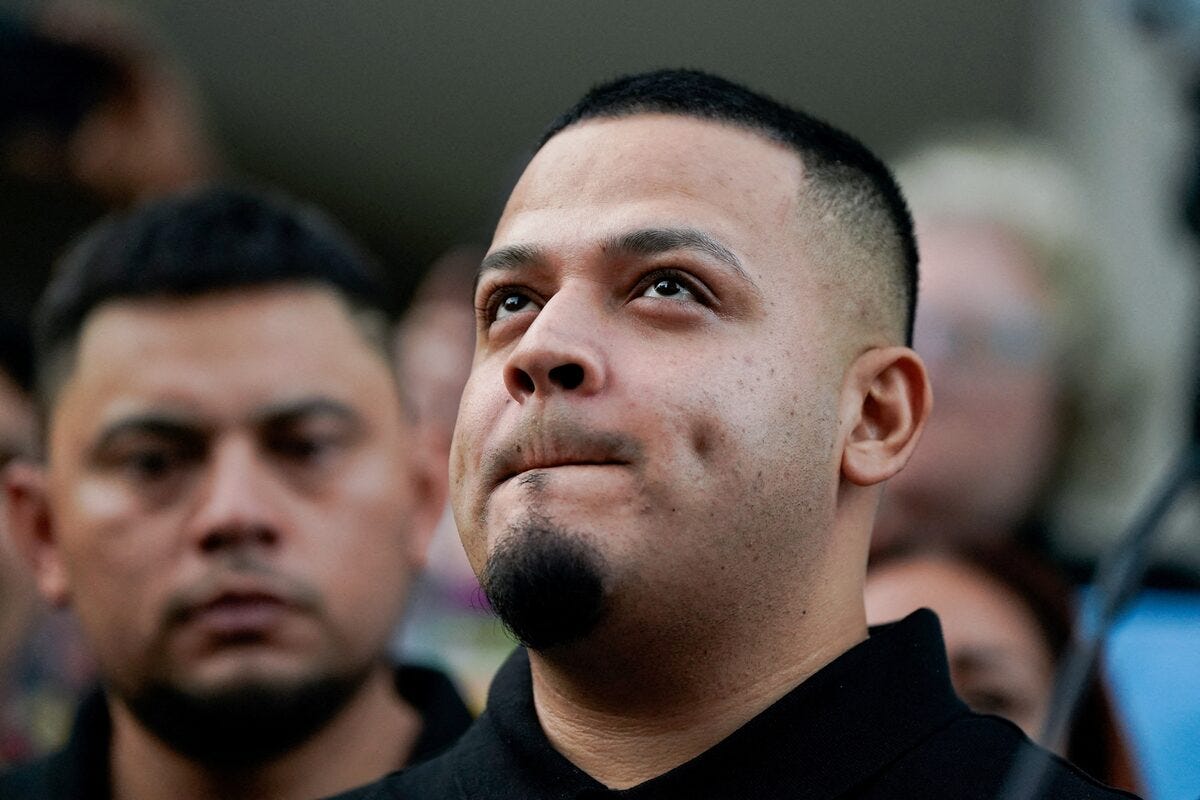
THE TRUMP ADMINISTRATION asked a federal appeals court on Monday to reinstate criminal charges against Kilmar Ábrego García, the Maryland man whose wrongful deportation to El Salvador made him an emblem of the White House’s mass deportation campaign, three months after a judge dismissed the case as an act of prosecutorial retaliation.
In an opening brief filed with the 6th U.S. Circuit Court of Appeals, which reviews federal rulings out of Nashville, the Justice Department maintained that the human smuggling allegations against Ábrego rest on evidence, and that the prosecution was never payback for his successful challenge to his March 2025 removal.
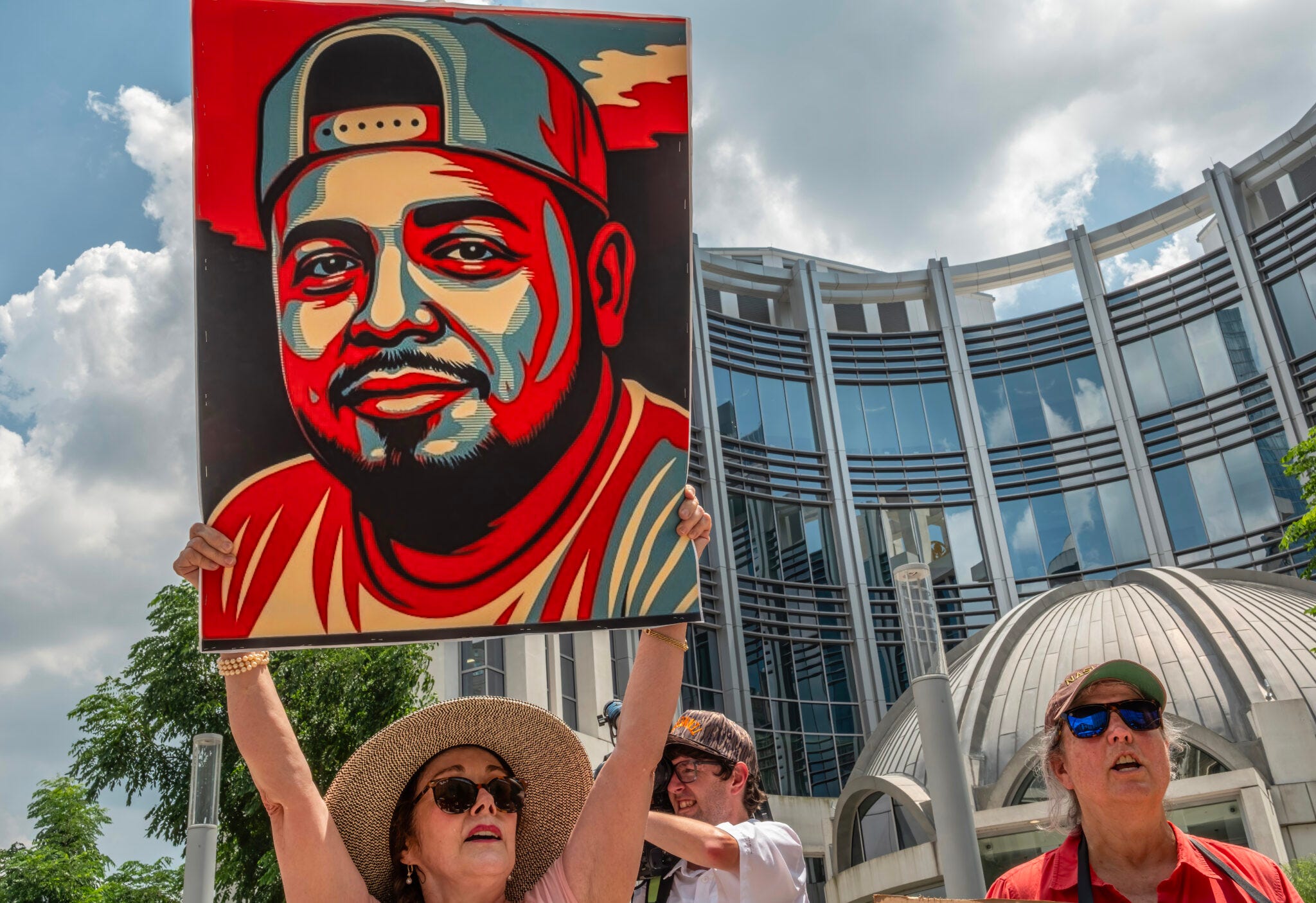
“The decision to seek an indictment against Abrego Garcia for human smuggling was made by career prosecutors based on the evidence, the law, and their firm belief that there is proof beyond a reasonable doubt that Abrego Garcia had committed the offenses charged,” the department said in a statement describing the brief and posted online on Monday.
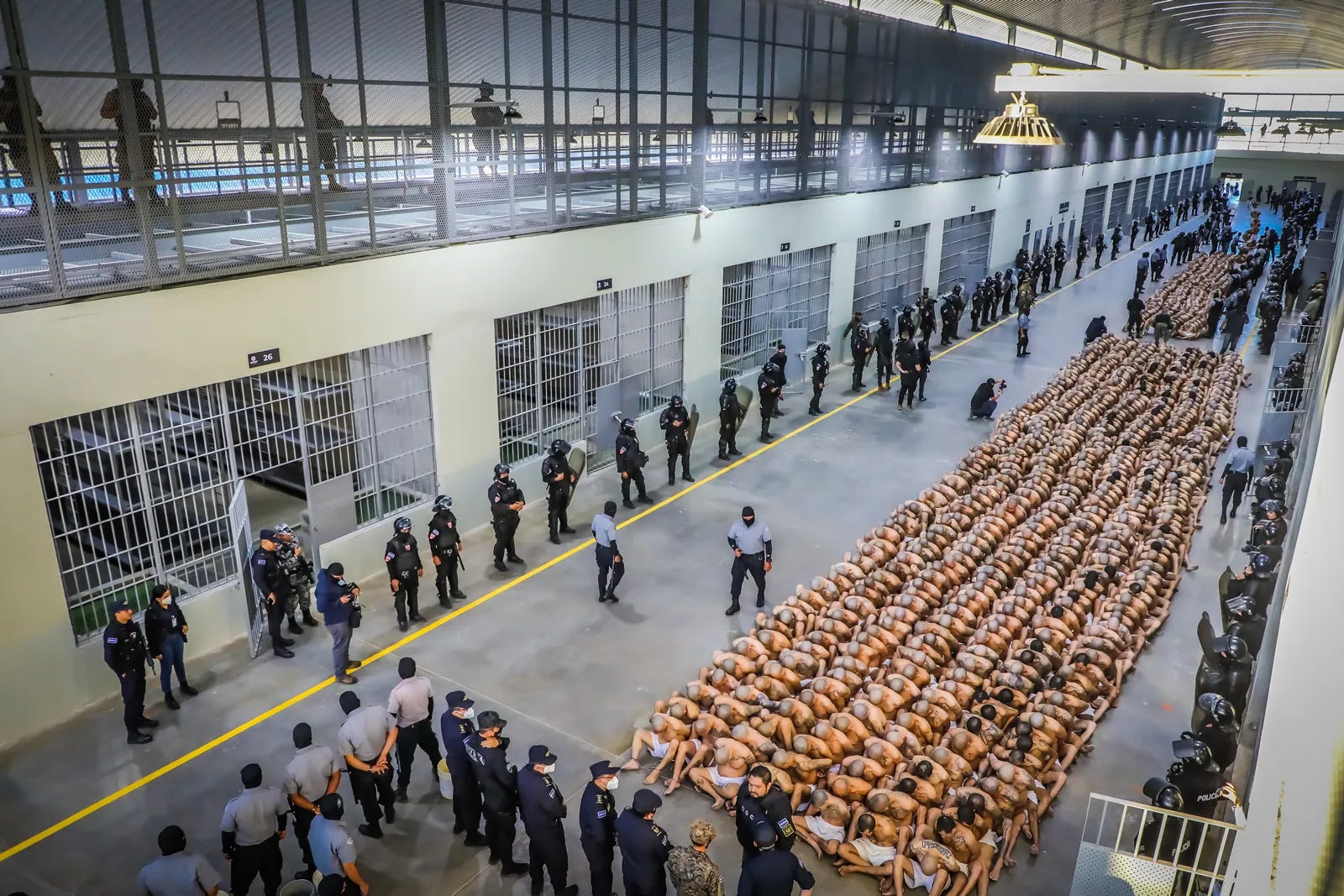
The deportation landed Ábrego in Cecot, El Salvador’s notorious anti-terrorism mega-prison. He was returned to the United States three months later, after a Supreme Court order directed the government to facilitate his release from Salvadoran custody.
Ábrego was charged with human smuggling based on a 2022 traffic stop in Tennessee. U.S. District Judge Waverly D. Crenshaw Jr. threw out the indictment in May, ruling that the government never overcame the presumption that the prosecution was vindictive.
“Because the presumption of vindictiveness remains unrebutted, the indictment must be dismissed,” Crenshaw wrote.
“The evidence before this Court sadly reflects an abuse of prosecuting power.”
Crenshaw’s opinion traced the case to public statements by the recently confirmed attorney general, Todd Blanche, and to sustained attention from senior Justice Department officials, describing an investigation “marked by retaliatory taint” from the moment it was reopened.
“Blanche’s words directly confirm that the Executive Branch reopened the criminal investigation because the Judicial Branch required the Executive Branch to facilitate Abrego’s return from El Salvador,” the judge wrote.
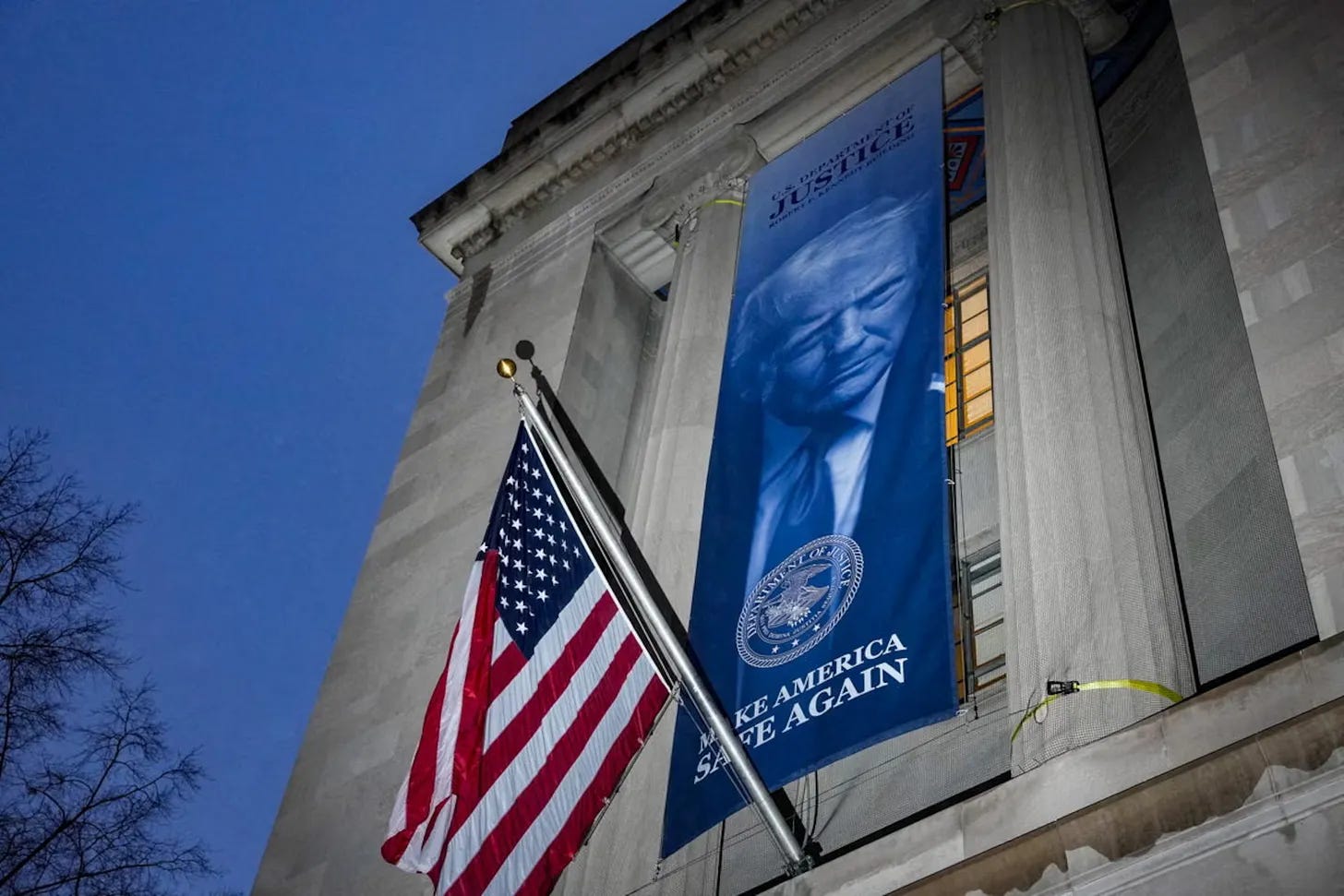
The Justice Department is urging the appellate court to reverse Crenshaw’s ruling, arguing that it “marks a dramatic expansion of the power of courts to dismiss serious criminal charges based on subjective assessments of a prosecutor’s motivations and is an unwarranted intrusion into the Executive’s powers and responsibility to protect the public.”
“The evidence in the district court proved that charges were brought against Abrego Garcia because, in the view of career prosecutors, the evidence conclusively established that he had committed a serious crime, and not for any vindictive motive,” the department said.
Attorneys for Ábrego told CBS News the appeal was “flat wrong.”
“The indictment and prosecution of Ábrego García was, in fact, vindictive; the evidence before the district court established just that; and the proof was clear notwithstanding the DoJ’s refusal to call the actual decision makers, including AG Blanche, to testify under oath,” they said in a statement.
“This case was initiated vindictively and on instructions from the White House after our client successfully won his Supreme Court case.”
Ama Frimpong, chief of services at We Are CASA, the immigration advocacy group representing Ábrego, said in May that the case was “nothing more than a political vendetta” and that the administration had “brazenly attempted to weaponize the criminal legal system” to “punish Kilmar for exposing their unlawful actions.”
Ábrego, 30, fled El Salvador at 16 to escape gang extortion, according to court records, and settled in Maryland, where his brother lives as a U.S. citizen. He lacked authorization to remain in the country. He had never been arrested or charged with a crime in the United States or El Salvador. He was living with his wife and children, all U.S. citizens, and attending regular Immigration and Customs Enforcement check-ins when he was detained and deported in the opening months of Donald Trump’s second presidency.

Press freedom does not survive on vibes. It survives because readers decide the work is worth protecting. The Developer is independent, ad-free, and reader-funded—which means your support goes directly into the reporting, not into some billionaire’s pocket. If my work helps you stay informed, consider upgrading to paid: $8/month or $80/year. If upgrading isn’t possible right now, sharing The Developer with someone who needs to read it matters just as much. Help keep independent journalism alive and impossible to buy.
No posts
Comments
Nothing yet. Say the first thing.
Sign in to join the conversation.