

Alain Delon as Tom Ripley in “Plein Soleil”, the first adaptation of “The Talented Mr Ripley”
There’s a rich vein of trash culture that gives you a sick old thrill from looking directly at the grotesque and the horrifying, and having a little laugh at it. It gets called, sometimes, “bad taste” - stuff like the films of John Waters, where we get to watch Divine chow down on dog shite, or many of the genres of exploitation movies from the 70s on, such as “Ilsa: She Wolf of the SS,” in which a Nazi concentration camp serves as the scene for a gory BDSM orgy. ‘Bad taste’ suggests it’s an issue merely of breaching social etiquette for shock value, and while that’s fine (at least for me, a fan of Waters), it doesn’t quite cover it. There’s a perverse pleasure in seeing others disturbed, but there’s a separate form of horror in being disturbed oneself, a form of horror which often evades the censors because it needs to walk a fine line that schlock can boldly stamp over, one that puts the emphasis not on visual shock, but on the quiet, quotidian discomfort of looking at the world as it really is. It’s the difference, crudely put, between, say, witnessing a public hanging, and choosing to lift a coffin lid in a funeral home. The splash of blood from the scaffold might, in the end, be less disturbing than the creak of the floorboard as you get caught in the act.
I suppose this sensation of nascent horror is a combination of suspense and thrill, and the American writer Patricia Highsmith was an aficionado of it. There are few car chases or axe murderers in her novels (although not none), and action takes a back seat to a sense that it might happen, carefully laid out until you’re certain it will but what it is is unclear. In the process, space emerges in which really disturbing things emerge, disturbing because, unlike the deranged axe murderer, these are things you will recognise from your own life. Those possessed of an amoral and indefatigable self-esteem, willing to seduce you then steamroll you without compunction; those willing to cheat, or lie, or plot; or even situations, such as being accused of acts you didn’t commit, but perhaps considered, and have no alibi for. I wonder, when people read “The Talented Mr Ripley”, whether they identify more with Dicky Greenleaf, someone whose graceless generosity is exploited by a sociopath, or with the sociopath, Tom Ripley, always feeling like an unwelcome outsider yet desperate to achieve a lifestyle he has briefly tasted.
Personally, I’m a Tom, not a Dicky, although I have never beaten anyone to death, as of yet. But I recognise that sense of being an unwelcome guest, someone for whom luxuries and hospitality, offered as a formality, are too gratefully received, and who outstays his welcome. I suspect that Patricia was a Tom too, although for different reasons: she, rather, was an outsider who understood the power of passing and the dangers of being exposed. What we’re talking about here is an anxiety about belonging, and that strange sensation of being a cuckoo in someone else’s nest.
When I was twenty, I spent a summer working in the south of France. The idea of a twenty year old lad taking a summer in a foreign country might conjure real Greenleaf vibes; after all, at that age young men can be so full of bravado, yet so clueless to consequences, that adventure is almost inevitable. That wasn’t me; I was, in retrospect, locked in a debilitating depression. Knowing I could neither go home nor stay in the student flat I shared, I volunteered to work on a farm as part of the WWOOF scheme. I emailed somewhere that looked likely, booked my train, and headed off with my backpack. I landed into the middle of somebody else’s trauma. The woman I was staying with wasn’t unkind per se, but was unpredictable and, at times, a little scary. The “farm” was really the garden of her newly finished straw-bale house, and the work was less farmwork than landscaping, digging holes, building walls and moving earth. I was a long way from anywhere, physically and emotionally, and didn’t really realise the nature of the situation I was in. She, meanwhile, resented my presence, and for a difficult month or so I tried to navigate her temper while sustaining a decent relationship with her, my only source of food or shelter. Eventually I met a guy in a pizza restaurant one night who needed help mucking out his horses on his summer break. I stayed in his childhood bedroom, fitting in with the discipline of his parents home, his father a former gendarme who had served in French Indochina and still ran his home like a colonial barracks. Breakfast was on the table at 6:30am. If you weren’t sitting down at that time exactly, you weren’t fed.
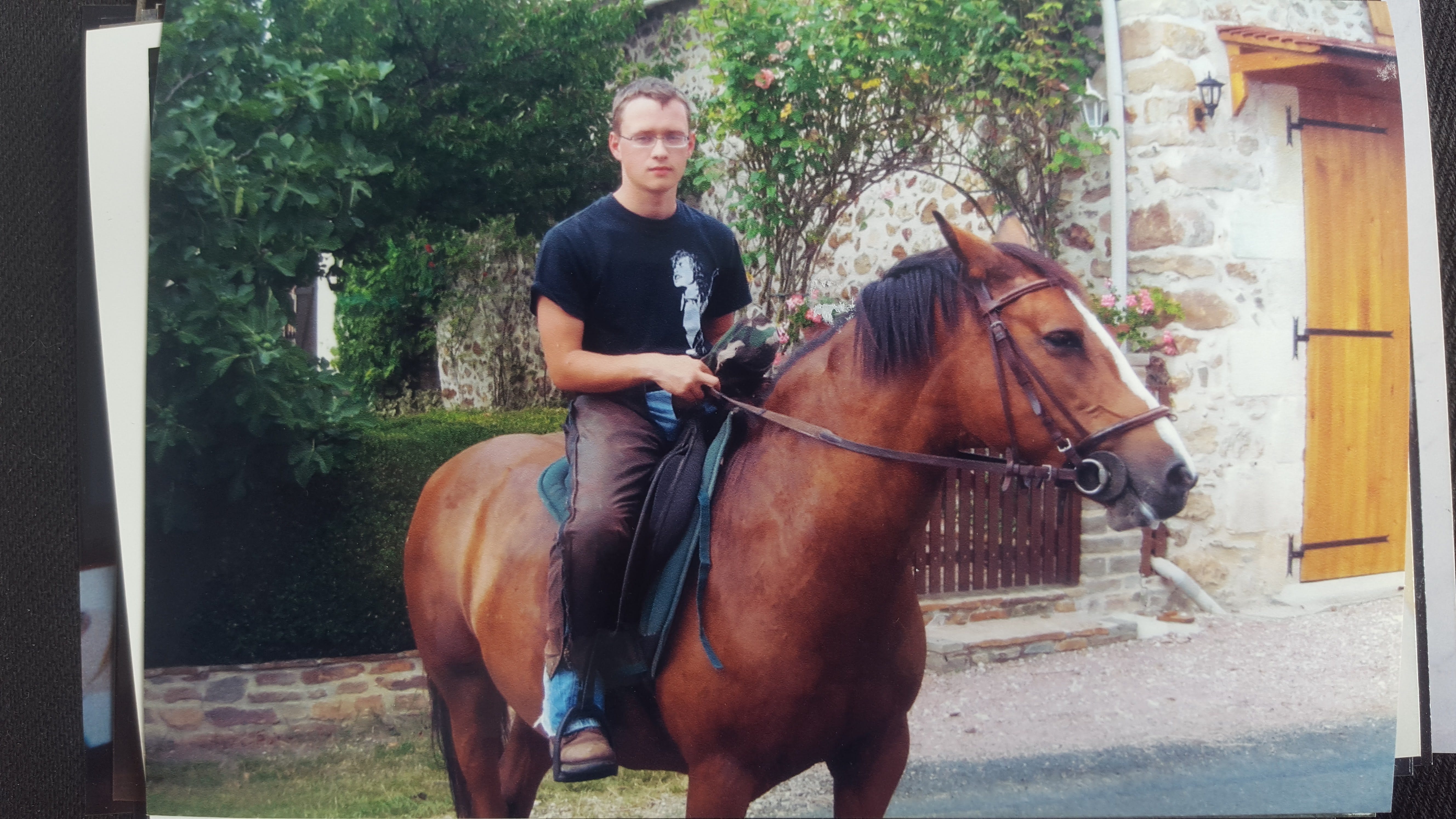
Me, aged 20, pre-twink death
It was bliss after the tempestuous home of my original host. You knew the rules, and if you obeyed them, the dining room table was draped with fillets of beef, confit duck, braised vegetables, litres of homemade wine, and friendly, welcoming smiles. There was no anxiety, because there was no unpredictability; you rose early, worked hard, and had a cold beer when you came through the door. The strictness of the routine matched, and allowed for, a genuine hospitality, freely given. My host, Eric, treated me like a kid brother, keeping labour to the minimum and teaching me how to ride a horse. One Sunday morning we rose early and took out two horses; reaching the high-rises of the banlieue on the outskirts of a nearby town, we found a long, straight road, devoid of cars, its residents only just awakening and opening their windows. He asked me if I wanted to race; without a chance to answer, he slapped the back of my horse, sending her into a canter. He was soon level with me, laughing at my response: a terror giving way to pure exhilaration. I can still remember it, two decades later, as though it were yesterday, the sound of clattering hooves ricocheting from the surrounding high-rise apartments, their inhabitants watching bleary-eyed as two men on their horses bound through the town in the first morning sun. When we returned to his parent’s home at lunchtime, his father, the commandant, was waiting on the doorstep with a glass of wine which he handed to me still in the saddle. Refreshed, we took off again into the woods. Come to think of it, that summer wasn’t all bad.
I was reminded of that strange, touching, impotent summer recently when I read “The Talented Ms. Highsmith,” a wonderfully evocative essay in the Yale Review by Elena Gosalvez Blanco about a few months in her life when, also aged twenty, she lived in the home of Patricia Highsmith as she worked on her final novel, “Small g: A Summer Idyll”. In her telling, which fits with almost everything else I’ve read about the author, it sounds absolutely awful. “Christ,” I thought, reading her account of Highsmith’s unpleasant little idiosyncrasies, her tight-fisted penny-pinching, her refusal to be kind when there was an opportunity to be rude, “what an asshole!”
Comments
Nothing yet. Say the first thing.
Sign in to join the conversation.