
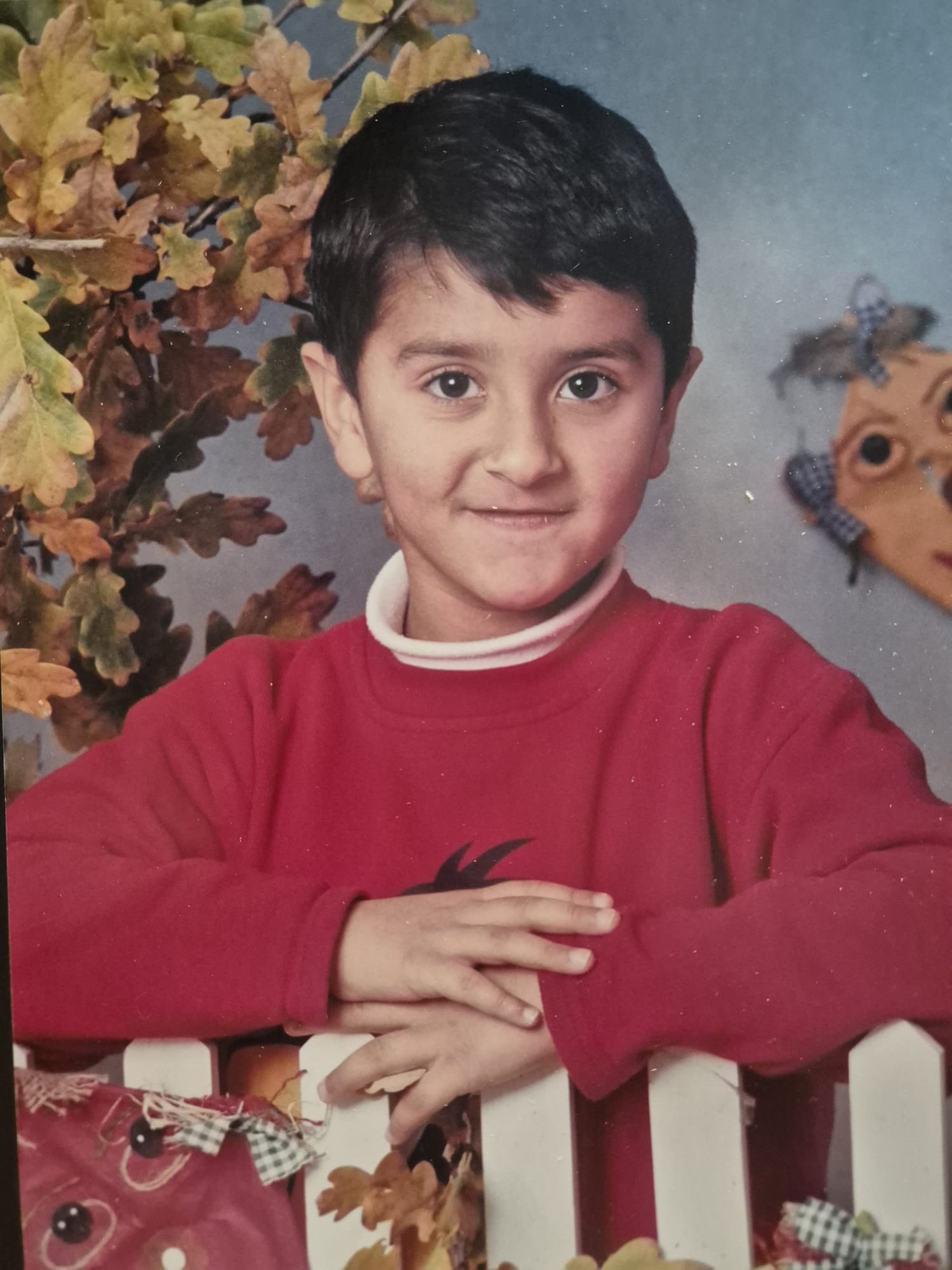
At 31, I found out I’m neurodivergent.
Inattentive ADHD. The kind where the hyperactivity happens entirely inside your skull.
I’ve written about the relief. The way a diagnosis hands you a more accurate map of terrain you’ve been crossing your whole life.
What I wrote less about is the other thing that arrived with it.
Grief.
Not for anything that happened. For someone who didn’t.
For most of my childhood I was “somewhere else”.
Daydreaming constantly. My head was a storm. A dozen thoughts running at the same time, all of them loud, arriving faster than I could sort them—while my body sat perfectly still at a desk and my eyes pointed politely at the front of the room.
From the outside, that looks like nothing at all. Like a kid who isn’t paying attention.
From the inside it was the busiest place I’ve ever been.
Nobody ever asked what was happening in there. They just told me I was somewhere else again.
There’s a version of me who got diagnosed at 10.
I don’t know much about him. That’s the strange part of this kind of grief—you’re mourning someone you can’t actually describe.
But I know a few things.
He wouldn’t have spent his childhood being told he wasn’t applying himself.
He wouldn’t have learned that the gap between what he could do and what he actually did was a character problem.
He wouldn’t have needed to become exceptional at one thing to be forgiven for being unreliable at everything else.
And he wouldn’t have spent 2 decades quietly building a case against himself.
“But look how well you did.”
It’s true. I have a PhD. I built a career. From the outside the story reads cleanly: struggled, overcame, fine now.
But achievement doesn’t tell you what it cost.
I did the hard things by burning something.
Compensation isn’t free. Masking isn’t free.
Every year I performed a version of myself that was easier for other people to process, I paid for it somewhere—in sleep, in health, in a body I stopped listening to, in a decade where I could research anything for 12 hours and couldn’t reliably feed myself.
The achievements are real. So is the price.
Both of those are allowed to be true at the same time.
I think we’re bad at this kind of grief because there’s no event to point at.
Nobody died. Nothing was taken. What I’m mourning is an absence—support that didn’t come, from people who mostly weren’t being cruel, inside a system that wasn’t built to notice me.
There’s nobody to be angry at, which somehow makes it heavier rather than lighter.
And it doesn’t fit the shape we expect grief to have. You’re supposed to grieve backwards, toward something you had and lost.
This grief points sideways. Toward a life that ran parallel to mine and never once touched it.
I’m not grieving a career I didn’t have. Or an easier version of my life.
I’m grieving the relationship I would’ve had with myself.
31 years of reading my own behavior as evidence of who I was.
Every missed deadline as proof. Every abandoned plan as confirmation. Every time I couldn’t start something I desperately wanted to do, another entry in a file I’d been keeping on myself since I was a child.
The diagnosis didn’t delete that file.
It just told me it had been built on the wrong evidence.
I don’t have a clear resolution for this.
I’m not going to tell you it all worked out in the end, or that the struggle made me who I am, or any of the other things we say to make an unfair thing sound purposeful.
What I’ve landed on is smaller than that.
The grief and the relief sit next to each other. I can be genuinely glad I know now, and still sad that it took this long.
They don’t cancel out. They just share the space.
And if you’re somewhere in this—if the answer came late, or you’re still in the part where you think it’s a character problem—I’d say only this:
You’re allowed to mourn the version of you who would have had help.
That person mattered. Even though they never got to exist.
Is there a version of you that you’ve been quietly grieving? The one who would have been believed earlier, or supported earlier, or just told it wasn’t their fault?
Let me know in the comments or reply to this email.
Much love,
Hussein
Comments
Nothing yet. Say the first thing.
Sign in to join the conversation.