
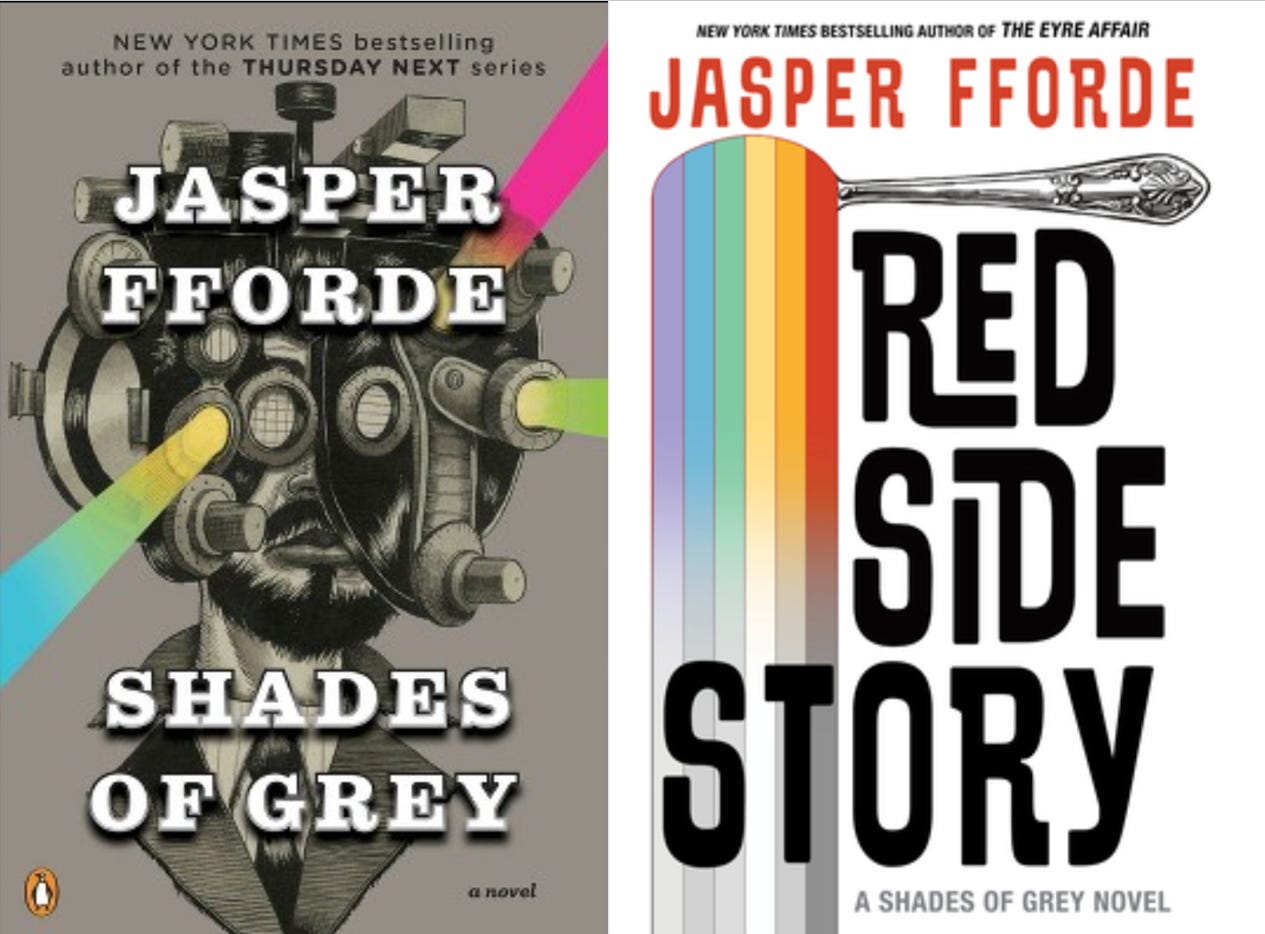
In Jasper Fforde’s Shades of Grey series, the world is a hilariously dystopian nightmare where your social status is determined by how well you see colors—reds rule, Greys scrape by, and purples are basically unicorn-level elite. Our hero, Eddie Russett, stumbles through purges, killer swans, and a bureaucracy so absurd it makes Kafka look efficient. Romance? Sure, there’s a sassy love interest named Jane, but it’s built on snarky banter and shared rebellion, not billionaire handcuffs.
Compare that to Fifty Shades of Grey, where the “grey” is just a euphemism for a plot as thin as over-whipped cream. E.L. James gives you kinky contracts and endless “inner goddess” monologues; Fforde delivers a satire-packed adventure with puns, sentient trains, and a mystery that actually rewards your brain cells.
Skip the bedroom erotica—dive into Fforde’s chromatic chaos. It’s smart, funny, and way superior. 10/10, would perceive colors again.
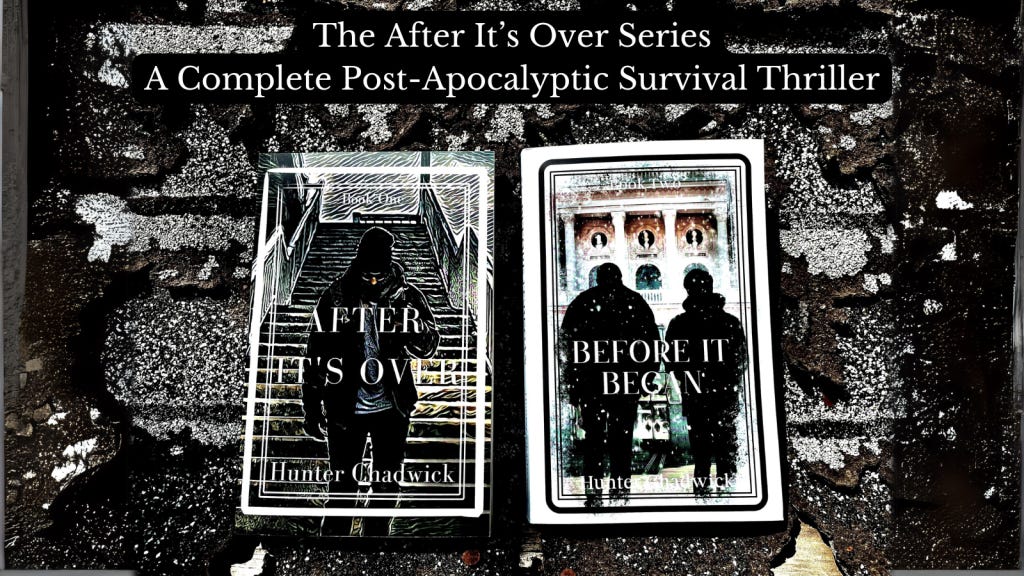
If you like Dystopian Fiction, you’re sure to enjoy my first novel, After It’s Over, and the sequel, Before it Began. This month, the first book is free March 7-12 and the sequel is just .99 cents, it’s lowest price ever.

The Homestead Act of 1862 was a landmark U.S. law signed by President Abraham Lincoln, designed to encourage westward expansion by offering 160 acres of public land to eligible settlers for a small filing fee. Any adult head of a household, over 21, U.S. citizen, or intended citizen—who hadn’t borne arms against the government—could claim a plot, making it accessible to immigrants, single women, freed slaves, and others. This fueled massive settlement, distributing about 270 million acres across states like Kansas, Nebraska, and the Dakotas, where events like Oklahoma’s 1901 land lotteries drew crowds hoping to stake claims in areas such as Day County.
Proving up under the Act’s restrictions was grueling, requiring continuous residency on the land for five years while making “good-faith” improvements. Settlers had to build a basic dwelling—often a sod house or dugout on the treeless plains—and cultivate at least 10-40 acres, depending on local soil rules, battling droughts, grasshopper plagues, blizzards, and isolation with rudimentary tools. Failure to live there most of the year or show progress meant losing the claim to rivals, though Union veterans got residency credit for service time, and a quicker six-month “commuted” option existed for those paying $1.25 per acre after minimal work.
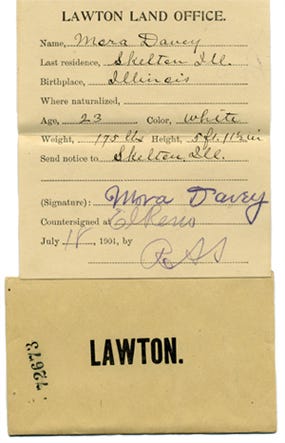
After five years, claimants filed proof at a local land office, paid a $6-$18 final fee, and received their patent deed—only about 40% succeeded due to the harsh realities of frontier life. For people like my great grandfather, George Gantz in the Crimson Plains series, this meant high-stakes perseverance amid the raw Oklahoma Territory.
I’m about 50,000 words into George’s journey to Oklahoma now and deep in the weeds of historical details like these to bring you the most realistic and entertaining visit to the Crimson Plains possible.
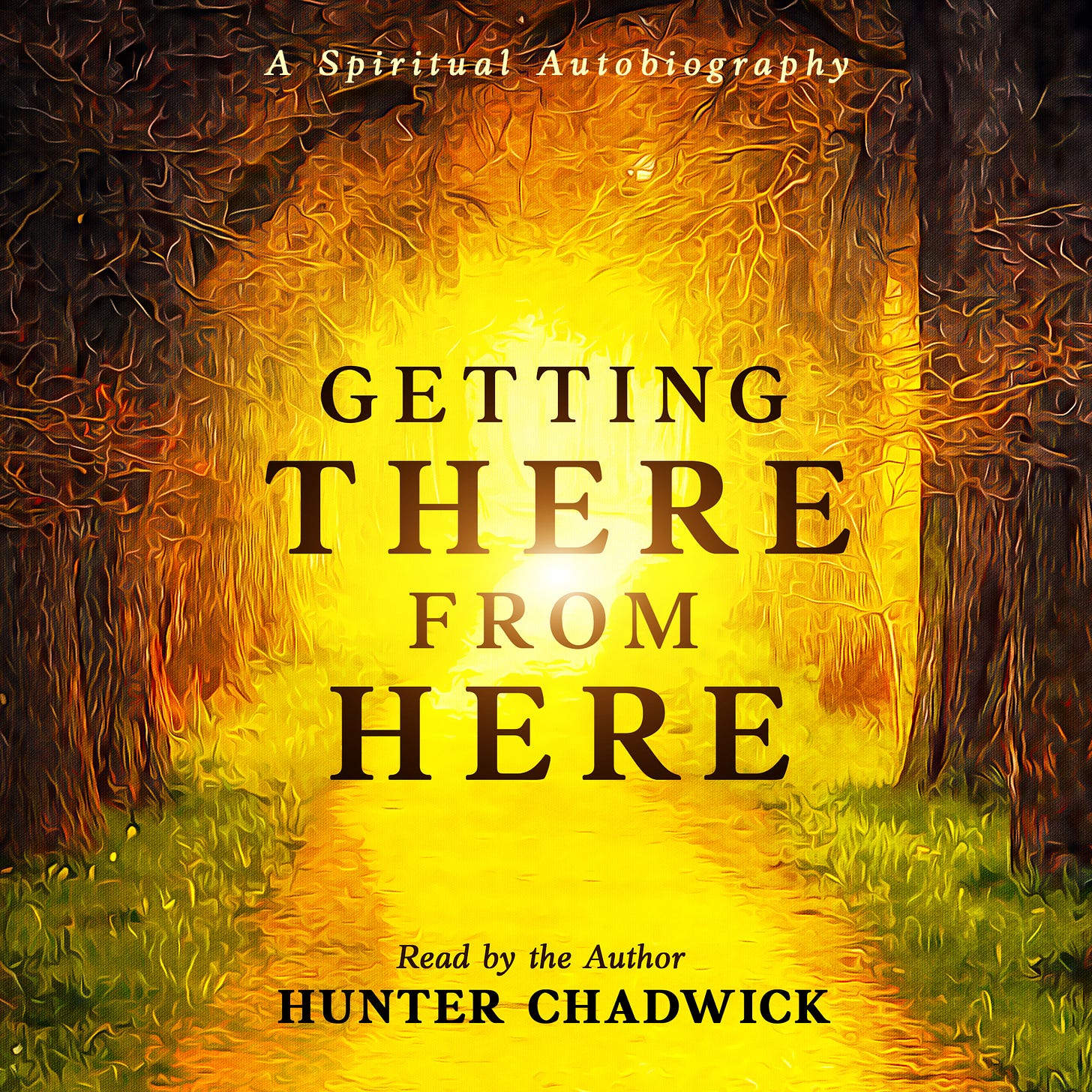
It’s here! For the last few months, I’ve been diligently working on recording my first audiobook. I chose my spiritual autobiography, Getting Here From There and it wasn’t easy, but overall I’m pleased with how it came out. It is available now on Audible, Amazon, and Apple Books and coming soon at other locations. I think my voice only cracked during one passage while reading this emotional spiritual journey. If you’ve ever wanted to listen to an author pour his heart out with his own words and voice, this is the book you’ve been waiting for.
Thanks for reading Amazing Stories from Hunter Chadwick! This post is public so feel free to share it.
No posts
Comments
Nothing yet. Say the first thing.
Sign in to join the conversation.