
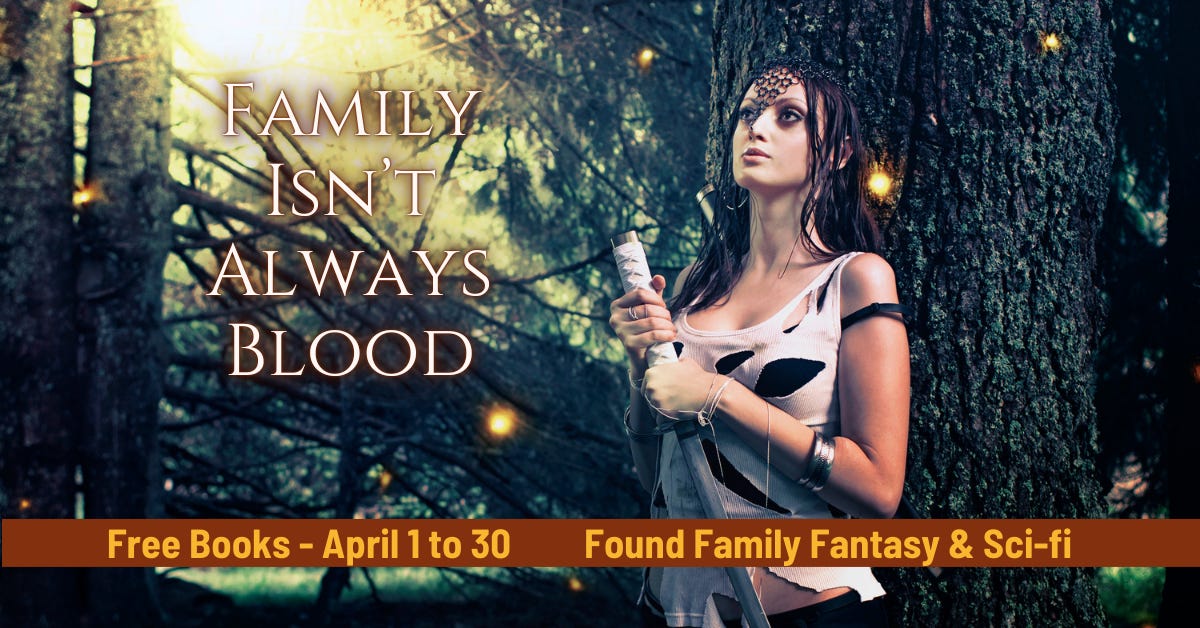
The found family trope captivates readers by showing that deep bonds can form through choice, not blood, offering hope and validation in stories of adversity. It strikes a chord for those from unsupportive backgrounds, proving belonging comes from loyalty and shared trials rather than obligation. Readers feel seen as characters build “earned intimacy,” turning strangers into protectors who sacrifice everything.
Perin and Trace from the Force of Magic Trilogy exemplify the found family trope through their unbreakable bond forged in trauma and shared rebellion against the tyrannical Dominion. Perin, a young girl enslaved and abused, and Trace, a reluctant soldier dreaming of farm life, endure brutal experiments with the Elixir of Life, granting them rare magical powers but marking them as targets. They escape together, relying on mutual trust amid chases and alliances with rebels like the old witch Marda and other survivors. This dynamic mirrors the trope’s core: strangers united by adversity become each other’s lifeline, evolving from survival partners to a chosen family.
Their relationship highlights complementary strengths—Trace's grounded resilience pairs with Perin's emerging heroism—creating loyalty that drives the trilogy's quest to topple the Dominion. As they seek other survivors, their duo expands into a tight-knit group fighting overwhelming evil, emphasizing sacrifice and emotional support over blood ties. If you love a good found family story, I hope you’ll check it out. The first book, as well as other great found family stories, can be found at the link below for free.

Thanks for reading Amazing Stories from Hunter Chadwick! This post is public so feel free to share it.
The phrase “poor as dirt” takes on a literal, gritty irony when discussing the 1901 Oklahoma frontier. While we use it today to mean “penniless,” to a homesteader in the frontier world of The Crimson Plains series, dirt was actually their greatest asset—it was their walls, their roof, and their floor.
The saying stems from the idea that dirt is the commonest thing on earth, possessing no market value. However, for a family “proving up” a claim, being “poor as dirt” meant you didn’t even have the capital to buy “dimension lumber” (milled wood) from the lumber yard. You were forced to live in the earth until the earth provided enough of a harvest to let you live above it.
A modern reader often imagines a dugout floor as a damp, muddy mess. In reality, a determined frontier woman (often the "commander" of the dugout's interior) used a clever chemical process to turn raw earth into something resembling a ceramic tile or a modern poured-concrete floor.
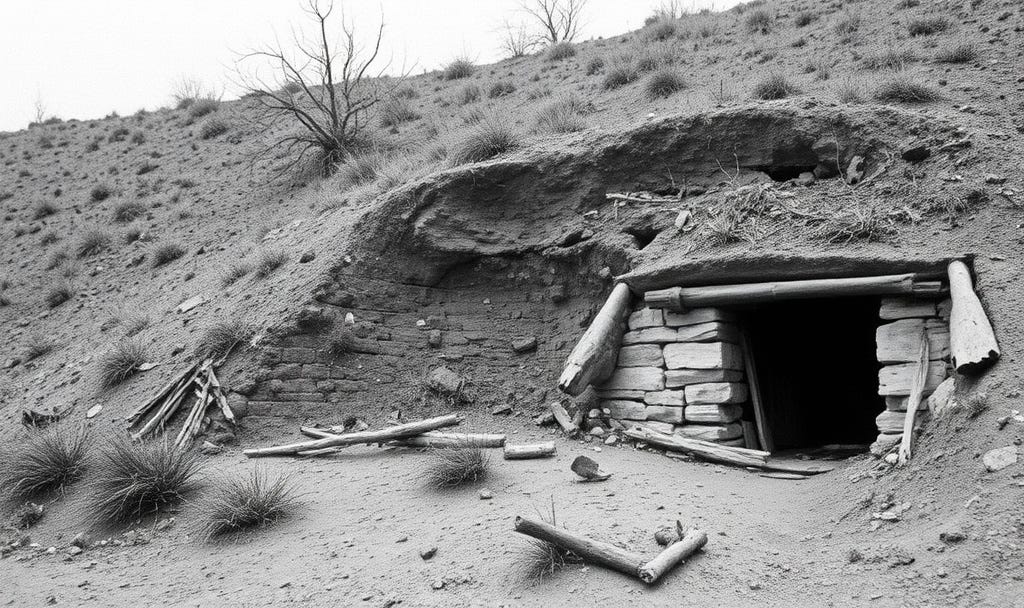
If the soil had a high clay content—common in Western Oklahoma—the family would “puddle” the floor.
The Mix: They would saturate the floor with water and mix in wood ash from the stove or calcium-rich lime.
The Tamping: Once the “slurry” was thick, the family would use a heavy wooden tamper (a flat block of wood on a pole) to beat the floor flat.
The Result: As it dried, the chemical reaction between the clay and the alkaline ash created a hard, crusty surface that could actually be swept with a broom without kicking up clouds of dust.
This sounds gruesome to modern ears, but it was a standard technique for creating a durable, waterproof finish.
The Application: After tamping the floor level, they would pour fresh bovine blood (collected during a slaughter) over the dirt.
The Science: The albumin in the blood acted as a powerful natural binder. As it soaked into the top inch of dirt and dried, it oxidized into a deep, dark maroon or blackish color and hardened into a surface nearly as tough as leather.
The Benefit: It sealed out moisture from the ground and prevented insects (like the dreaded “centipedes” of Oklahoma Territory) from burrowing up through the floor.
In Book Two of the Crimson Plains series, George will get his start as a pioneer with a dugout home with a floor similar to this one. Book Two is set to be released at the end of the summer, 2026.
My Spiritual Audiobiography, Getting There From Here, is now available on most audio book services, in addition to Amazon and Audible. If you use one of these services, click the links below to check it out.
No posts
Comments
Nothing yet. Say the first thing.
Sign in to join the conversation.