
Happy Wednesday all,
Markets are sending increasingly mixed signals this week. The U.S. housing slump is deepening as affordability continues to weigh on buyers, falling auto insurance costs are providing some rare relief on inflation, and the rapid expansion of AI infrastructure is beginning to face growing political and regulatory resistance.
In today’s Hump Days, we break down what’s driving the housing slowdown, why car insurance premiums are finally falling, and how the backlash against AI data centers could become a meaningful risk for investors.
Enjoy this week’s Hump Days!
- Humphrey & Rickie

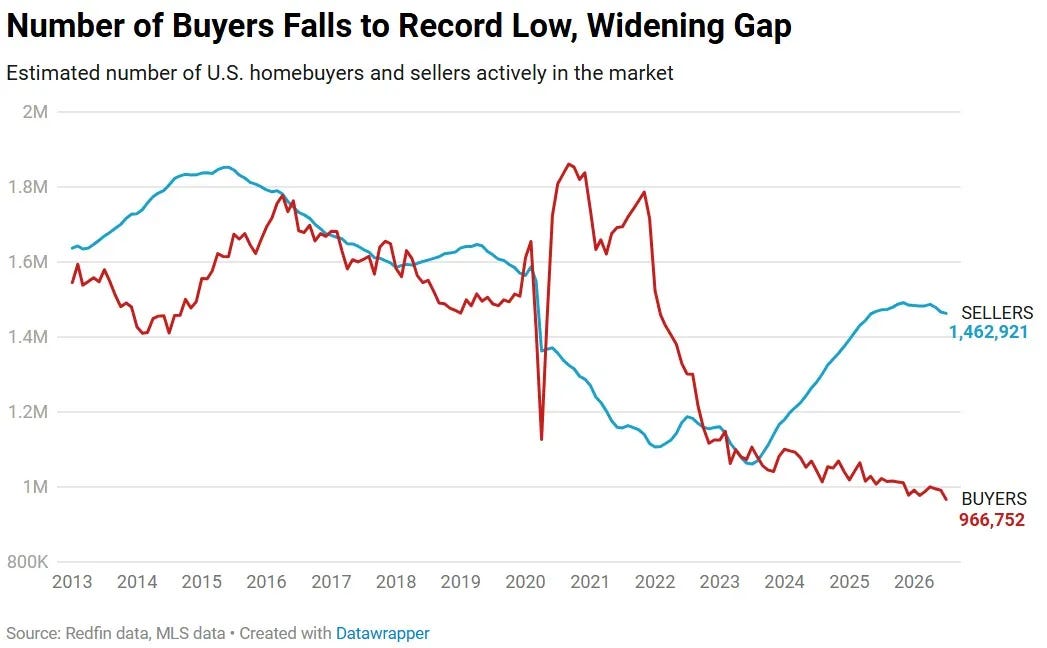
The U.S. housing market is deteriorating further, with July contract signings for previously owned homes matching the second-worst level since data collection began in 2001, and single-family housing starts falling to their lowest since 2022.
The median existing home price hit a record $434,000 in June, while 30-year fixed mortgage rates sit at 6.67%, having spiked back up from below 6% after the Iran war sent energy costs and rate expectations surging.
Redfin estimates there are 51% more sellers than buyers nationally, yet transaction volumes remain near historic lows because potential purchasers simply can’t afford to transact.
Homebuilder sentiment has languished below the 50 “breakeven” level for 16 consecutive months, the longest such streak since the aftermath of the 2008 financial crisis.
What’s emerging is a K-shaped housing market that mirrors the broader K-shaped economy. Custom builders serving wealthy buyers report relatively stronger conditions, while speculative builders targeting the middle market are struggling badly.
Residential construction has already contracted in seven of the past nine quarters, and economists expect it to remain a drag on growth through the second half of the year.
Car insurance has quietly turned into one of inflation’s good guys. July’s CPI showed motor-vehicle insurance down 4.5% from a year ago, the fastest drop since 2020 and the third straight month of declines, a sharp change from the double-digit spikes of 2022–2025.
Insurance runs in cycles. After cranking premiums way up post-pandemic, insurers rebuilt their profits and are now in a “soft market,” cutting rates to win customers and grow.
The big personal-auto players (Allstate, Progressive, Travelers, Hartford) still have plenty of room to keep prices low.
Their combined ratio, the share of every premium dollar that goes back out as claims and expenses, is sitting in the 80s. Anything under 100% means they’re taking in more than they pay out, so there’s a real cushion before anyone starts to worry.
The catch is repair costs. Fixing cars got 6.6% pricier in July, and Trump’s Section 232 tariffs on auto parts mean that pressure probably isn’t a one-time blip.
On the bright side, drivers are filing fewer claims, driving less, carrying higher deductibles, and sometimes just paying cash for small repairs.
Analysts think auto rates could keep drifting lower for roughly another 18 months before the cycle flips and premiums climb again.
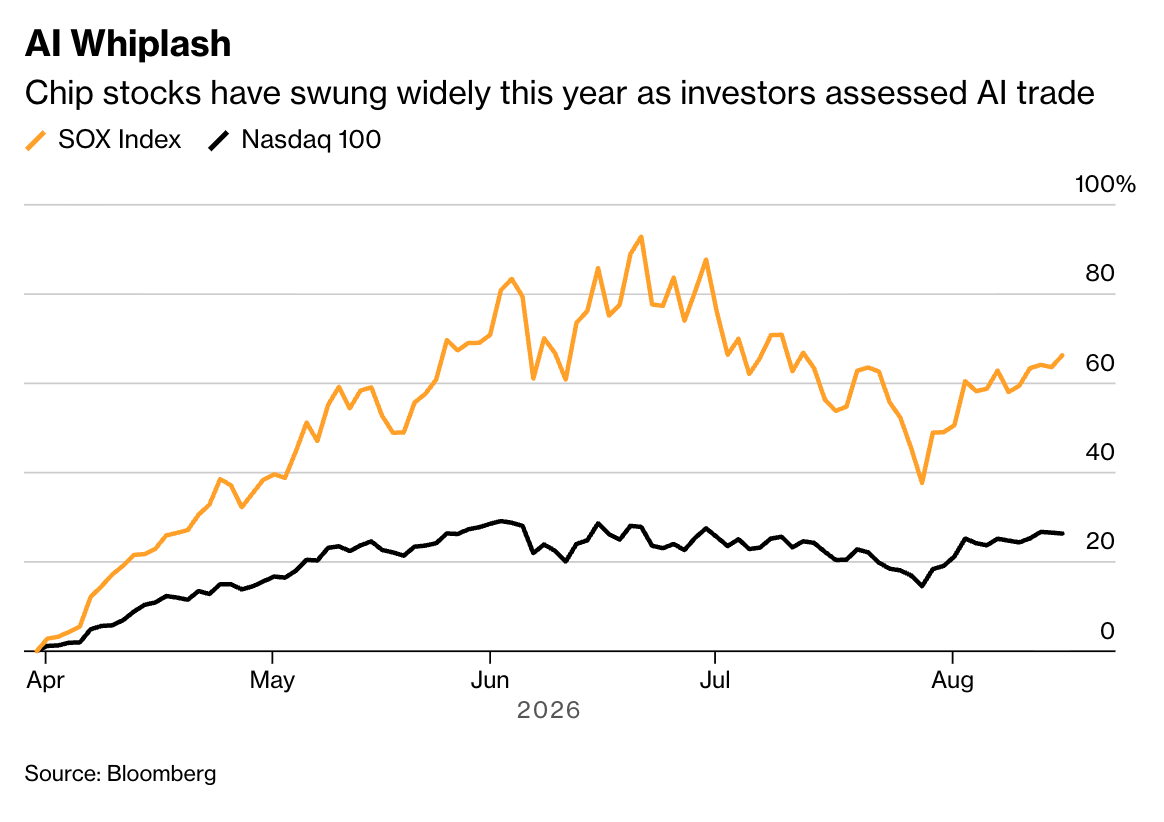
The pushback against AI, specifically the giant, power-hungry data centers that run it, has gotten big enough to become both a Wall Street and election issue.
Bank of America told clients that a strong Republican showing in November’s midterms would send AI stocks ripping higher, while a Democratic sweep of the Senate and the Texas governor’s mansion could trigger a 10%+ drop next year.
Why does Texas matter so much? It’s a deep-red state absolutely packed with data centers. So if even Texas officials start cracking down, that’s a signal voter frustration over electricity prices, affordability, and the environmental toll isn’t just a blue-state thing.
New York already slapped a moratorium on big new data centers, a growing list of cities and counties are adding restrictions, and Governor Greg Abbott just paused grid approvals in Texas and ordered an audit of every data center trying to plug in.
For investors, the practical implications are variable. Regulated utilities like AEP and power generators like NRG face uncertainty from grid access restrictions, while companies like GE Vernova and Bloom Energy may actually benefit as pressure mounts for data centers to generate their own power rather than draw from public grids.
The Philadelphia Semiconductor Index remains up 72% for the year despite recent volatility, suggesting markets haven't priced in a serious regulatory crackdown yet.
No posts
Comments
Nothing yet. Say the first thing.
Sign in to join the conversation.