

Happy Sunday,
This week’s data paints an increasingly complicated picture for the economy. Global food prices are climbing as supply risks mount, the US labor market just delivered its first outright payroll decline in years, and beneath the surface, consumers are facing growing challenges across everything from wages to insurance claims.
In today’s Market Report, we break down what these developments could mean for inflation, the Fed, and the broader economic outlook heading into the second half of the year.
- Humphrey & Rickie

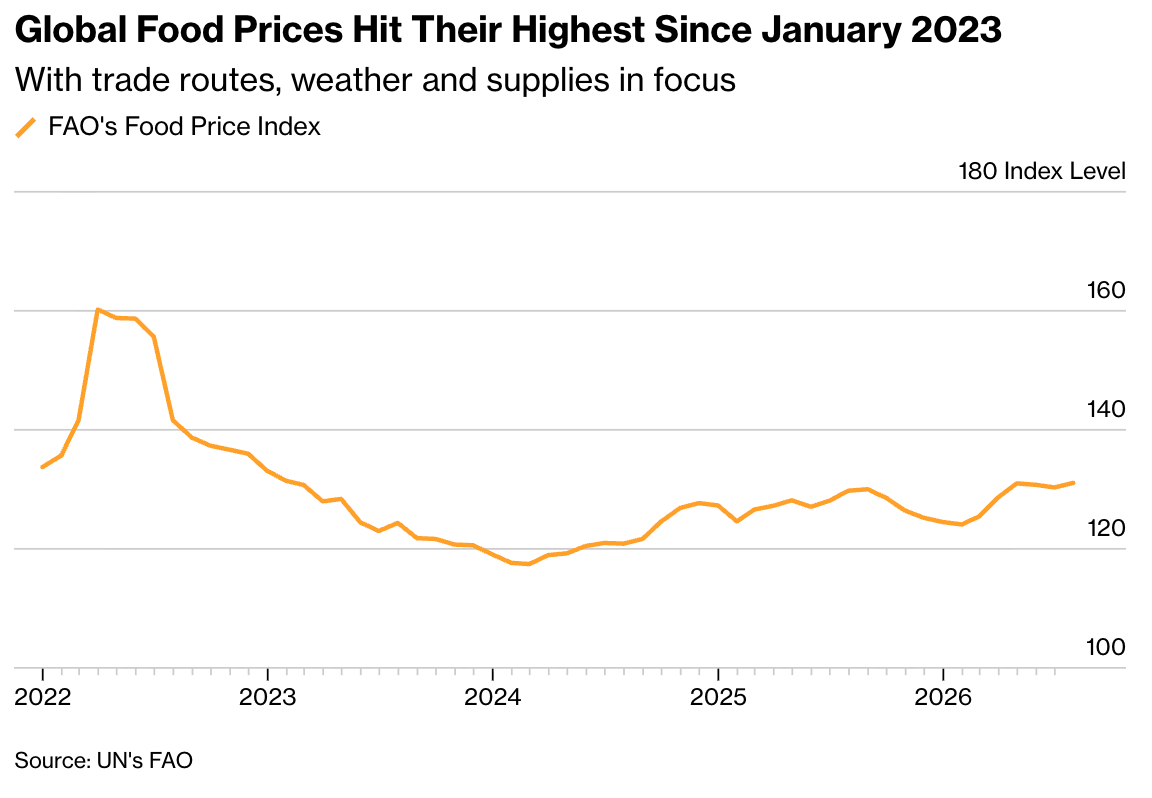
Global food commodity prices rose to their highest level in more than three years in July, with the UN’s FAO food price index climbing 0.6% from June, led by wheat (up 5.8% for the month, nearly 10% year-over-year), corn (up 3.6%), sugar, and vegetable oils.
Intensifying Russian and Ukrainian attacks on Black Sea shipping corridors are threatening grain exports from one of the world’s most critical agricultural regions, extreme heat is pushing Europe toward one of its steepest grain harvest declines on record, and dryness across major U.S. growing areas is threatening corn and soybean yields.
The initial food market disruptions from the Iran war, including fertilizer supply chain disruptions and elevated energy costs for agricultural production, also haven’t faded.
With an unusually powerful El Niño also developing on top of existing supply disruptions, the food inflation risk looks likely to persist and potentially intensify through the end of the year and into 2027.
Food and energy are typically excluded from “core” inflation measures, but sustained increases in both can feed into broader inflation expectations.
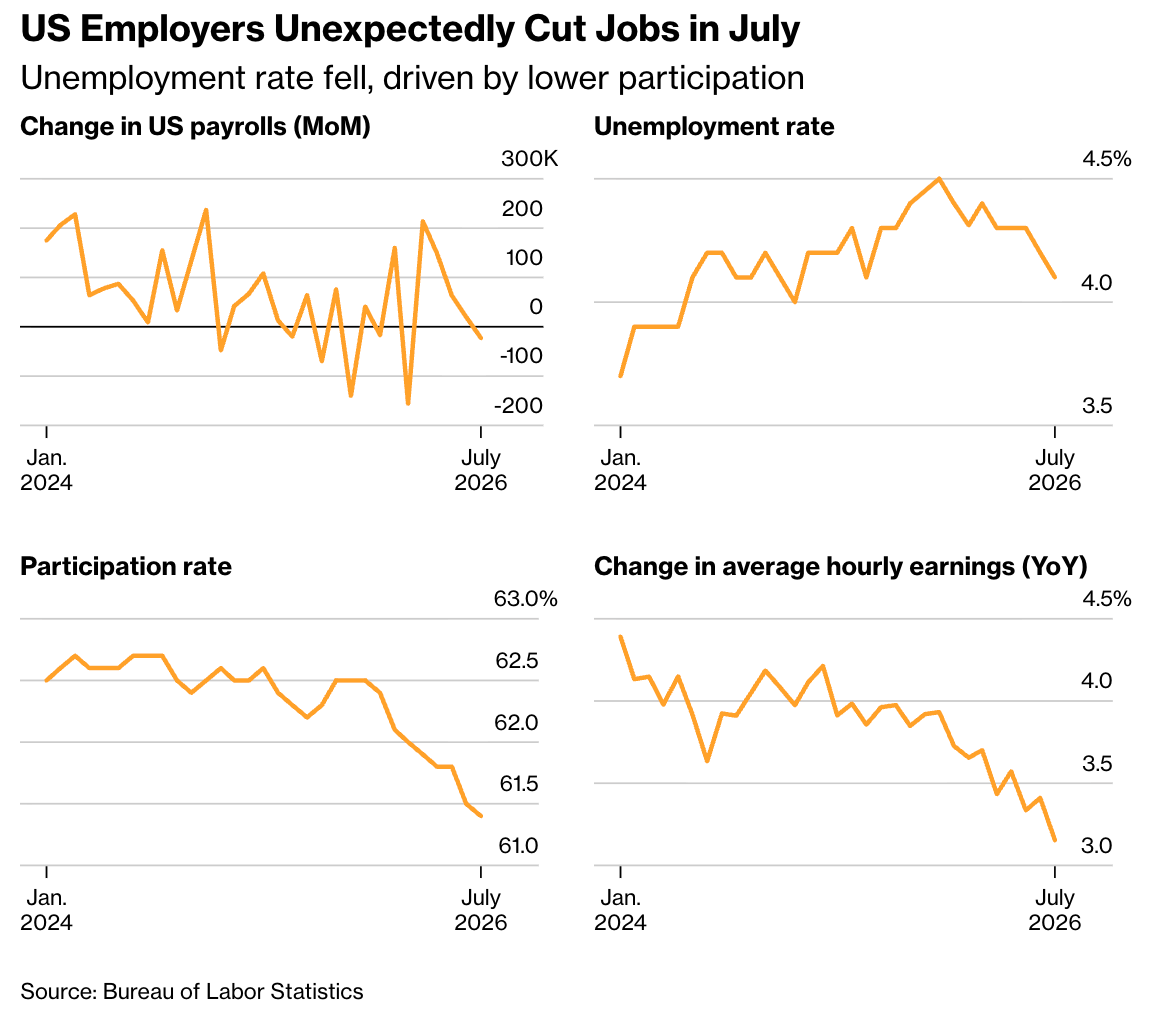
U.S. employers unexpectedly shed 23,000 jobs in July, the first outright payroll decline in years, compounded by a combined 103,000 downward revision to May and June figures.
The unemployment rate fell to 4.1%, but for the wrong reason: labor force participation dropped to 61.4%, its lowest level outside the pandemic since the 1970s, meaning people are leaving the workforce rather than finding jobs.
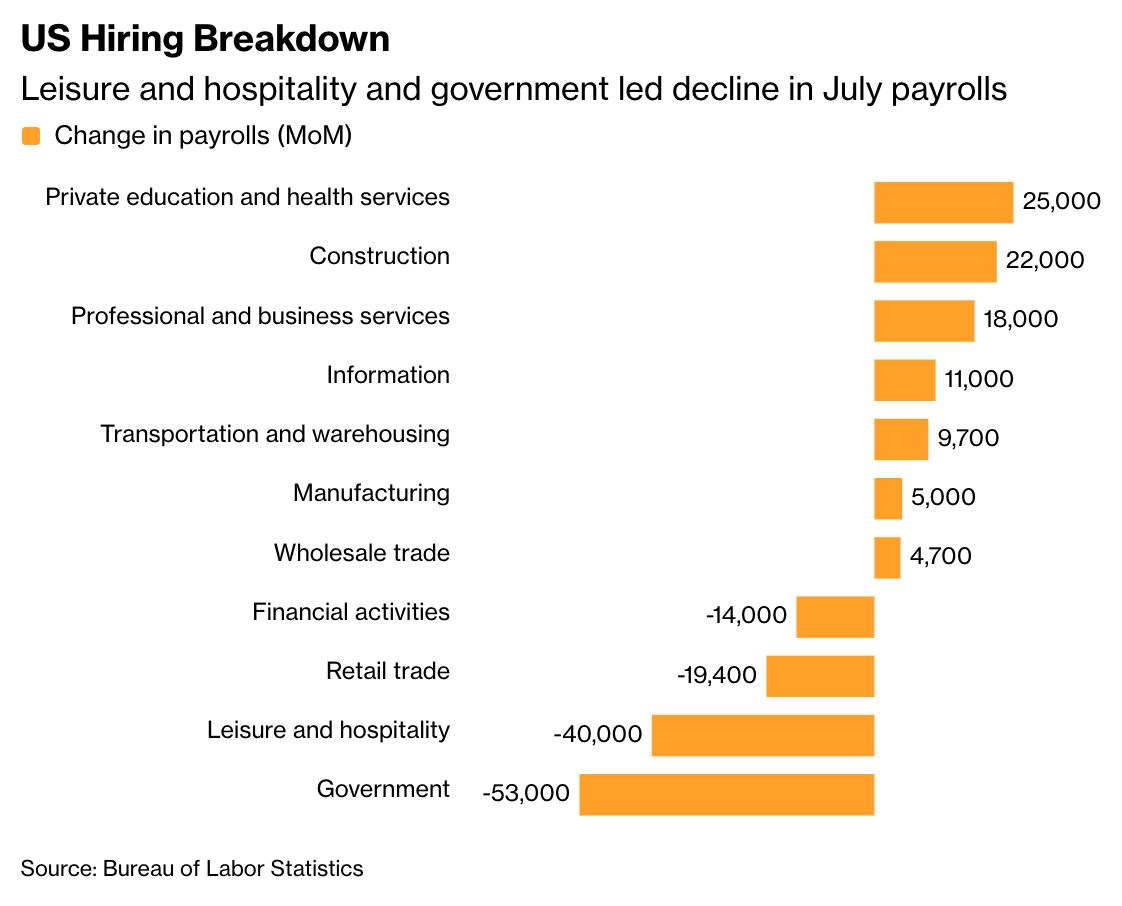
Wage growth also slowed to 3.2% year-over-year, the weakest pace in over five years. The decline was driven by government payrolls (especially local education, which is seasonally volatile in summer), leisure and hospitality, and retail trade, while private-sector payrolls rose a modest 30,000, led by healthcare.
Financial sector employment fell to its lowest in four years.
Some economists expressed skepticism about the report’s credibility, noting it conflicts with other data points. ADP showed the best job-switching wage gains in nearly a year, Bank of America Institute found strong pay growth among lower-income households, and small-business hiring plans hit a four-year high.
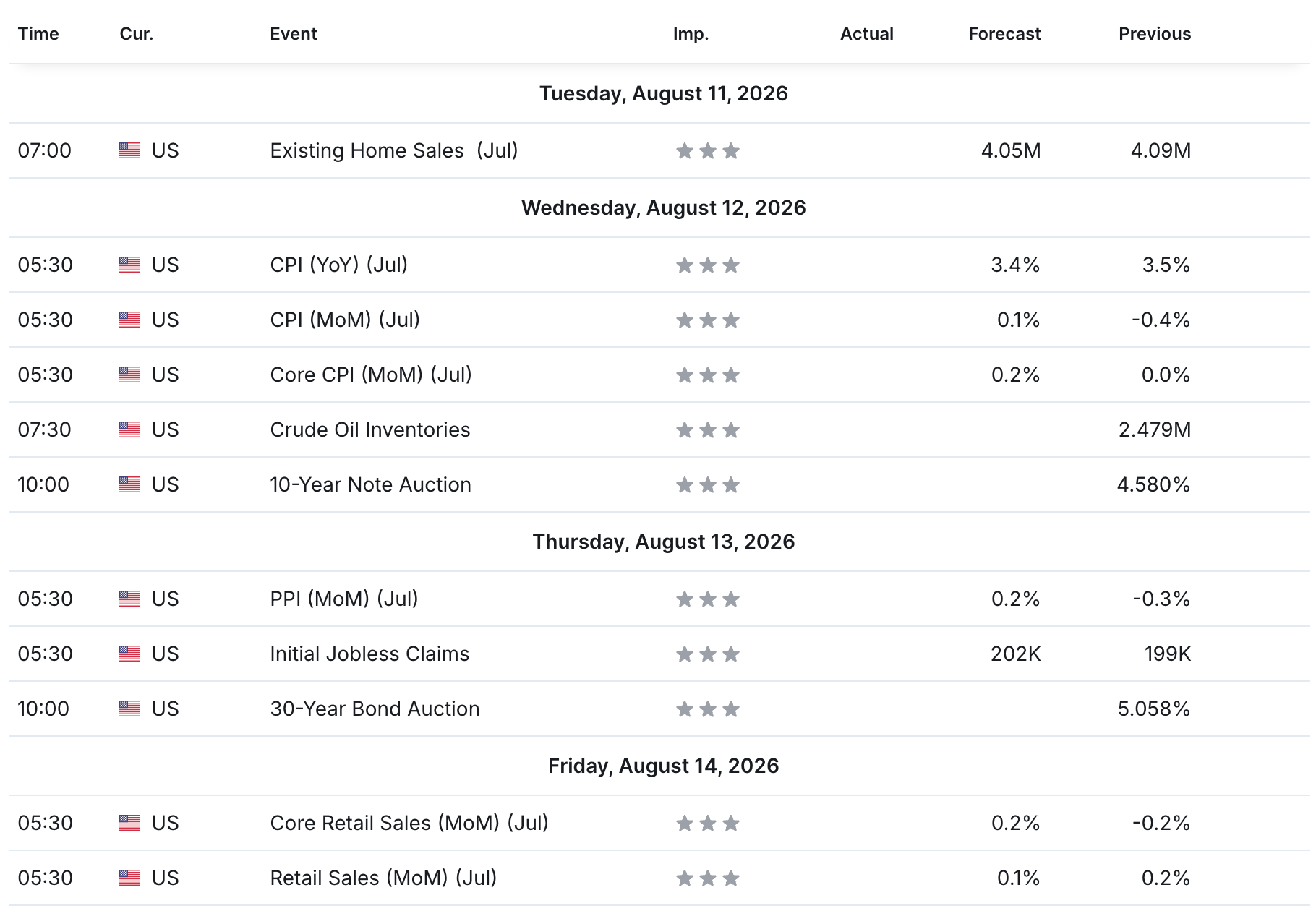
Bloomberg Economics expects the Fed to stay on hold in September, with next week’s July CPI report next on deck.
A soft inflation print alongside soft payrolls would lock in a hold, while a hot inflation number could reintroduce rate hike pressure despite the weakening jobs picture.
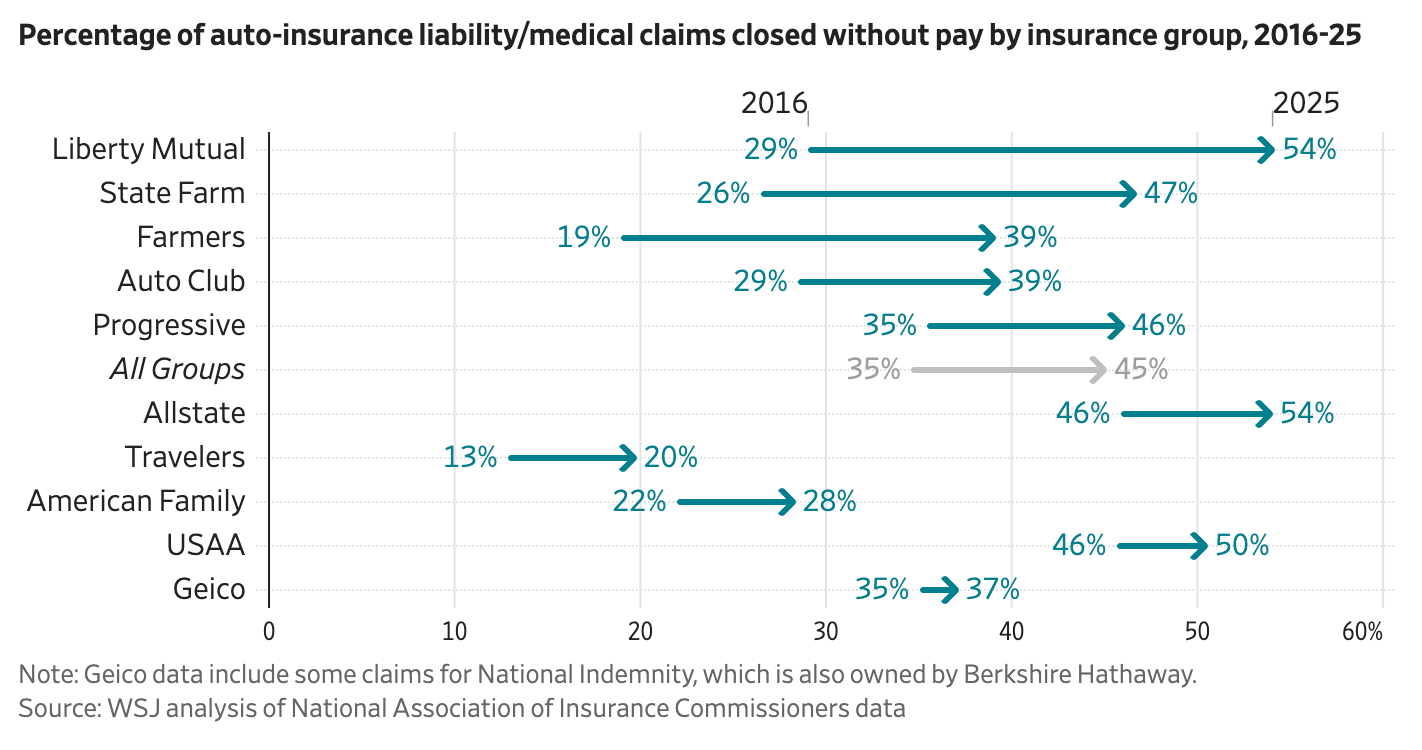
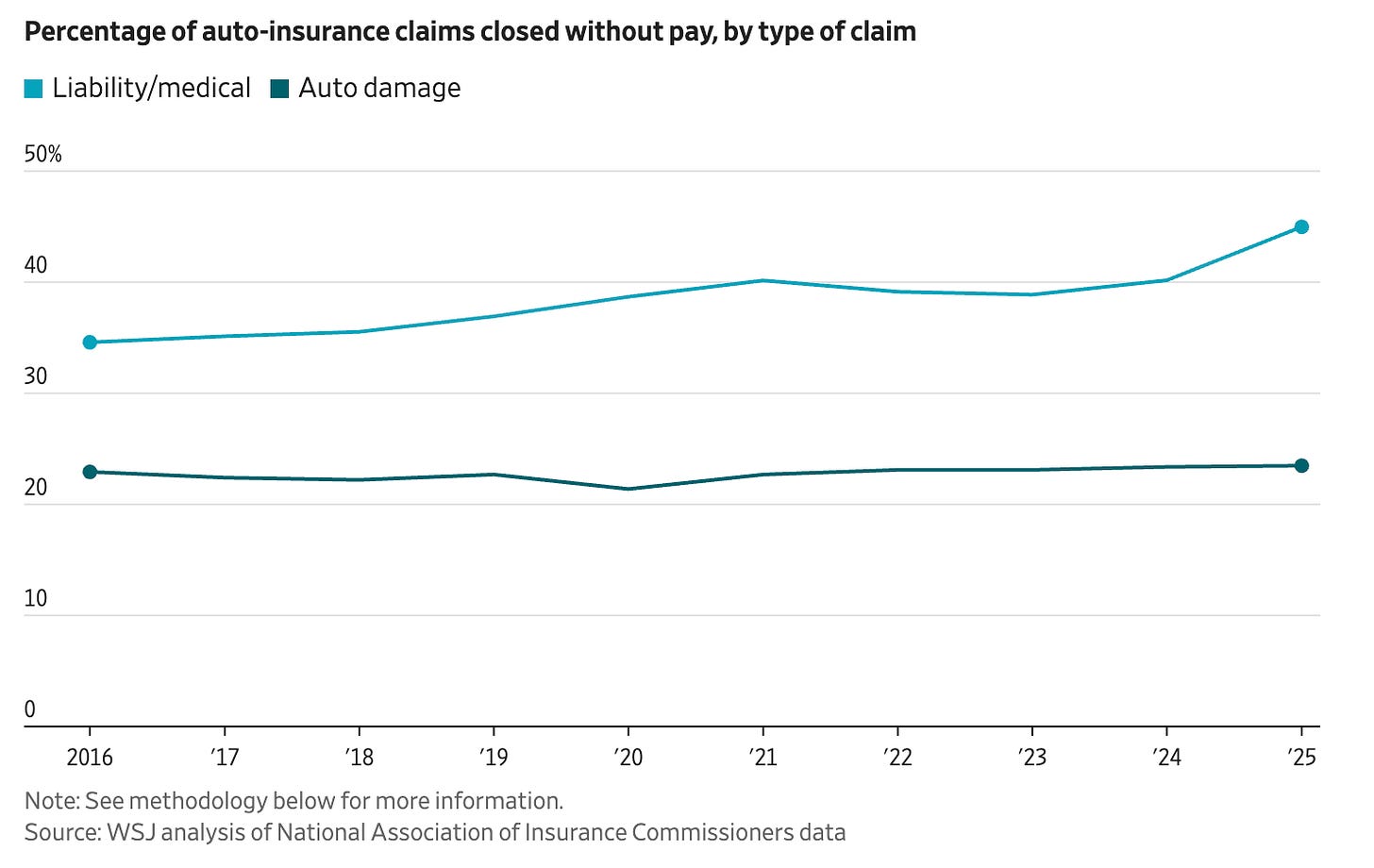
A Wall Street Journal analysis of thousands of insurance regulatory filings found that auto insurers denied or closed without payment 45% of liability and medical claims last year, up from about 35% a decade ago.
The trend mirrors what’s happening in homeowners insurance, where claim denials have also risen sharply. Insurers attribute the increase to fraud, AI-enhanced fake claims, and plaintiff attorneys filing suit rather than negotiating.
However, consumer advocates state that denials are rising because insurers are deliberately tightening claims handling to boost profits. Personal auto insurers paid out just 61 cents in claims per dollar of premium last year, their lowest loss ratio since 2020.
The problem is most severe for liability and medical claims rather than auto damage claims, where denial rates have remained more stable. State Farm, Farmers, and Liberty Mutual showed the largest increases in no-payment rates over the past decade among the ten biggest insurers.
A growing share of denials are tied to “undisclosed driver” clauses. State Farm alone estimates it costs them nearly $1.5 billion annually when unlisted drivers are involved in accidents, and the company recently tightened its policy language to make denials easier in those situations.
No posts
Comments
Nothing yet. Say the first thing.
Sign in to join the conversation.