
Happy Wednesday all,
Markets are sending some mixed signals this week. Small-business optimism is improving and credit card stress may not be as severe as the headlines suggest, but questions around the enormous financing required to sustain the AI boom continue to grow.
In this week’s Hump Days, we look at Nvidia’s latest effort to bring Wall Street deeper into AI infrastructure, why the consumer credit picture may be healthier than it appears, and how the SEC is rethinking one of the most important market surveillance systems in the US.
Enjoy this week’s Hump Days!
- Humphrey & Rickie

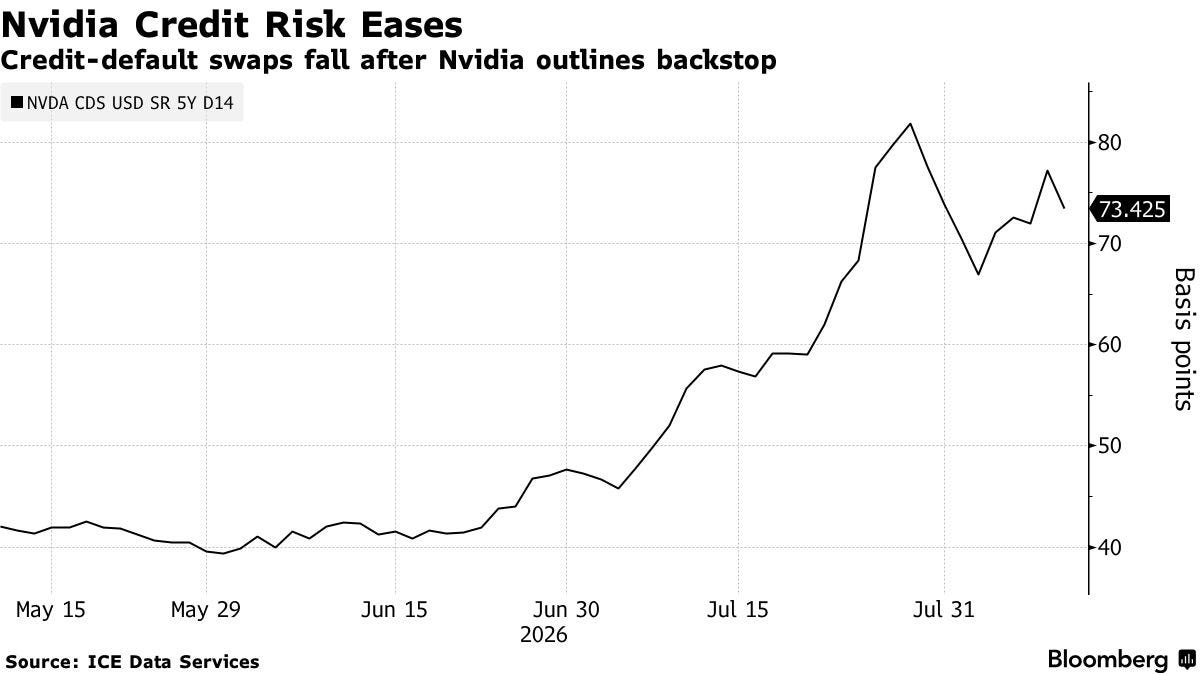
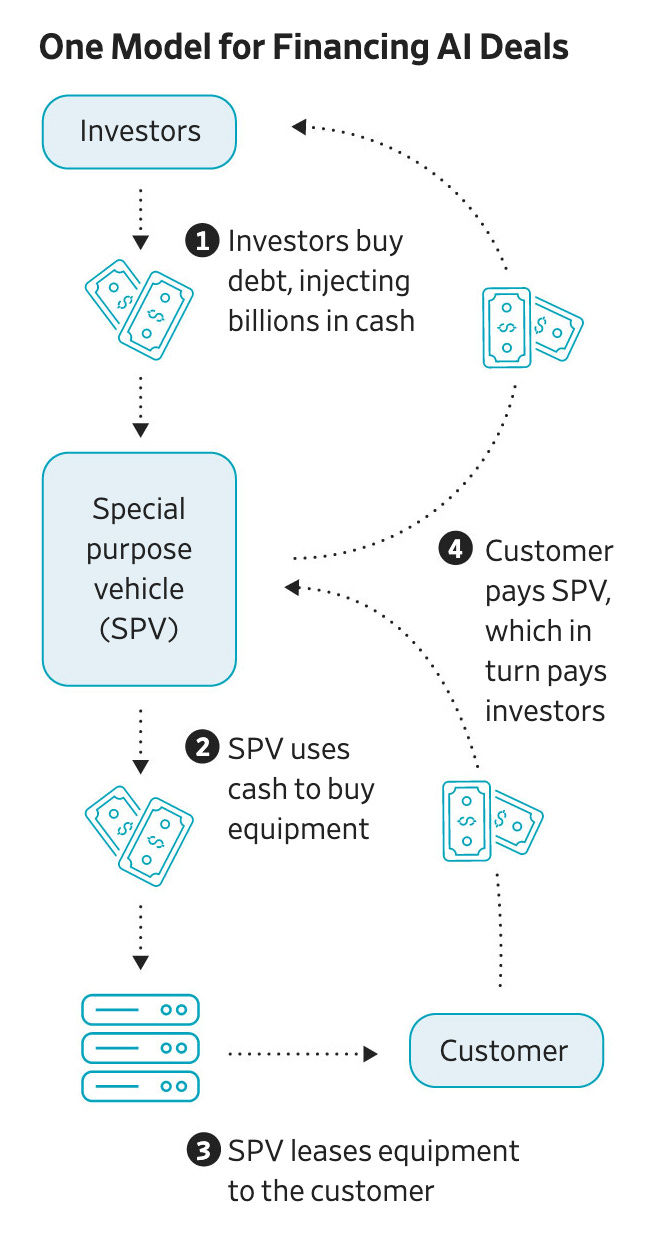
Nvidia announced that a coalition of major financial institutions, including BlackRock, Goldman Sachs, Apollo, Blackstone, Brookfield, and KKR, will independently deploy more than $500 billion to help fund AI infrastructure.
Concerns had been growing about ‘circular financing’. If Nvidia was lending money to customers like OpenAI so they could buy Nvidia chips, and those customers failed, Nvidia would be left holding the losses while having booked the revenue.
In less than three weeks, the cost of protecting Nvidia’s debt against default had nearly doubled in credit markets. Tuesday’s announcement helped stabilize things as Nvidia’s own exposure will be limited to guaranteeing up to 25% of some projects via a “residual value mechanism,” with the rest of the risk absorbed by outside investors.
The relief may be partial and temporary, however. Critics note that the broader problem hasn’t disappeared as it’s just been redistributed. If projects fail, the losses ultimately flow to bondholders, life insurers, and pension holders, not Nvidia’s stock investors.
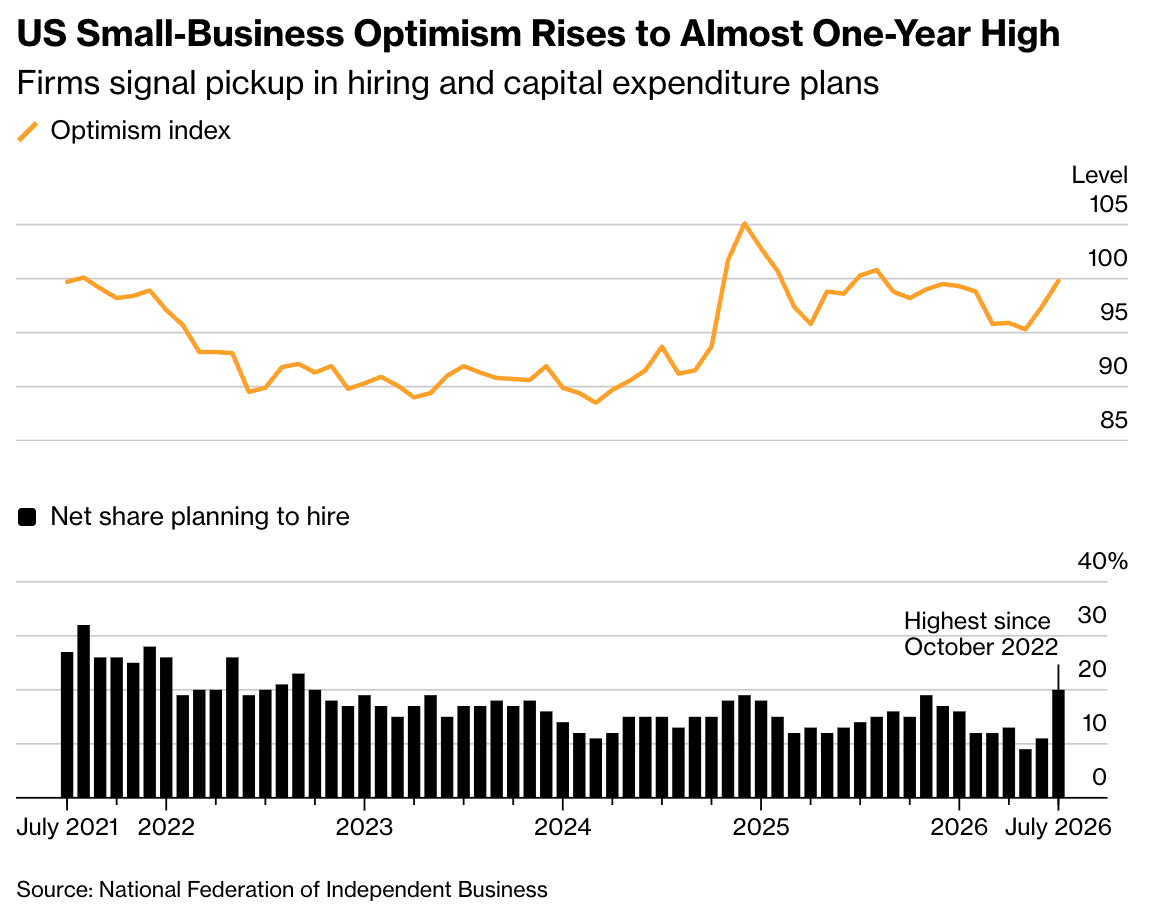
Small-business confidence jumped in July to its highest level since August 2025, with the NFIB index rising to 99.8 as eight of ten components improved.
Hiring plans surged to the highest level since October 2022 and capital expenditure plans hit their strongest reading since late 2024, suggesting Main Street is investing and expanding despite the ongoing uncertainty from the Iran war.
Inflation concerns also eased for the first time this year, with fewer businesses reporting inflation as their top problem and the share planning to raise prices declining for the first time since February, just before the U.S.-Israel strikes on Iran sent oil prices surging.
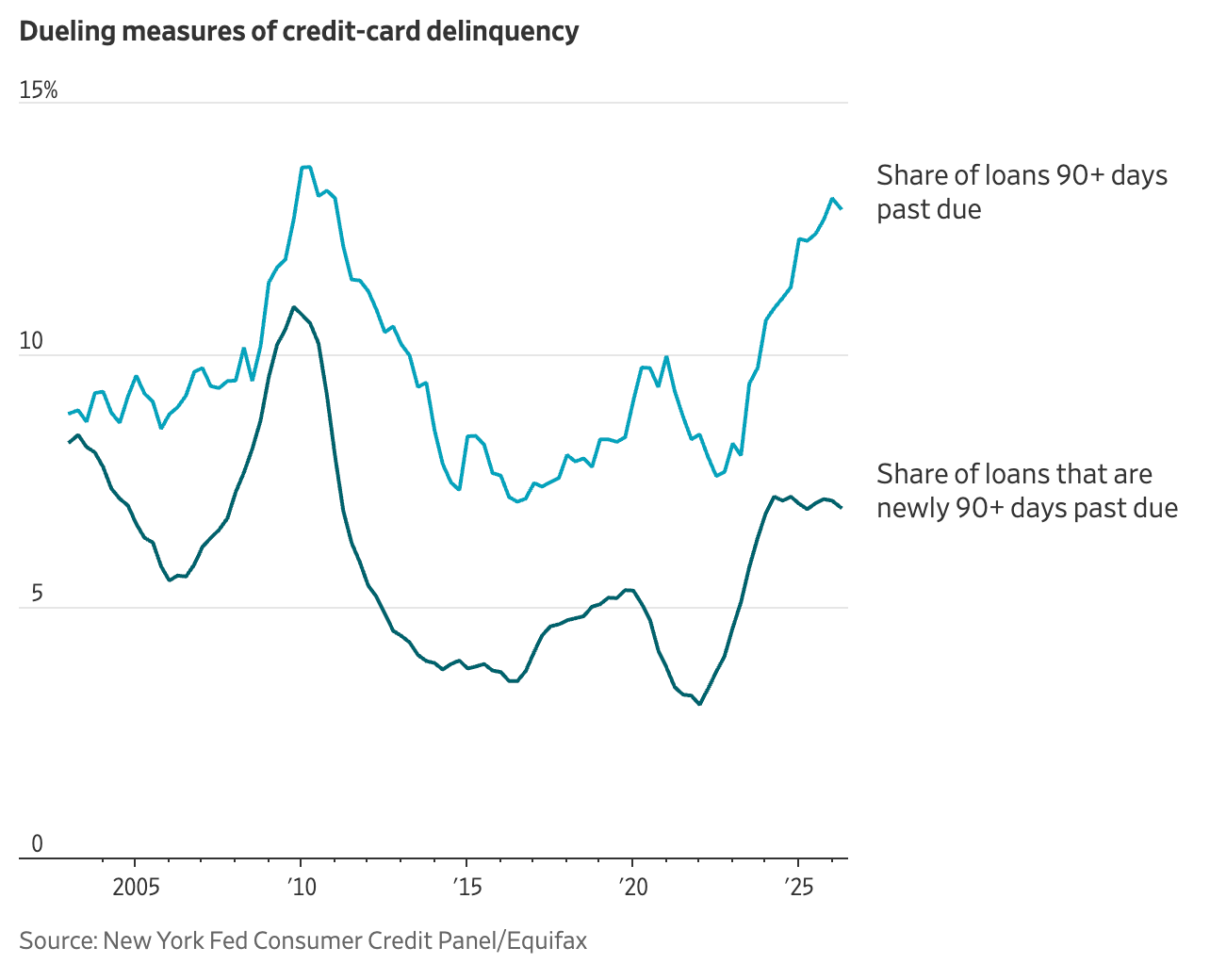
Headlines about credit card delinquencies hitting their highest level since the 2008 financial crisis are technically accurate but potentially misleading, according to new research from the New York Fed.
Charged-off credit card debts, loans lenders have deemed uncollectable, are staying on borrowers’ credit records twice as long as they did a decade ago.
Between 2004 and 2012, about 40% of charged-off debts were still being reported a year later; by 2024, that figure had doubled to roughly 80%.
This means the stock of delinquencies keeps rising even when the flow of new delinquencies has stabilized, which is exactly what happened after early 2024.
When the NY Fed researchers stripped out these accumulated severely derogatory balances, the delinquency picture stabilized considerably, consistent with what major banks and lenders have been reporting in their own results.
The SEC is exploring taking direct ownership and funding of the Consolidated Audit Trail, the massive database that tracks every trade across U.S. equity and options markets, following a 2025 court ruling that invalidated its existing funding structure after Citadel Securities won a legal challenge.
Currently, exchanges and FINRA bear the cost (estimated at roughly $250 million annually) and have been attempting to pass it on to brokers, creating years of industry conflict over who ultimately pays.
SEC Chairman Paul Atkins announced the agency is considering directly administering and funding the CAT through the SEC itself, with changes unlikely before late 2027. The move would effectively spread the cost across all market participants through SEC fees rather than concentrating it on exchanges and brokers.
Wall Street has long complained about the CAT’s ballooning costs and the breadth of data collected, particularly the explosion in options trade reporting driven by the retail trading boom, as every unfilled order gets logged, creating enormous storage expenses.
The CAT was created after the 2010 “flash crash” to give regulators real-time market surveillance and enforcement capabilities.
No posts
Comments
Nothing yet. Say the first thing.
Sign in to join the conversation.