

Welcome back!
This week, I’m sharing the story of a UK bills management company that discovered its growth ceiling wasn’t market competition. It was hidden in thousands of water bills sitting on their operations team’s desks.
But first, the critical intel you need this week:
Manual utility bill processing costs businesses an average of 45 minutes per bill, with error rates climbing as volume increases - creating bottlenecks in service delivery
The utility billing software market reached $6.13 billion and is projected to hit $14.07 billion by 2032, growing at 12.07% CAGR.
UK property management firms are under unprecedented pressure in 2025, with rising operational costs and evolving legislation forcing them to streamline every process or risk profitability
Launched in 2015, Huddle aimed to handle household utilities so landlords don’t have to. Huddle grew into one of the UK’s leading bill management companies.
But by the time they hit scale, Huddle had developed a problem that threatened everything they’d built.
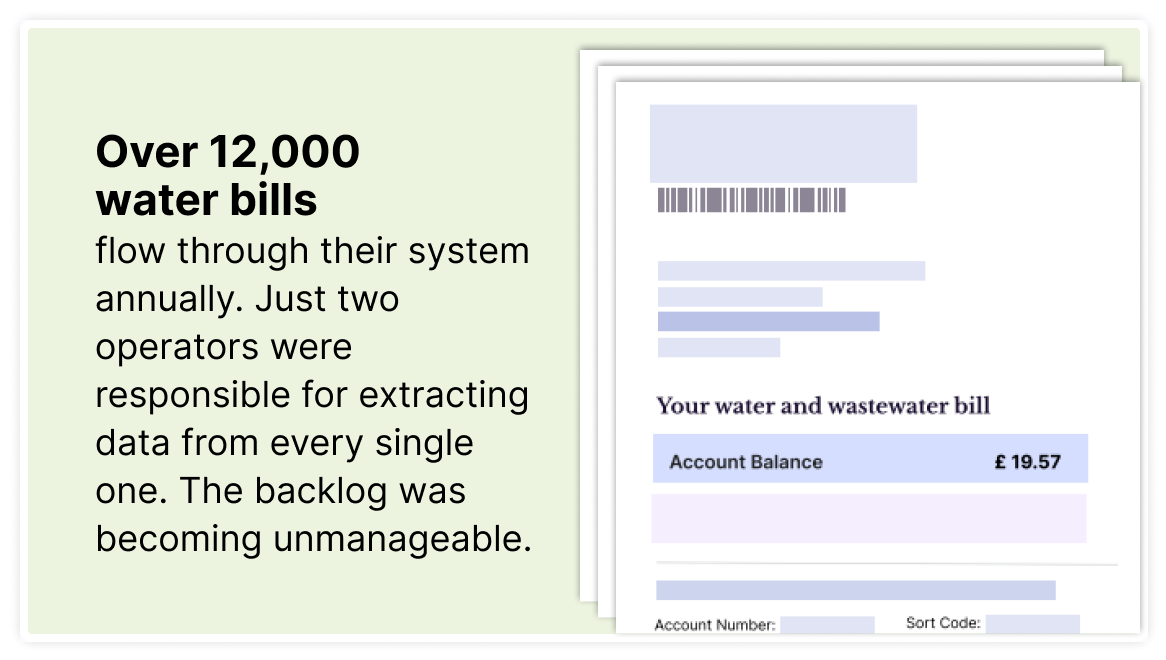
Each bill required identifying the provider, finding usage charges buried in different sections, identifying environmental fees and wastewater costs, and then manually entering everything.
Simple bills with straightforward usage? Maybe 10-15 minutes. Complex multi-property accounts with seasonal variations and adjustments? 30-45 minutes per bill.
Tenants questioned delays. Landlords grew frustrated. Every processing delay chipped away at Huddle’s reputation.
Every water company structures their bills differently. Rate structures differ based on property type and location.
For Huddle, managing properties across the UK meant dealing with an ever-expanding universe of bill formats.
Traditional document processing relies on pattern recognition. Huddle couldn’t build templates for every water bill variation. Even if they could, water companies update systems periodically, breaking existing templates.
They can pull “£143.67” from a bill, but can’t validate whether that indicates a potential leak.
Huddle’s leadership demonstrated forward thinking that separates sustainable businesses from those that hit scaling walls.
Understanding Billing Patterns: It learned to recognise usage data whether it appeared in detailed tables, summary paragraphs, or mixed formats.
Adapting to Provider Variations: Instead of creating rigid templates for each water company, the system learned to identify the same business information across presentations.
Validating in Context: The platform cross-checked extracted data against Huddle’s property records and historical patterns. Inconsistent charge structures were caught before reaching customers.
The system doesn’t care where the usage data is. What matters is understanding that certain pieces of information represent meter readings and others represent calculated charges.
Read the full case study here!
After implementing intelligent document processing, Huddle achieved 95.46% accuracy across their 12,000+ annual water bill volume. Processing that previously consumed days of operator time now happens in a fraction of the time with minimal manual intervention.
Customer experience improved measurably. Billing turnaround times dropped. Error complaints declined. Tenants got accurate bills faster. Landlords gained confidence that utility management was being handled genuinely.
But most importantly, document processing stopped being a constraint on growth. Huddle can now onboard new properties without worrying whether their water provider’s bill format will create operational chaos.
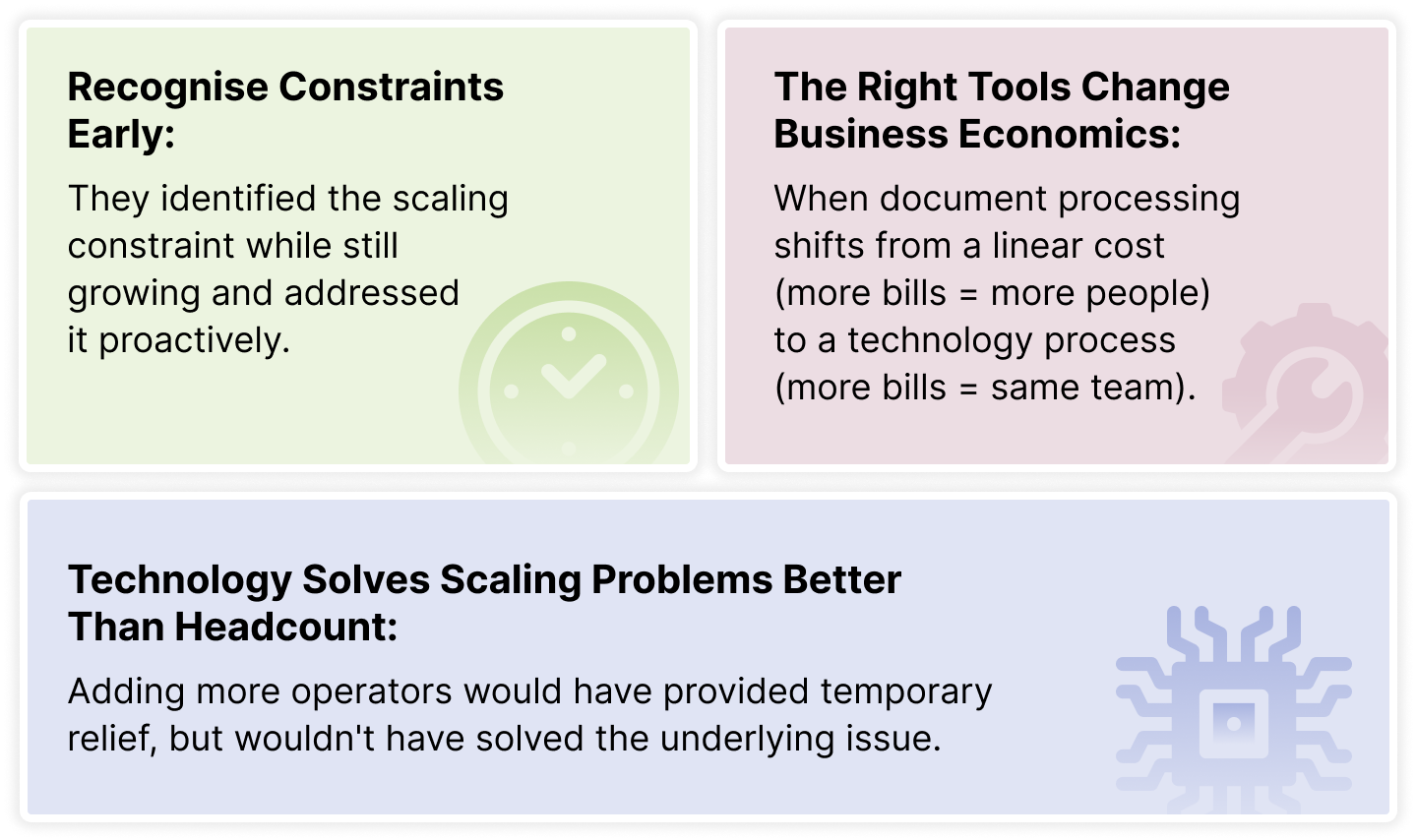
If you’re running a property management business, utility service, or any operation that processes high volumes of varied bills, Huddle’s story should resonate.
The technology exists. Huddle has proven it works across format variations. The only question is timing - will you address the constraint before or after it becomes a crisis?
PS: If water bills, energy statements, or any utility documents are eating your operations team’s time, Docsumo can help.
PPS: Every number here is real. 12,000+ bills. 95.46% accuracy. Two operators freed for higher-value work. True results from a company that chose to solve its problem rather than accept it.
No posts
Comments
Nothing yet. Say the first thing.
Sign in to join the conversation.