
After losing her home, artist Nataliia Burmaka found herself questioning not only where she belonged, but why humanity divides the world into "us" and "them." In this deeply personal essay, she reflects on migration, war, and environmental justice, and on why she hopes her paintings will remain a warning rather than a prophecy.
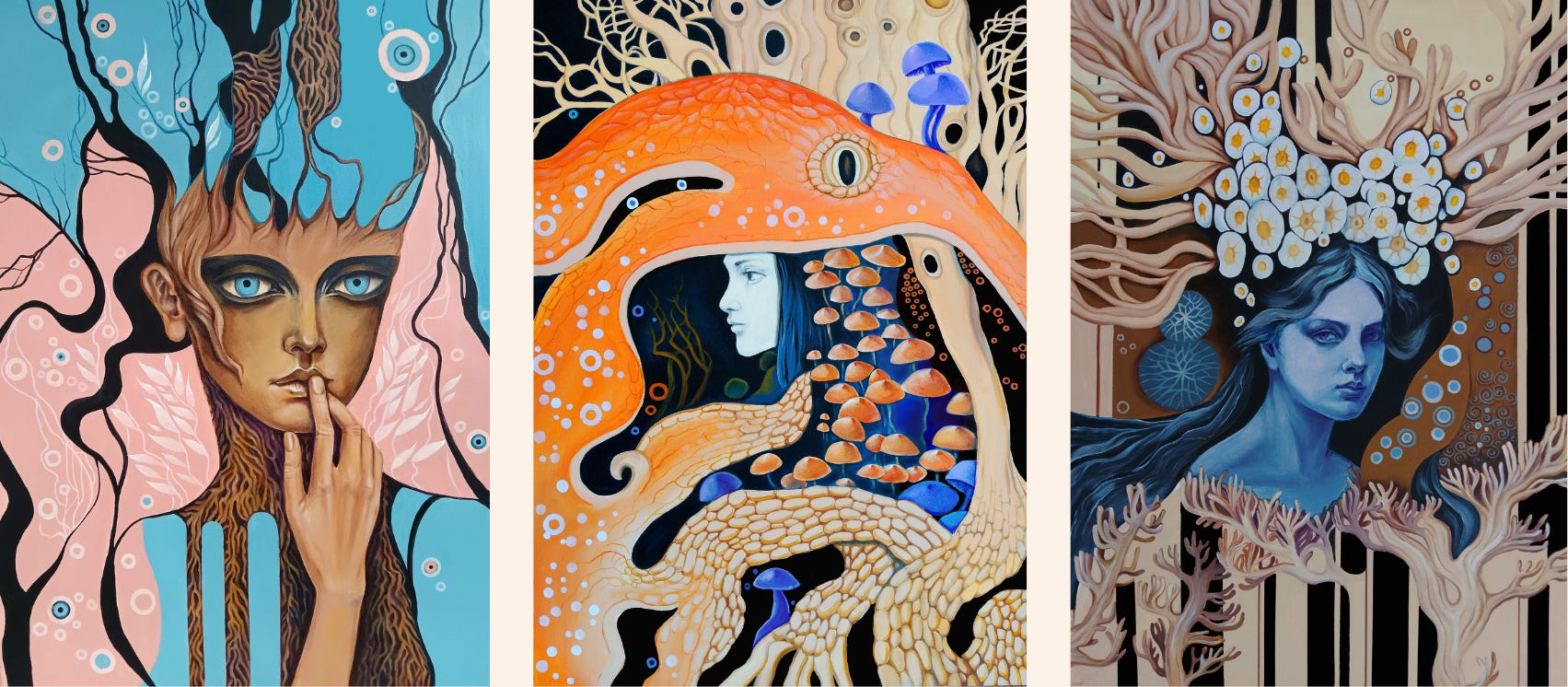
A few years ago, I lost the world that had always felt familiar. The constants I had taken for granted disappeared: my home, the view from my window, the landscape I knew – those ordinary anchors that make us feel safe. I had to search for them again in a foreign land.
As a child, I was fascinated by what lay beyond the railway station in my hometown. I dreamed there was a meadow of extraordinary beauty, filled with wildflowers, where hares leaped through the grass. (Years later, I discovered that the place had actually been an industrial area with warehouses). Then I arrived in another country and found that, beyond the railway tracks, there really was a meadow with hares – just like the one from my dream. Outside my window now stand towering spruce trees whose tops seem to brush against the passing clouds. Without even realizing it, I found myself wanting to belong to this landscape, just as I had once belonged to the place I called home.
I offered my new country the most valuable thing I had: myself – my experience, my ideas, my art. But I also discovered invisible boundaries. Not only the obvious ones created by language, but the quieter boundaries that define who belongs and who does not. For the first time, I experienced what it meant to be someone with decades of professional experience and, at the same time, someone whom nobody here knew.
I began thinking about how easily people divide everything and everyone into groups: us and them. Those who are different from us usually end up in the category of “them,” and once they do, it becomes much easier not to truly register their pain.
I found myself asking: What if we were all on the same side? What if, instead of competing, we built alliances? Unfortunately, my experience has taught me that people are more often united by the need to survive than by a shared desire to create. War revealed both sides of human nature to me. I witnessed extraordinary solidarity and generosity between people willing to help one another. But I also saw the terrible price humanity pays for dividing the world into “us” and “them,” when energy and resources that could have been devoted to creation are instead consumed by destruction.
By destroying the environment, we inevitably destroy our own future. We forget that all of us are only guests on this planet. Humanity becomes too heavy a burden for the Earth, exhausting itself through endless competition and conflict.
I wanted to imagine a world where cooperation had become the natural way of existing—shaped by my own experience of living through war where that sense of connection can feel fragile or disrupted. That is how my series Future in the Past came into being. In these paintings I depict forms of life capable of merging in order to survive. Within semi-abstract compositions, people, trees, corals, and fungi emerge, blending together, growing into a single living mass that becomes a complex yet harmonious system. But this is not an ideal world. It is a world after catastrophe, where humanity faces an existential threat and is forced to change. When land disappears, every living thing must adapt. To survive, humans must discover new ways of coexisting with other forms of life. And perhaps the first step toward that begins with learning to cooperate within our own species.
Environmental justice has never been only about protecting nature. It is, above all, a question of relationships and responsibility. Nature does not recognize the categories we create. The ocean does not care what passport someone carries, what religion they practice, what nationality they belong to, what job they have, or how much they earn. Faced with global change, those distinctions lose their meaning. I do not know whether humanity is capable of abandoning the division between “us” and “them” by choice. That is why I place people in circumstances where cooperation is no longer a moral decision but a condition for survival.
It turned out that the meadow from my childhood dream had existed all along – just in another country. I want to believe that humanity does not need to wait for catastrophe in order to change. If that happens, these paintings will remain a warning rather than a prophecy.
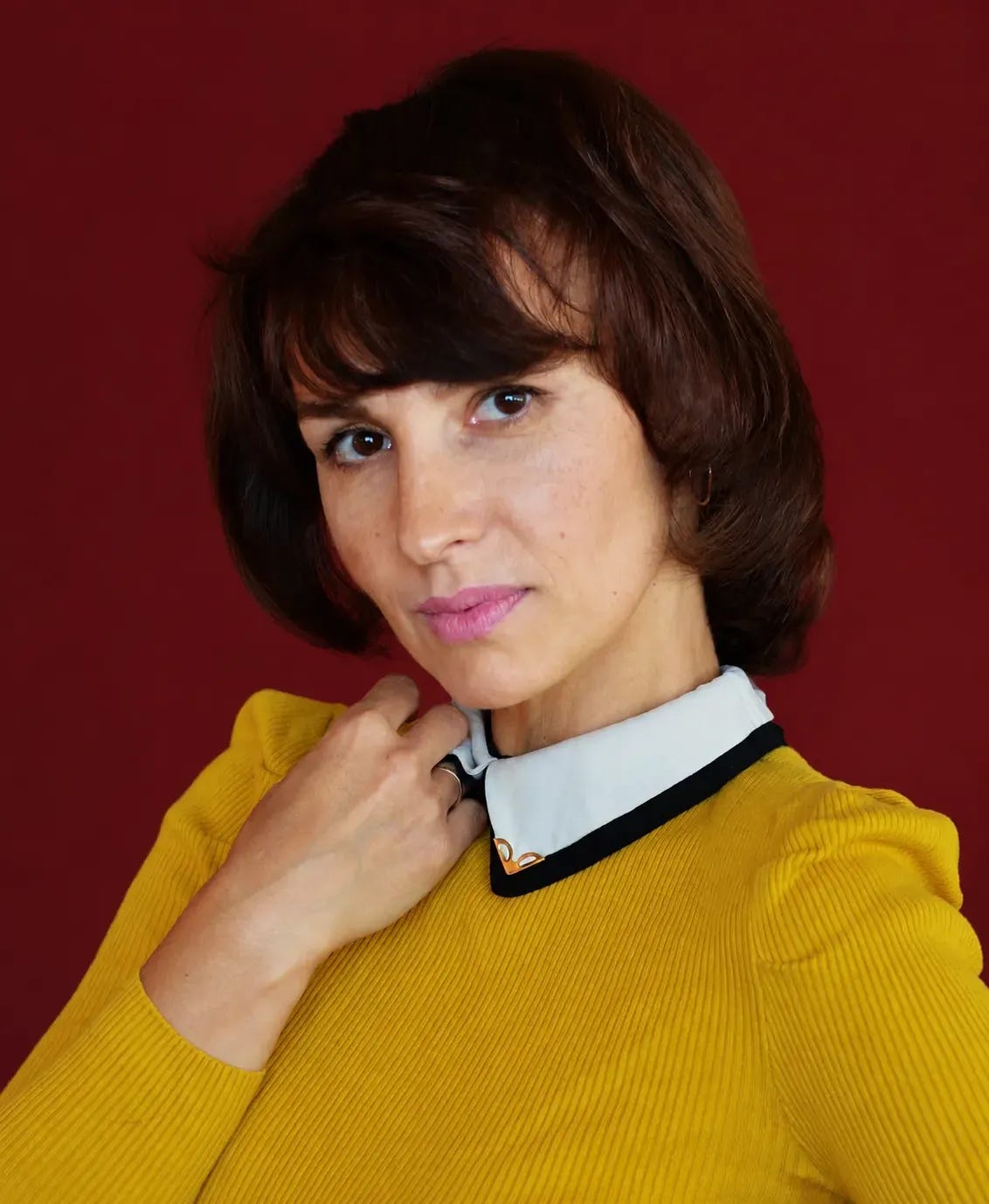
Nataliia Burmaka is a Ukrainian visual artist and writer based in Finland. Her artistic career began in the late 1990s, before she shifted her focus to literature, and cultural projects after earning a degree in Philology and Pedagogy. Since returning to visual art in 2022, she has exhibited her work in Finland and internationally. Alongside her artistic practice, she co-curates the Open World literary platform and develops independent cultural initiatives that foster dialogue between communities.
Comments
Nothing yet. Say the first thing.
Sign in to join the conversation.