
Felix Auger Aliassime came through a rollercoaster five-setter against Alejandro Davidovich Fokina 6/7(4) 7/6(6) 6/3 6/7(2) 6/1 to reach his first quarterfinal at Wimbledon since 2021.
The serve and forehand have been firing for the Canadian — the usual backbone of his game — and so far he has only been broken once the entire tournament: when serving for the match at 5-3 in the fourth-set yesterday.
But I’ve also liked the backhand setup adjustment FAA has made in recent months, lowering the takeback that is better suited to handling faster, lower incoming shots. Compare his Indian Wells set up to the grass season:
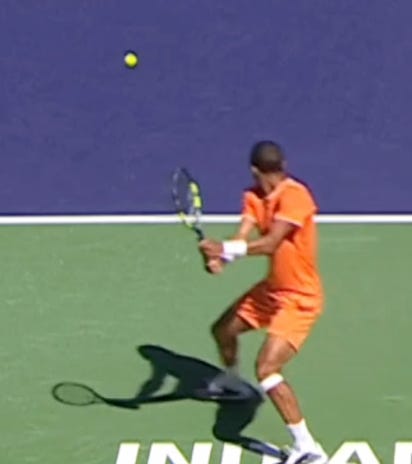
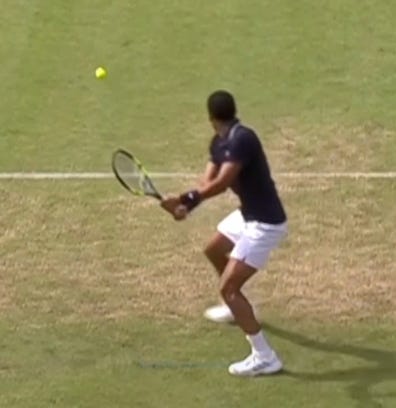
And recall this little note from February after FAA’s title in Montpellier:
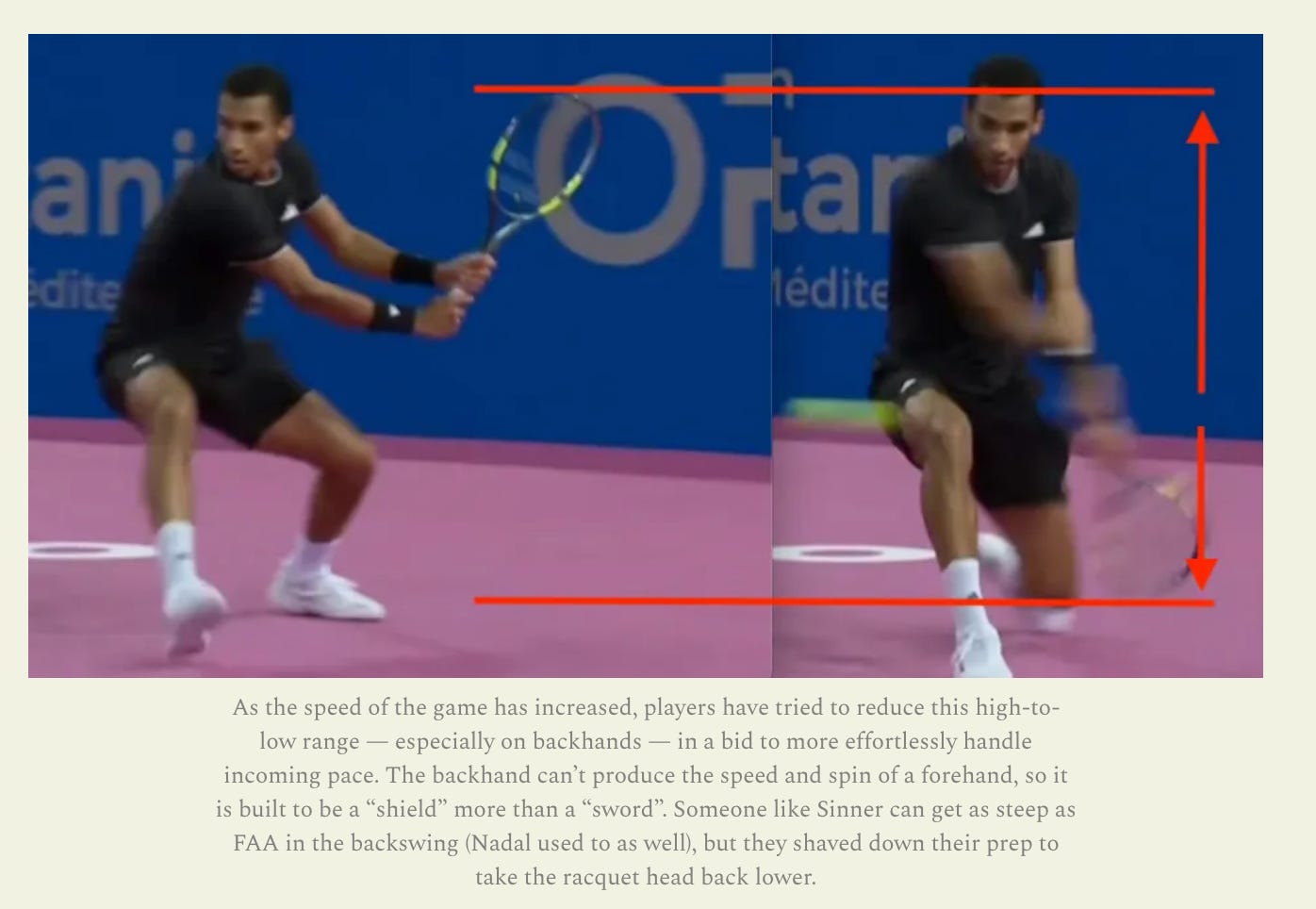
And square that with the stark difference in bounce height that players must confront only days after leaving la terre battue of Paris:

Tennis Insights@tennis_insights
The grass-court bounce is real 📉🌱 Transitioning from clay to grass forces players to completely lower their strike zones. Notice how shots at shoulder-height plummet on the turf, replaced by a massive spike in thigh-height shots! #TennisInsights | @atptour

3:19 PM · Jun 10, 2026 · 14.5K Views
2 Replies · 17 Reposts · 82 Likes
It’s still the weaker wing for the Canadian, but at times it held up quite well against ADF’s flat and compact left-side. Recall the crucial set point in the second set tie-breaker:
On grass, however, players with a weaker topspin backhand often navigate Wimbledon by possessing an elite slice. Berrettini, Dimitrov, Musetti and even Federer all leaned heavily on it.
But in this department I think there is room for improvement with the Canadian.
FAA’s typical slice backswing is low and abbreviated. It works for low and short balls, but it lacks the racquet head speed and high-to-low swing path necessary to tame more difficult incoming balls with any real authority. Compare FAA with the slice backhand speed and spin leaders in Dimitrov and Evans:
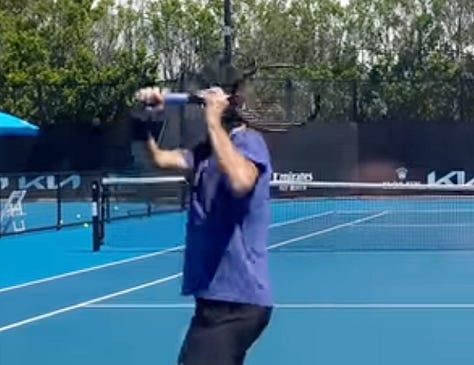
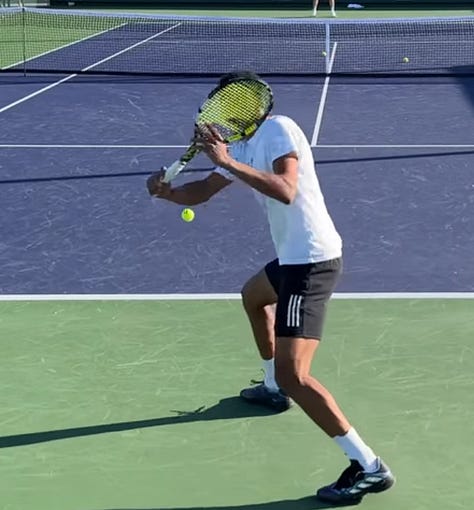
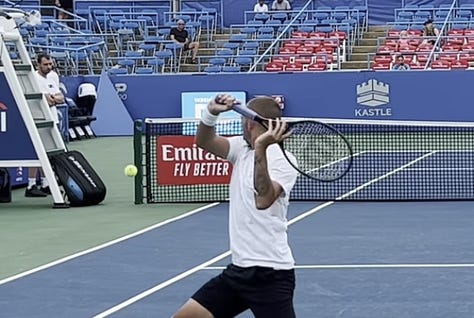
Notice how Dimitrov and Evans get the hitting hand pulled higher. They create a much better stretch in the hitting arm/shoulder muscles, and have more length to accelerate the racquet head, as well as the option to still hit down on higher and rising balls. Musetti and Federer also have this higher setup:
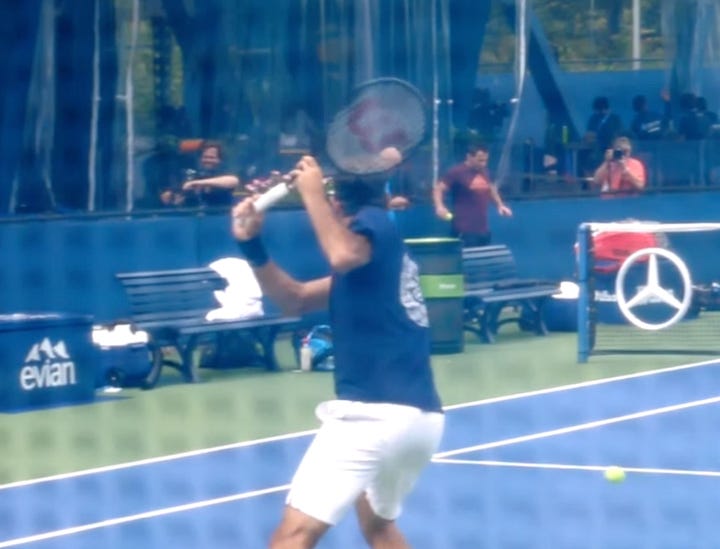
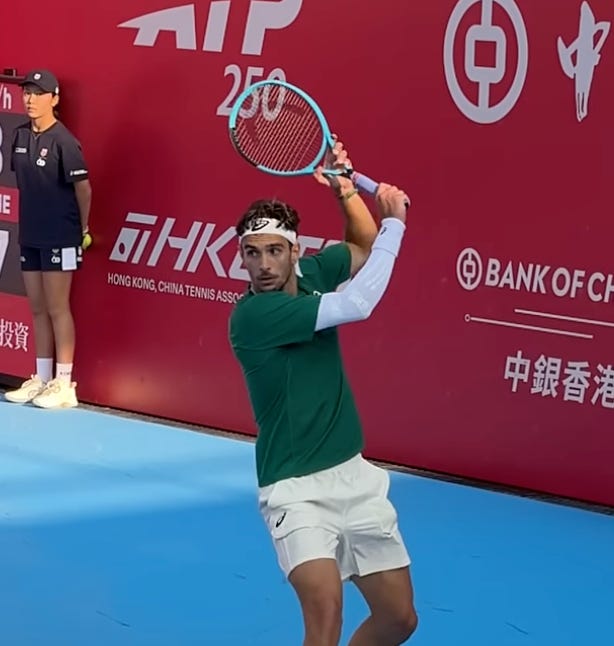
Oh, and let’s not forget Carlos:

Getting the hitting hand above the ball and leaning over it creates something akin to “compression” (if you are a golfer), as all great slicers do. I think FAA is often lacking these elements, resulting in his slice floating. The best ones flirt with the net tape before knifing low into your opponent’s ankles.
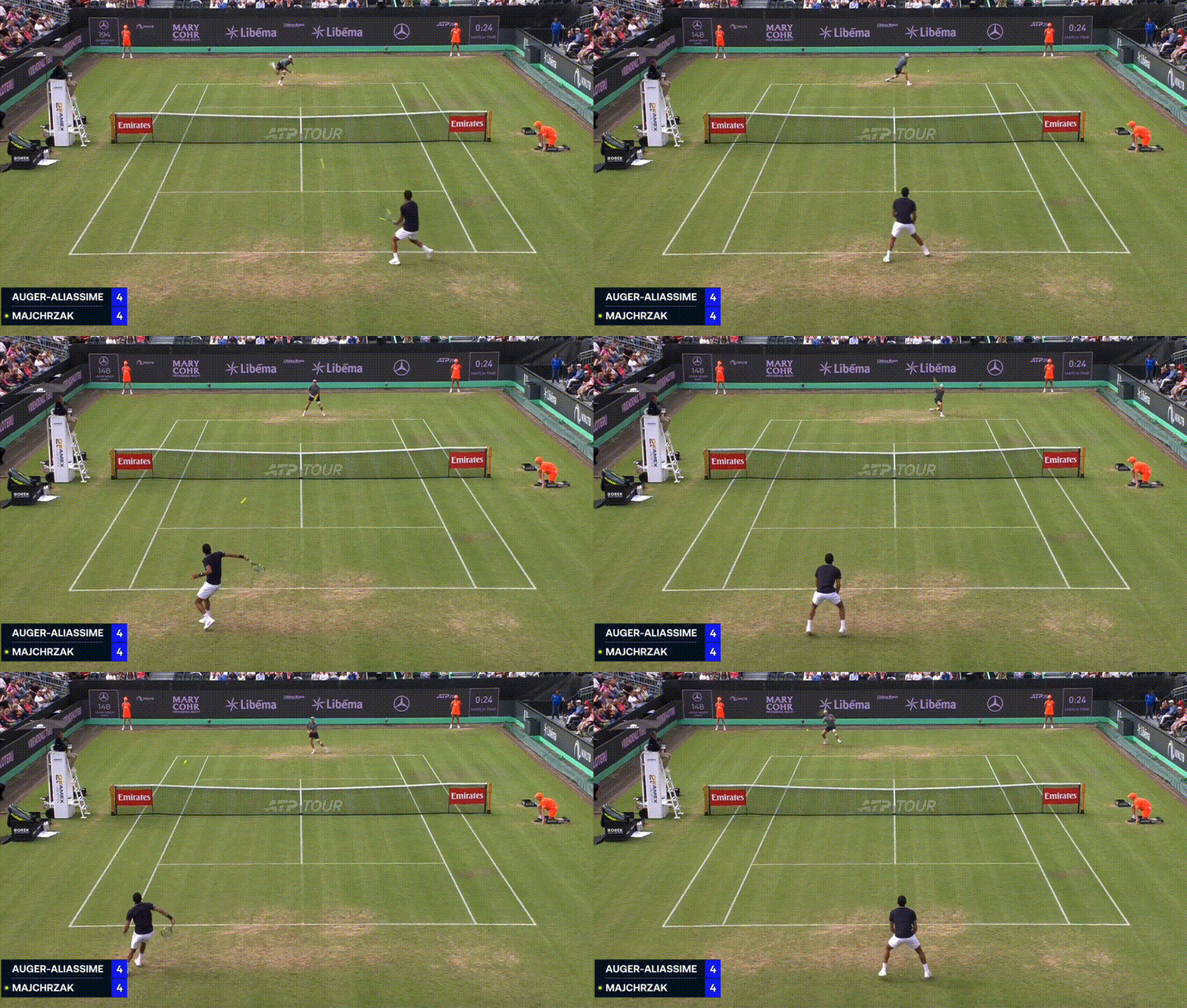
And this is fleshed out in the data. Compare Dimitrov and FAA backhand slice averages:

A higher speed, lower net clearance, and more spin. You can see why Dimitrov excels on the lawns of SW19. From the 2025 notes:

Like most shots in the modern game, the players with the most intent, revealed through racquet speed, possess the most dangerous versions. The slice is no different. 2024 Data:
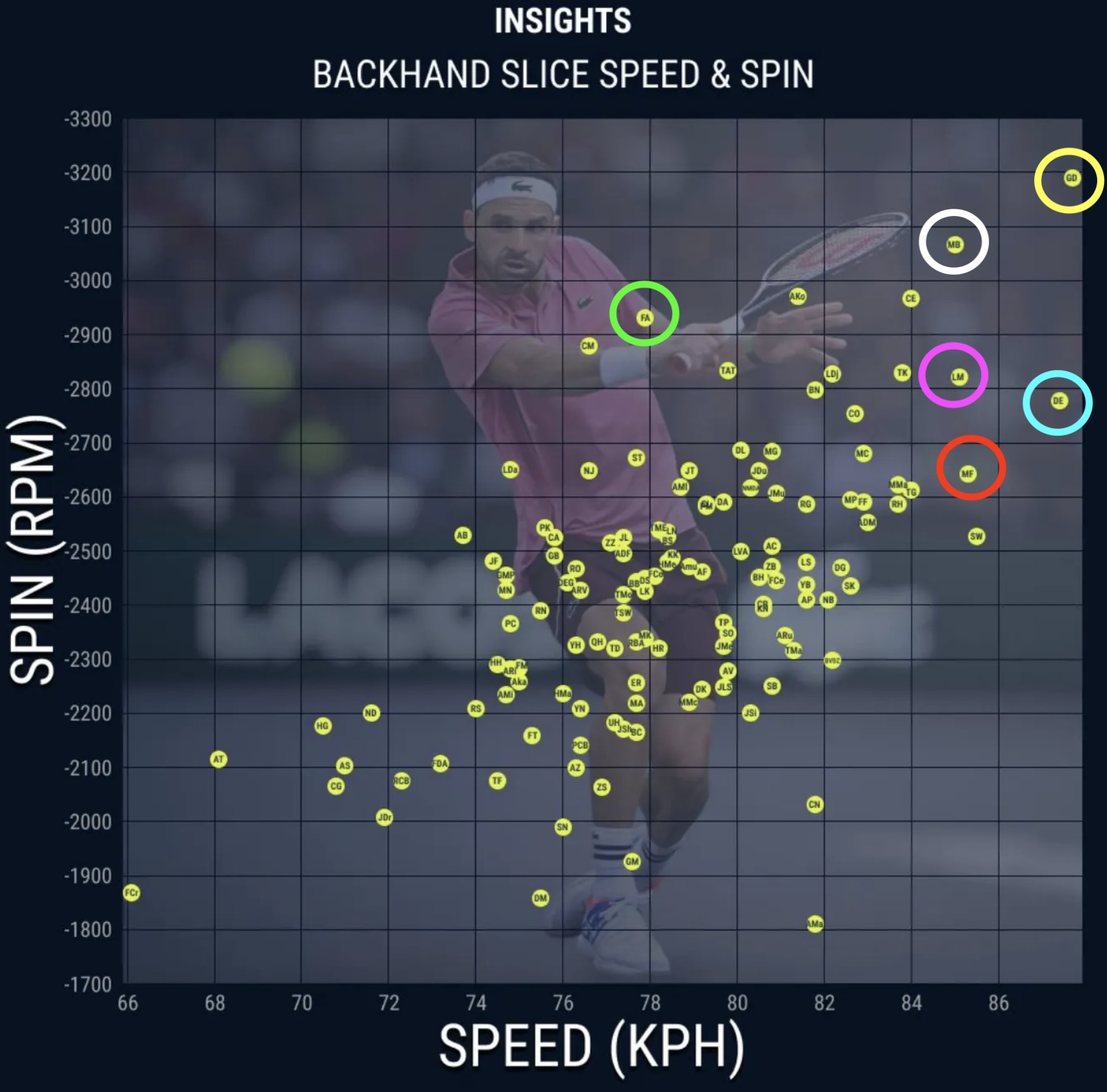
Against Djokovic — a player who relentlessly probes weaknesses — FAA's improved topspin backhand may hold up. Whether the slice does could prove just as important. Keep an eye on that come Tuesday.
I’ll be back with more field notes later in the week. See you in the comments. HC.
No posts
Comments
Nothing yet. Say the first thing.
Sign in to join the conversation.