
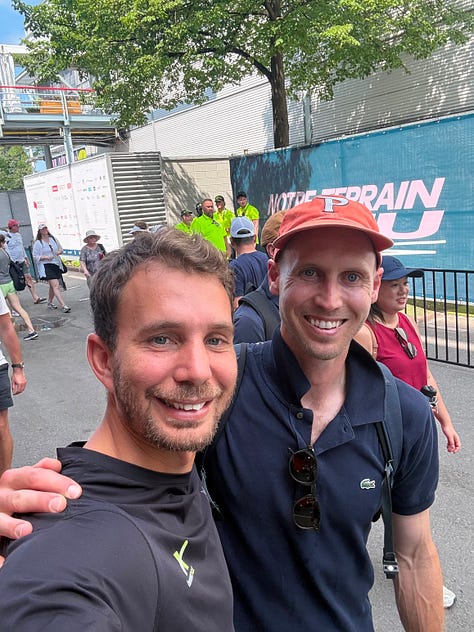
Apologies that this is late (just like last year’s Canadian recap) but Thursday finals just aren’t working for me right now. Anyway, it’s always great to see the top players in town. I saw Shelton, Fonseca, Norrie, de Minaur, Fils, Jodar, and Mensik, to name a few. I also got to catch up with Kevin Konfederak (team Norrie), and meet Jim Courier and talk coaching, forehands, extended wrists, etc., which was very cool.
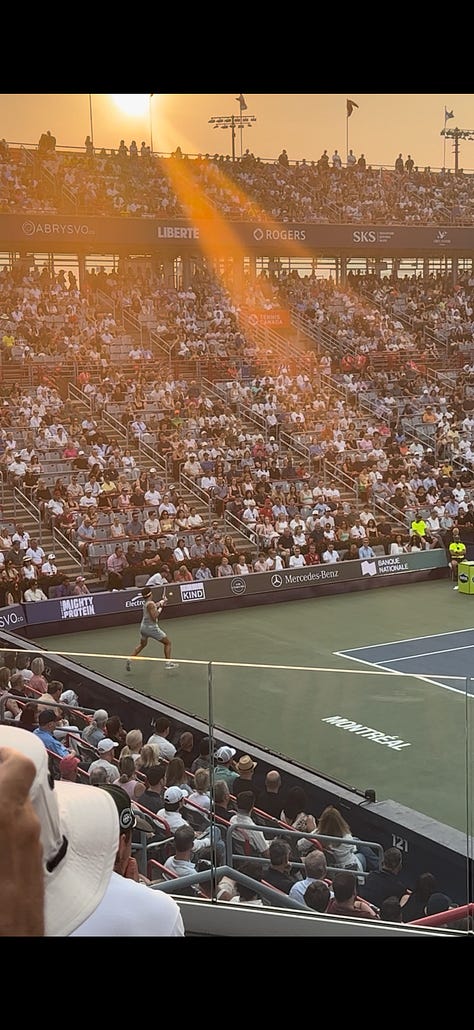
Ben Shelton defended his Canadian Masters title, defeating Brandon Nakashima 6-3 7-6(4) in the final of the Montreal Masters 1000 on Thursday evening. Shelton is now up to 6th in the ATP rankings, and I kind of want to shelve the match somewhat and just talk about Shelton’s game in more detail.
What is Ben Shelton’s M.O?
“He’s a serve +1 guy”
Maybe, but the forehand is average for speed and spin, and the in-percentage (80%) is 3% below tour average.
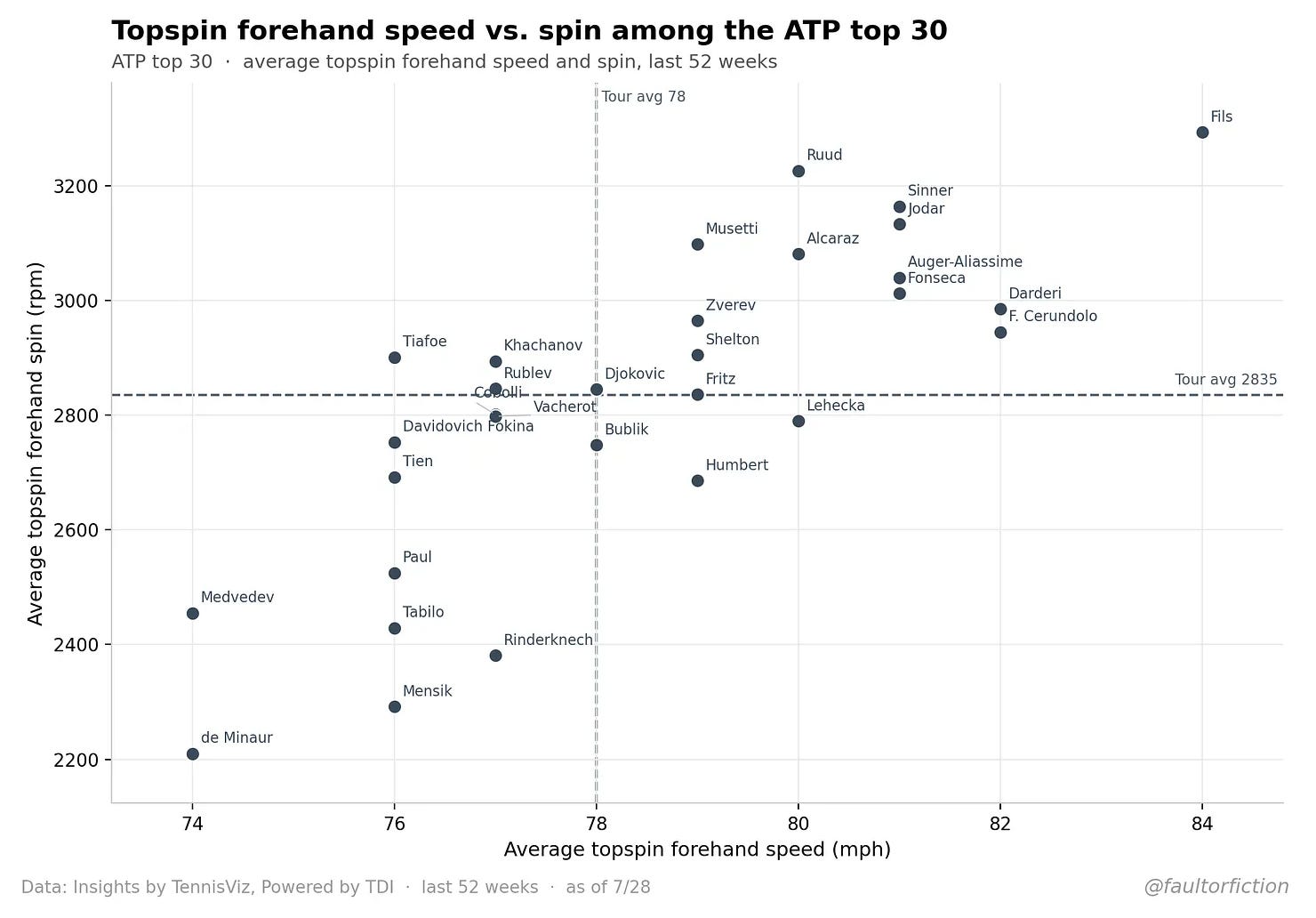
He also sprays more errors than most of his top-30 peers.
As a result he is currently 70th in the 52-week forehand rating for TennisViz.
But that shot certainly has its moments, and it often did on Thursday evening: deep returns, end-range passing shots, set piece +1’s. You name it, Shelton probably hit it:
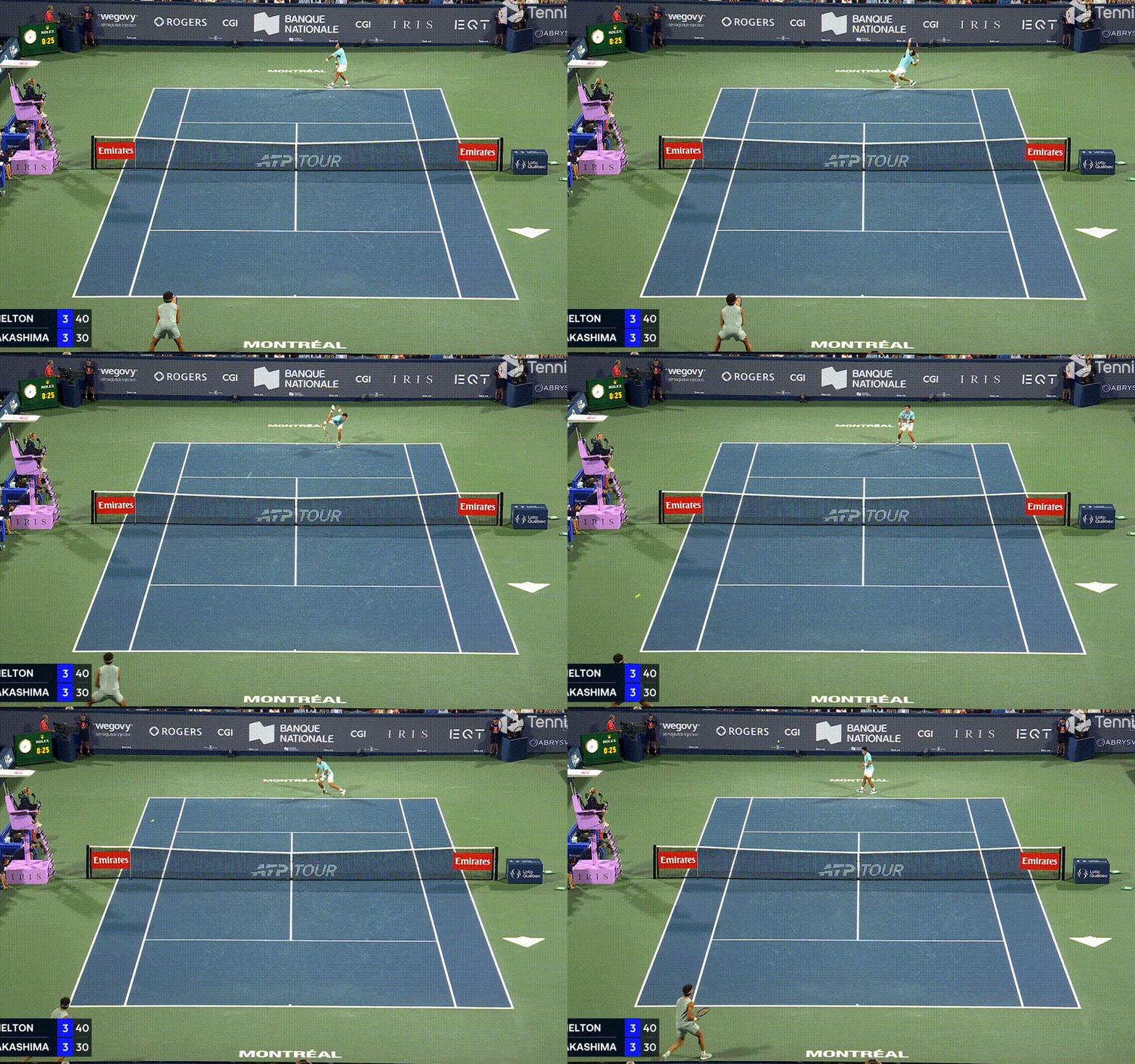
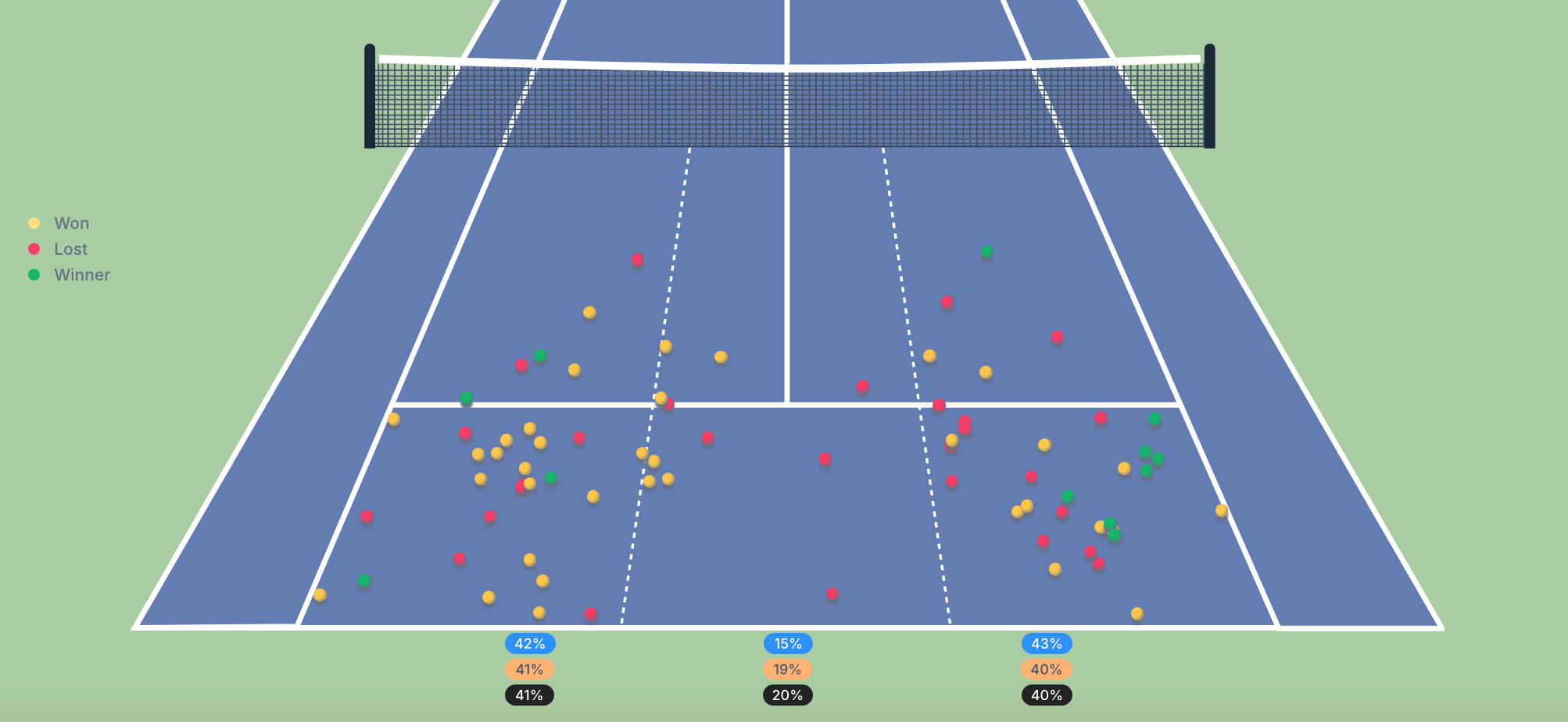
So the forehand was great in this match: 90%-in, at a speed and spin-rate closer to FAA/Fonseca, while keeping the ball to the outer-thirds at a higher clip than his average:
But he’s not a pure serve +1 guy, because much like last year, Shelton’s steal score also exploded, registering 34% across his six matches in Montreal:
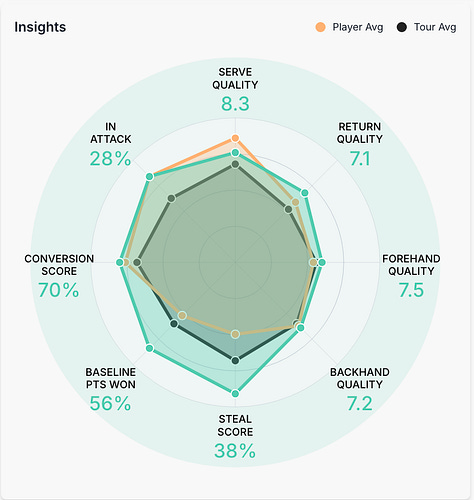
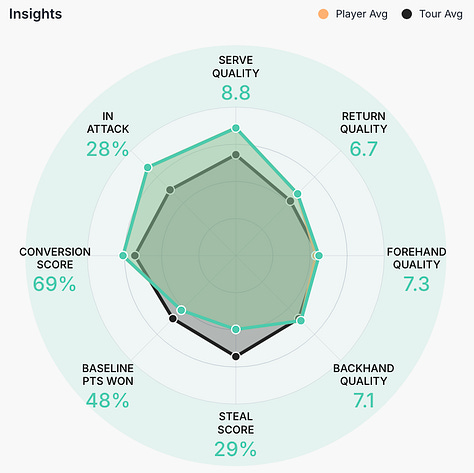
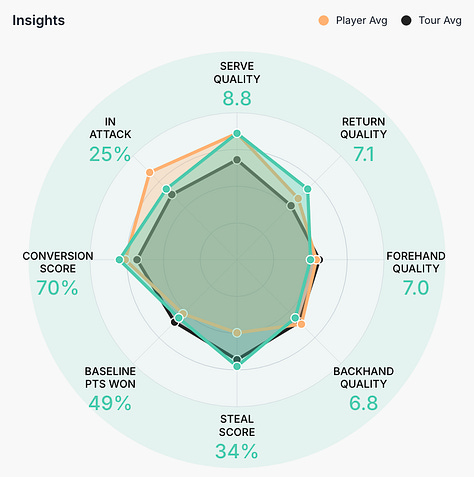
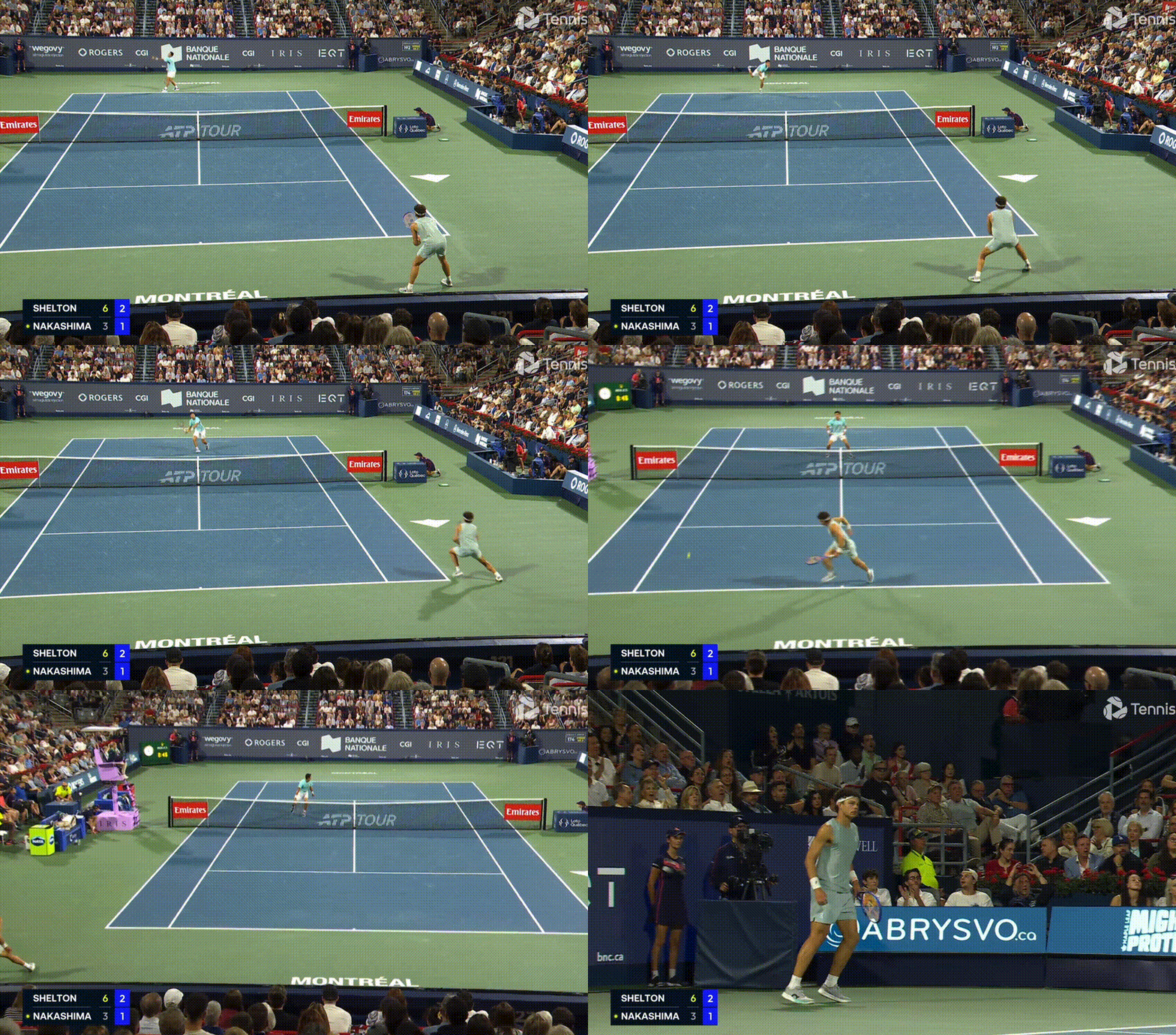
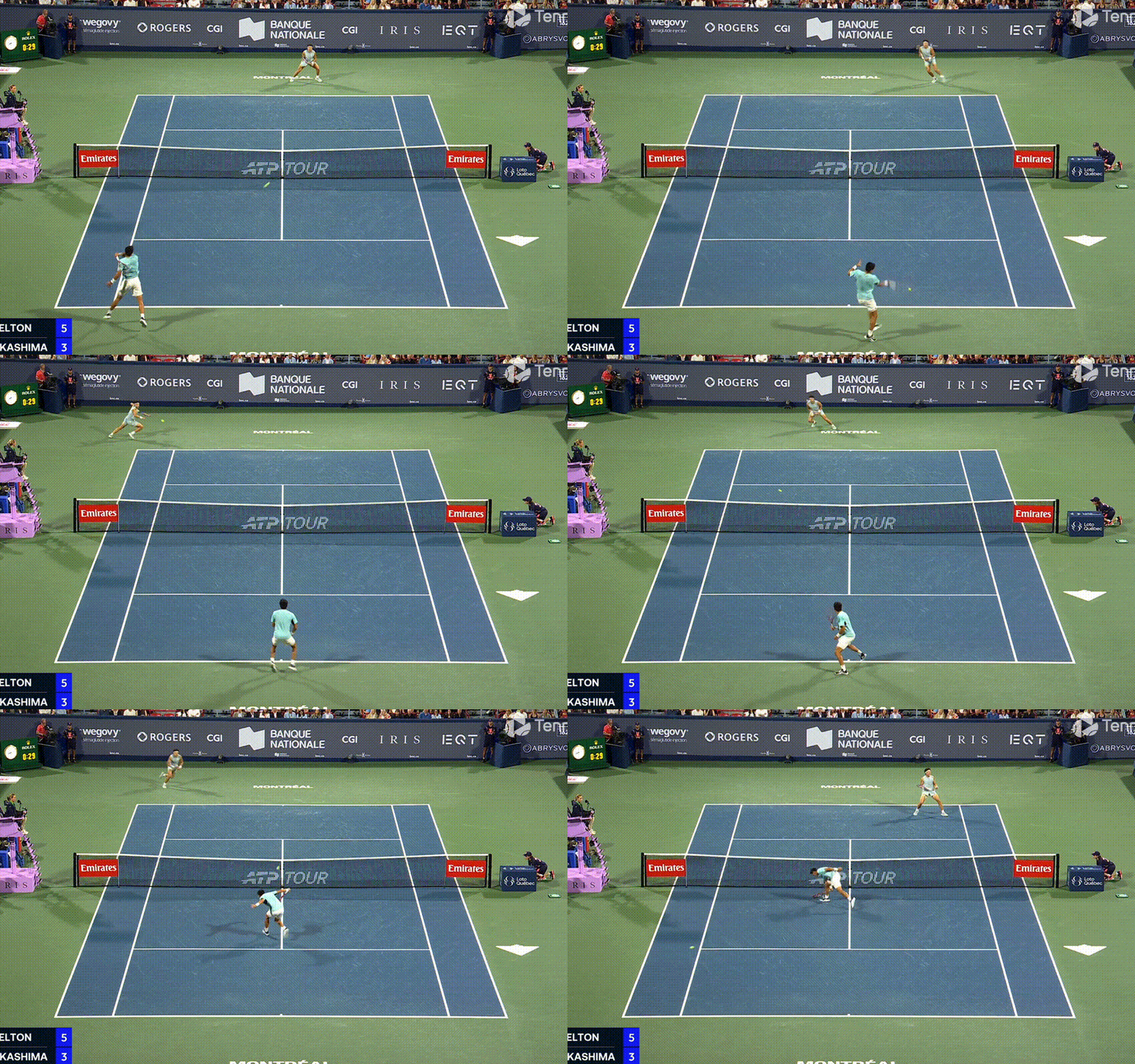
Last year in Toronto Shelton was scampering in deep greens like Walmart-Nadal, and in this final he had moments that were pretty good impressions, seen here carving a deft backhand slice low to force Nakashima to volley up, before threading the lasso-forehand on the pass:
Alongside all that blue-collar baseline work, Shelton is an outlier in another regard: compared to other top players, the American serves-and-volleys far more frequently behind his own delivery:
So perhaps the most enticing thing about Shelton’s game is the feel of “potential” that emanates from nearly all areas of the court. Take the serve, for example. Shelton has one of the most corkscrewed, jack-in-the-box, whiplashed motions that create unrivalled racquet head speed:
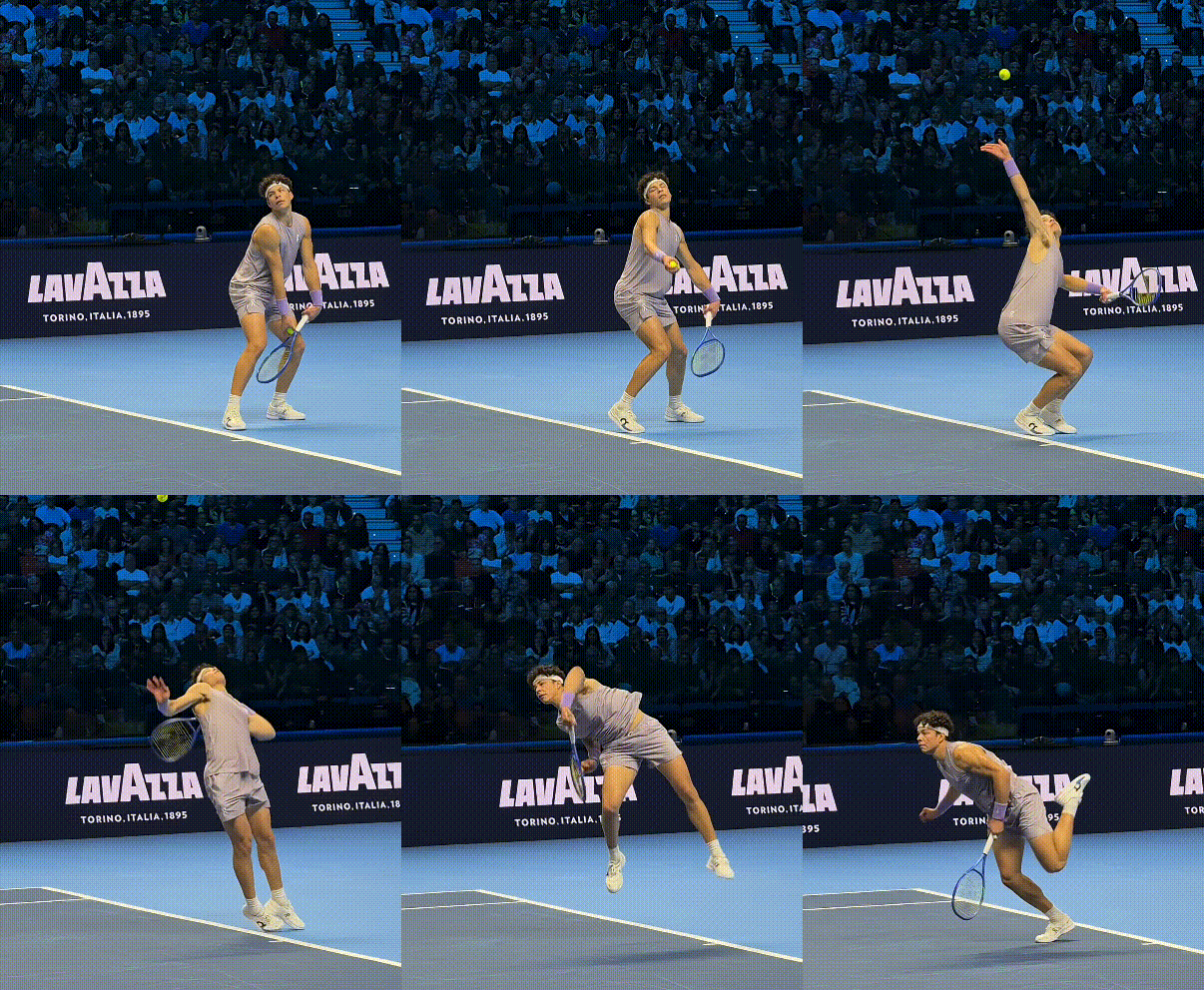
And we’ve seen him light up the radar gun (to the tune of 151 mph at its fastest). But what really separates Shelton’s serve from his peers is the nasty second-serve kicker:
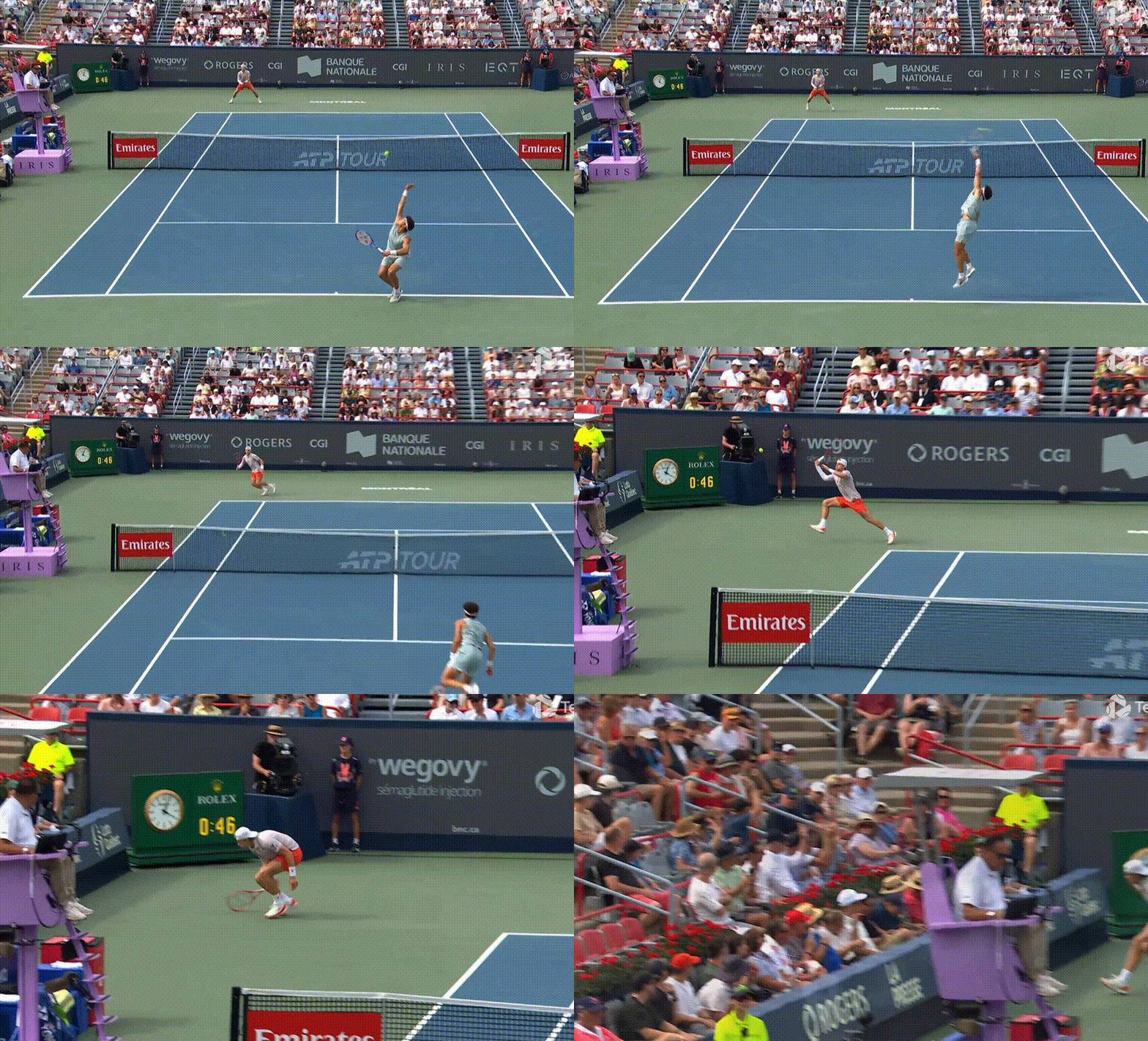
Staying side-on to the target is essential for producing this action, as it allows the racquet path to swing up and across the ball from inside-to-outside. Compare how well Shelton coils and stays side on during the service motion against someone like Mensik, who has better first-serve accuracy/aces/unreturned serve numbers than the American, but who hits a weaker, less kicking second delivery:
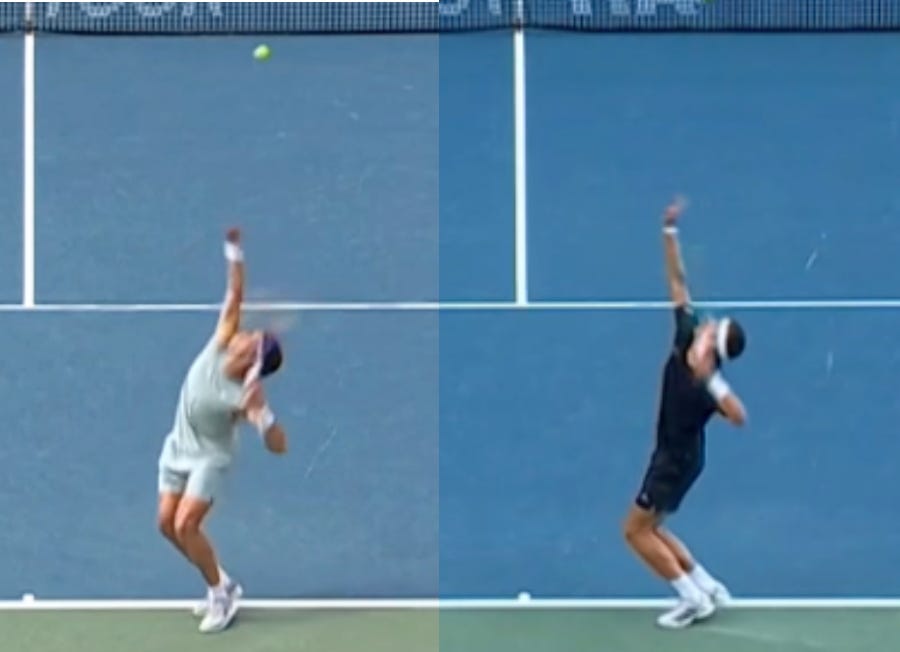
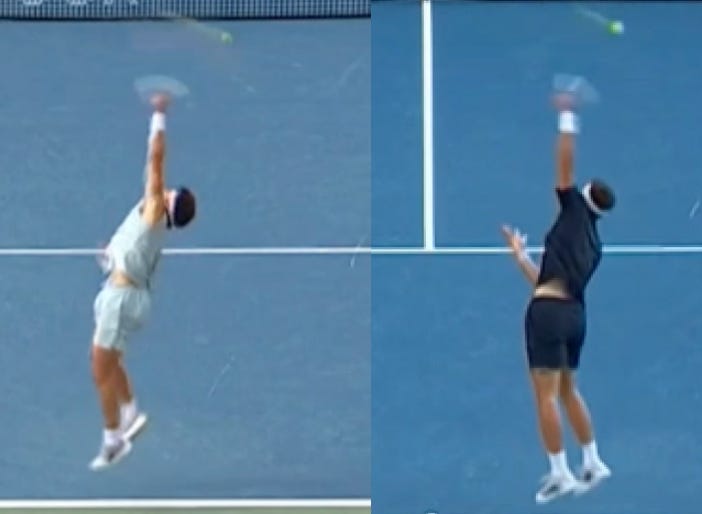
The kicker has almost gone out of fashion on hard courts in recent years, as players have crush’n-rushed these deliveries — especially off their compact two-handed backhands. But Shelton’s insane racquet speed and left-handed delivery means he is targeting forehands, often at their weakest; abbreviated return swings often lack the racquet head speed or two-handed stability to tame the Shelton kick. The second-set tiebreak alone featured numerous kickers that registered weak or unreturned balls from Nakashima’s forehand:
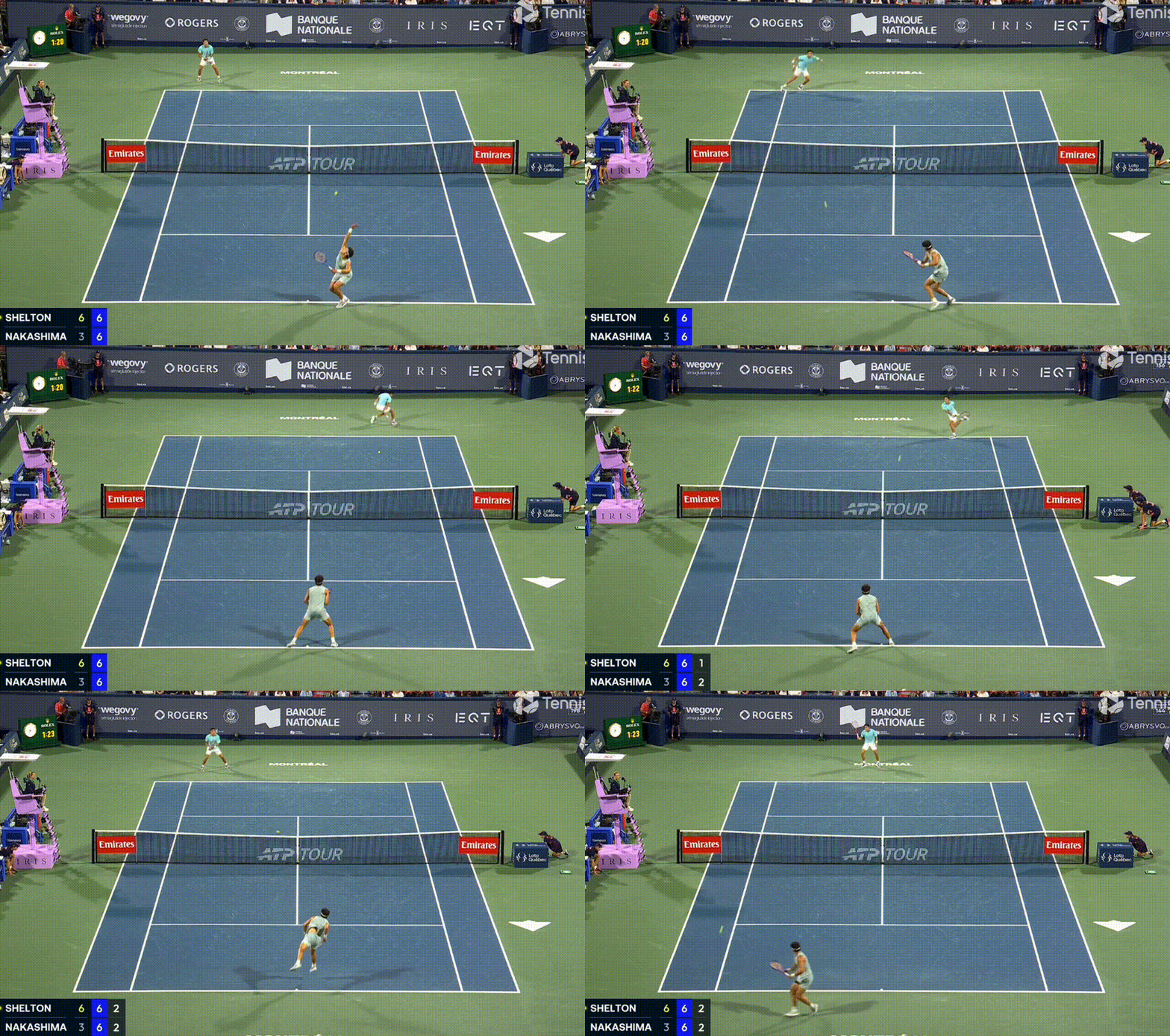
That last miss from Nakashima is often what will happen. The ball rises up and left from this view because the ball is rising with topspin faster than Nakashima’s racquet is; the more topspin coming in, the more backspin you will send back. I wrote about the physics of this interaction last year after the Rune vs Draper Indian Wells final.
To drive the point home, Lev Akabas provided a visual of second-serves unreturned from the top 32 ATP players:
And if we dig into the data, we can see that Shelton’s second-serve unreturned numbers are better for right-handed forehand return locations (deuce wide and Ad T). Poor Zizou Bergs should feel better seeing this:
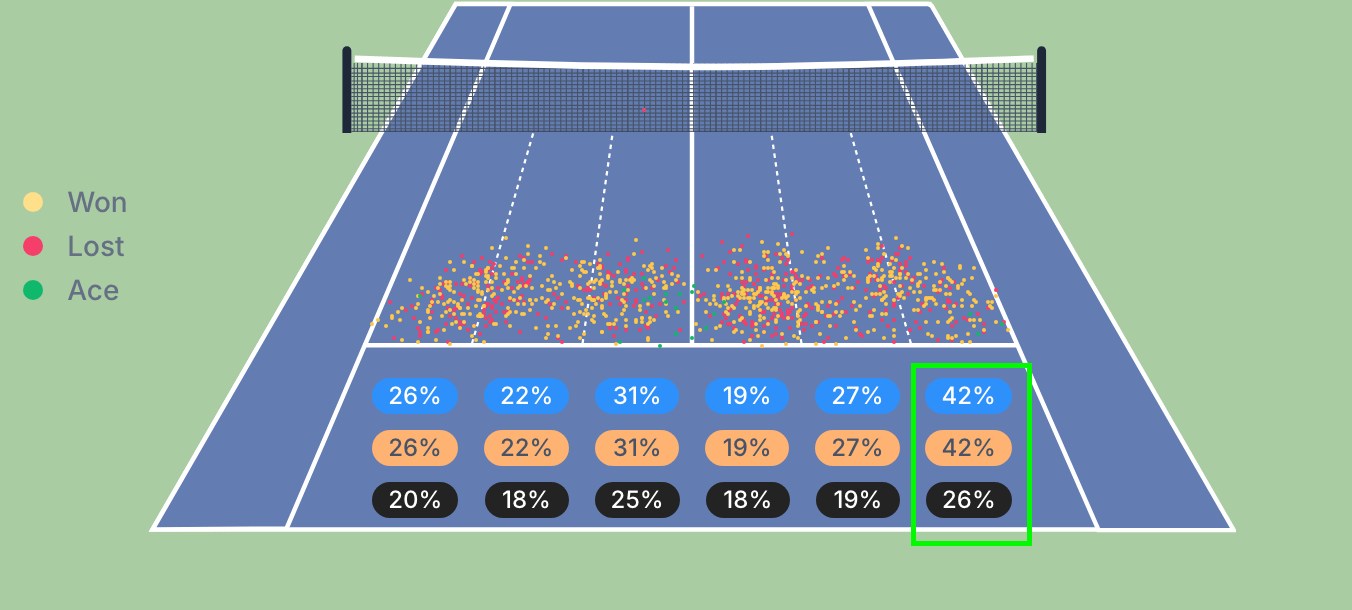
To counteract that serve you’d need to be a rangy 6’3” ginger-cyborg-slingshot with extended wrist forehand return mechanics that provide end-range racquet speed and a closed racquet face to tame a rising topspin ball and send it back low and hard, and there’s just no one right now who fits that descrip — oh wait:
Sinner’s reach and mechanics just mince that rising kick serve. Here’s the first four kick returns he faced against Shelton in their 2026 Australian Open quarterfinal earlier this year:
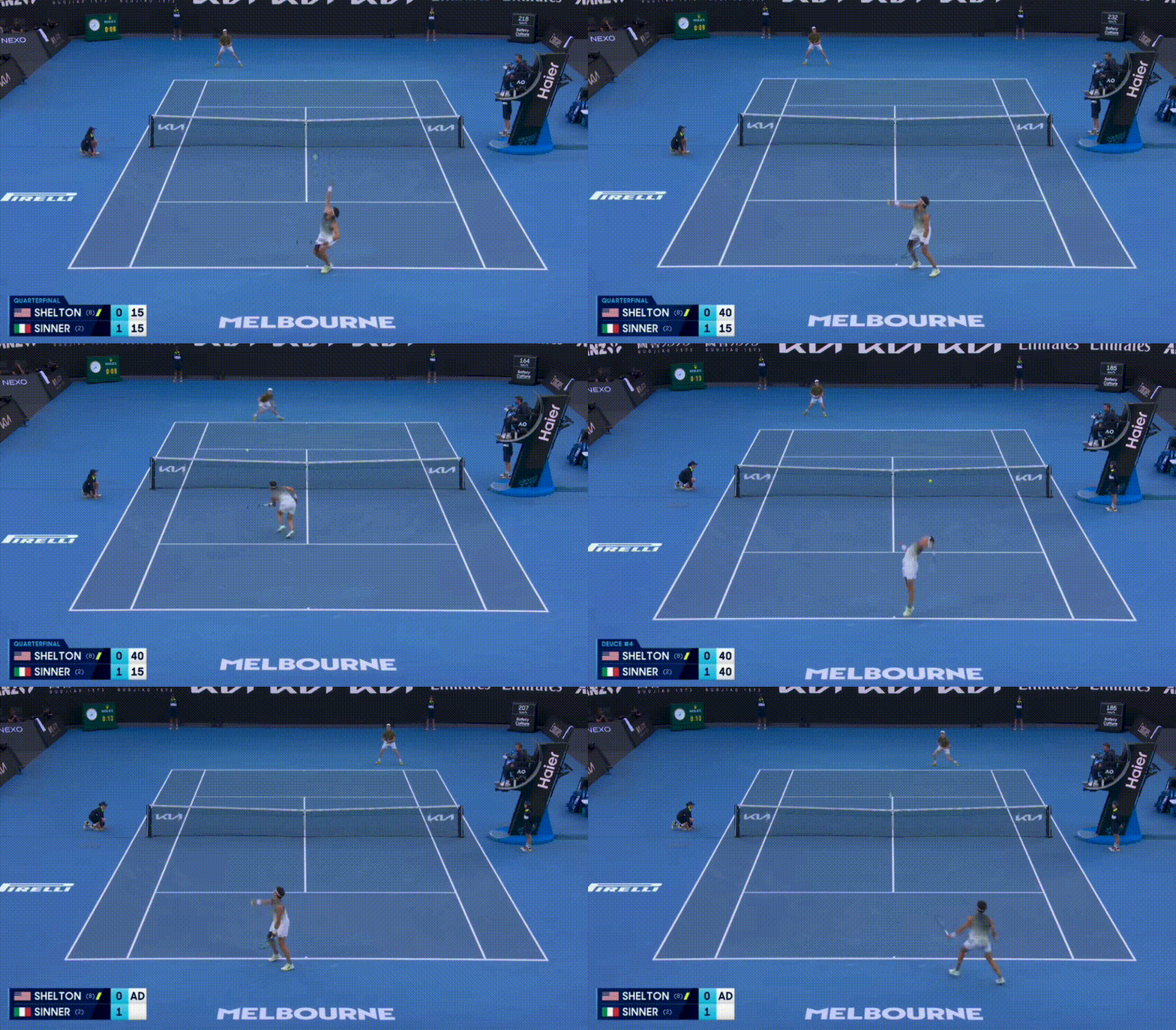
This is a major reason Shelton gets chewed up and spit out by Sinner. As a server he relies on freight train physics to simply overwhelm opponents, but Sinner has that Majin Buu quality to his game where the harder you go at him the better he is.
For a man who has now ascended Sincaraz-absent 1000s twice, the goals should be set higher. A Slam final, or at least something more competitive against Jannik Sinner.
In that spirit, perhaps a better question is: what should Ben Shelton’s M.O. be?
For one, it’s worth exploring the possibility of shelving the serve variation against the very best and just trying to hit aces. Hitting spots is the best way to ensure someone like Sinner doesn’t repeatedly jam your toes with his return, and he should take inspiration from the step-change in accuracy Sinner himself has achieved in the last 12 months.
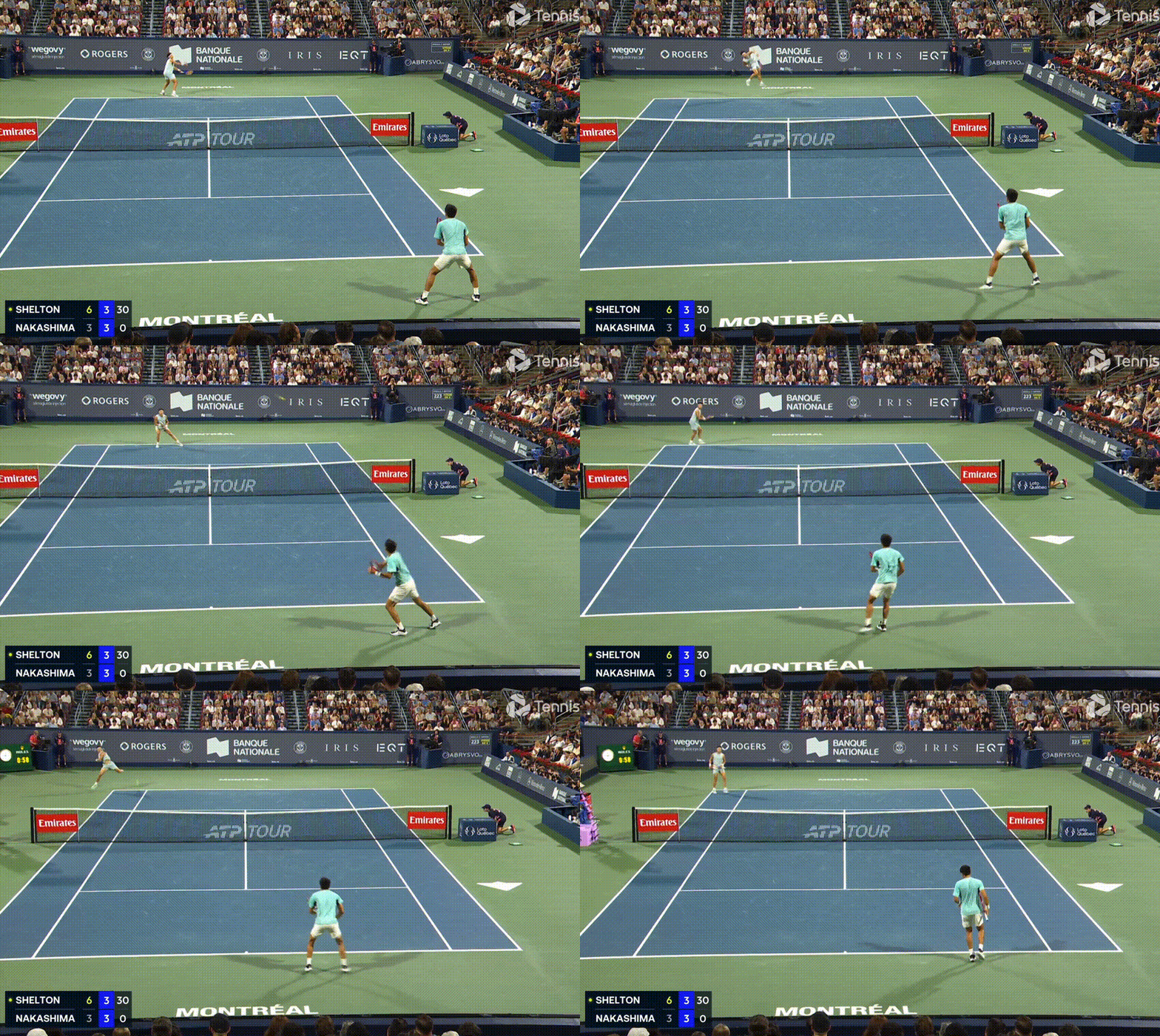
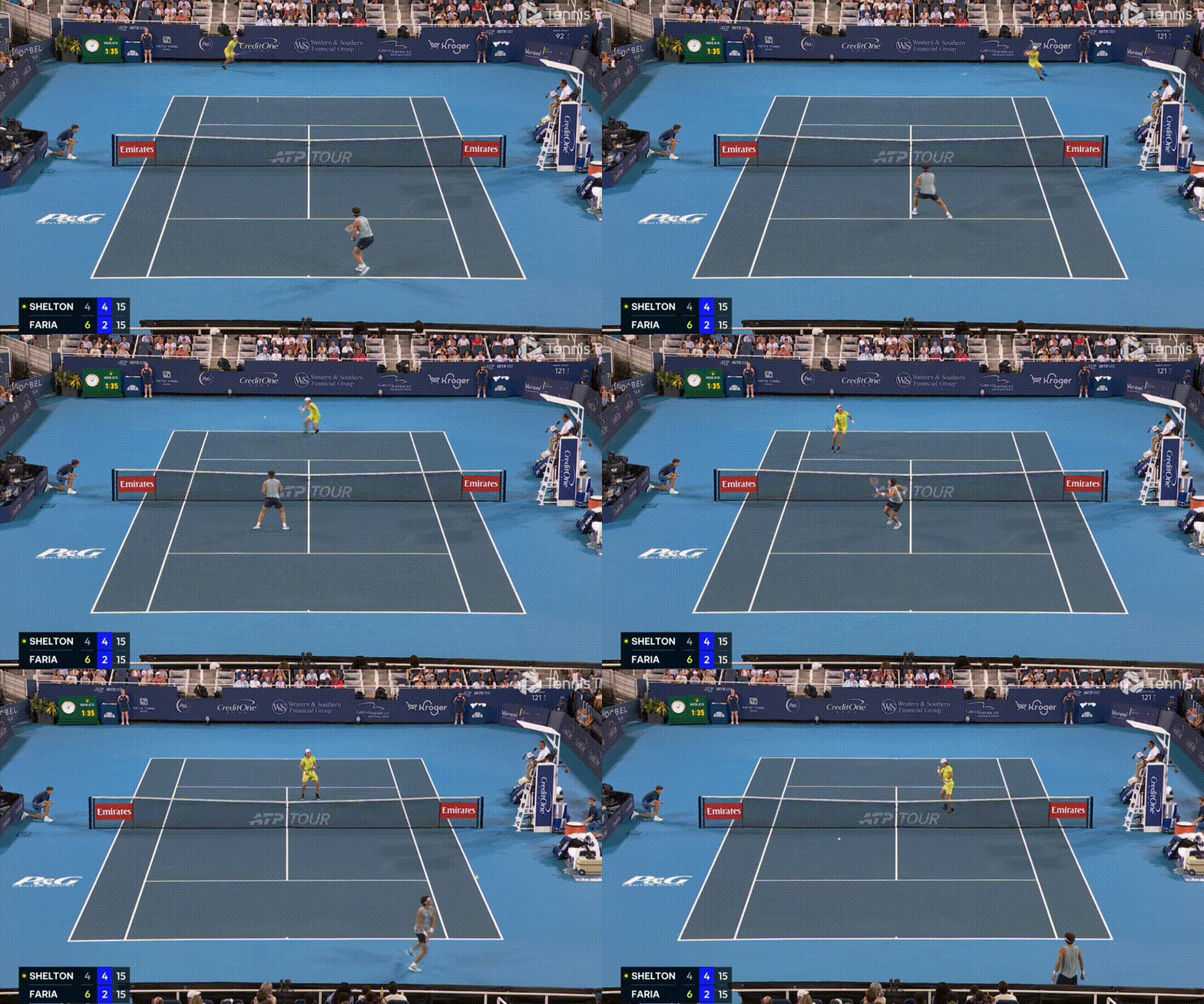
Second, I like Shelton coming forward. I’ve always felt his athleticism is more combine-like: raw, linear, explosive. Get forward and finish in one or two shots, and leave the 9+ steal scores for the little guys with malnourished shoulders. But his lack of feel on volleys is killing his conversions. Here’s a heavy-handed nothing-volley from the Montreal final:
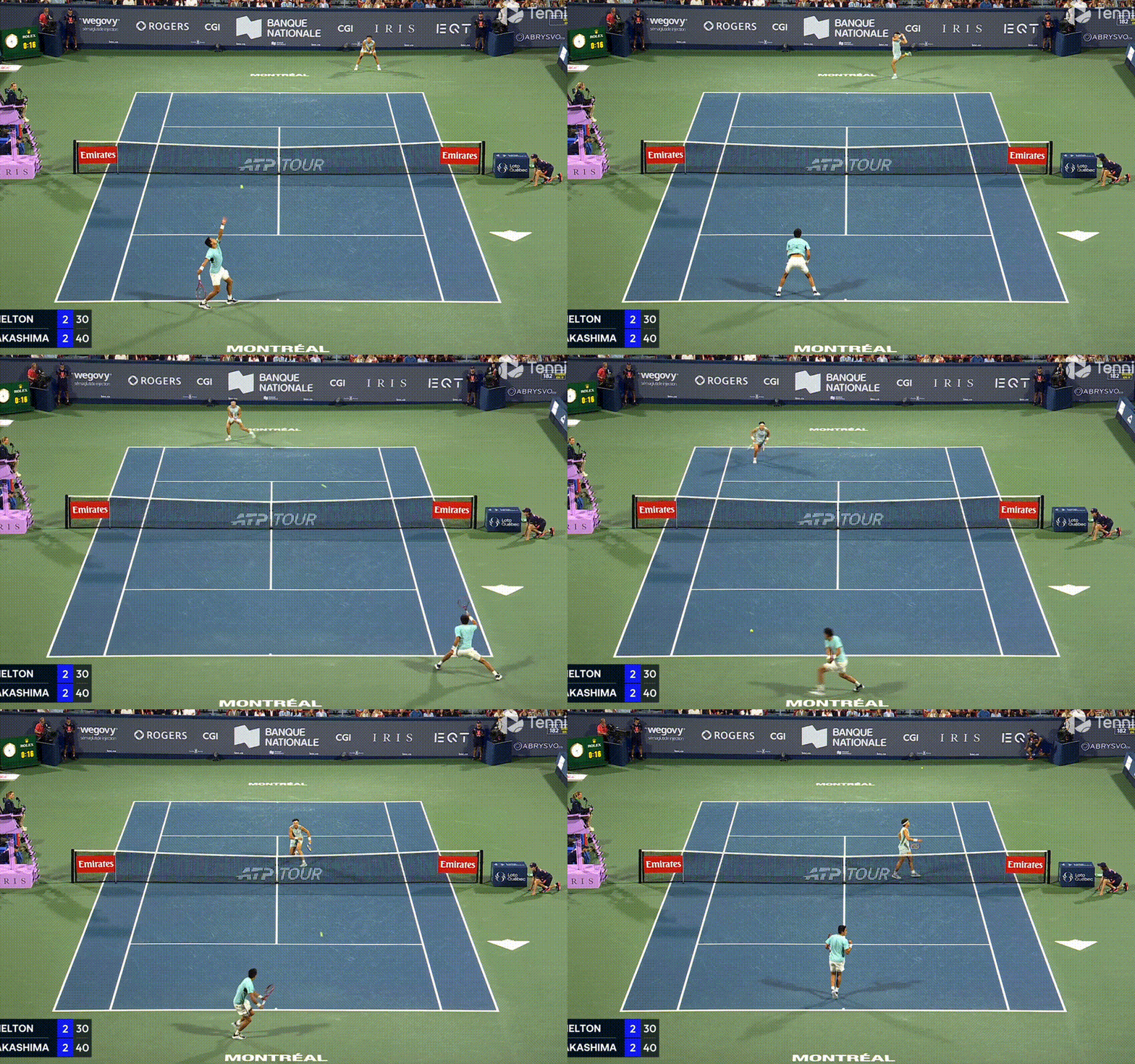
This half-volley looks like it was taken too far from the bounce:
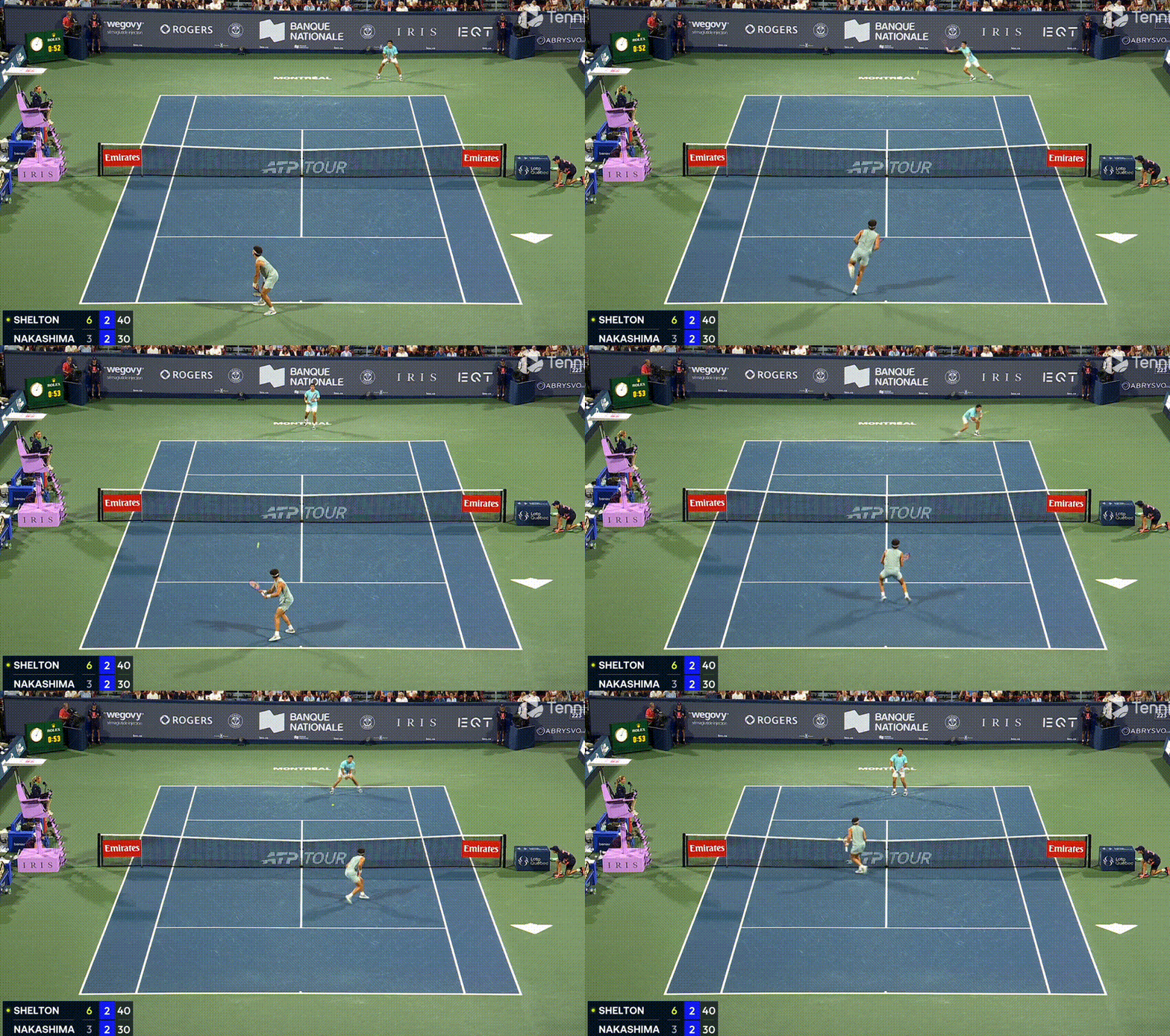
And here’s another from tonight’s loss in Cincy that contributed to getting broken back in the second set:
Lastly, there’s a backhand wrinkle with the footwork that I touched on last year, where Shelton often chooses to use step-over footwork instead of open-stanced ones that would enable faster recoveries:
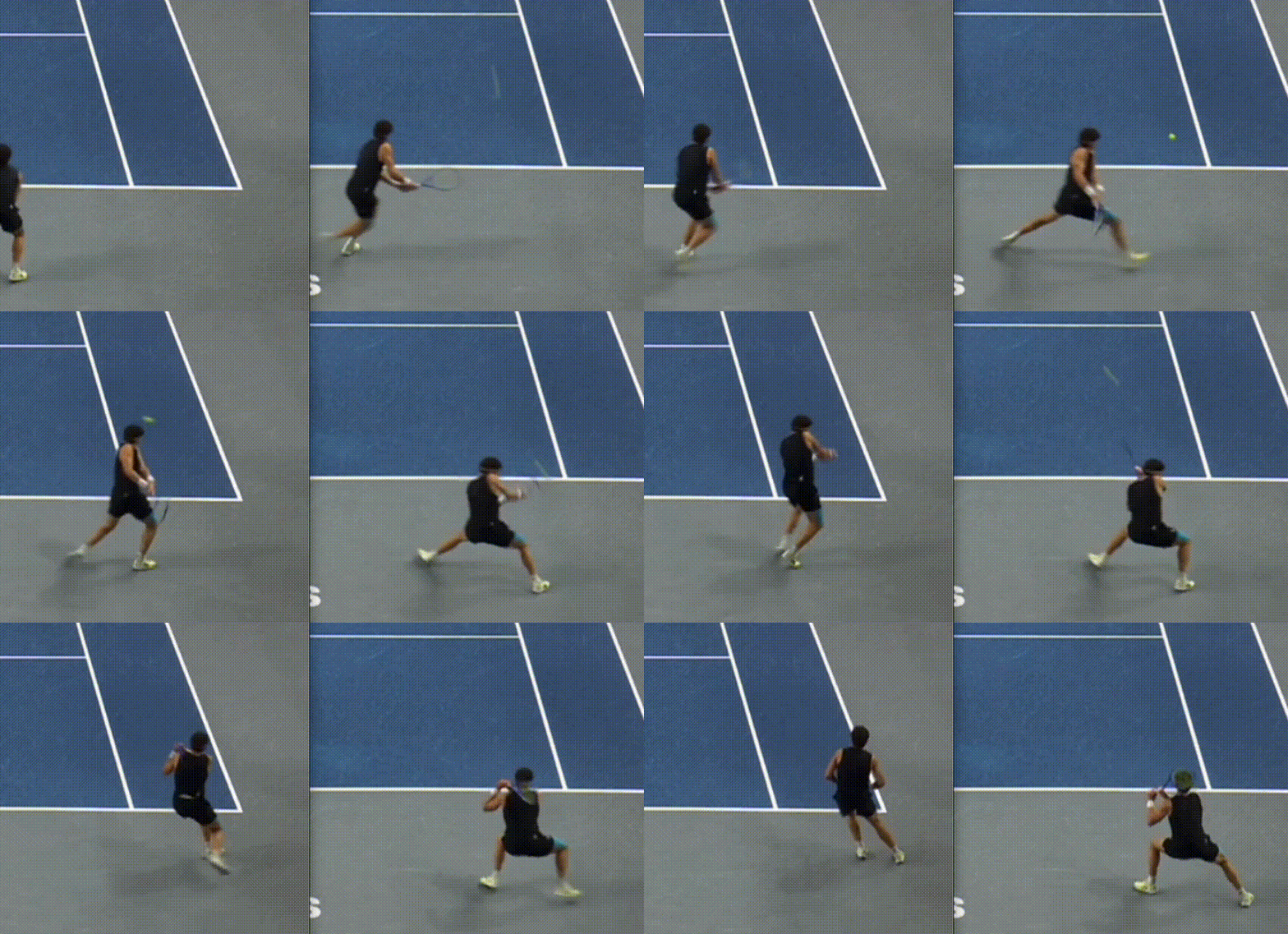
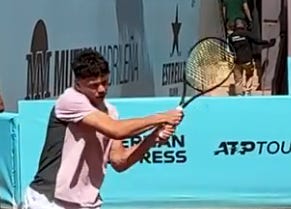
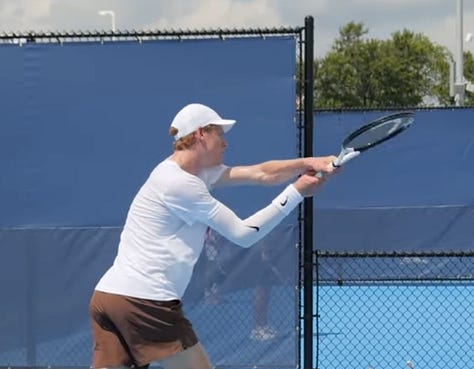
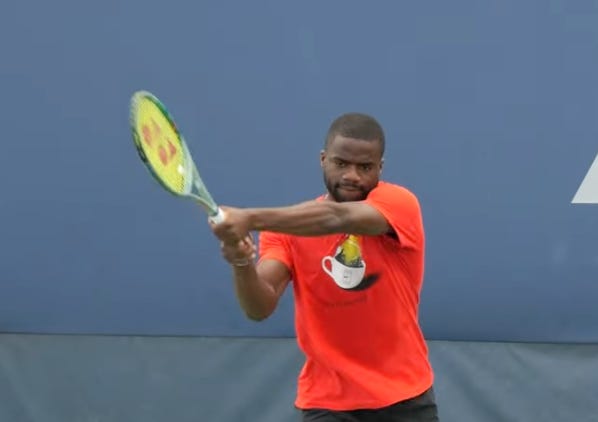
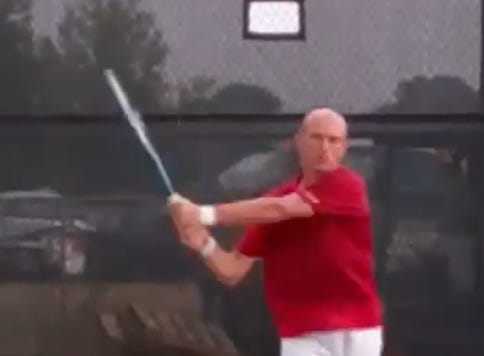
One possible reason for Shelton’s reliance on step-over footwork is due to how chicken-winged his stroke is: he always plays with a double-bend hitting arm structure for the whole swing, while also trying to brush the ball with spin. Most double-benders tend to be super flat pushers: Ferrer, Medvedev come to mind, or they double-bend at contact but often extend afterwards (Davydenko, Tiafoe). So perhaps he’s unconsciously trying to lengthen his swing by staying sideways for longer.
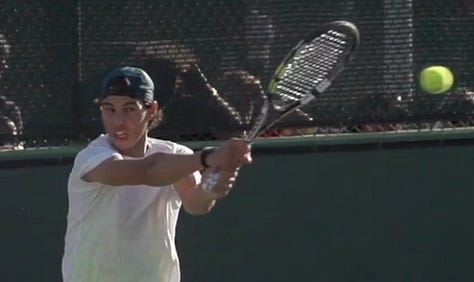
Anyway, all three of these are about getting more aggressive tactically or technically, because Shelton already is quite accomplished in a physical and mental sense; he’s a better performer than he is player. And it’s interesting because so much of his success in Canada against lower-ranked opponents has come about by mixing in so much defense and variation; he slices a lot, he mixes up the serve, he mixes up the return positions and strategies. Far from being a serve +1 guy, he’s kind of a second-serve +n guy, but if he wants to seriously trouble Sinner and Alcaraz, he probably needs to become a little more like the former.
That’s all I got. I’ll see you in the comments. HC.
No posts
Comments
Nothing yet. Say the first thing.
Sign in to join the conversation.