
This is another newsletter with the latest resources, concepts and links that made me reflect and learn this month. I’ve also shared some content from me on how we frame EDI workshops.
Hope you are having a great start to the year!

This research reframes polarisation as a psychological issue rather than a purely informational one. For workplace leaders, this offers an important lens. Many organisational responses focus on symptoms, when the deeper work lies in understanding threat, identity and belonging.
Written from lived experience, this article argues that adjustments alone are not enough. Emotional accessibility, understanding how neurodivergent colleagues experience stress, processing and identity, is what creates genuine psychological safety.
This is a helpful perspective for organisations going through workplace refurbishments or moved. Read it for some tips on rethinking how physical environments support wellbeing.
This article introduces microshifting: structured flexibility based on short, non-linear work blocks aligned to energy levels and personal responsibilities. With 65 percent of workers expressing interest, it signals a meaningful shift in how flexibility is understood.
A Swedish pharmaceutical chain is piloting “friendcare”, giving employees time and a stipend to spend on friendships. I think I would be more open-minded about this if it was more than just 15 minutes a week!
Access to qualified professionals, cultural competence and an understanding of EDI remain important factors in effective workplace wellbeing offerings, particularly given how experiences of stress and mental health vary across groups. This piece raises questions about boundaries, clarity of purpose and how technology is integrated without losing sight of the human expertise and trust that underpin meaningful wellbeing support..

Since I am back to posting consistently on LinkedIn, I wanted to share something a bit different here.
POV: You get an email about an upcoming EDI workshop being provided at your workplace.

Be honest - what are you actually thinking?
I know that some people feel these sessions are not relevant because they come from a marginalised group. Others assume they already know the content because they have had training before. Some organisations approach EDI workshops as a compliance exercise or a one way transfer of information.
At least at HTVB, we know that the time spent together in these workshops is a lot more than what most expect. This is what led me to create this content to frame our sessions.
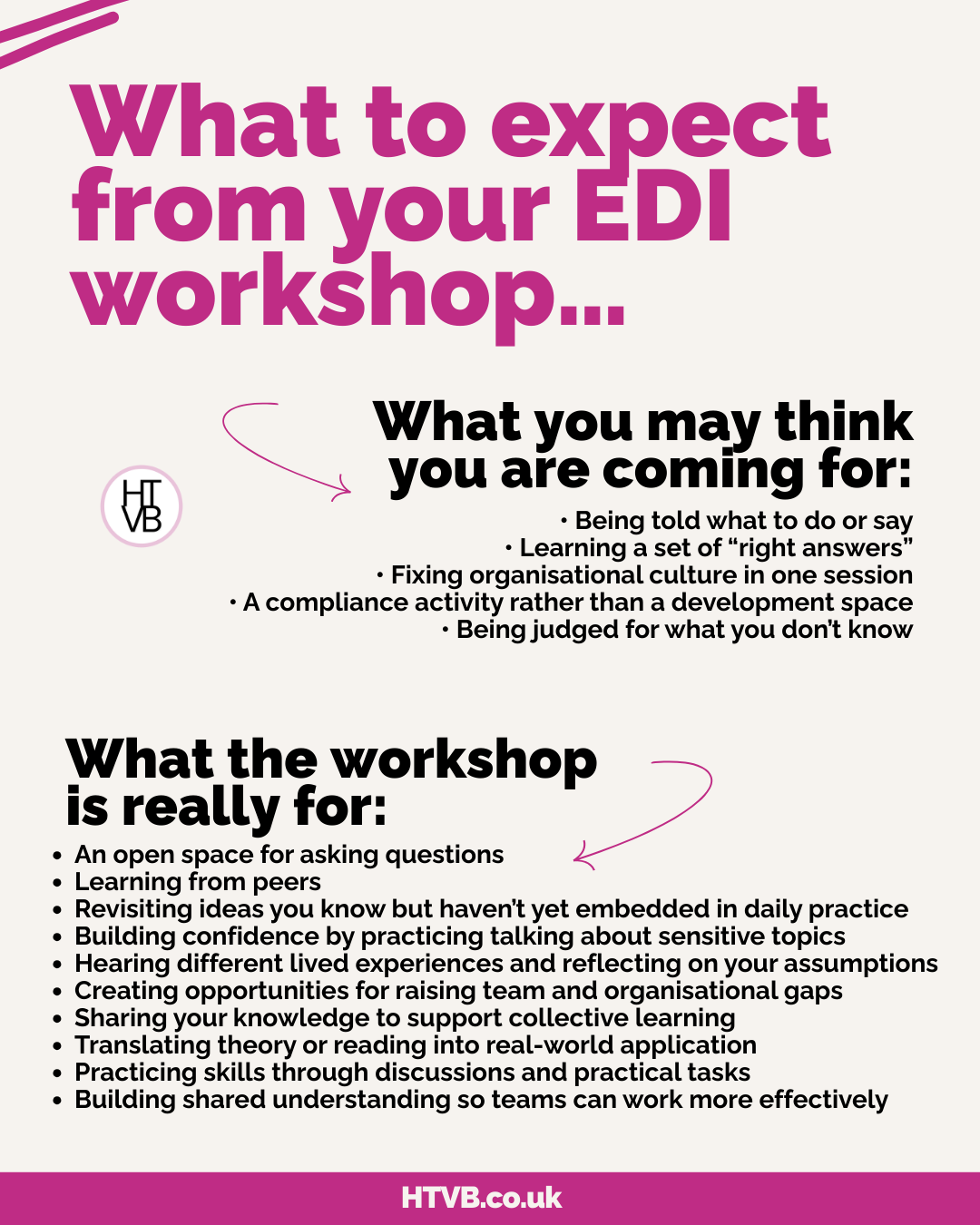
Please don’t share without permission 💖


Bragitude is the practice of openly recognising and promoting the contributions of others. Organisational psychologists also refer to this as “dual promotion”, where elevating someone else’s work can also increase the credibility of the person doing the recognising.
In workplaces where visibility is uneven, bragitude can help redistribute attention and interrupt biases. It’s a small behaviour that can have a meaningful impact on inclusion and team dynamics!
I personally love this. It can be hard to brag about myself but I love doing it for others.


This UNICEF guide supports managers, People & Culture professionals and hiring teams to create environments where neurodivergent colleagues are understood and supported. Available in multiple languages, it challenges the idea of “fixing” individuals, instead focusing on reducing stigma and addressing systemic barriers.
This report from Equimundo and Beyond Equality explores seven key areas including gender attitudes and masculinity, social connection, mental health and wellbeing, work and economic security, and online behaviour.
I attended the launch where much of the discussion focused on what these findings mean for workplaces, particularly in relation to wellbeing, connection and how organisations engage men in healthier, more inclusive ways.

See if you can watch this without dancing!


Comments
Nothing yet. Say the first thing.
Sign in to join the conversation.