
There’s an old line about venture: show me your coinvestors and I’ll tell you what you believe.
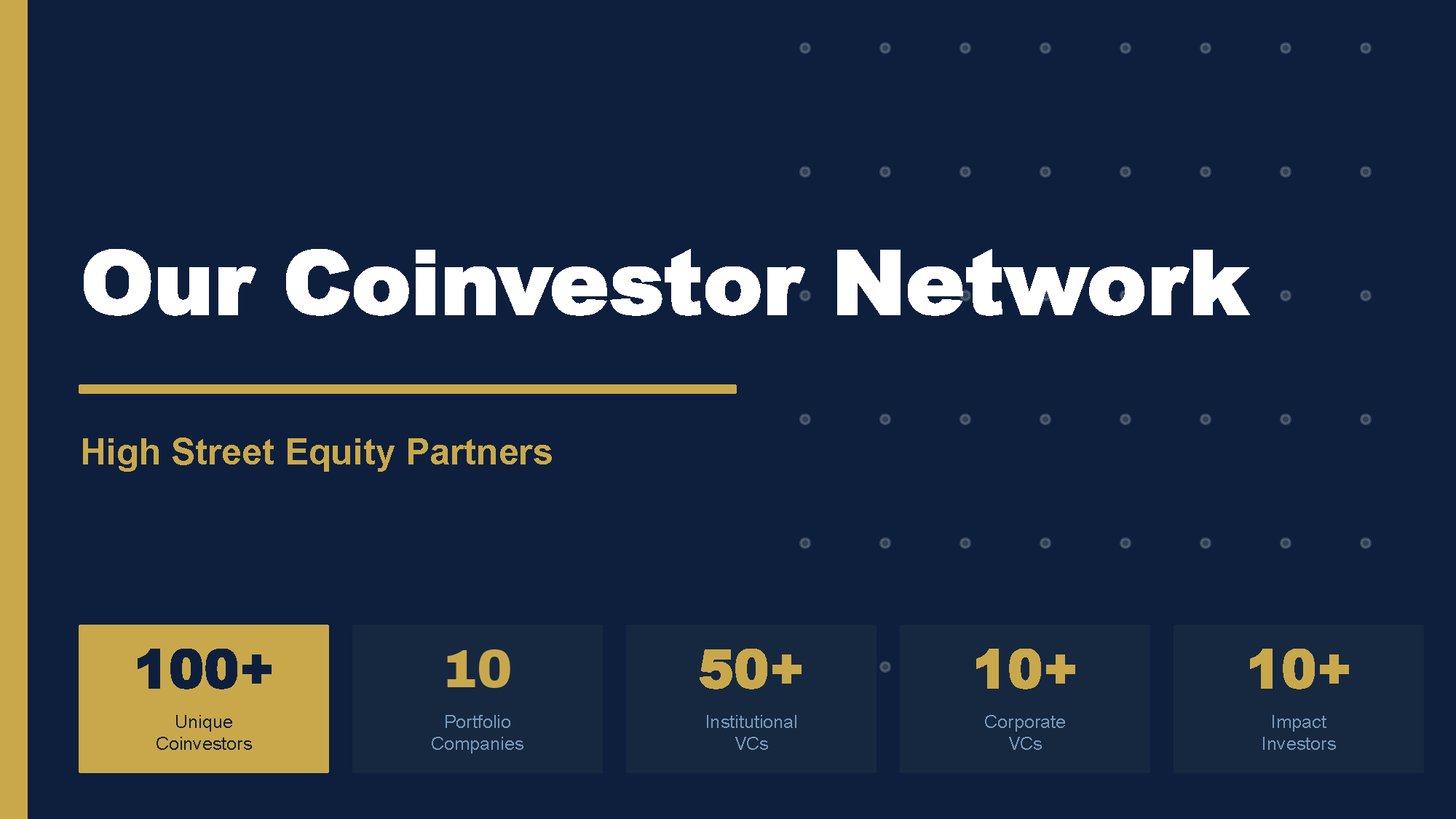
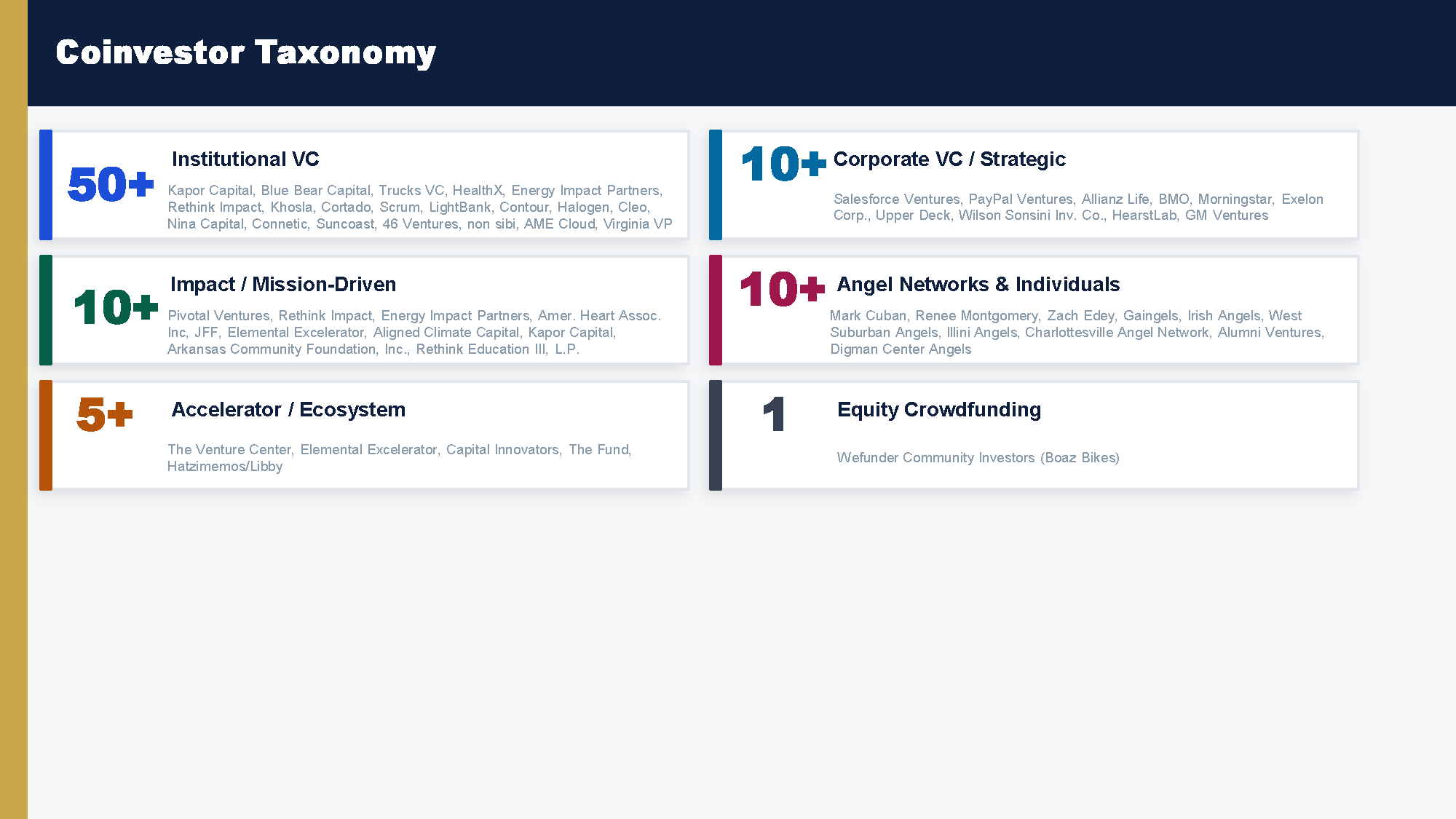
We’ve been sitting with our own coinvestor map lately — the full list of firms, funds, angels, and strategics who’ve written checks alongside us across the portfolio — and it turns out to be one of the more honest artifacts we have. Not a pitch. Not a thesis deck. Just a record of who else looked at the same founders we did and said yes.
A few things jumped out.
The best founders really are everywhere — and so is the smart money.
We’ve said for a while that geography isn’t destiny, that the highest-upside companies aren’t clustered in two zip codes. It’s easy to say. It’s more convincing when you look at who’s actually on the cap tables next to us.
The map runs from coastal institutional names to heartland and Arkansas-ecosystem funds, from specialist healthcare investors to climate accelerators, from a former NBA owner to state-backed venture programs. These aren’t investors slumming it outside their comfort zone. They’re sophisticated capital following founders to wherever the founders happen to be building. When a Chicago consumer fund, a Notre Dame angel network, and a sports-licensing strategic all land on the same collegiate-economy company, that’s not luck. That’s a signal that the opportunity was legible to a lot of serious people at once.
Coinvestors are a portfolio’s second balance sheet.
Capital is the obvious thing a coinvestor brings. It’s rarely the most valuable thing.
Look at the pattern by category and you see what each syndicate is really for. A digital-health founder surrounded by specialist healthcare VCs and a mission-driven strategic isn’t just funded — they’re plugged into clinical networks, regulatory instinct, and distribution they couldn’t buy. A climate-transition company with an accelerator, an impact fund, and a utility-affiliated strategic on board has a path into the exact institutions it needs as customers. The syndicate is the go-to-market, if you assemble it on purpose.
That’s the part we think about hardest when we invite people into a round. We’re not filling an allocation. We’re building a founder’s second balance sheet — the one that doesn’t show up in the wire.
A good syndicate is a portfolio of perspectives, not a monolith.
The thing we’re proudest of in the map is how little it rhymes with itself. Institutional funds sit next to angel networks. Corporate strategics sit next to equity-crowdfunding communities. Impact-first capital sits next to growth-stage generalists.
That mix is deliberate. Homogeneous syndicates tend to agree with each other — which feels great until the company hits a decision where consensus is exactly the wrong answer. A founder is better served by a table where a payments strategist, a gender-lens impact investor, and a seed generalist would each stress-test the same plan differently. Productive disagreement is a feature. We try to underwrite for it.
Why we’re sharing any of this.
Partly because it’s a useful mirror for us. A coinvestor map is one of the few documents in venture that can’t be spun — either serious people showed up next to you, repeatedly, or they didn’t.
But mostly because it’s the cleanest evidence we have for the thing we actually believe: that conviction travels. When you back founders on their merits rather than their zip code, you end up in good company — literally. The map is just the receipt.
We invest alongside partners who share that conviction. If you’re building something that doesn’t fit the map anyone drew for you, that’s usually where we want to be.
High Street Equity Partners invests in, supports, and scales high-growth technology companies across Work, Health, and Emerging Tech — guided by the belief that the best founders are everywhere.
Comments
Nothing yet. Say the first thing.
Sign in to join the conversation.