
Now that I know how to do some computational chemistry, my next target is global warming. Namely, an enzyme in cow guts that makes methane. I’m going to look for a good inhibitor using a similar pipeline as the one I used for this project.
This is confirmation that I can sit in my bathrobe with a nice fat support cat on my lap and do—hopefully—helpful chemistry on my computer from home. A dream come true. No lab materials were wasted in this study.
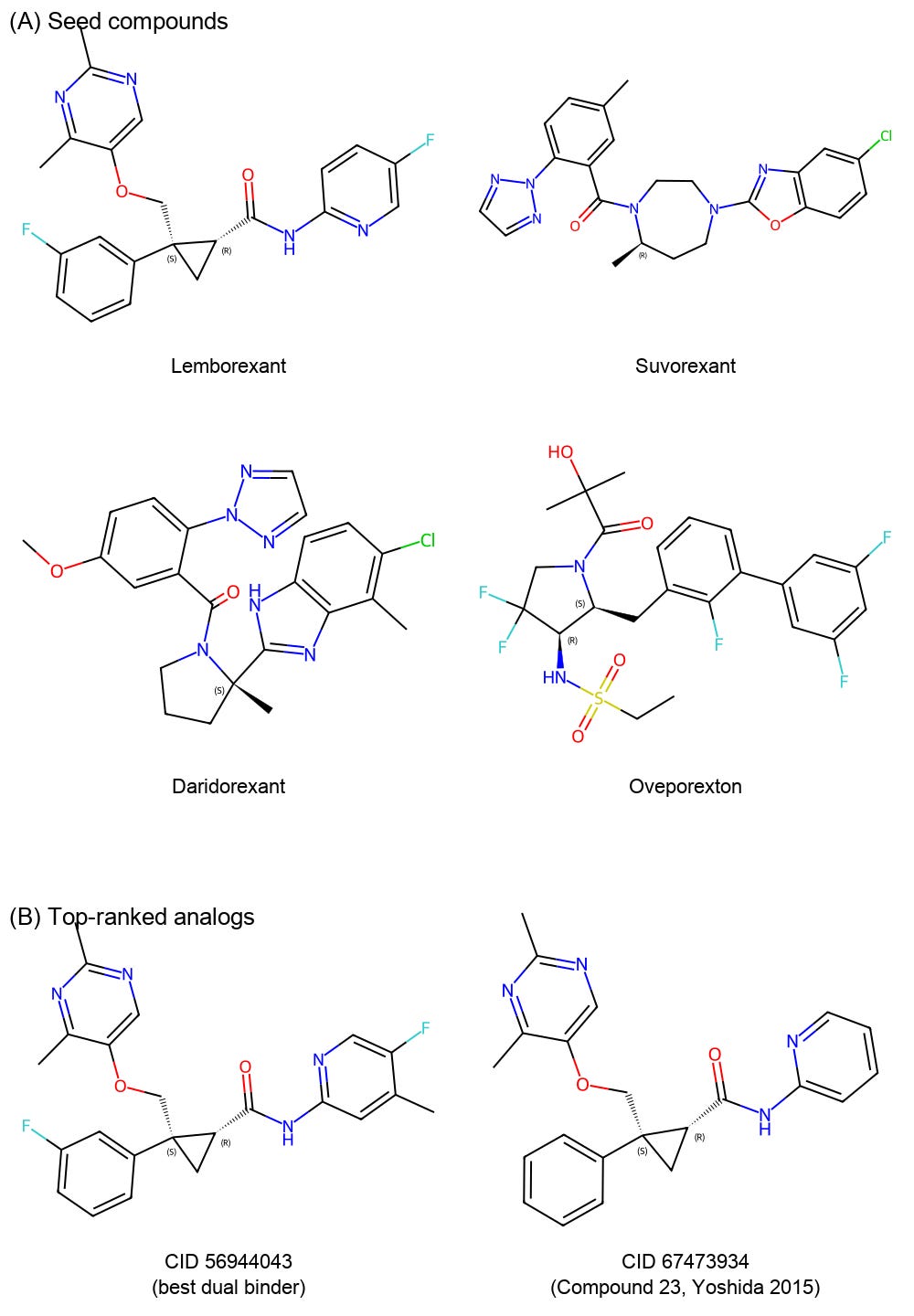
For this study, I was motivated to explore newer insomnia medications. I screened 80 compounds that are similar in structure to those that act on the brain’s orexin receptors, a system that governs sleep and wakefulness. I was pleased to get confirmation that some of my best candidates had already gained some interest in the literature.
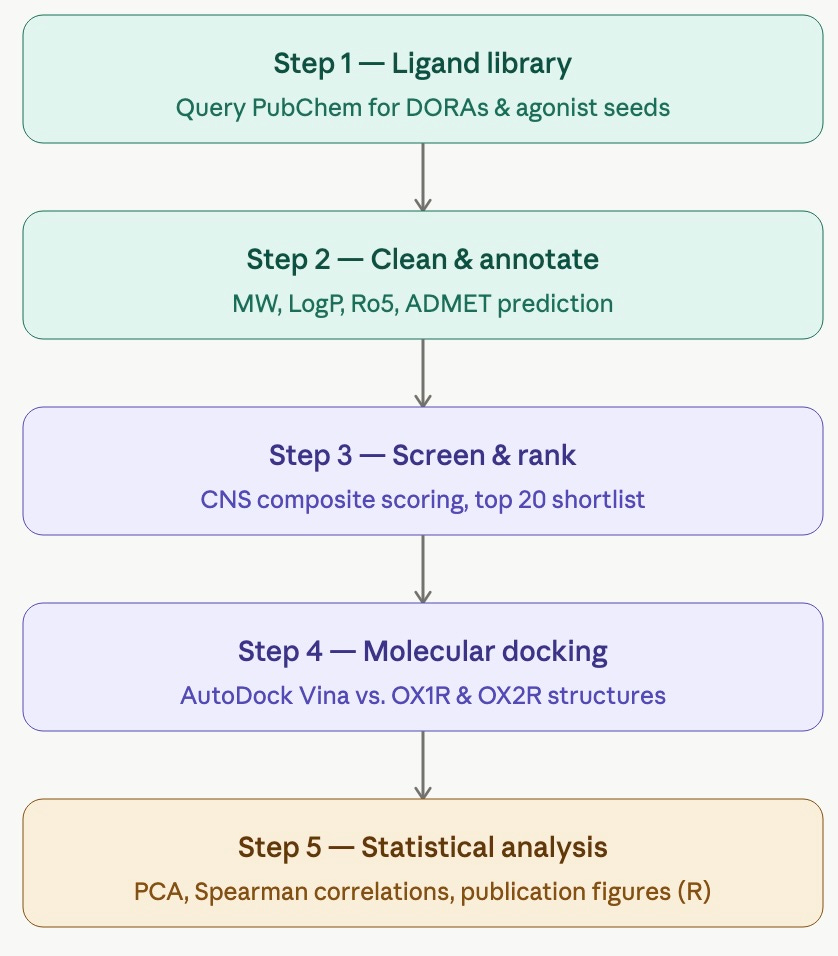
I hope this means that my computational pipeline is a good one. Here’s a link to my pipeline.
If I could make any changes, I would use a virtual receptor docking system that is more flexible. However, the scope of my study was for a class project, which didn’t allow for that sort of broader exploration.
Why did I chose to study the orexin system?
I hate insomnia drugs. I worry that many increase the risk of dementia. (There’s a terrifying wakeup-call study that shows that ambien (zolpidem) shuts off the glymphatic system in mice at least—that’s the brain’s waste clearance system.) I want to come up with safer alternatives. My mom, like many people with dementia, suffered terrible insomnia and for a while took drugs that worked through similar (GABAergic) mechanisms. I am beyond motivated to tackle this problem.
The orexin system may not be the answer to this problem.
But this is, at least, information that might help find a better answer, somewhere.
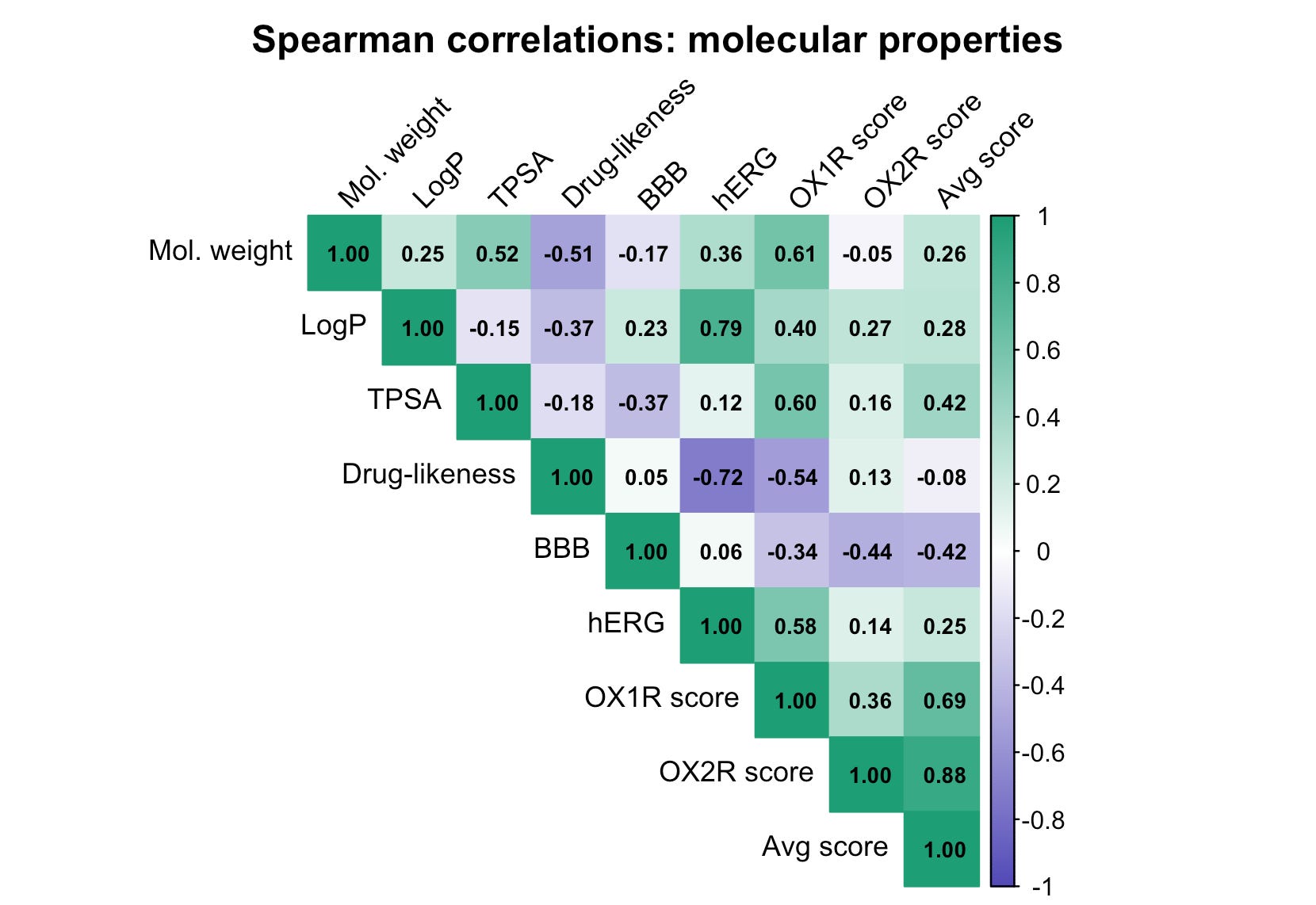
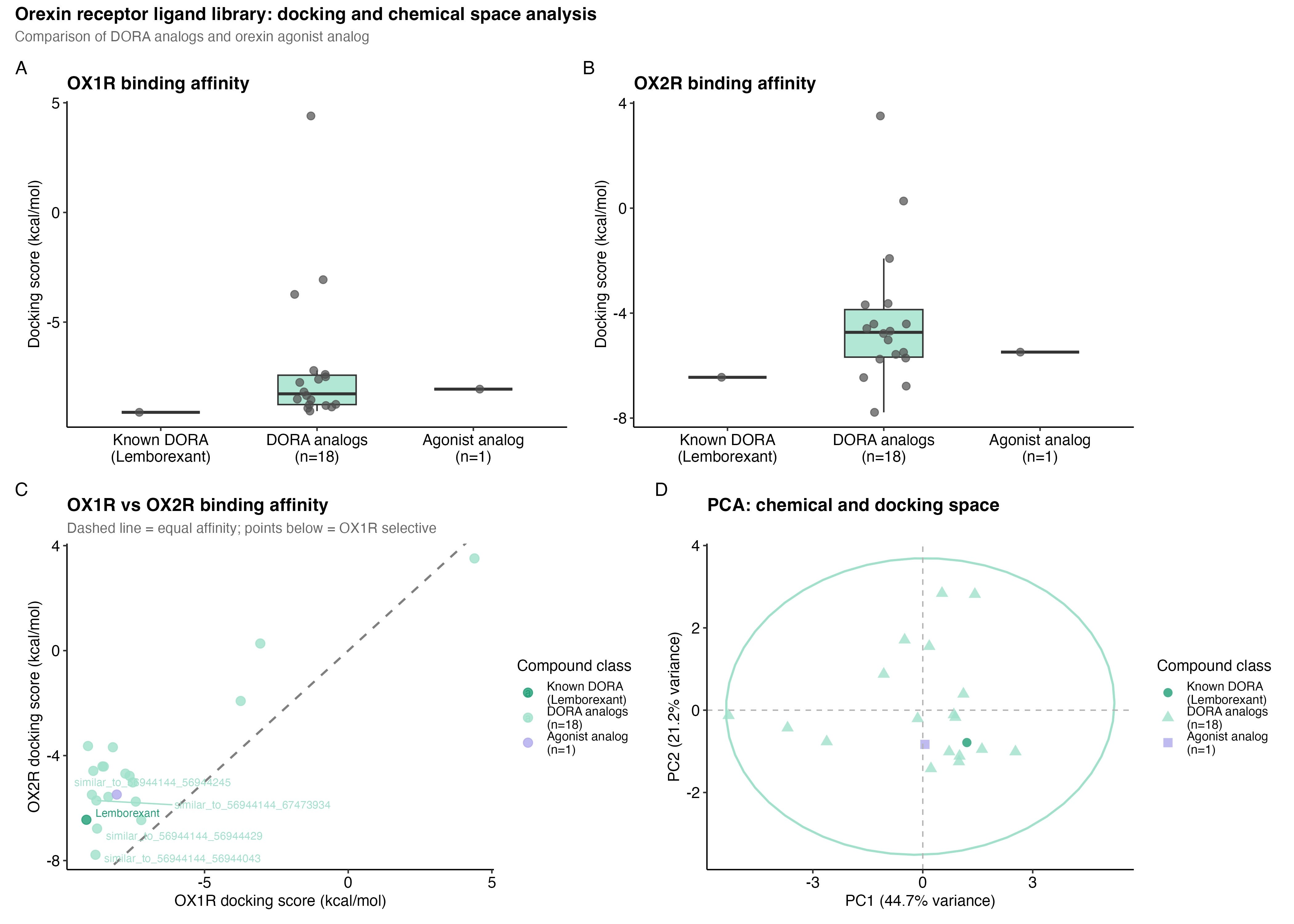
Here are some figures from my paper; the first gives you an idea of the steps involved.
Comments
Nothing yet. Say the first thing.
Sign in to join the conversation.