
“I can’t confuse expertise and experience with the moment of learning and unlearning.” — Brian Solis
My next guest on How We Future is Brian Solis, a futurist, innovator and best-selling author who has spent decades in Silicon Valley observing trends and helping leaders make sense of what’s coming. He’s written nine books, including Mindshift: Transform Leadership, Drive Innovation and Reshape the Future, and his newest, Infinite: How Visionary Leaders Transform Today’s Businesses into AI-Forward Companies.
Within the first two minutes of our conversation, Brian and I had invented a new metric: the smile metric.
How many smiles might you elicit in a day — not in a performative way, but through meaningful connection? Brian is someone who measures his days this way. I try to do the same.
For Brian, one of the most open and curious learners I know, the discipline of “unlearning” is something he still intentionally practices. He even keeps a copy of his own book, Mindshift, on his desk — highlighted and annotated — to remind himself to stay open.
Brian defines mindshift as “an opening of your mind and heart. Your ability to see something new or differently, to learn and unlearn, to react creatively in times of change.” Who doesn’t want that?
MindShift is an ambitious book that reads like a love note to his readers — there’s so much heart and care in every chapter, a steady undercurrent of I believe in you.
Here are just a few nuggets from our conversation:
How do we put ourselves into a positive stance to take in the future? Brian suggests we need to slow down – a counter intuitive instinct amid the rapid pace of change.
No one teaches leaders to daydream, take long walks, or protect time for reflection. But Brian makes the case that without pausing, “you’re only going to be able to make yesterday better tomorrow. You’re not going to be able to reimagine what tomorrow could be.”
It reminded me of my Season 3 conversation with Bob Sutton about the power of savoring — of slowing down long enough to actually take in what’s in front of you.
His book provides a six step guide with detailed suggestions for moving through mind set shifts to action. Each phase has its own chapter and set of suggested practices. And, conveniently, they rhyme! In order: Receive, Perceive, Weave, Conceive, Believe, and then Achieve.
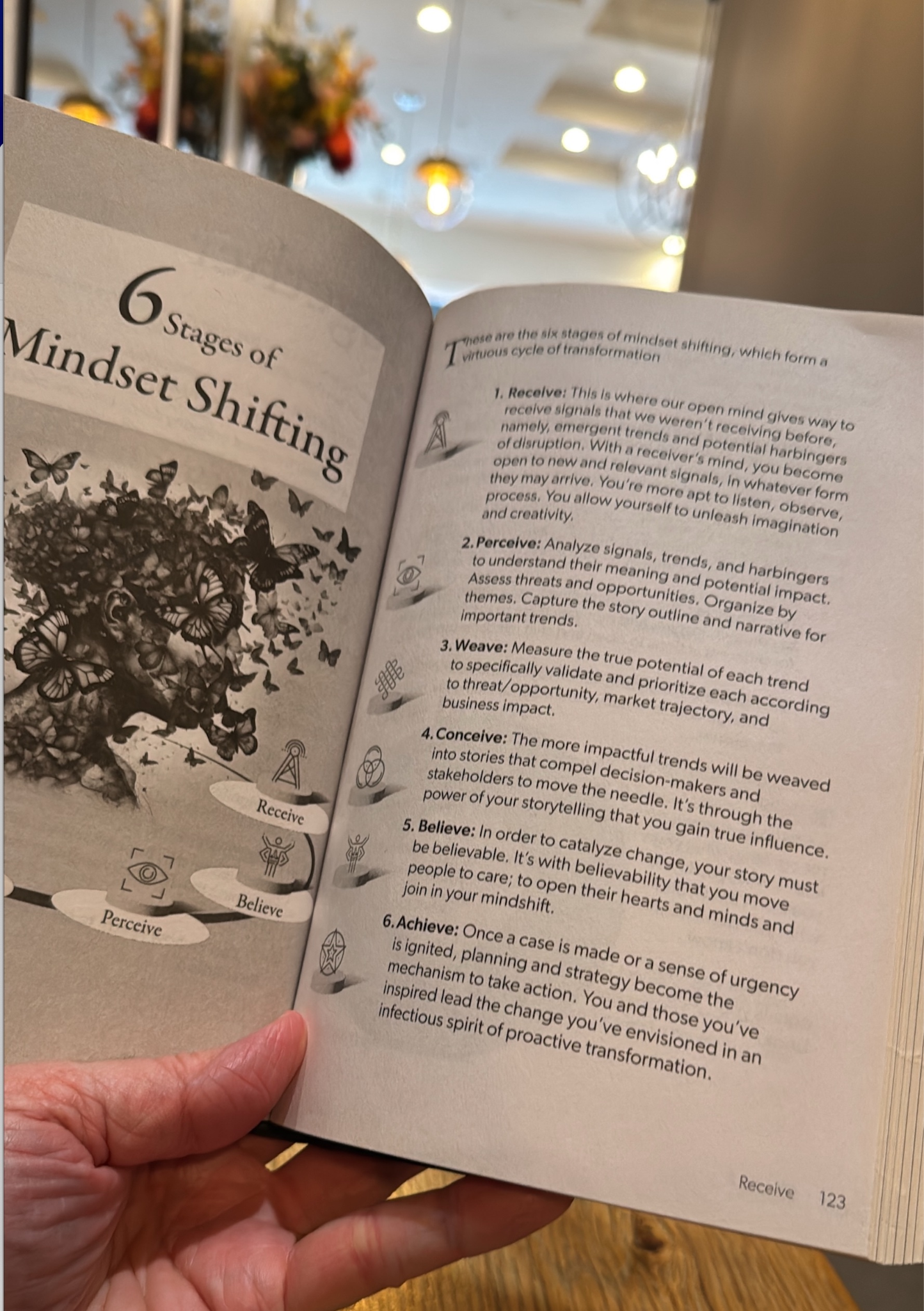
We all believe we’re self-aware; yet research suggests only about 10% of us actually are.
This lack of self-awareness can get in the way of receiving signals that might truly broaden our perspectives. Instead, we absorb the signals that reinforce what we already believe. We can learn to both recognize this cycle, and then find ways to actively interrupt or redirect it.
Part of that work is making room for awe and wonder — states that are nearly impossible to access when our attention is spliced thin and narrowed to a small screen. Brian described knowing he’s in the right frame of mind when he’s a little gullible: when someone tells him something surprising and his first instinct is really? rather than skepticism.
Brian’s focus protects a willingness to be moved by what he’s encountering instead of guarding against it. Wonder isn’t a luxury; it’s a receiving posture. And it’s learnable.
Brian and I talked extensively about the power of great storytelling. Not just as entertainment, but as an approach to deeper engagement, team alignment, and a portal to imagining possible futures.
True storytelling, Brian says, isn’t getting someone to say “great story.” It’s getting them to see themselves in the journey — to become the protagonist. This reminded me of earlier How We Future conversations with Ed Finn and Ruth Wiley, the co-directors of ASU’s Center for Science and The Imagination, and actor and futurist Ahmed Best who invites us to “feel the future” through stories.
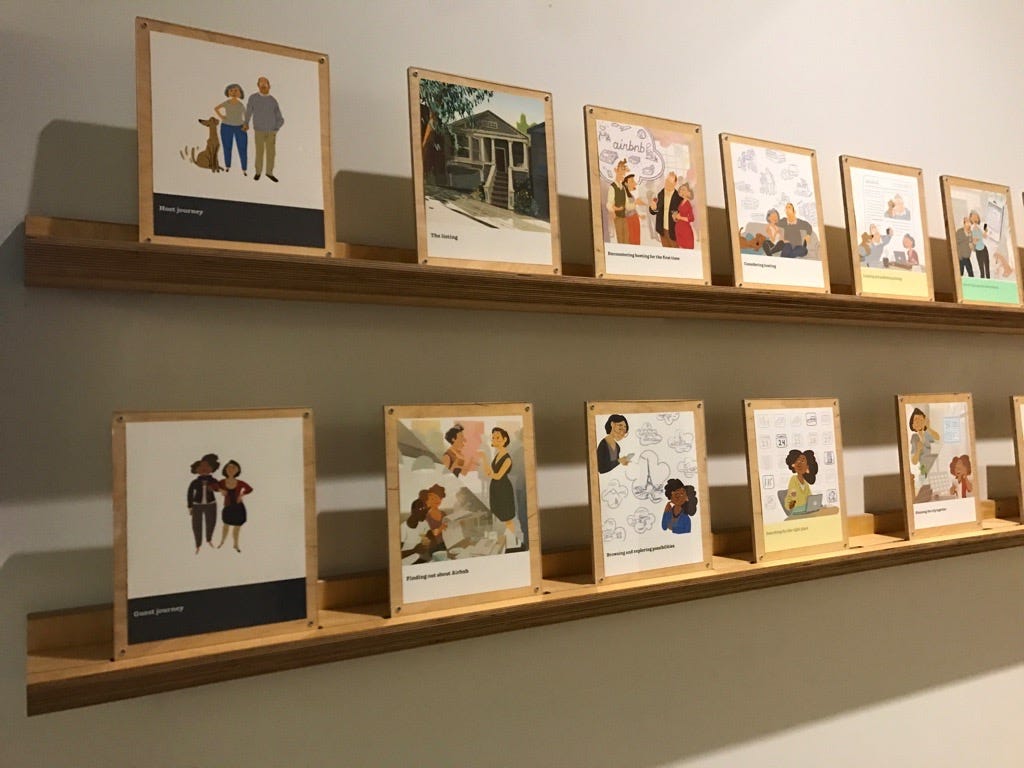
Great stories have an arc to them, and can help us find connection and congruence between the scenes. We talked about how in the early days of Airbnb, the founders used Disney’s storyboarding practice (via a Pixar animator) to visualize their service through the eyes of hosts and guests.
I remember visiting Airbnb’s headquarters and seeing the journey map of the guest experience storyboard color coded to signal which areas of the process needed improvement. That shift towards storytelling transformed them from a technology company into an experience company.
Brian’s new book, Infinite: How Visionary Leaders Transform Today’s Businesses into AI-Forward Companies, co-authored with ServiceNow’s chief innovation officer, is out now. It was born from conversations with leaders who admit — often with relief — that they don’t yet know what to do about AI. It’s a timely companion to this conversation: a case for reinvention over efficiency, because as Brian puts it, you can’t cut your way to innovation and you can’t automate your way to growth.
As Brian shares at the end of Mindshift, “Remember, your destiny isn’t a matter of chance. It’s a matter of choice. You have what it takes to be the hero you need and that we all need.”
This is your mind shift moment.
Want to contact us? Email hello@howwefuture.com
No posts
Comments
Nothing yet. Say the first thing.
Sign in to join the conversation.