
When I tell people I’m making a film, two questions are lobbed from two camps: folks in the film biz (whatever that is, now) want to know how it’s being financed. Boring, but fair— it’s harder than ever to get money behind projects. I get it. But the unequivocal number one question I get from people outside the world of film these days is “what does a producer do?” This was surprising to me until I started thinking about the decades of overwrought premium cable opening-credit sequences we’ve been subjected to. The list of names behind the “producer” moniker has continually grown, fungus-like, appearing in variants like “produced by,” “line producer,” “co-producer,” “associate producer,” and of course, the god-like, c-suite flavored “executive producer.” So, the confusion is understandable. And if you are curious about the distinctions between these various mutations, I’m sorry, but I’m going to disappoint you. There’s an online robot more than happy to fill you in, I’m sure. What I can tell you is what the producers on OUR film (and many films of its scale) have done and do. The answer is a close cousin to “everything.”
The producers of our film have been in the creative muck of shaping the concept, giving notes on the script, and helping to craft the tone and approach. They are spreadsheet sorcerers who have formulated budgets, drafted contracts, hired, fired, dealt with unions, and have coordinated every aspect of equipment rentals, locations, lodging, transportation, and meals, not to mention keeping every person in their charge as happy and healthy as possible, and putting out hundreds of little fires that need not be seen by those of us who would be unduly stressed and distracted. They are magic individuals who straddle the excitement of the creative process and the madness of the raw logistics needed to make a film happen. I am not sure they sleep, and I would be 100% lost without them.
They do a thousand little things that go pretty much unseen and uncelebrated in the process of getting a thing from the inside of my weird little brain onto a screen in front of you, and their names are Brady Kirchberg and Nick Hernandez.
Brady and I went to high school together at Georgetown Day in Washington DC. We were theater kids, blessed to be led by a force of nature named Laura Rosberg who headed up the department and created the model for collaborative art-making we’re still using today. I reconnected with Brady in 2016 and we made a pilot together. We worked seamlessly, and I’d barely seen someone so attentive and present for every person and part of the process. How to Build a Fire is our fourth project together, and somehow he’s gotten better at this each time. All the while he’s straddling several projects in various stages of development or production in everything from documentary to commercial work, and is a father of two in New York City (see my comment about sleep). Though I defy you to time out more than thirty seconds in which the man is not smiling.
Brady’s the one who introduced me to Nick. They’d worked together on the show Billy on the Street, which, if you know it, you can imagine requires a level of patience and tolerance for insanity that few can sustain. But Nick Hernandez embodies a kind of preternatural calm I wish I could bottle. He’s the kind of guy who, if your house was on fire, will have gently escorted you down three flights and out the front door before you got the “p” out in “help.” He knows it’s gonna be okay, rather than pays lip service. He also took on the role of script supervisor on the film (a GIANT job on its own), and I cannot tell you the number of times I started looking around set for him to ask a question or mark a take, only to find that he was directly behind me and two steps ahead. (And he just got married the other day- so send your congrats on our instagram account: @HowtoBuildaFire.film, which he ALSO runs.)
And none of this touches on all the craziness from which these guys SHEILD me. So that I can focus as much as possible on creative decisions, they make sure I truly don’t even know about most of the close-calls, nightmare vendors, disputes, and daily stress-fests they’ve shouldered. Producers of micro-budget films have to bring a jumbo toolkit of disparate skills, and be savvy enough to learn new ones on the fly. If I was blessed with one of these guys to work with, I’d be extremely lucky. To be in the same boat with both of them, a boat we’re constructing, repairing, and navigating as we row, is an embarrassment of riches.
I say all this, in part, certianly to prop-up my collaborators and give credit where it is due. But I also want to spell it out because one of the most miraculous things about movie magic is how effortless a well-made film can feel, and what chaos it often is behind the scenes. Most people have no sense of the scope and scale of the effort on the other side of the lens, which cannot be overstated. I will never forget my parents coming to visit me on the set of my first feature, Give or Take. My father, who has a deep appreciation for the gears behind anything, was blown away by the size and complexity of the apparatus at work, even on this modest indie film set. The number of moving pieces, of departments, choices, and logistics behind making a single moment coherent, let alone impactful, bowled him over. He’s never watched a movie the same way again.
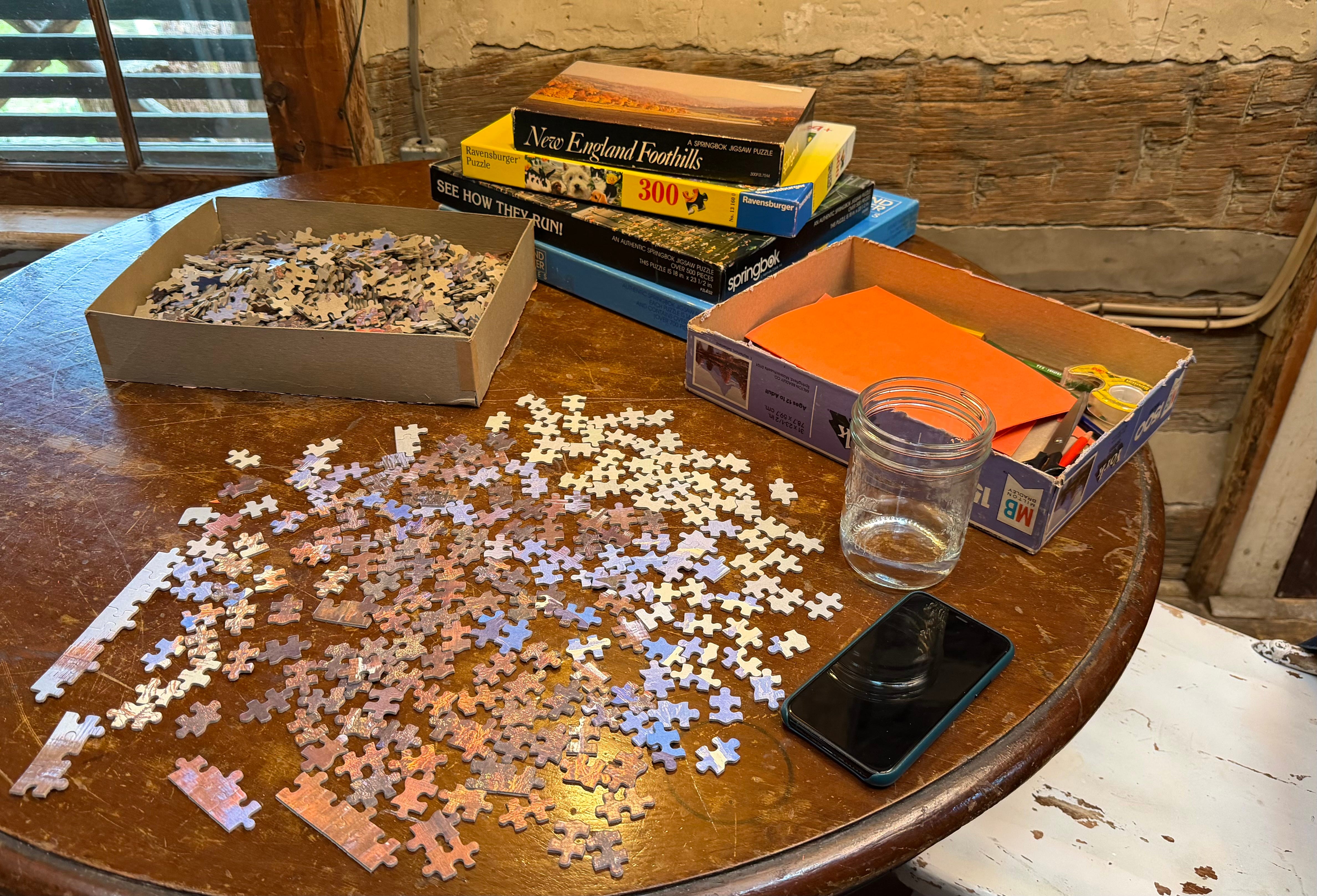
It’s an absolute miracle to make a film that works. This is a huge part of the addictive thrill of the process. There are a thousand little things that get it there, and it takes a special kind of person to keep an eye on every one of them, and nudge each toward the coherent picture of the finished puzzle.
That’s what the producers in my world do. So when you see their names, consider this the opening credits they deserve.
No posts
Comments
Nothing yet. Say the first thing.
Sign in to join the conversation.