
Democracy is fraying. It’s being eroded from the top and, simultaneously, losing the bedrock that will sustain it long term: a generation of young people ready to defend it.
A big reason it’s losing resonance is that democracy doesn’t trickle down (just like economics don’t trickle down). It bubbles up—from all people, and especially young people, participating, engaging, caring and believing they can have impact. Leadership, politics, and technology, among other forces, are actively degrading opportunities for young people to do this in authentic, not performative ways.
Which is why when Fernande Raine, co-founder of the History Co: Lab asked me to help her dig into this issue, I said yes (here’s the final product). It felt aligned to my book—helping build engagement— near to my heart, and urgent. Trump has little regard for democracy. I have a lot, and need to work to defend it.
I have seen what happens when kids do important, genuine, needed, and challenging work. They grow in real time. They feel important and brave and generous and part of something. Those things feel good and they want more. Rather than the dirty dopamine of a like on TikTok, it’s the hit that propels kids to take risks, do things, actively build belonging and find their place in the world. Not their passion. Not their purpose (though god bless if that happens). The experience of being part of something worthwhile, which more often happens with others. America may lionize and love the solo, rugged hero, but so much good happens in the world in community, together.
How do we get beyond the narrative of individual optimization and self actualization to a healthier, more generative one of collective improvement and efficacy—the capacity to do things together?
How do we help young people disagree better? And engage them in dialogue about hard things—even when they agree?
How do we measure stuff that matters like participation and impact, and not just what’s easy (test scores, which are also important but very narrow)
How do we get out of our silos to have more impact, connecting mental health, education reform, civics, history, all of which are calling for the same things (co-created, intergenerational work that’s real)?
It’s a crisis of meaning, connection, and belonging. Just like GDP doesn’t equal well-being, good civic knowledge doesn’t translate into civic commitment. Democracy is not a spectator sport. It must be practiced: debated, voted on, felt, lost, and won. It must be emotional, relational, and real.
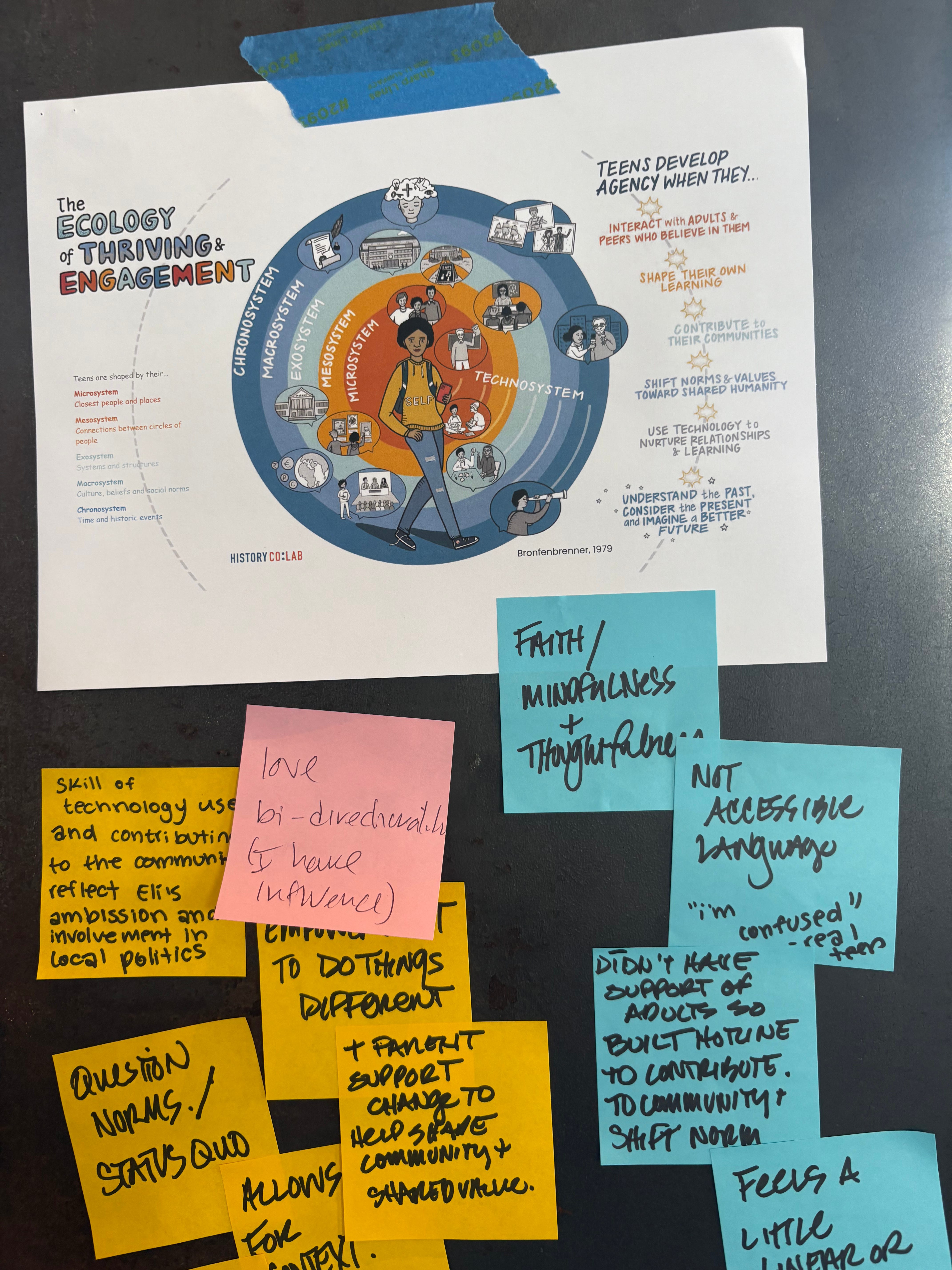
Learning sticks when it feels purposeful, social, and emotionally resonant. Knowledge matters. But when students work on a real issue in their neighborhood—organizing a food drive, redesigning a park, interviewing elders, or building a game to foster empathy in their school—they are not just “doing civics” —they are becoming civic. They’re rehearsing what it means to show up for the commons - not just striving to advance their place in the sorting game of school.
Hannah Arendt argues humans need three things: to sustain themselves, to work to create durable things, and to participate in plurality. “Without being seen and heard by others, without a publicly recognized and guaranteed sphere, wherein people act together and speak and show themselves, not only are we as if we did not exist but also we are as if we had never come into being.”
Young people know where power lies. They want it, but no one wants to let them use it. We need to stop preaching about voting if we’re not giving them real decisions to make. Let them lead projects, shape school policy, create public goods. Adults need to be more comfortable with the discomfort of handing over the reins.
From Kansas City’s youth-designed museum exhibits to embedding local civics into schools to youth-led Civic Season whereby Made By Us supported 2,000+ events across 700 museums and 20 million people with ideas like “a slice of history” pizza party, pockets of activity are happening. These aren’t classroom simulations—they’re real acts of democracy.
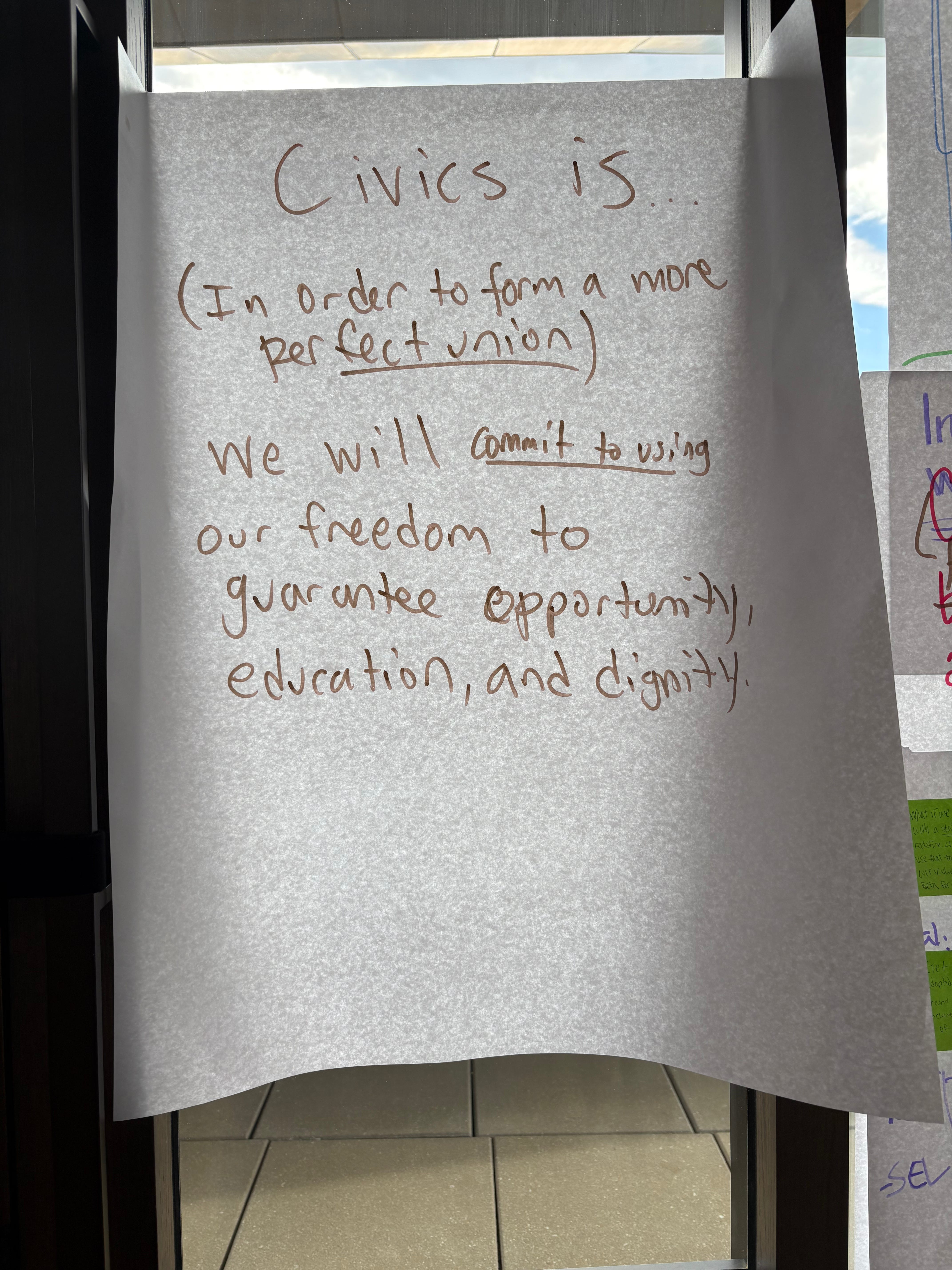
To get young people to even care about participating in society and caring about democracy, we must redesign civic learning to reflect how democracy actually grows: not from the top down, but from the inside out.
This project, like so many things I do these days, took me way out of my comfort zone. I am not a civics or history practicioner; I do not work in mental health or education.
But I am obsessed with helping young people find hope.
I do not believe this will happen by telling them what do, or making them jump through more of the hoops we have been furiously constructing for 50 years. It will happen by stepping back but also staying present. By creating more opportunities for doing—less screens, more IRL (see my work at the Center for Teen Flourishing which is about how we help activate kids to do good stuff - from sports and arts to part-time jobs and pleasure reading). By listening closely and carefully, and responding where possible. By helping young people along their individual journeys, but also inviting them to build and improve things together. Human flourishing has obvious individual components. This project revealed the power of the collective parts too.
And that gives me hope.
Here’s the website where you can find the insights. Here’s what’s in it (a cheat sheet for reading because who really reads reports?)
A brief examination of the polycrisis. Young people are lonely and distrustful, rocked by wars, a pandemic, a cost of living crisis and deep uncertainty about the future. A paltry 16% of teens think democracy is working while the public commons for kids —schools—are in crisis. More than a quarter of kids are chronically absent and more than 50% of Americans are unhappy with their schools. Clearly we need an entirely new approach to civics if we want young people to care about democracy, much less fight for it.
History on how we got here. Democracy depends on memory of the past and imagination about the future.
Co-Authoring tomorrow — Young people on the adults they aspire to be and the role civics plays (this is THE BEST PART OF THE REPORT…and not just because we got to work with Shereen El Mallah, professor at UVA and extraordinary human).
12 Design Tenets: Three interwoven strands, like DNA, enable and supercharger civic growth: learning and wellbeing are inseparable and mutually reinforcing; individual agency grows through contribution, communities thrive with genuine participation; identity, belonging and resilience deepen through history and imagining futures. Civic practice without historical memory is rootless. Without imagination it is hopeless.
12 Case Studies that illuminate the tenets
Five clusters of collaboration to build civic thriving that can be funded today.
Background:
Authoring Tomorrow : Insights from the Next Generation of Adults
No posts
Comments
Nothing yet. Say the first thing.
Sign in to join the conversation.