
A few years ago, my then-writing partner and I were in a notes call with a multi-Emmy-winning writer and showrunner for a pilot we wrote, when the thought entered my mind.
It started small and quiet at first:
“This doesn’t matter.”
The writer / EP was going on about how funny it was, how smart we were to partner with each other because this was easily the best script he’d read from either of us. How it contained humor and heart at the same time.
“Let’s just get this over with.”
Pretty soon, I grew impatient, the voice in my head shouting: “Can we skip to the part where you hire us or not?!”
By this point, I’d spent close to 7 years grinding as a script coordinator / writers’ assistant in TV writers’ rooms. 120 hour weeks, low pay, no perceivable career benefit and countless instances of unintentional – and intentional – professional humiliation and bullying aimed directly at my sweet, innocent cherubic face.
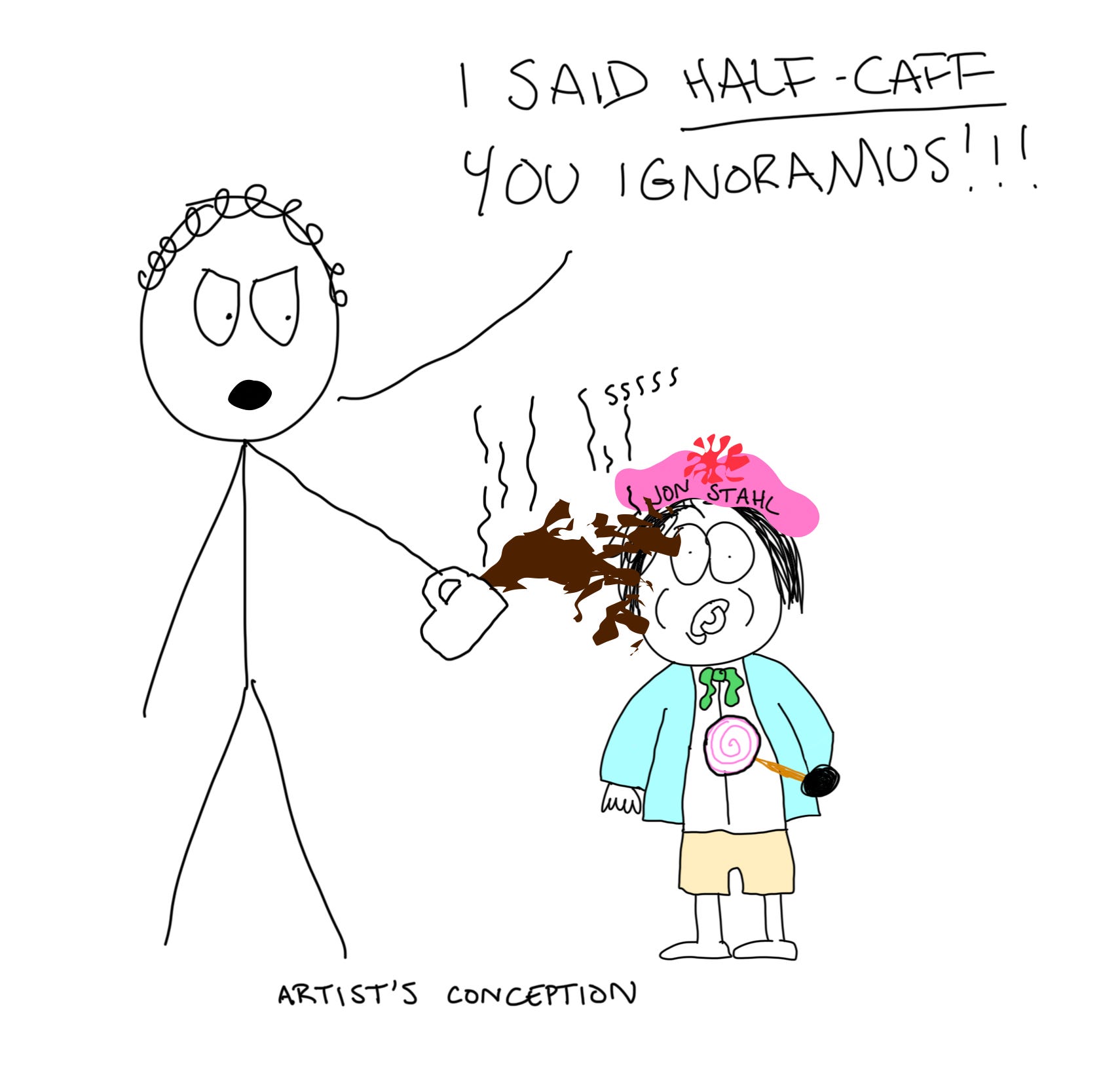
But the frustration itself didn’t emerge from that. It wasn’t directed at the EP, who was doing us a huge favor by reading our script, giving us notes and stroking our egos.
The frustration came from somewhere else. Somewhere much deeper and more foundational. And until very recently, I couldn’t pinpoint exactly where it originated or why I felt it.
But now, I’m able to name the source of this frustration and even identify it in others. So strap in, because this one is a doozie.
No punches pulled and all that.
🎃 The Halloween shop, the muscle suit, and why I walked out
🪞 Taking your work seriously vs. taking yourself seriously (and how to tell which one you’re doing)
🧬 Why being a storytelling species is actually the problem
📊 The 98% failure rate, and what separates you from it
I pride myself on being an optimist.
I don’t like putting people down. I don’t like blind cynicism. I’m allergic to sarcasm, and I abhor bullies, no matter what form they take. I also absolutely hate it when people offer a problem without also proposing a viable solution.
But, in this instance, I must eschew optimism to share a very hard truth:
Most people who call themselves writers should quit. As in: They should stop pursuing a career in writing.
Not because they’re bad. But because they have no interest in getting better.
They want to be told they’re talented. They want to be told they’re smart. They want to be told they have something unique and special to offer the world.
They want the recognition. They want the career. But they don’t want to do the hard, painful work necessary to get there.
And I feel uniquely qualified to say these things out loud because – until relatively recently – I was that person.
The person who sought validation over growth. The person who – when asking for notes – didn’t actually want the notes part of the notes. The person who wanted the pat on the back. The acknowledgement that writing is incredibly hard and yet here you are, doing it so very, very well.
But then I came to the realization that I was just using my writing as a way to be seen.
The writing itself was performative.
That performance – and the external validation it elicited – kept me going for a while. It kept me writing and rewriting and seeking out new projects to work on.
But something has changed between then and now.
Now, I quite frankly don’t give a shit what anyone thinks of me as a writer, and I am entirely over the performative aspect of my creative career.
What I care deeply about is the work that I do as a creative.
And until you are able to internalize that distinction – between your identity as a creative and the resultant work – that next stage of your career will remain out of reach, forever receding into an endless horizon.
There are two types of creative I’ve met in my career journey:
Creatives who take their work seriously are obsessive about learning what works and what doesn’t.
When they ask for notes from different people, they’re not just seeking validation or a pat on the head.
These are:
Directors who shadow other directors on set, not for the connections, but to genuinely learn the craft
Writers’ Assistants who review the room notes at the end of every day – not so they can recite plot points back to the writers, but so they can learn how professional writers pitch jokes and story beats
Actors who take classes not as a way of getting closer to gatekeepers, but in the genuine interest of refining their craft
They genuinely want the guidance of an outside perspective to help them learn their shortcomings. They are relentless about craft, and they understand – implicitly – that any critique of their work is not an indictment of them as a person.
These creatives seek out people who disagree with them on taste and craft. They see alternate perspectives as essential to growing as a creative, and they’re not afraid to shine a harsh, unforgiving light on their work in the name of self-improvement.
Their primary objective is to get smarter. To get better. To grow.
Talented as they may be – and some are quite talented – creatives who take themselves seriously are a totally different breed.
They are fragile. Driven by ego. They only seek notes that validate them and their work.
They are:
Writers who get defensive when you try to give them critical notes
Directors who turn up their noses at emerging or undiscovered talent because they lack “legitimacy”
Showrunners who demand that their writers laugh at every joke at the table read or run-through, even if the jokes are kinda meh1
For these creatives, the primary objective – whether they realize it or not – is to be recognized as smart. To be seen as talented. To be validated by others.
Talking with them about their projects – or craft in general – is exhausting.
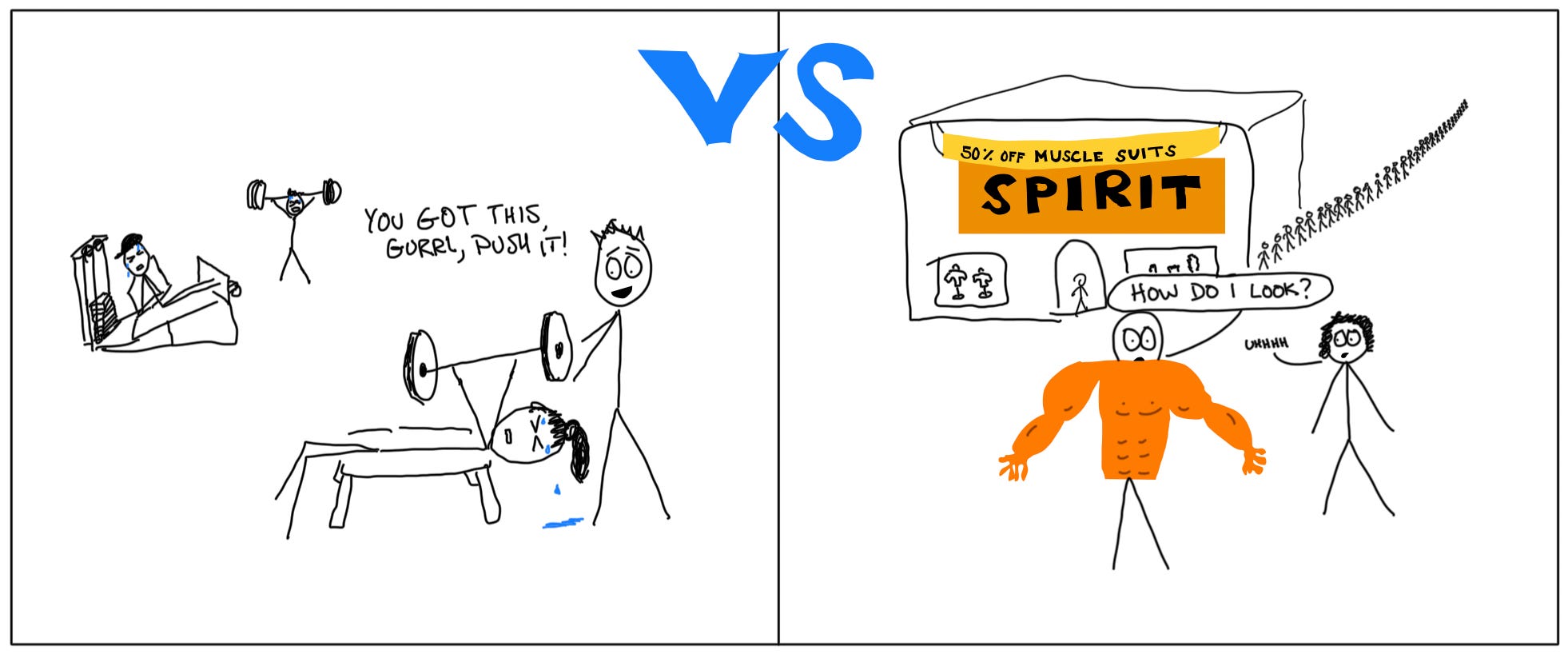
The difference between a Type A Creative and Type B Creative is the difference between going to the gym every day to build strength and buying a muscle suit from a Halloween store in order to appear strong.
Go ahead and share this article with either type, and drive them mad trying to figure out which one you were implying they were:
Spoiler alert: Everyone has both types – A and B – inside of them at any given time.
Of course I want to be told I’m talented and brilliant. Of course I want my peers to acknowledge me and my work. Of course I want Casen Pointe and Upstage and my upcoming improv micro-series to soar to magnificent heights.
But, I’ve also come to realize that professional success can only come from one of two places: growth or nepotism. And since I’m not related to any tech billionaires who can hire me at their studio, I have no choice but to grow, even if that growth comes at the cost of some very painful lessons about how I failed these series.
And that pain is part of the process.
Think about it: You don’t go to the gym because it’s comfortable and easy. You go because you want results.
In order to get better, you have to put in the time, you have to put in the reps, you have to push through the pain, and you have to ignore anyone trying to sell you a shortcut to quick gains. Because – as anyone who’s been to a gym knows – real growth, real strength only comes from the physiological process of breaking muscle down in order to build it back up.
So, while (seemingly) everyone else seeks to demonstrate their strength, I am desperately digging and grinding away to uncover my weaknesses. Where my writing falls short, why my projects fail to gain traction, what led me to cast the right actor for the wrong role.
Then, I learn, internalize and move on. Patching the holes, building the muscle.
It’s not pretty, but it’s my process.
Like I said, everyone has both types inside them.
Think of these as indicators of each type as opposed to a diagnosis of you personally. You can always come back from the brink through some self-reflection and focused work.
If you have had one script that you’ve been writing and rewriting and polishing and refining for the better part of the last decade, that is a Type B trait.
If your main character is a fictionalized version of yourself and the project is your way of getting retribution on everyone who has wronged you, that’s classic Type B.
If you’re a writer-director who frets endlessly about every word of dialogue being read exactly “as written” by actors… Type B.
If you pitch things from your script to people and expect them to be impressed, textbook Type B.
Side note: If you spend enough time around real, working writers, you’ll be struck by how few of them ever talk about their in-progress projects, which is a pretty big faux pas in professional circles. And forget about sharing lines of dialogue.
For real: If you want to embarrass yourself in front of a working screenwriter, the easiest way to do that is to “show off” lines from a script you’re working on.
They may smile and nod in the moment, but inside, they are screaming for you to please stop immediately.
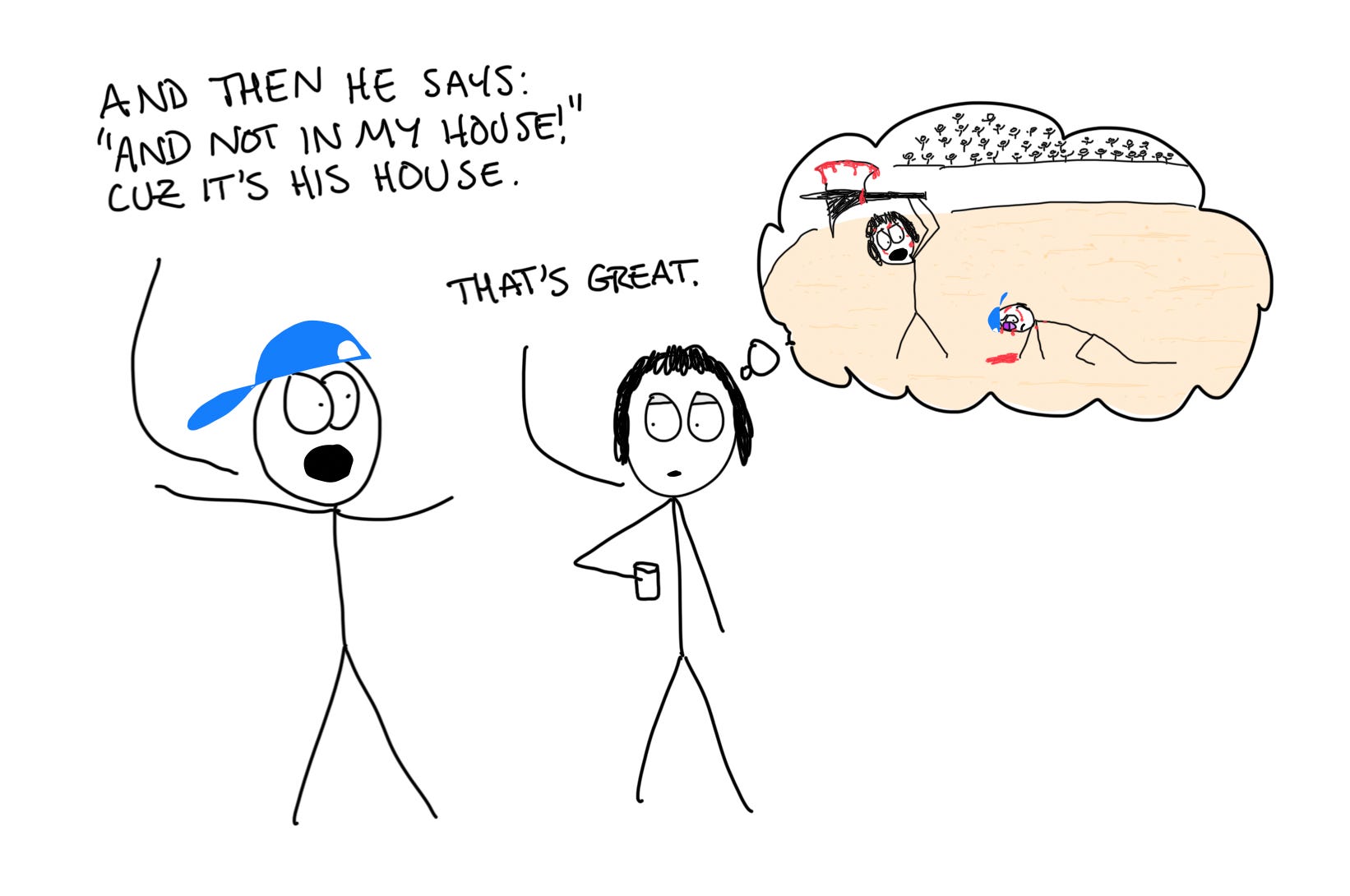
If you block a scene and then feel compelled to do a rewrite based on an actor’s interpretation of it, that’s Type A behavior.
If you receive notes from a writer / director / producer and only respond with clarifying questions, that’s Type A.
If you have multiple projects in the works and lessons from one inform your approach to the others, Type A.
If you keep a running list – mental or written – on how you can write a better script or direct a better scene or give a better performance, that’s classic Type A.
Put another way:
Type A is all about the work. Type B is all about the ego.
I’d argue that maybe 98% of people who call themselves “writers” probably shouldn’t be pursuing a career in writing.
Yes, statistically speaking, that 98% includes you.
But for the sake of subscribe below, let’s assume you are in the other 2% and I’m talking about THEM; not us.
Okay, so how did this happen? How have so many people deluded themselves into believing they’re something they’re not? That they have something they don’t?
Why is the career failure rate for writers (and by extension all creatives: directors, actors, musicians, etc.) so goddamn high?
I believe the answer to that question lies in evolution. Specifically, in the act of storytelling.
As I’ve cited in the past, humans are a storytelling animal. Anthropologists believe we’ve been telling stories basically as long as we’ve had spoken language.
Storytelling was an evolutionary adaptation that protected us from predators and helped us find our next meal. The tribes who told stories shared their dreams with one another and passed stories down from generation to generation.
The tribes who didn’t tell stories starved and died.
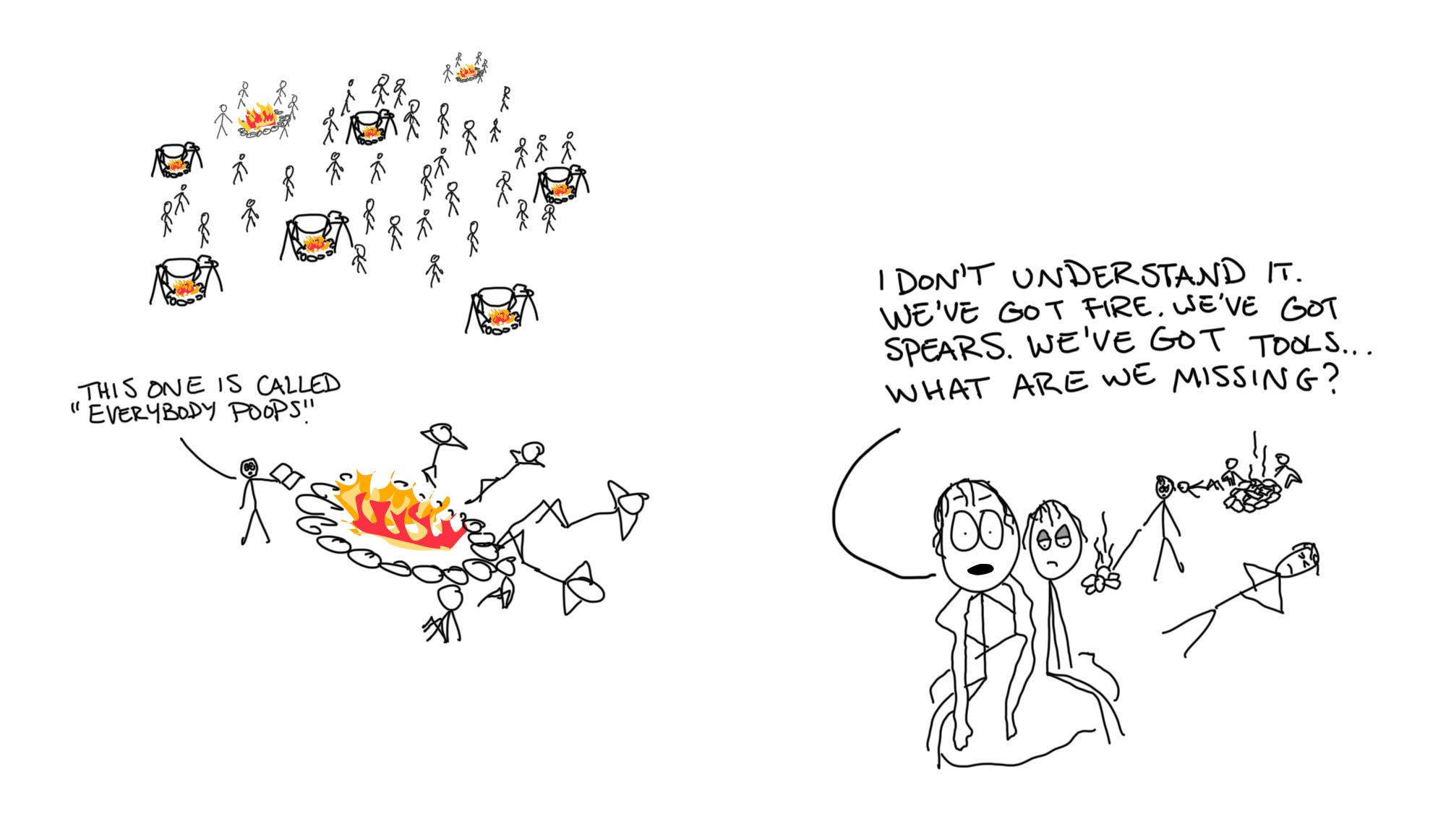
So here we are, 200,000 years later, every single one of us perfectly-evolved to tell stories. Innately. By default.
It’s the reason we literally feel the same way a protagonist does when hearing a well-told story.
It’s the reason that music has the power to move our feet (and open our wallets).
It’s the reason we were able to build civilizations and corporations and currencies and borders and governments.
It’s also the reason we’re addicted to social video apps, but I’ve already written about that in the past.
As soon as we’re out of the womb, we’re exposed to stories. They’re so deeply ingrained in our day-to-day human experience that we forget they’re even there.
Everyone believes they can tell stories because they can tell stories. By default.
But – and this is a War and Peace-sized “but” – the type of storytelling that builds careers in Hollywood is very different from the one that we possessed at birth.
And that difference comes down to – you guessed it – craft.
So there’s the tension:
A species that has evolved to prize well-told stories.
An industry that sells the illusion that expertise is unnecessary.
A level of craft that stands as an invisible barrier between the 98% and the 2%.
And a Halloween shop full of muscle suits for everyone who’d rather skip the gym.
Storytelling is the only career path sold to everyone from birth.
And that’s the problem.
Relatively few people are born in the cockpit of a jumbo jet, and so no one believes they can pilot one by intuition alone, without training or practice.
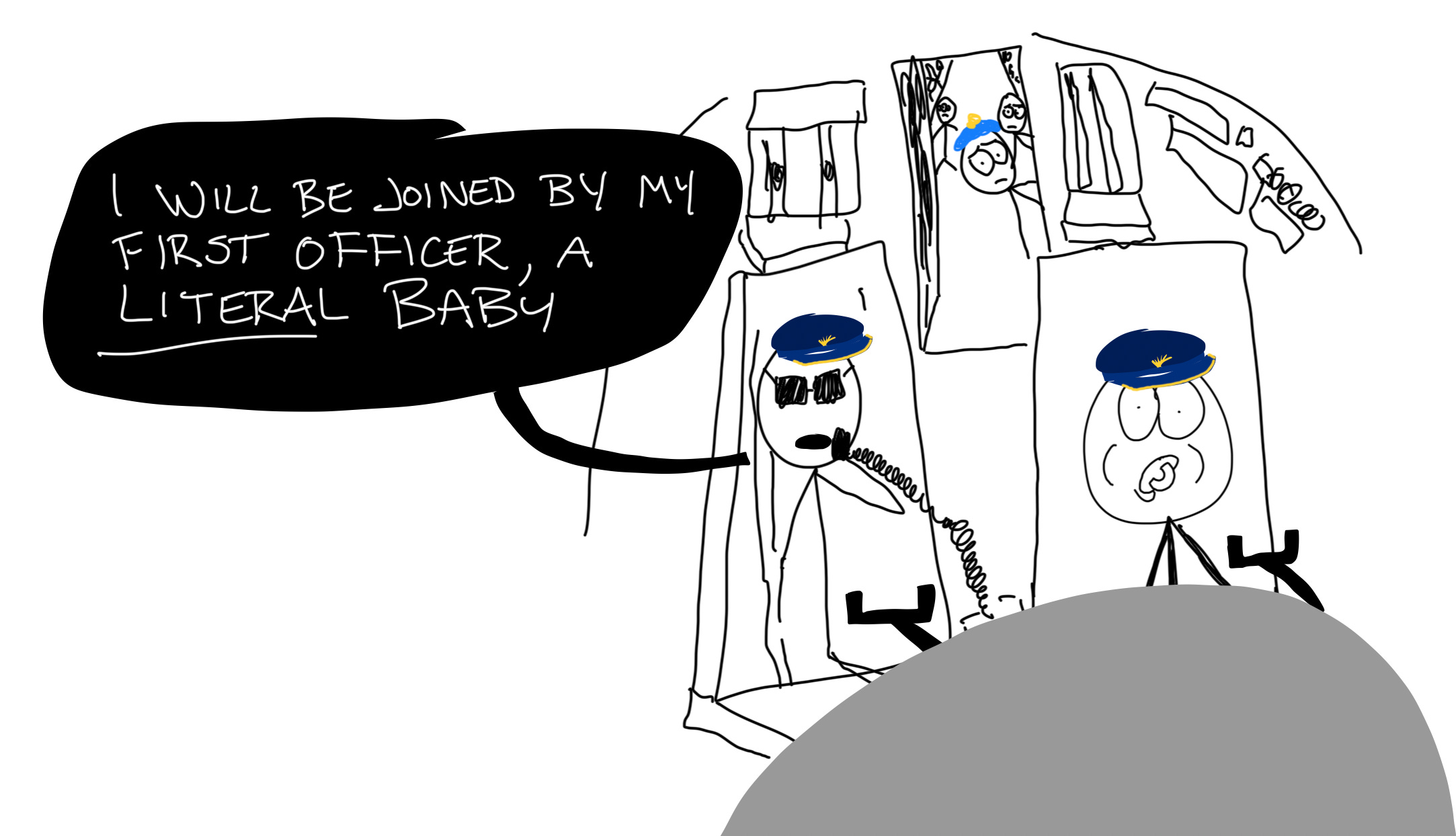
Whereas everyone grew up with stories, being read stories, playing make-believe... And so everyone – at some point in their life – thinks: “Hey, how hard could it be to do this professionally?”
But you and I know something that the other 98% don’t: That building a career in storytelling takes more than just intuition.
It takes a combination of craft and taste, and a keen understanding of how those two things differ.
BTW Ellis J. Sutton has a great post about this, so be sure to check it out:
But in addition to that, it takes fucking up, making things that are bad. It takes a willingness to admit you’re wrong, an acceptance of the really tough notes, and the wisdom to learn the right lessons from your mistakes.
These traits are exceptionally rare.
And thank God for that, because if they weren’t, that 2% would be more like 80%, and you and I would have a lot more competition.
And as the entertainment market grows colder and more unforgiving, craft will be the only thing that separates the victors from those running around in fake muscle suits.
This is a very big question that will not fit in a single Substack post.
In fact, I wrote a three-part series on character and barely scratched the surface of that single facet of screenwriting craft. I’ll do a deeper dive on this in a future post. SO feel free to skip to the next section and be sure to:
How do you build craft?
Reading books on screenwriting theory is a great start. Exposing yourself to great scripts is even better. Working shoulder-to-shoulder with professional screenwriters better yet.
Still, for all the benefits they bestow, these resources won’t tell you how NOT to do something. The wrong turns. The false starts. The pitfalls.
But since this is How NOT to Be a TV Writer, I am more than happy to do so. Here are just a few pointers off the top of my head:
Audiences don’t care about your characters’ elaborate back stories. Like, at all.
Having a character call another character “a genius” carries a lot less weight than actually showing that person solve a really hard problem.
Relatability ≠ Likability, but you also need to give the audience a reason to care about your protagonist.
Flash forwards are a crutch. Stop using them.
Don’t run from ambiguity and mystery; embrace them. Not every single piece of context needs to be set up in Episode 1 (or Act 1 if you’re into the whole feature thing).
Don’t get married to a character arc or line of dialogue or joke. If you’re very, very lucky, that thing will probably end up changing or getting eliminated anyway when the show goes into production.
These 6 bullet points don’t even begin to encompass all the things you’re probably doing wrong as an early-career writer or producer or creative.
So if you want more specific advice on your own script or career path, please don’t hesitate to reach out:
If you choose to wear the muscle suit – if you choose validation over improvement, if you choose easy answers over hard work, if you choose self-seriousness over learning – you’re never going to get there, wherever “there” looks like for you.
Whereas if you commit to going to the gym – to doing the work, to pushing through the pain and accepting feedback from the people who have been there before – “you’re never going to get there” isn’t even a sentence that makes sense, because you’re already there.
So let the Type B’s keep their muscle suits.
I’m going to be at the gym, working on craft, collaborating with my peers, breaking down muscle so that I can build it back up again.
And I hope to see you there with me.
Stay tuned,
Jon
This is actually one of the more defensible practices in this list. When the studio / network shows up to your table reads and run-throughs, you don’t want to give them any excuse to note you to death. That means really playing up how funny the episode is… Which means “big laughs.”
No posts
Comments
Nothing yet. Say the first thing.
Sign in to join the conversation.