
Welcome back to House Rules. If you haven't read part one, please find it here House Rules - Part One .
Every time I walk into a home, there are a few things I notice almost immediately. Sometimes they’re tiny details and sometimes they’re the reason a room doesn’t quite feel right, even though everything in it is beautiful.
These are 4 of the ones I see most often and, thankfully for you, they’re all easy to fix.
Let’s get into it.
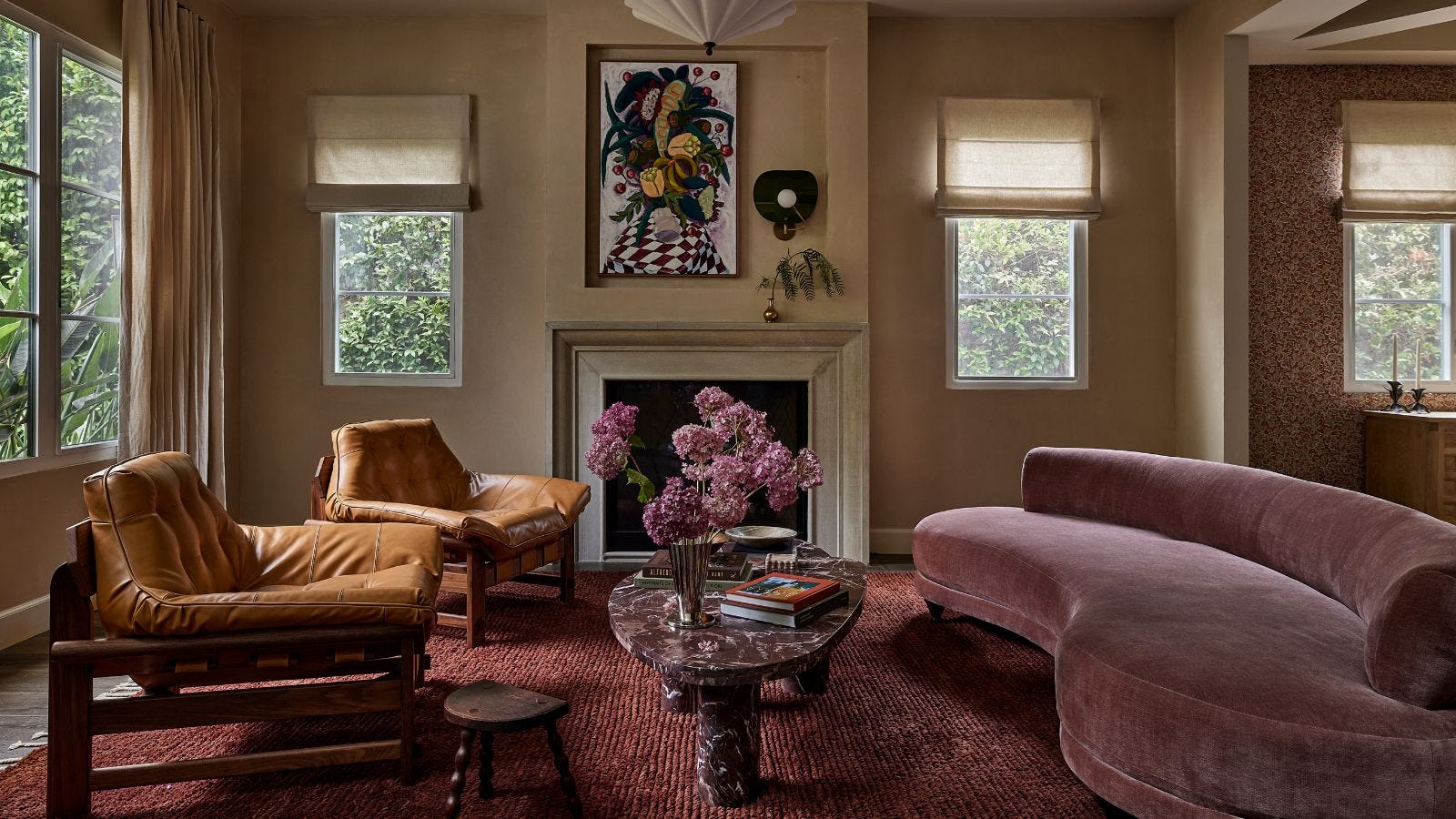
There’s an instinct, and I think it’s a hangover from small flats and student houses, to push every piece of furniture against the wall, as if the goal is to leave the maximum possible empty space in the middle of the room. It doesn’t make a room feel bigger, it makes it feel like a waiting room.
So pull things off the walls, just a few cm will do it. Float a sofa. Angle a chair. Let a console breathe. The moment furniture stops hugging the perimeter, a room starts to feel deliberate rather than default.
The other half of this is scale, and the answer isn’t simply “go bigger.” The trick isn’t to supersize everything. A huge sofa, an oversized coffee table, giant artwork and an enormous floor lamp all fighting for attention will make a room feel just as uncomfortable as everything being too small.
Good interiors are a balancing act. You choose where the room gets its one or two bold moments, and you let everything else quietly support them. Maybe it’s the oversized pendant over the dining table. Maybe it’s a single beautiful armchair, one big sculptural vase, or the art. The point is that not everything needs to shout at once. In fact, the quiet moments are often what make the bold ones sing.
Where people go wrong is at the other end too: the tiny lamp on a big sideboard, the little coffee table marooned in front of an enormous sofa, the postcard of a painting on a huge wall. Undersized things don’t make a room look bigger, they make it look apologetic. Tiny lamps have ruined more beautiful sideboards than I’d care to admit.
So it’s not “go big.” It’s knowing what to size up, and what to keep quiet.
Try this: Move your sofa just 10cm off the wall and stand back. I bet the room already feels more considered.
Lydia’s Rule: If every piece of furniture is touching a wall, pull one piece forward. Start there.
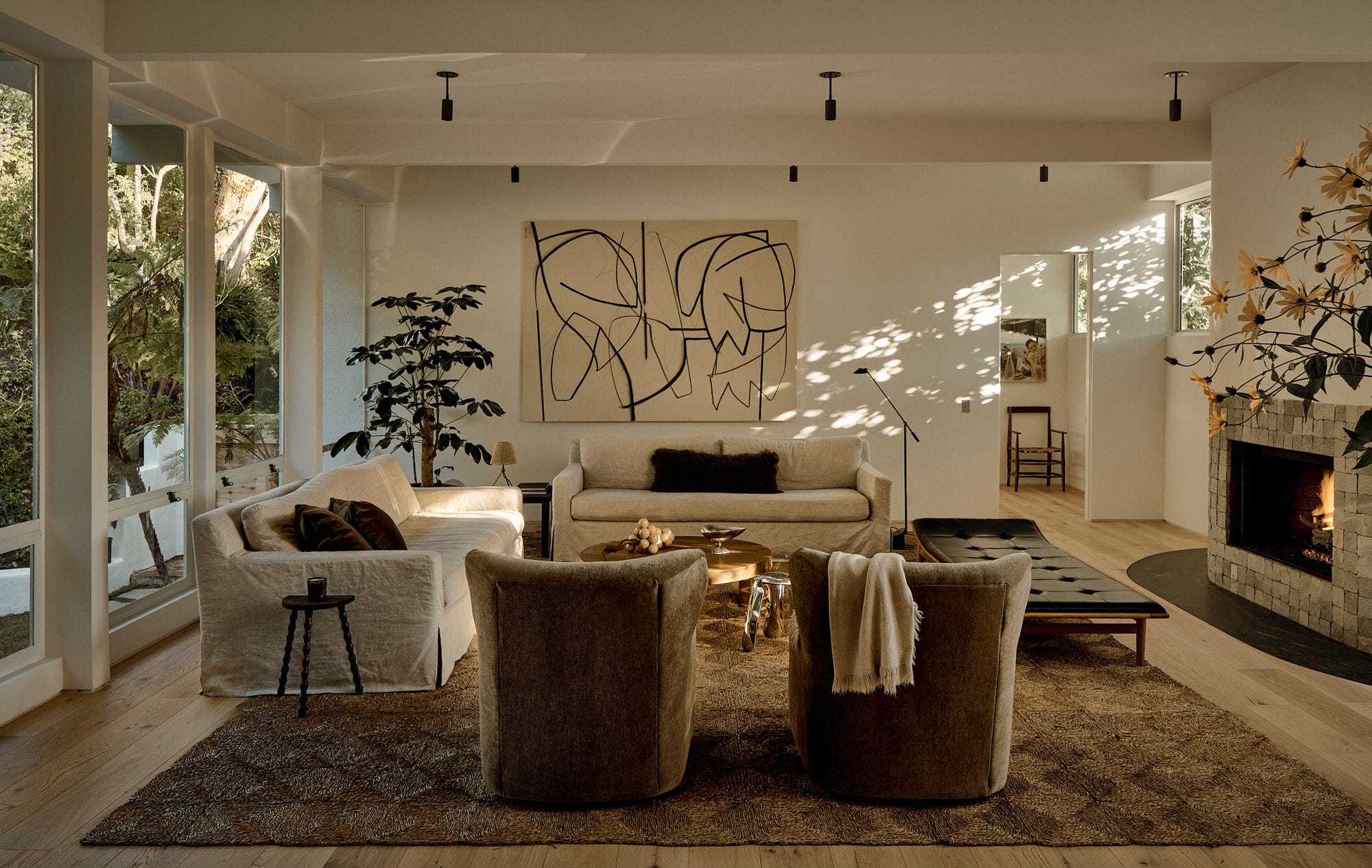
I know, I know! Everyone says this. It’s the most repeated piece of advice on the internet, and I wanted to avoid it, for exactly that reason. But I’m saying it anyway, because people are still doing it. WHY???
People spend thousands on a beautiful sofa, slide a bath mat of a rug underneath it, and then can’t work out why the room feels off.
Here’s the test: if your rug is floating in the middle of the room like an island, with the furniture standing politely around the edge, it’s too small.
What you want is for the furniture to sit on it. At the absolute minimum, the front legs of your sofa and chairs on the rug. Ideally, the whole lot, with the rug showing beyond each piece.
And yes, sizing up costs more. But bigger does not have to mean thousands. IKEA’s LOHALS jute is one of the best affordable oversized rugs going, and one I recommend time and time again. RugVista and Benuta are brilliant across nearly every style. And eBay and Etsy are full of vintage rugs if you’re willing to hunt a little. I’ve had clients spend £400 on a rug, and others spend £20,000 and wait 24 weeks for it to be hand-knotted in Nepal. Neither is right or wrong. Every client has different priorities, some see a rug as the finishing touch, some see it as a piece of art to build the whole room around. What matters, whichever camp you’re in, is getting the size right.
Try this: Put painter’s tape on the floor to mark where the next rug size up would sit. Nine times out of ten, it won’t feel nearly as big as you imagined.
Lydia’s Rule: If you’re choosing between two rug sizes, buy the bigger one. Every time.
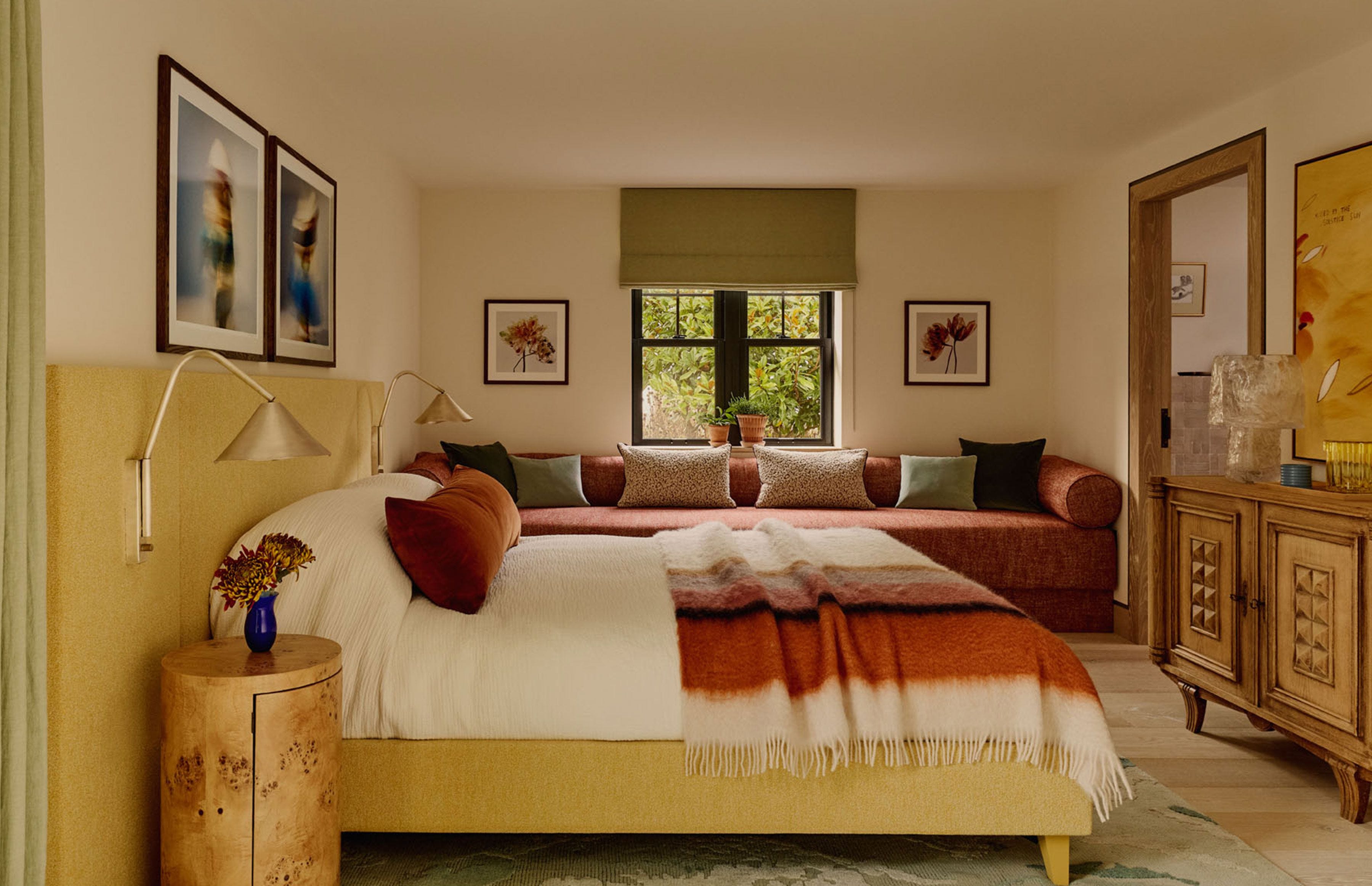
Lighting is one of my favourite parts of designing a home. And I'm about to go in and go hard at the humble spotlight. Look, I love beautiful pendants, chandeliers, wall lights, table lamps, floor lamps and picture lights. Spotlights absolutely have their place. So do discreet LED details, when they’re done well.
What I don’t love is when they’re expected to do everything.
Rows and rows of spotlights marching across a ceiling, like someone bought them in bulk and felt obliged to use every last one, should never be the thing creating the atmosphere. Their job is practical, and used sparingly, supporting the rest of the scheme rather than carrying it.
The most common thing I walk into is a room lit by a perfect grid of spotlights and nothing else. Somewhere along the way, someone decided that every sqm of ceiling deserves its own downlight. The result? Cold, flat, unflattering. Nobody wants to sit in that. Nobody has ever sat down with a glass of wine and thought, “I wish there were more spotlights.”
If you’ve inherited a ceiling full of spotlights and you’re not touching the wiring, don’t panic. The goal is simple: make the room so beautifully lit that you NEVER need to turn them on. Start with lamps, a pair of table lamps, floor lamp tucked into a corner. Build the light from the room up, not the ceiling down. And if your sockets aren’t where you’d like them, or you don’t fancy chasing cables through freshly painted walls, the rechargeable options now are brilliant. Rechargeable wall lights, table lamps and floor lamps. No electrician, no mess. Just charge them and put them exactly where you want them.
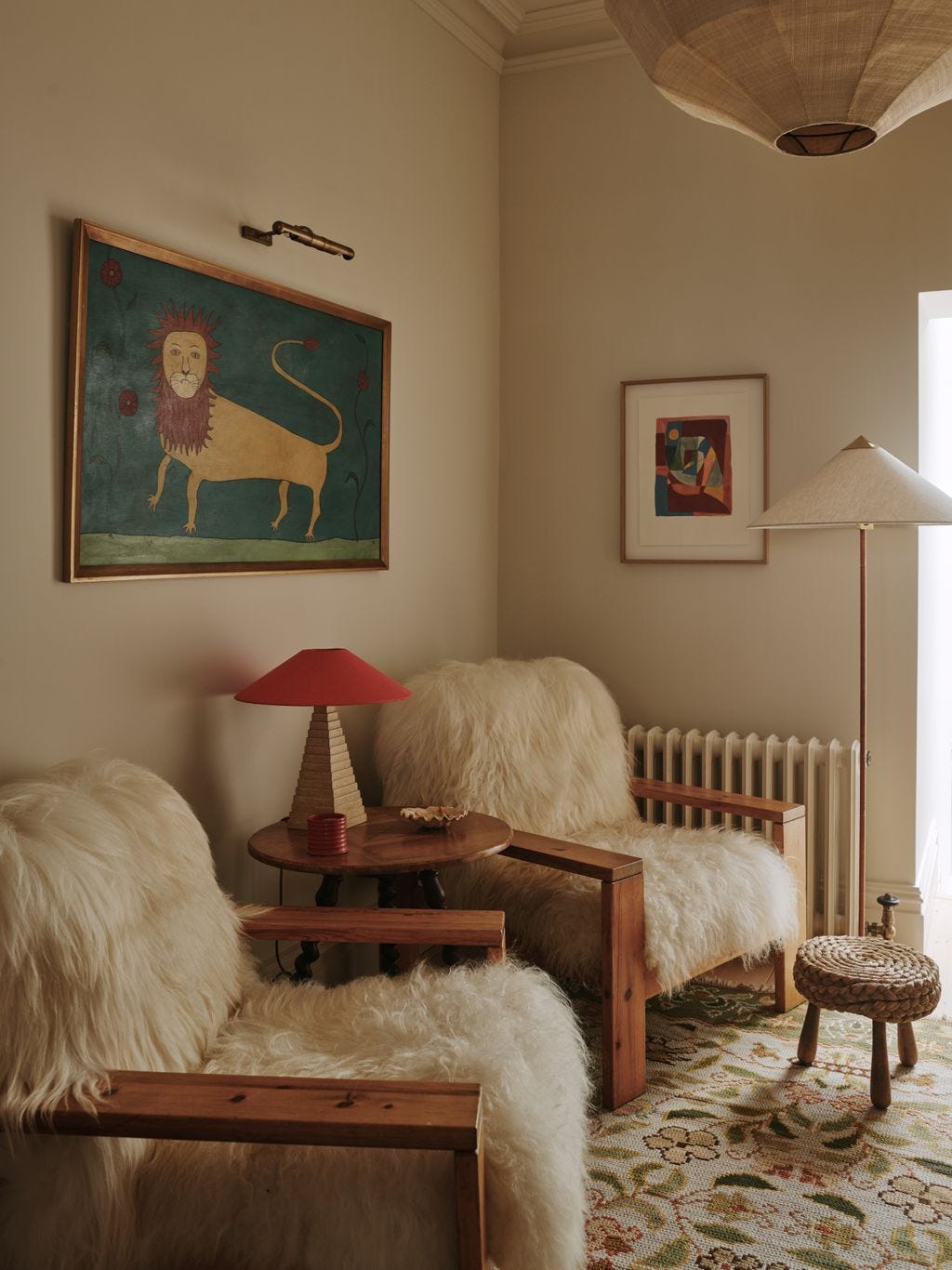
If you’re renovating or starting from scratch, Lucky you! because you get to plan it properly. Before you decide where a single spotlight goes, think about how you’ll actually live in the room. We always start with the decorative lighting first. Is there a beautiful pendant over the dining table? A chandelier in the hallway? Wall lights framing a fireplace? Table lamps on a console? A floor lamp beside the sofa?
Those are the lights that give a room atmosphere. They’re what you’ll actually use. Decorative lighting creates pools of light rather than one flat blanket of brightness, and that is what makes a room feel intimate.
Only once those are in place do we think about spotlights, and even then they’re there to do a job. They might light a kitchen worktop, a utility or a wardrobe. They’re practical, not the main event. You definitely don't want them over your head whilst in bed, or watching the TV.
That’s the biggest shift in thinking. Spotlights shouldn’t be responsible for the mood of a room. They should quietly support everything else. For our clients, we always work in the same order: decorative lighting first, then lamps and wall lights, then practical spotlights where they’re genuinely needed. The result is a room that feels layered, considered and comfortable, rather than evenly blasted from above.
That order changes everything.
A few extra tips for you. Warm white, ALWAYS! 2700K is the sweet spot. It’s probably the cheapest upgrade you’ll ever make, and a beautiful lamp with a cold blue-white bulb is a waste of a beautiful lamp. And if you’re picking a pendant, be brave. I see far more lights that are too small than too big. A tiny shade floating in the middle of a large room almost always looks apologetic. Give it the stage baby!
Try this: Turn off your ceiling lights this evening and switch on every lamp you own instead. If the room immediately feels calmer, you’ve just proved my point.
Lydia’s Rule: Build a room’s lighting from the lamps up, not the ceiling down. The “big light” should be the exception, not the default.
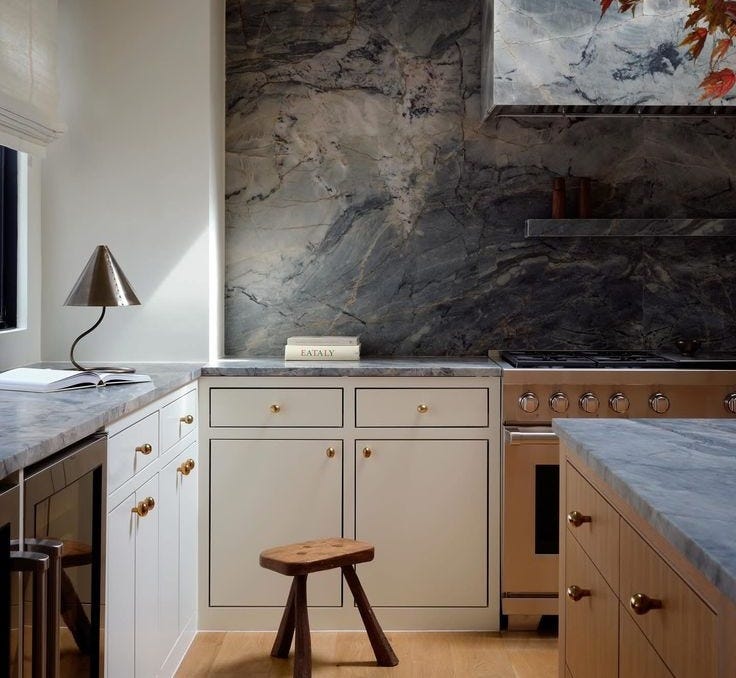
Two problems here, and they’re opposites.
The first is people who think everything has to match. Every tap, every handle, every switch plate the same finish throughout. It’s safe, and it’s flat. Mixing metals is what makes a scheme feel collected rather than ordered off a single page.
The second is people who mix them badly. And this is the bit I find genuinely interesting, because the metals that clash aren’t the ones that are most different. They’re the ones that are almost the same. The combinations I nearly always avoid are nickel with chrome, because they sit so close together they just look accidental, and brass with chrome, which tend to fight each other unless you’ve been very deliberate about where each one goes.
On the other hand, matt black gets on with almost everyone. Brass, nickel, chrome, bronze, it flatters all of them.
And if you’re reading this glancing guiltily at your chrome taps, don’t panic. You do not need to rip anything out. Just introduce one other finish somewhere else, clearly on purpose: black picture frames, bronze cabinet handles, a brass wall light. The second there’s a second finish that’s obviously a choice, the whole thing reads as layered rather than a mistake.
If you want a rule to hold in your head, it’s really two things. First, warm or cool (brass, bronze and copper on one side; chrome, nickel and steel on the other), plus the finish (polished, brushed, aged, matt). And second, let one metal lead, roughly two thirds of the room, with the other playing a supporting role. Dominant, then accent.
None of this is law. But after years of designing homes, I’ve learnt that a room rarely benefits from a committee of finishes.
Try this: Walk around your kitchen and count the finishes. If there are 6 simplify, if there’s only 1. Find another to introduce a second, on purpose.
Lydia’s Rule: Let 1 metal lead. A room with a committee of finishes never quite relaxes.
That’s Part Two. 4 things everyone’s getting slightly wrong, and 4 things you could fix this weekend.
See you in the next one.
Lydia x
This is House Rules, a recurring series on the details that make a home. If you enjoyed it, there’s a subscribe button around here somewhere.
House Rules - Part One
No posts
Comments
Nothing yet. Say the first thing.
Sign in to join the conversation.