
Attention, recruits! D.P. Season 2 is breaking the chain of command.
The army has a solution for every crisis: deny it, contain it and hope the paperwork outlives the victim. Unfortunately for those in charge, trauma disregards rank. What begins as fallout from the first season becomes an assault on the system that caused it, broader, angrier and almost impossible to stop watching.
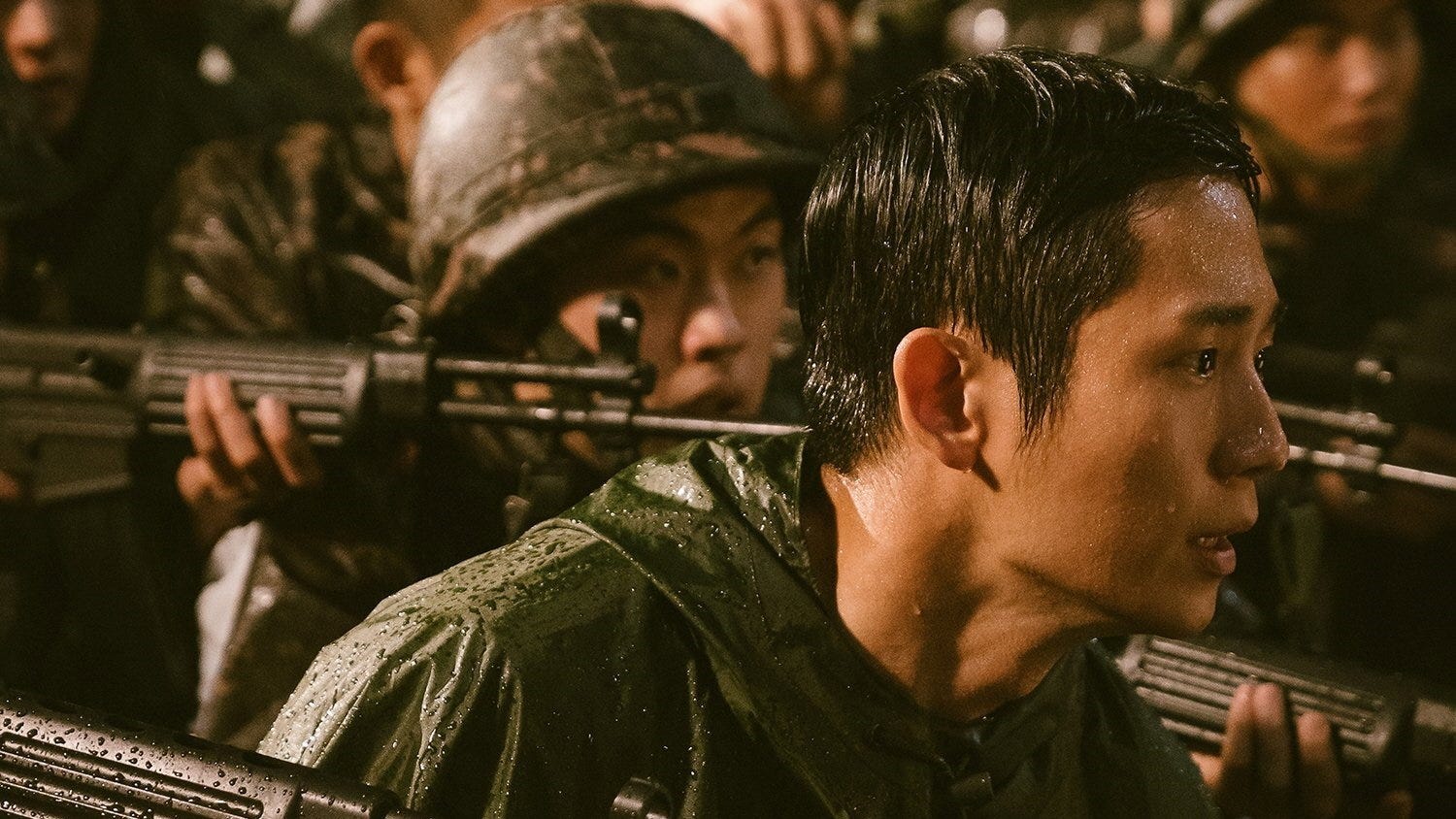
Still shaken by the season 1 finale, Private An Jun-Ho (Jung Hae-In) and Corporal Han Ho-Yeol (Koo Kyo-Hwan) resume tracking down military deserters. Meanwhile, their commanding officer, Sergeant Park Beom-Gu (Kim Sung-Kyun), is under increasing pressure to keep the unit together.
A mass shooting committed by a soldier who was the victim of brutal bullying threatens to expose the conditions inside the barracks. While Captain Lim Ji-Seop (Son Suk-Ku) grapples with his own complicity in the system, senior officers attempt to contain both the public scandal and the truth behind it.
The season begins amid the emotional wreckage of Private Cho Suk-Bong’s case, then gradually expands its scope. Individual incidents begin to form a pattern that can no longer be dismissed as a series of unrelated tragedies. I initially missed the first season’s tightly focused cases. Once the larger pattern emerged, however, the shift felt necessary. The problem is structural and has developed an immune response to accountability: the closer anyone gets to the truth, the harder the military closes ranks.
After two emotionally punishing episodes, the third finally allows humour to return, even if just for a minute. I had begun to fear that comedy itself had deserted the unit, but it seems that it only required a short period of unauthorised leave. This episode gives the characters and us a chance to breathe, without pretending that the danger has disappeared. It briefly restores the lighter chemistry of the first season before delivering an extraordinarily intense emotional blow.
That tonal ambush makes it my favourite episode. Here, humour does not weaken the tragedy; it makes the gutpunch land harder because we have temporarily lowered our guard. The return of a character from the first season also works beautifully, both emotionally and narratively. Saying more would spoil the surprise, but this choice provides a sense of continuity rather than an empty cameo designed to amuse.
An Jun-Ho’s development is particularly satisfying because he finally moves beyond observing. He stops collecting evidence like bruises and starts acting, trading shock for determination and caution for a dangerous willingness to detonate the truth, regardless of who stands nearby. Captain Lim Ji-Seop receives an equally compelling arc. Once willing to ignore wrongdoing to protect his career, he starts resisting the system he benefited from, defended and helped preserve.
While the finale delivers a strong emotional and thematic conclusion, its pacing feels unnecessarily compressed. Too much appears to be resolved within what feels like a single day in court, making the institutional accountability seem strangely efficient. One additional episode would have allowed the conflict to develop more naturally.
The performances remain exceptional. Jung Hae-In portrays Jun-Ho as a compelling mix of exhaustion, fury, and moral determination. Koo Kyo-Hwan lets Ho-Yeol’s old spark flicker beneath a layer of silence and emotional exhaustion. Even when their familiar dynamic has been fractured, their chemistry gives the bleakest material a pulse and stops the story from becoming emotionally distant.
Kim Sung-Kyun plays Park Beom-Gu with restrained frustration until the finale finally releases that energy. Son Suk-Ku makes Lim Ji-Seop’s development believable because he never plays him as though he has suddenly become someone different. His arrogance and self-interest remain visible beneath every attempt to become better.

Jung Suk-Yong is wonderfully abrasive as Warrant Officer Oh Min-U, striking with equal force through words and feet. Bae Na-Ra’s portrayal of deserter Jang Sung-Min combines ubiquitous fear with a heartbreaking vulnerability. By the end of his case, my composure had deserted the unit only to leave me sobbing in its place.
The camera remains calm and static throughout, preserving the roughness that defines the series. While a few moments feel staged, most scenes retain an uncomfortable sense of observing something that was never intended for the public eye. Offices and barracks feel less like workplaces than pressure chambers, where everyone must remain composed while something volatile builds beneath the surface.
Moments of movement therefore feel like a release valve. Action, comedy, and even a simple change in visual rhythm allow the atmosphere to breathe before the walls close in again. Particular highlights include a bicycle chase and a confrontation aboard a train. The season also contains several impressive action sequences, with close combat playing a larger role than before.
The visual storytelling repeatedly questions whether we have been shown the whole truth. Situations are revisited from different perspectives, revealing that what initially seemed clear may have been incomplete, distorted, or even deliberately misrepresented. This approach is fitting for a season preoccupied with testimony, evidence and public narratives. The camera does not merely record events; it also considers who controls the angle from which those events will later be judged.
The second season had the same compelling effect on me as the first. The episodes passed so quickly that their running times barely registered, a feat achieved by very few series. I spent most of the season sitting on the edge of my sofa, waiting for the next disaster to report for duty. D.P. knows suspense needs no mystery when impending catastrophe already fills the room.
The moral stakes feel even higher than before. In exchange, there are slightly fewer personal cases and comedy, and the series moves closer to being a tense institutional drama without fully becoming a thriller. This works because the growing conflict feels like a natural consequence of the first season. Once we have seen enough individual victims, it becomes unavoidable to examine the machine that keeps producing them.
At the same time, I missed the earlier balance between tragedy, action and humour. The third episode reminded me of how effectively the series can move between them; I wished the season trusted that balance more often. Nevertheless, the darker and broader direction did not diminish the show’s compelling nature. The pressure felt different, shifting from immediate to suffocating as an entire institution closes ranks.
The ending affected me more than I expected. Although a small moment had hinted at what might be coming, I remained uncertain about its meaning until the final scenes confirmed my suspicions and destroyed my emotional composure. Yes, I cried. It seems that my own chain of command had failed to keep my tear ducts under control.
What I appreciated most was the sense that the story had been told in its entirety. While the ending does not solve every problem or suggest that the institution has suddenly developed a conscience, it provides the central characters with sufficient emotional closure to make the journey feel complete. I would happily watch another season because, as a fan, I have no respect for sensible discharge procedures.
D.P. Season 2 turns its predecessor’s portrait of military abuse into a broader indictment of institutional denial. Instead of asking only why soldiers flee, it exposes the system that drives them away and then buries the evidence. Its greatest strength lies in that expansion. The character development is compelling, the performances exceptional, and the shift towards public perception and structural responsibility raises the moral stakes considerably.
The wider focus does cost the season some of the intimacy, humour and case-based immediacy. The finale also compresses a complex institutional reckoning into too little time, when one additional episode could have made the conclusion far more convincing. Would I still recommend it? Absolutely, especially to anyone invested in the first season or drawn to intense character dramas about power, responsibility and institutional failure. Viewers seeking something light, comforting or remotely relaxing should probably request reassignment.
The official report may be closed, but the discussion is not. Would you reenlist for a third season, or has D.P. already completed its mission?
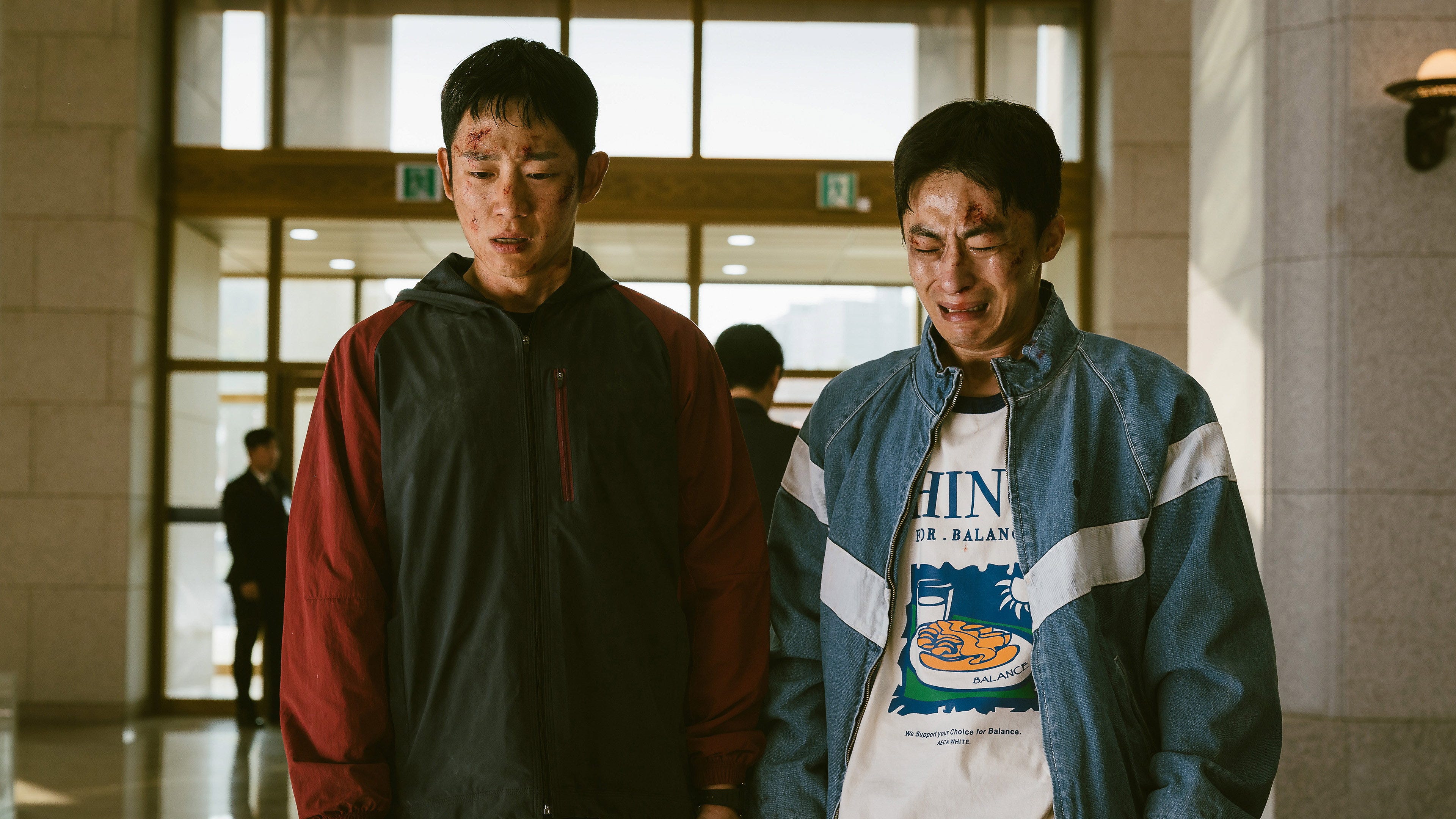
Achievement: The chain of command met the chain of consequences.
The review is complete, the truth is still at large, and my feelings remain absent without leave, xo Marie
D.P. Season 2 is a six-episode South Korean military drama directed by Han Jun-hee and written by Kim Bo-tong and Han. It was released on 28 July 2023 and continues the story adapted from Kim’s webtoon D.P. Dog’s Day.
Where to watch: Currently streaming on Netflix
More info: IMDb | AsianWiki | Rotten Tomatoes
Comments
Nothing yet. Say the first thing.
Sign in to join the conversation.