
Dear film friends, today we are revisiting the first film that ever truly broke me.
This is officially my 50th review on Substack, so I wanted the film to mean more than simply being next on the watchlist. Naturally, I chose the film that taught me how much cinema could hurt. Bridge to Terabithia is the one childhood watch that divided my understanding of films into a before and an after. Before it, films could make me happy or sad. Afterwards, I knew they could leave scars.
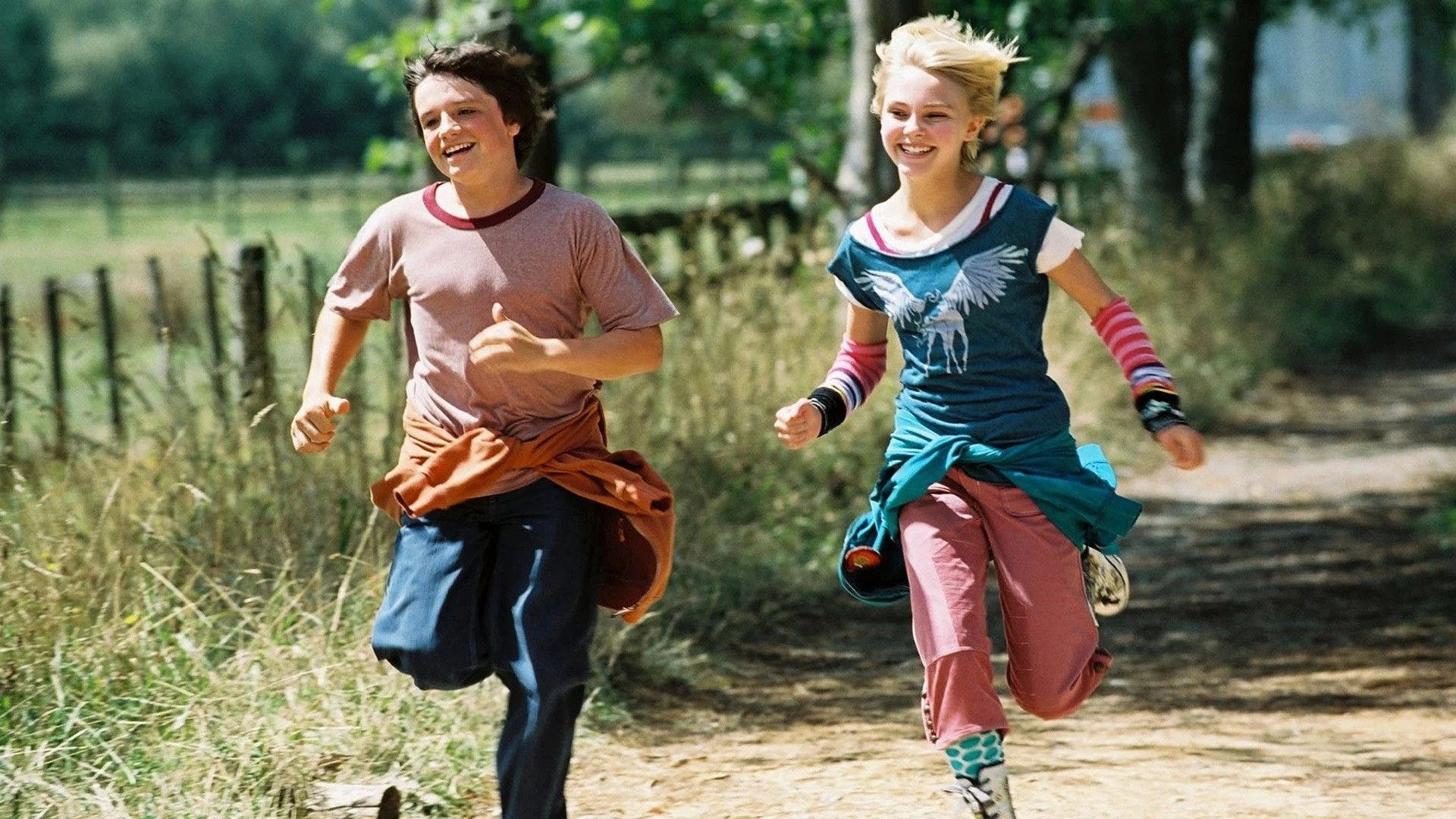
Jess Aarons (Josh Hutcherson) doesn’t have many places where he feels comfortable. His family struggles financially, his relationship with his parents and siblings is strained, he is bullied at school, and he mostly keeps his passion for drawing private.
This changes when Leslie Burke (AnnaSophia Robb) becomes both his neighbour and unlikely friend. Together, they cross a creek into the woods and create Terabithia: an imaginary kingdom where everyday fears become fantastical enemies, and where the two outsiders finally find a place that belongs entirely to them.
Whenever I watch Bridge to Terabithia, I am reminded of one unshakable truth: children can be incredibly cruel. The film understands that cruelty does not require grand motivations; an old pair of trainers will do. More importantly, it remembers how enormous small humiliations feel when you are young, when a school corridor can become hostile territory, and one stupid comment can occupy your mind for days.
Jess and Leslie respond to that world differently. While he retreats inward and draws what he cannot articulate, Leslie seems defiantly open to possibility. She is capable of looking at an ordinary forest and seeing the foundations of an entire kingdom. What I love most is that the film never turns this into a competition. His images and her words are allowed to create something that neither could have built alone.
Therefore, Terabithia becomes much more than just a place of escapism. Yes, retreat there when reality hurts, but they also bring reality with them. They turn bullies into monsters and anxieties into quests that can finally be confronted rather than endured. Frankly, imagining your bully as a troll so you can defeat them in an enchanted forest seems a perfectly valid coping mechanism to me. After all, therapy is expensive.
The clever part is that this exchange works in both directions. Their experiences shape Terabithia, and the empathy and confidence they practise there gradually cross the creek with them. Leslie offers Jess the rare experience of being seen without being judged. She doesn’t create his talent or courage, but she gives him the space to recognise that they were already there. Consequently, their friendship never feels like one child simply rescuing another.
Ultimately, the story confronts them with something imagination cannot simply disguise as a monster and defeat. Its greatest insight is that growing up does not mean abandoning imagination. It means learning its limits. Fantasy cannot erase pain, but it can help us understand it, preserve what mattered and decide what we carry forward. Sometimes, it is not possible to remain safely on one side of the creek forever. The real question is what you choose to take across.
Much of the film’s magic stems from how naturally its visual languages coexist. Live-action, drawings, fantasy creatures and visual effects all feel like they are part of the same artistic vocabulary, rather than competing attractions. Even when digital effects are used, I can still sense the stories and human creativity behind them, as though the film is bringing things made by hand to life before our eyes.
Some effects inevitably show their years, but the film itself aged more gracefully than that suggests. The wide landscape shots are genuinely beautiful, giving the woods a sense of scale and wonder that makes it easy to understand how two children could turn them into a kingdom. The creatures come from children’s imaginations, so photorealism was never really the point. They only need to convince us that Jess and Leslie believe; not enough to apply for New Zealand citizenship.
More importantly, the film never becomes obsessed with spectacle. It knows when visual effects can enrich the inner world, but it also recognises that sometimes a face, a silence, or something deliberately left unseen can achieve considerably more. This restraint is one of the film’s greatest strengths. This is one of the films that trusts its story enough to avoid using special effects just to get our attention.
The same applies to the music. Rather than announcing an emotion and ordering us to experience it, it slips beneath the images, making their colours seem slightly richer. The score gives Terabithia a sense of scale without overwhelming the intimate story at its heart. It knows when to retreat and allows the performances to provide the emotional weight. The film feels magical without drowning itself in sentimentality. It eventually gets the tears anyway, and unfortunately it does not have to ask twice.
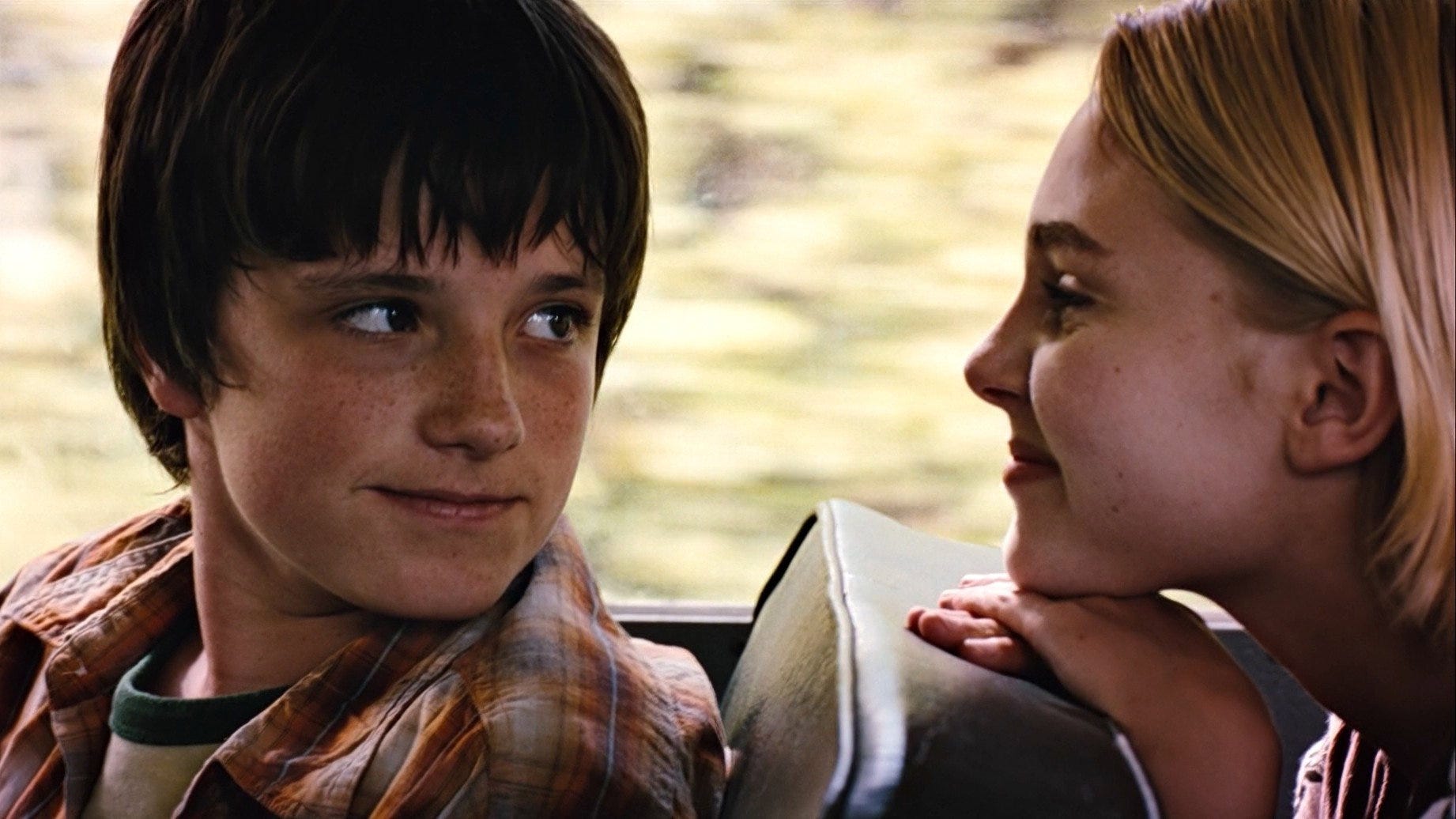
Hutcherson’s performance is particularly impressive given his age. Jess spends much of the film holding back his emotions, so the performance relies on subtle shifts. AnnaSophia Robb provides Leslie with the perfect amount of energy. She is intelligent without being irritatingly precocious and self-assured while remaining believable. The two of them have the kind of chemistry that makes their friendship seem real even before the screenplay tells us how important it is.
Their conversations help enormously, containing awkwardness and a complete lack of self-consciousness, frequently making it feel as though a camera has simply been put in front of real children. This natural quality extends to the dialogue in general. The children don’t constantly deliver polished miniature monologues designed to impress an adult audience, which might not sound like much of an achievement until you remember how many films fail to achieve this.
I still remember seeing Bridge to Terabithia for the first time as a child. I sat in that cinema sobbing, discovering rather abruptly that films could affect me in ways other than mere entertainment. The inconvenient part is that it hurts even more now. Back then, I connected with the friendship, fantasy and immediate emotional impact. As an adult, I see everything surrounding them: pain, poverty and children trying to navigate emotions they don’t know words for yet.
Most of all, I now understand loss. It’s not just what I see that has changed, but whose perspective I notice. As a child, I could relate to two outsiders who found refuge in friendship and in creating their own world. Now, it is the fragility surrounding them that affects me: Belle’s desire to belong and Jess’s difficulty in expressing himself. The film no longer feels like a celebration of finding someone who understands you, but as a reminder not to take that person, or that time together, for granted.
Then there is the simple fact that I know what’s coming. That knowledge changes the texture of every happy moment in the film, because joy becomes fragile once you know how quickly it can disappear. Scenes I once watched innocently now carry shadows my younger self could not possibly have seen. And that feeling no longer belongs to the film alone. Perhaps that is what hurts most now: the film reminds me that loving someone also means living with the possibility of losing them.
Nothing will ever quite replicate that first viewing. You only get to discover a story once, and my younger self was completely unprepared emotionally for what Bridge to Terabithia was about to do to me. Every subsequent viewing offers something that the first one could not. That is probably my favourite thing about the film. Terabithia is imaginary, but the impulse behind it is painfully real: when the world feels too small, cruel or complicated, creativity can carve out enough room to breathe.
There are films I admire more technically and films I might rank above it today, but very few stories have touched me this deeply or changed meaning so completely as I changed alongside them. And yes, it still breaks me every fvcking time. This film and I, we made an arrangement: it provides friendship, imagination and emotional devastation, and I continue accepting the terms and conditions.
Bridge to Terabithia is heartbreaking, yet never hopeless. It is more concerned with friendship, creativity, and the legacy people leave behind than with pain itself. The fantasy is memorable, but it is its humanity that ensures its lasting power. Terabithia matters because Jess and Leslie created it together, and because doing so changed them long after imagination stopped being enough to protect them from reality.
If you haven’t already, you should absolutely watch that film, because this is one of the best coming-of-age stories that explore complicated emotions and trust even young audiences to understand them. Just don’t expect a conventional fantasy adventure with creatures and battles, because the film’s real monsters and miracles are considerably closer to home. And bring tissues. Think of that less as a recommendation and more as mandatory safety equipment.
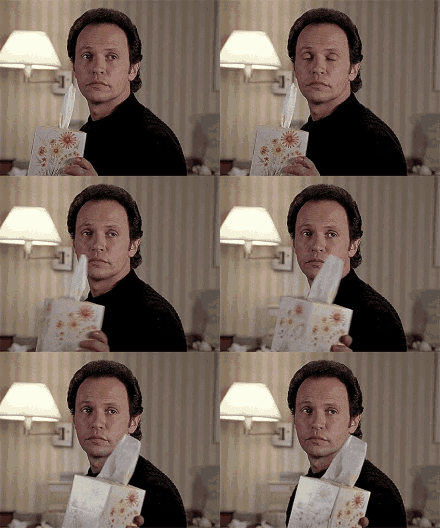
Have you seen Bridge to Terabithia? If you have, did it hit you differently as a child than it does now, and if you have somehow escaped the emotional ambush so far, do you plan to catch up?
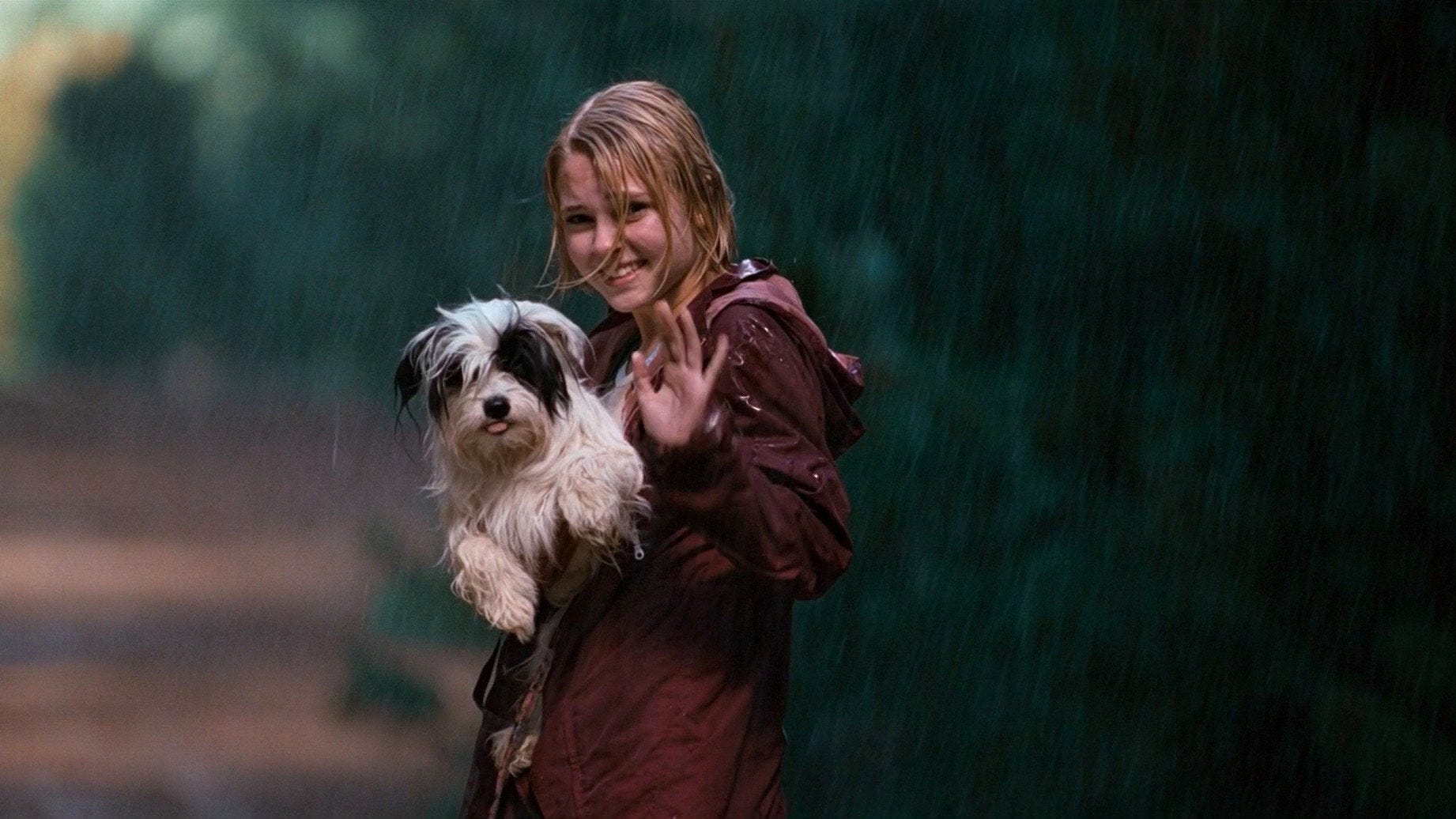
Achievement: Tear ducts thoroughly field-tested.
Until our next adventure, keep making worlds whenever this one feels a little too small, xo Marie
Bridge to Terabithia is a 95-minute fantasy drama directed by Gábor Csupó and written by David Paterson and Jeff Stockwell. Released on 16 February 2007, the film is based on Katherine Paterson’s 1977 novel of the same name.
Where to watch? See JustWatch for streaming availability
More info: Letterboxd | IMDb | Rotten Tomatoes
Comments
Nothing yet. Say the first thing.
Sign in to join the conversation.