
Duke Energy is back at the trough, and this time, they want to reach even deeper into North Carolina’s pockets. There’s a hearing coming up, and if you haven’t seen the numbers, brace yourself. Duke Energy Carolinas wants regulators to let it rake in hundreds of millions more, with regular folks getting hit twice.
First, a 14.2 percent hike, then another 4.1 percent on top. This is in a state where groceries already feel like a second mortgage, and costs for renters are out of control, and the only people being told to wait their turn are the ones who can least afford it. The corporations never have to wait. They get what they want, every damn time.
Duke’s notice puts the numbers in thousands, like that’s supposed to make it less painful. That’s not an accident; every line in that table is money ripped out of a real house, sweating the bill while running a fan instead of the AC, praying the fridge keeps the insulin cold while the power company sends another threat in the mail.
This post is free because people need the information.
The work behind it is not free.
The research, records, campaign finance digging, bill tracking, writing, and time all cost something, and reader support is what keeps Holler & Hammer independent.
Use this link for 20% off a yearly subscription and help fund the work.
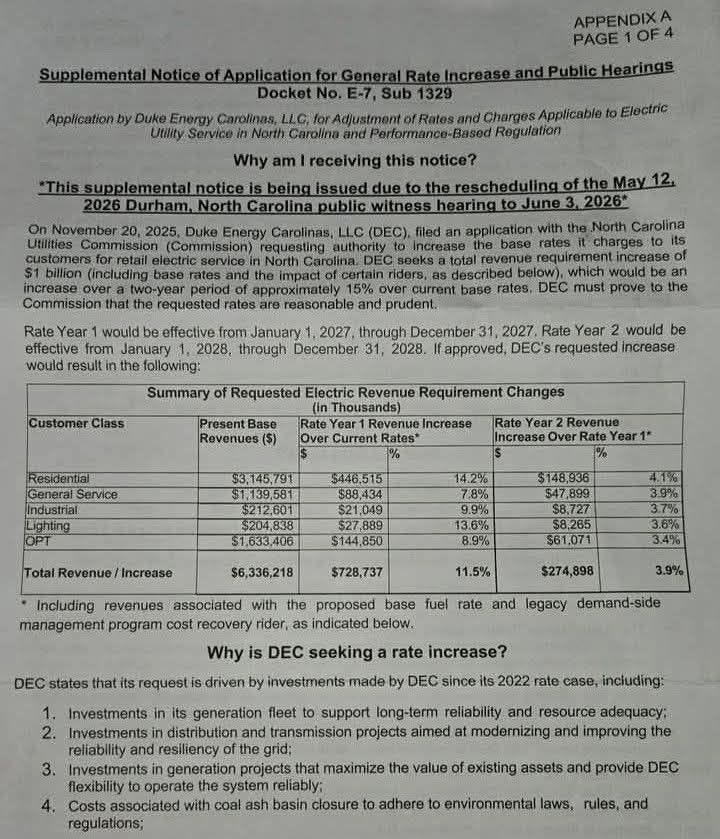
Duke isn’t struggling. It’s a monopoly, full of shareholders, lobbyists, lawyers, consultants, and a political network in Raleigh that makes regular people feel like the game is rigged from the start. That’s why it’s important to follow the money and pay attention to the votes. Being angry about your power bill isn’t enough. Anger is just the beginning. Use it to push for real accountability.
The News & Observer revealed part of the story in 2022. Duke Energy’s campaign money flows through North Carolina politics in both parties, using its corporate PAC, employee donations, lobbying, sponsorships, and outside groups. It also uses influence that works quietly because it already knows how to get access.
The paper reported Duke spent $903,800 lobbying legislators the previous year, that Duke employees and its PAC gave over $350,000 to North Carolina candidates or groups in that election cycle, and that the company reported more than $4.2 million in donations to political groups and organizations the year before. This isn’t civic participation as most people know it. It’s a regulated monopoly buying a permanent seat at the table where our bills are decided.
Now let me do something people say I never do: thank a Republican. That Republican is the House representative for District 28 here in Johnston County.
Rep. Larry Strickland actually did something worth a thank you in 2019. Strickland and I don’t see eye to eye on much, but that’s not the point. The point is, in this fight, on this bill, against this corporate beast, he used his power to block what Duke Energy wanted. When a politician actually stands up for the people paying the bill, the record deserves to be named.
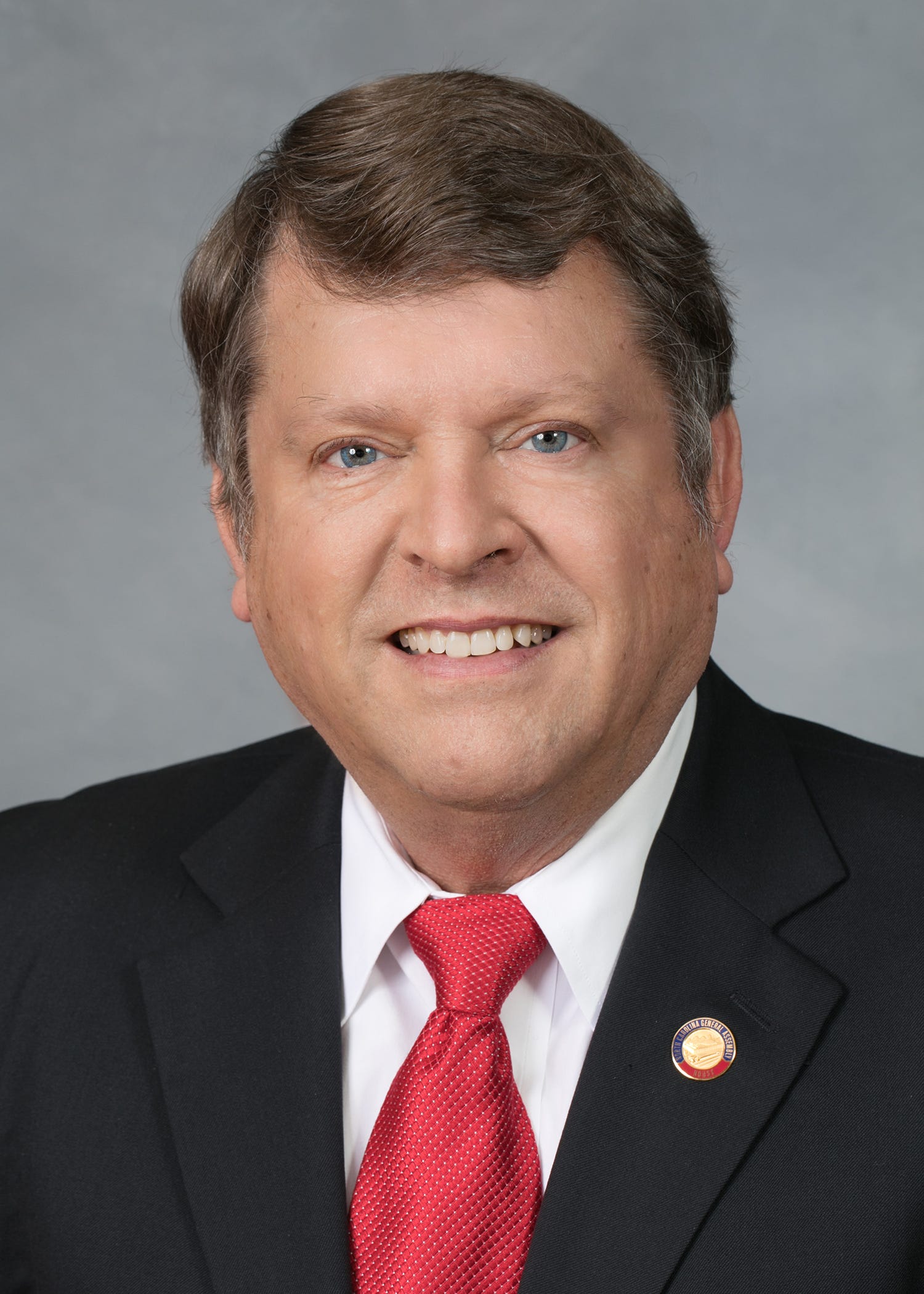
He gives us a real example of what happens when an elected official stands up to Duke Energy on rate-setting. In 2018, Duke Energy’s corporate PAC gave Strickland $2,000. The next year, Duke pushed Senate Bill 559, which included multiyear rate-setting.
This would have let Duke ask for rate increases covering several years instead of coming back each year. It may sound technical, but it was really about who controls the bill, how often Duke had to answer to regulators, and how much room the company had to plan future increases while regular people struggled to understand why their bills kept going up.
Critics warned that multiyear rate setting could weaken oversight and make it easier to overcharge customers. Duke wanted it anyway and had been pushing for it, with a clear interest in getting it through lobbying.
Strickland introduced an amendment that stripped Duke’s multiyear rate-setting scheme out of Senate Bill 559 and replaced it with a study. His amendment passed. He did not hide behind a vague statement about affordability. He did not duck the fight. He used the power of his office to block the mechanism Duke wanted, and the record shows it.
That deserves praise, because after that, the money stopped.
The N&O reported that Strickland received nothing from Duke’s PAC in the 2020 and 2022 cycles. A lawmaker got Duke PAC money, crossed Duke on a major utility bill, then Duke’s PAC money disappeared.
That is useful information. It tells citizens where to press. It tells us that even inside a Republican supermajority culture, there are moments when an elected official can be made to choose the public over the utility. That is why people should lean on Strickland now.
Do not let Strickland forget his own record. Call him, tag him on social media, share this article with him, put the facts in front of him, and make him say out loud whether he stands with the people paying the bill or with the monopoly that keeps raising it.
Remind him that every dollar Duke takes is a dollar out of a Johnston County kitchen, and that letting Duke hike rates again is not just a number on a docket, it is another month of families sweating the bill while the company counts its profits. He has the power to stand up to this system, and the only thing that matters now is whether he uses it.
He does not need to invent a new position. He already has a record to stand on. Either Duke keeps shifting costs and risks onto the people who pay the bills, or elected officials step in and say working people have paid enough. There is no middle ground.
Rep. Strickland should publicly oppose this rate increase. He should tell the North Carolina Utilities Commission that Duke Energy should not be allowed to treat families as a revenue well. He should oppose any bill, amendment, settlement, or regulatory change that gives Duke more room to protect its own position while the public eats the increase.
That is not flattery.
That is accountability.
When an elected official does the right thing, name it. When the same fight comes back around, demand they do it again. Strickland stood in Duke Energy’s way once. Johnston County needs him there again.
Then there is Benton Sawrey.
Sawrey’s record runs the other way. Transparency USA shows Duke Energy’s PAC handed him $4,000. That’s not the whole story, but it’s a start. The real story is in the votes. Sawrey co-sponsored Senate Bill 261, the Energy Security and Affordability Act, a bill that would have let Duke ditch the 70 percent carbon-reduction target and start charging us for construction work before we ever see a single benefit. In plain Johnston County English: Duke gets to drag its feet on clean energy, build whatever it wants, and send the bill to us before we get a damn thing out of it.
Sawrey voted yes on SB 261.
Then he voted yes on Senate Bill 266, the so-called Power Bill Reduction Act, which became the vehicle that actually moved. The name is an insult. North Carolina has a special gift for naming bills like they were written by a lobbyist trying not to laugh.
SB 266 did not come from any mass movement of working families begging Raleigh to help Duke with its accounting problems. It came through the legislature as a utility-friendly rewrite of the rules, scrapping Duke’s interim carbon goal and changing how costs can be shifted among customers. Analysts warned residential customers could pay more. Governor Josh Stein vetoed it. Sawrey voted to override the veto.
Duke gave Sawrey money. Sawrey wrote and voted for bills that help Duke. Sawrey voted for the next one. Sawrey voted to override the veto. Now Duke is back, holding out its hand to the same people who already pay for every political favor, every crooked law, every backroom deal, every Raleigh deal that ends with a working family opening the bill and asking, How in the hell are we supposed to pay this too?
This is not about pretending Democrats are clean and Republicans are dirty. Duke gives across the aisle because Duke is not loyal to a party. Duke is loyal to Duke. That is what monopoly power does. It studies the room, finds the chairs that matter, writes checks where checks help, hires the people who know the system, and waits for ordinary people to get too tired to follow the docket numbers.
Docket E-7, Sub 1329. That is the one in front of us now. A docket is basically the official file number for the rate case, so every public comment, document, and decision gets tracked under it. If you want your voice heard or your written statement counted, you have to use that docket number. It’s how the regulators keep track and how the public makes sure their feedback goes on the record.
There’s a public hearing June 3 at 7 p.m. at the Durham County Courthouse. If you can’t make it in person, you can still raise hell by sending a written statement to the Utilities Commission. Go to the public comment portal, enter docket number E-7, Sub 1329, and say your piece.
Maybe that sounds small next to Duke’s billions. Maybe it is, if you’re standing alone. But a room full of pissed-off people is different. Hundreds of statements are different. Local pressure on Strickland is different. Public questions for Sawrey are different. Politicians count on us getting tired and going quiet. They get nervous when we keep the receipts and show up anyway.
So here is what needs to happen.
Lean on Strickland because he has a record of blocking Duke’s rate-making agenda once before. Make him own that record in public.
Press Sawrey. His record is with Duke, not with the families getting squeezed. Make him answer for the $4,000. Make him answer for SB 261. Make him answer for SB 266. Make him answer for the veto override. Make him explain why anybody in Johnston County should trust him to stand up to a monopoly when his votes and his campaign cash say the opposite.
If you see Sawrey speeding down 70 in Clayton or walking around downtown Smithfield ask questions he can’t dodge. Ask him directly. Why did you take $4,000 from Duke’s PAC and then back bills that help Duke? How do you justify voting for SB 261, which would have let Duke charge customers before any benefits show up?
Why did you support SB 266 when experts warned it could raise bills and gut clean energy goals? Why did you vote to overturn the governor’s veto instead of siding with working families? Will you pledge right now to oppose Duke’s current rate hike, and if not, why not? These are the questions that put accountability back in the hands of the public.
That is what holding politicians accountable looks like in the real world.
Do not bow to the party label. Do not clap for slogans. Do not let them hide behind bill titles that treat you like a fool. Follow the money. Read the vote. Name the lawmaker. Show up at the hearing. File the statement. Make elected officials pick a side: the people paying the bill, or the company cashing it.
Thanks for reading! This post is free and public so please share it to bring awareness.
Comments
Nothing yet. Say the first thing.
Sign in to join the conversation.