
One of the most important things in creative work is making enough room for other people’s ideas.
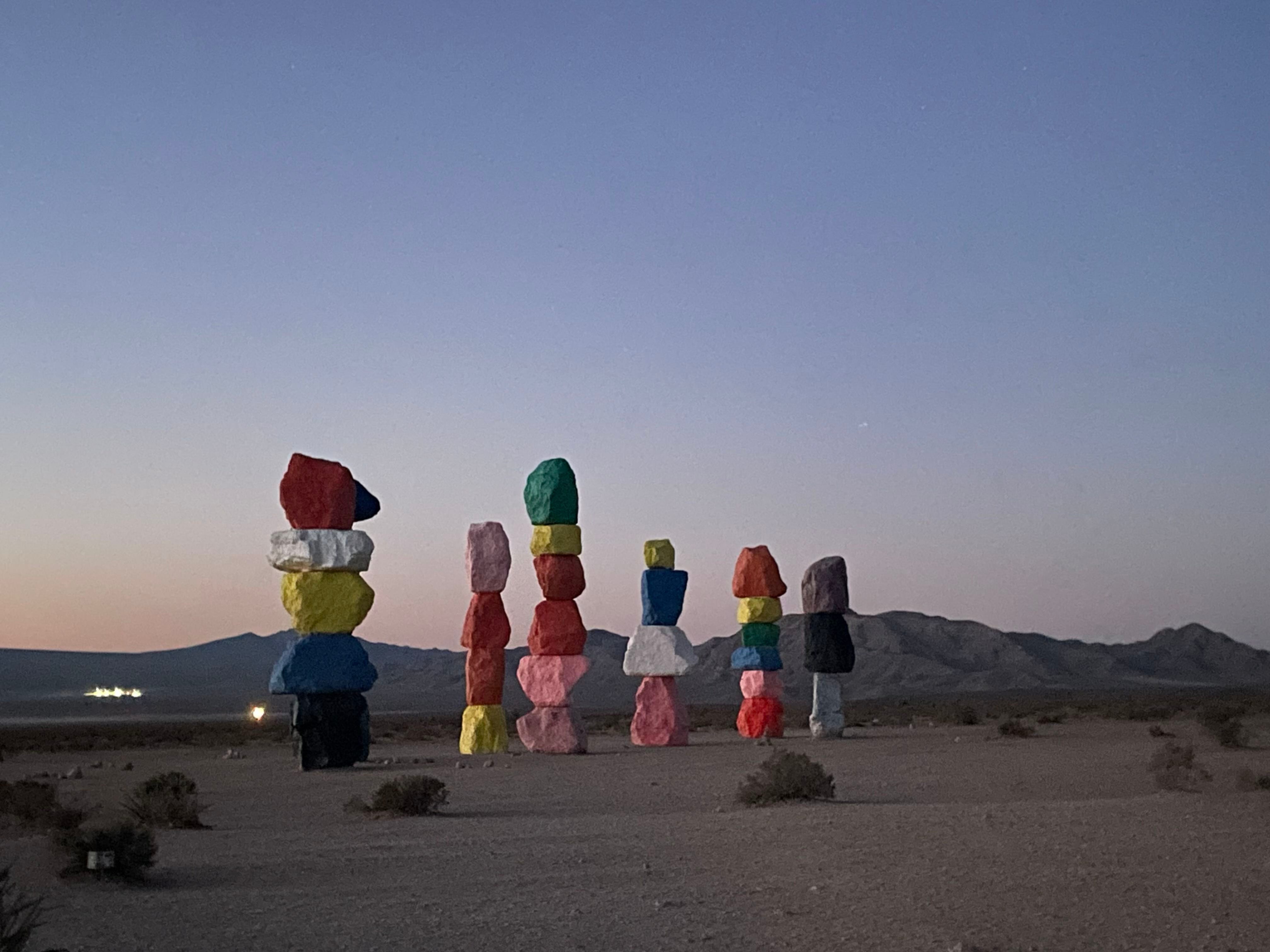
I was reminded of this necessity recently while producing an independent documentary on the Seven Magic Mountains, an art installation you may have driven past as you travel from LA to Las Vegas. The artwork is by a Swiss-born artist called Ugo Rondinone and comprises seven columns of massive boulders painted in day-glo colours piled on top of one another—each column as high as a 10-story building. It’s a perfect reflection of Vegas itself, something man-made in the desert (although it feels as if it might outlast Vegas).
We’d spent weeks shaping the film when our editor, Jim Flynn, quietly presented a completely new ending he’d been developing on his own.
It transformed the documentary, and it was a reminder that leadership is often less about directing every frame and more about creating the conditions for other people’s brilliance to emerge.
Agreeing to help make this documentary is a part of my journey to say “yes” if someone is nice enough to ask. I’ve never been part of producing a documentary before let alone one about the world of outdoor contemporary art installations (many of these are majestic, awe-inspiring, and something I knew nothing about) but when my friend Maya Binkin, a prominent contemporary art curator, asked me to help her to develop a TV series about it, I said yes. It was a labor of love.
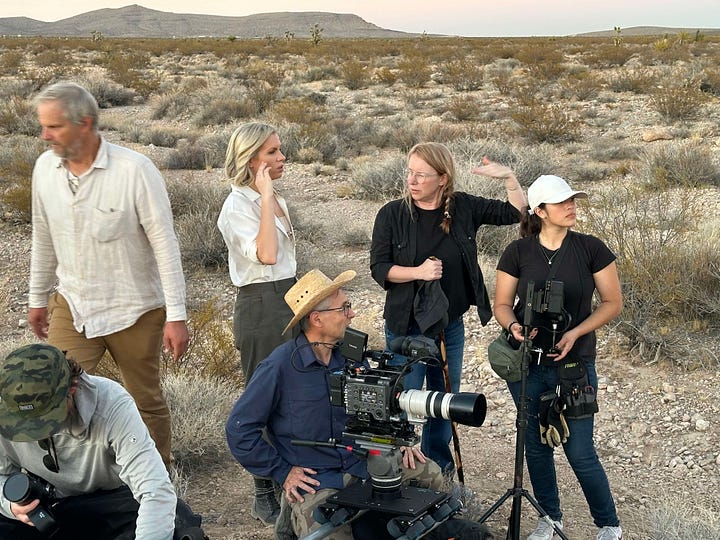
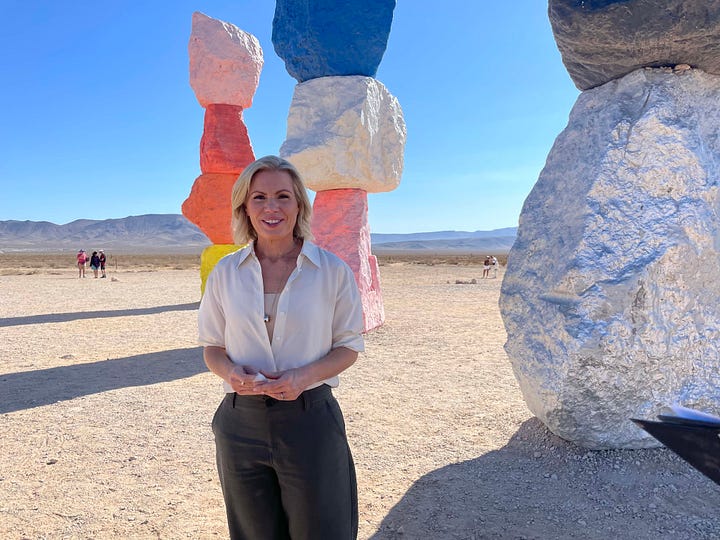
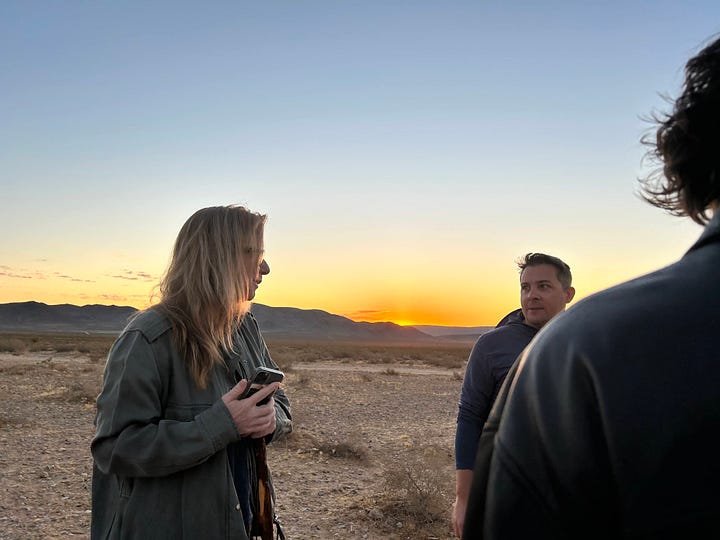
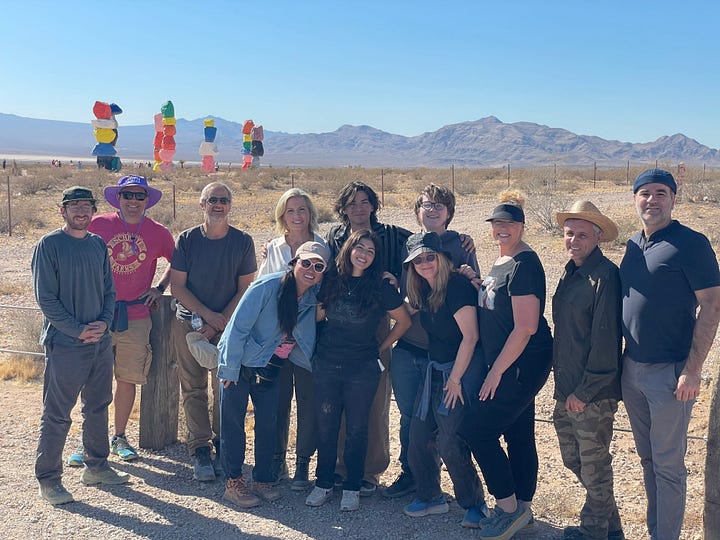
That is how I ended up in the Nevada desert at dawn with a few of my favourite crew, trying our best to capture the gravity-defying wonder of what we were looking at. That’s not what this post is about though. This post is about what happened later.
I had the privilege to work with Jim on Bridgerton and I already knew and trusted his creative vision, which was one reason I asked him to help me with the documentary. He asked me to take a look at his new concept for the ending. He had been working on it entirely unprompted, and was keen to find out if we thought he had been wasting his time.
So we looked at it. His new ending was completely unexpected and it was masterful. We had been working for weeks on the documentary and we were struggling with how to open it up beyond the little world we managed to create with limited resources earlier in the year. It had been feeling too small and insular and now, somehow, our editor figured out a way to let it soar.
Maya emailed me: “I didn’t really understand why a good editor was so important. I didn’t see the big deal. I totally get it now. He is FANTASTIC!”
There is more here to unpack.
Everyone has the potential to bring their artistry and their creativity to work. It is my belief that everyone on a carefully built team has the ability to make a positive impact.
But leaders have to remain open.
That is the caveat. Many people in the entertainment industry and beyond feel a terrible burden. They believe they have to project an image of absolute control. I’ve seen it time and time again. In all but a very few cases this attitude limits the creativity and problem-solving potential of their team. It’s a tragic loss for everyone. They feel deeply that unless they are perceived as the “genius” from which all wisdom flows they won’t be taken seriously.
In my opinion what works best is a collaborative mindset. The idea of the all-encompassing brain controlling everything is a mirage. A wonderful producer I used to work with in the UK said to me many times: “Teamwork makes the dream work.” Yes, it sounds a bit corny but it’s so true.
The teams we are lucky enough to work with are not there to carry out commands from the central brain. The idea that this is even possible helps no one. I believe in my heart we all rise together, and I do my very, very best to stay spacious, to stay open.
I’ve always got guiding principles when I embark on a project. For this one it was words like “spiritual” and “pilgrimage” that guided me loosely so everything was filtered through that lens. But within that framework it’s critical that everyone feels able to exercise their own artistry, to bring themselves to the party.
It’s not news that we all live in cages through the bars of which we view the world. In my opinion, “I control’ everything” is one of the most nonsensical and damaging cages from which to view life, but escaping it takes a willingness to be vulnerable.
Jim wouldn’t have tried our new ending if he didn’t feel seen and trusted, and I couldn’t have recognized its brilliance if I hadn’t been open to it. This is my artistry.
No posts
Comments
Nothing yet. Say the first thing.
Sign in to join the conversation.