
While I regularly offer book recommendations covering subjects like biblical scholarship, deconstruction, and mythology, today I have a book review instead. This was written by and for evangelical Christians on the dangers of deconstruction.
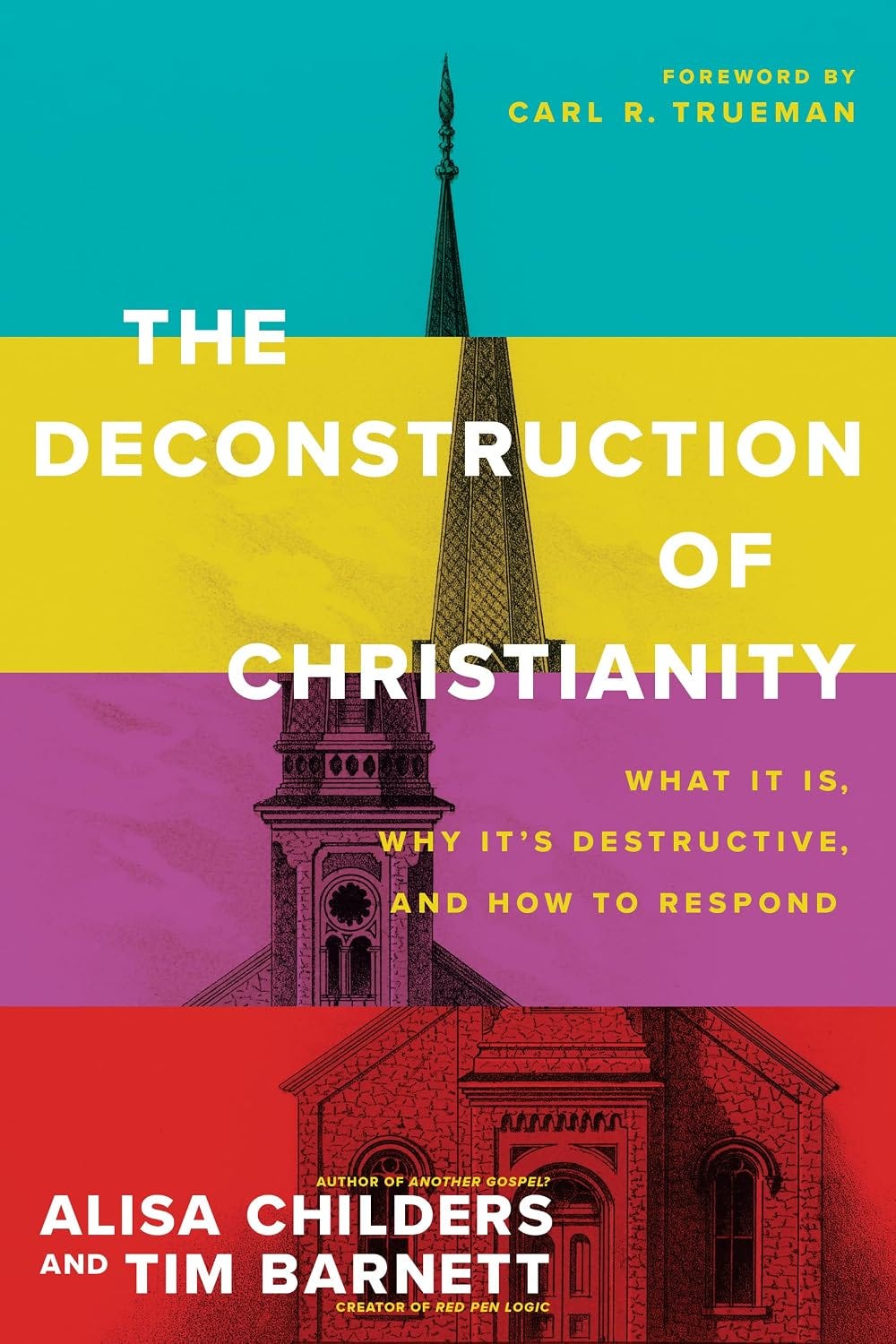
I found this book randomly in the library, and it piqued my curiosity. In the opening pages, the authors discuss meeting an older couple who were upset that their adult child had gone no contact due to deconstruction. Then the authors talk about a teen who lost all of his friends when one of them came out as gay. He was looking for a way to stay true to the Bible but also get his friends back.
Those types of people are the core audience for this book. Ones who are suffering social and familial isolation for their beliefs. So I read it to find out what evangelicals think and teach about those of us who have deconstructed.
I read this so you don’t have to.
And it’s as bad as you think it is.
The apologetics are rudimentary at best, the logic is nothing but circular, and they fail to address what actually triggers deconstruction. In short, their accusations against deconstructionists are the same ones they should be using for self-reflection.
For them, deconstruction is a cultural threat against “historical Christianity,” a term they conveniently never define. They use the term “deconstruction” as synonymous with apostasy. And yes, they consider progressive Christianity to be among that circle of apostates, although they never discuss where Catholicism stands.
I assume “historical Christianity” loosely applies to the last 150-ish years of conservative Christianity in the US, but which they think is as old as the Gospels themselves. Additionally, while they are quick to denounce cultural worldviews that aren’t based on the Bible, they never address how any of that is different from a scientific worldview.
The authors spend a good deal of time discussing the difference between subjective and objective truth, while placing historical Christianity in the objective truth category. They defend that position by claiming the Bible is the authoritative word of God and is therefore objectively true.
That’s called circular reasoning.
They also accuse progressive Christians of being apostates for placing Christian theology into the subjective category, thus undermining the authority of scripture.
What do Christians have if not the authority of scripture?
It’s what I expected. But it’s also a solid window into the failures of both evangelical thought and apologetics. One can only prop up historical Christianity as “objective truth” by building their theological foundation on established assumptions. A foundation of sand.
They must first assume:
-That the Bible is historically accurate and not legendary fabrications.
-That the authors are who they say they are (i.e. Matthew wrote the gospel of Matthew) and that they’re not forgeries. (I don’t think they know what a pseudepigraph is.)
-That the accounts don’t contradict each other.
-That their “sound doctrines” (as they put it) are based on biblical teachings rather than cultural perceptions throughout history.
-That 2000 years of translations never introduced any textual, cultural, or theological errors.
There are more assumptions, but those are the most common ones. A critical thinker doesn’t address the claim of whether Christianity is objectively true without first analyzing the assumptions underneath that claim. When you critically evaluate those assumptions, as most deconstructionists have done, the entire premise quickly falls apart.
But apologists never evaluate those assumptions. They never ask the right questions of themselves. They only look for ways to defend the positions that they already believe. Critical thinking is the opposite of apologetics.
The second primary position in this book is that deconstructionists can never reach the truth because of how they perceive the authority of scripture. This is the fundamental fracture between evangelicals and deconstructionists.
Deconstructionists do not believe the Bible is authoritative because they have critically evaluated those assumptions and found that they don’t hold water. Evangelicals will never ask the fundamental question: What if the Bible is wrong? The authors believe anyone who asks that question is already deceived by Satan.
They never explicitly say they are creationists, but they repeatedly reference the Garden of Eden story as if it were real, then argue that the first sin—the original sin—was deconstructing what God had said.
The sad thing is that the authors think this entire exercise is logical thinking. In reality, it is anything but logical.
At this point, deconstructionists are probably wondering if the authors ever addressed the elephant in the room. They did. Trump and the right-wing political merging of Christianity with nationalism came up once. The authors spent one paragraph on it, hedged their political statements, then moved on.
And this is where the authors need some serious self-reflection.
They repeatedly berate progressive Christians and deconstructionists for sinning in the ways of the world and seeking subjective, cultural theology instead of sound biblical doctrine. Not once do they ask themselves if “historical Christianity” or their own conservative and American identity markers have influenced the cultural parameters of their own Christian beliefs.
So, looking back through this book after finishing the last page, the entire deconstructionist response can be summed up with the words of Matthew.
“Why do you look at the speck of sawdust in your brother’s eye and pay no attention to the plank in your own eye? How can you say to your brother, ‘Let me take the speck out of your eye,’ when all the time there is a plank in your own eye? You hypocrite, first take the plank out of your own eye, and then you will see clearly to remove the speck from your brother’s eye.”
Matthew 7:3-5
Comments
Nothing yet. Say the first thing.
Sign in to join the conversation.