
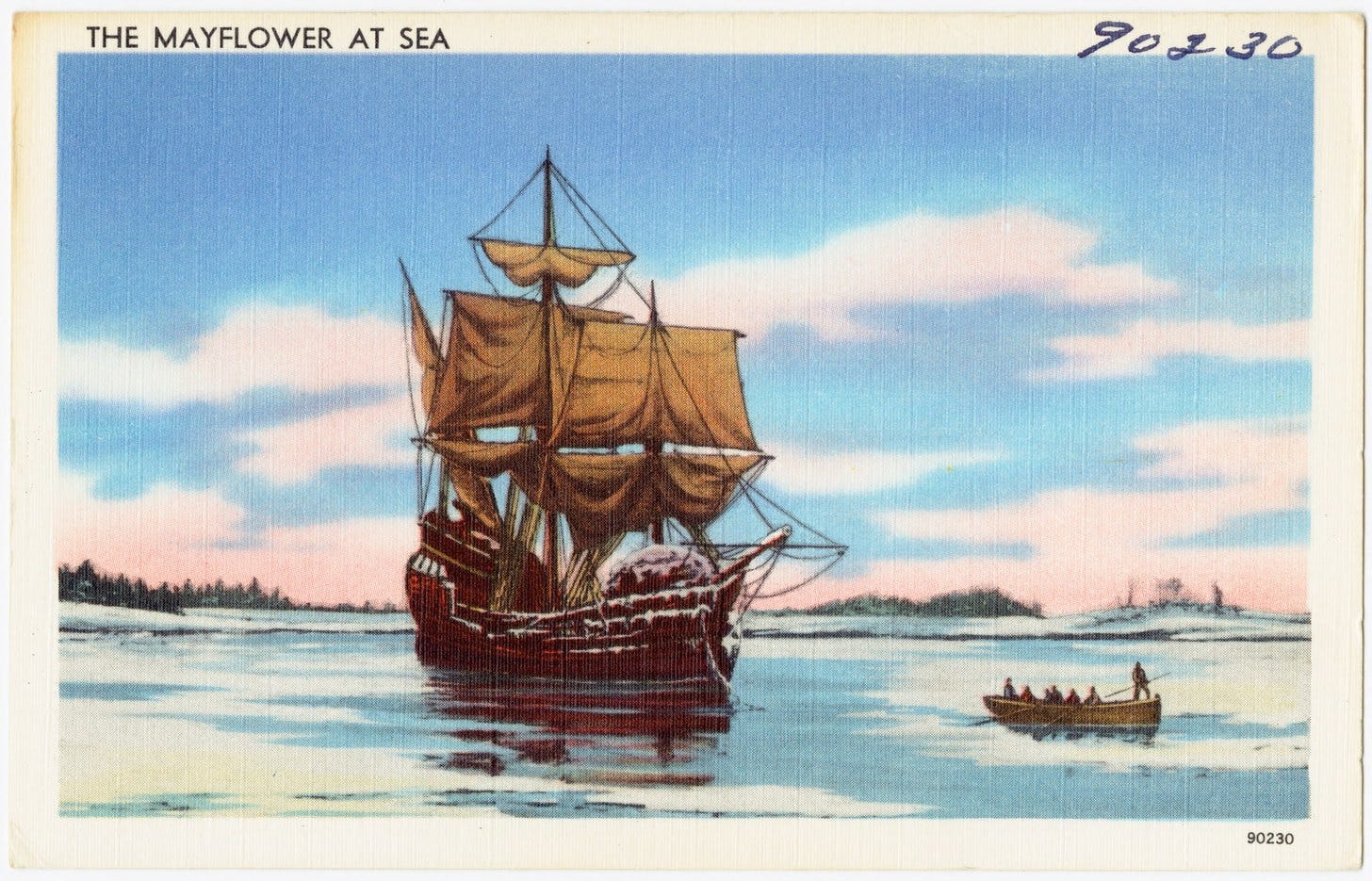
Two ships came out of Southampton Water on August 15, 1620, bound for the northern parts of the Virginia patent. The larger was the Mayflower, a merchant vessel of about a hundred and eighty tons chartered for the voyage. The smaller was the Speedwell, sixty tons, which the congregation had bought in Holland and intended to keep in America as a fishing and trading boat once they arrived.
Between them they carried something over a hundred and twenty passengers. Rather less than half were the separatist congregation that had been living in exile at Leiden for a decade, people who had left England because they would not conform to the established church. The rest had been signed up by the London merchants financing the venture, and had come for land and wages rather than doctrine. The two groups did not much like each other and would be sharing a hold for the next several months.
The Speedwell began taking on water almost before they were clear of the coast. Not a seam weeping, but water coming in fast enough that the crew were at the pumps and the masters agreed they could not cross an ocean like it. Both ships put into Dartmouth, about seventy-five miles down the coast, and the Speedwell was searched over and caulked and declared fit.
They sailed again. About three hundred miles west of Land's End, well out into the Atlantic with no land in sight, she started leaking again and this time worse. They turned round a second time and ran for Plymouth.
At Plymouth the decision was finally made. The Speedwell was sold off as unfit, and with her went the plan to have a boat of their own on the American coast. Some of the passengers had had enough by then and went home. Robert Cushman, one of the men who had negotiated the whole enterprise, was among those who stayed behind, and he wrote to a friend that he expected the venture to fail and most of them to die.
The rest crowded aboard the Mayflower. She now carried a hundred and two passengers in a ship built to carry wine, with the space between decks not high enough for a grown man to stand upright, and she sailed alone on September 6.
The five weeks mattered more than anything else that happened that summer. An August crossing would have put them on the American coast in early autumn with time to look for a site, cut timber, and get something in the ground. Instead they went out into the North Atlantic in the season of gales, took sixty-six days to cross, and somewhere in the middle of it the main beam of the ship cracked.
They sighted Cape Cod in November. They were well north of the patent they held, the season was gone, and after trying to work south along the coast against the weather they gave it up and anchored where they were.
Before anyone went ashore, forty-one of the men signed an agreement to combine themselves into a civil body politic and to obey the laws they would make. They wrote it because they were outside the territory their patent covered, and some of the passengers had already pointed out that on landing nobody would have any authority over anybody.
That first winter, they lived aboard the ship and in whatever shelter they could throw up, in a climate none of them had experienced, with provisions that had been eaten into by five extra weeks in English harbours. Scurvy and pneumonia went through them. By the following spring roughly half of the hundred and two were dead, and of eighteen married women who had sailed, three were still alive.
The Speedwell, meanwhile, was sold, re-rigged by her new owners, and reportedly made voyages for years afterward without difficulty. William Bradford, who was aboard the Mayflower and later wrote the history of the colony, came to a conclusion about that leak, and it was not that the ship was unsound.
1914: The Panama Canal Opens and Almost Nobody Notices
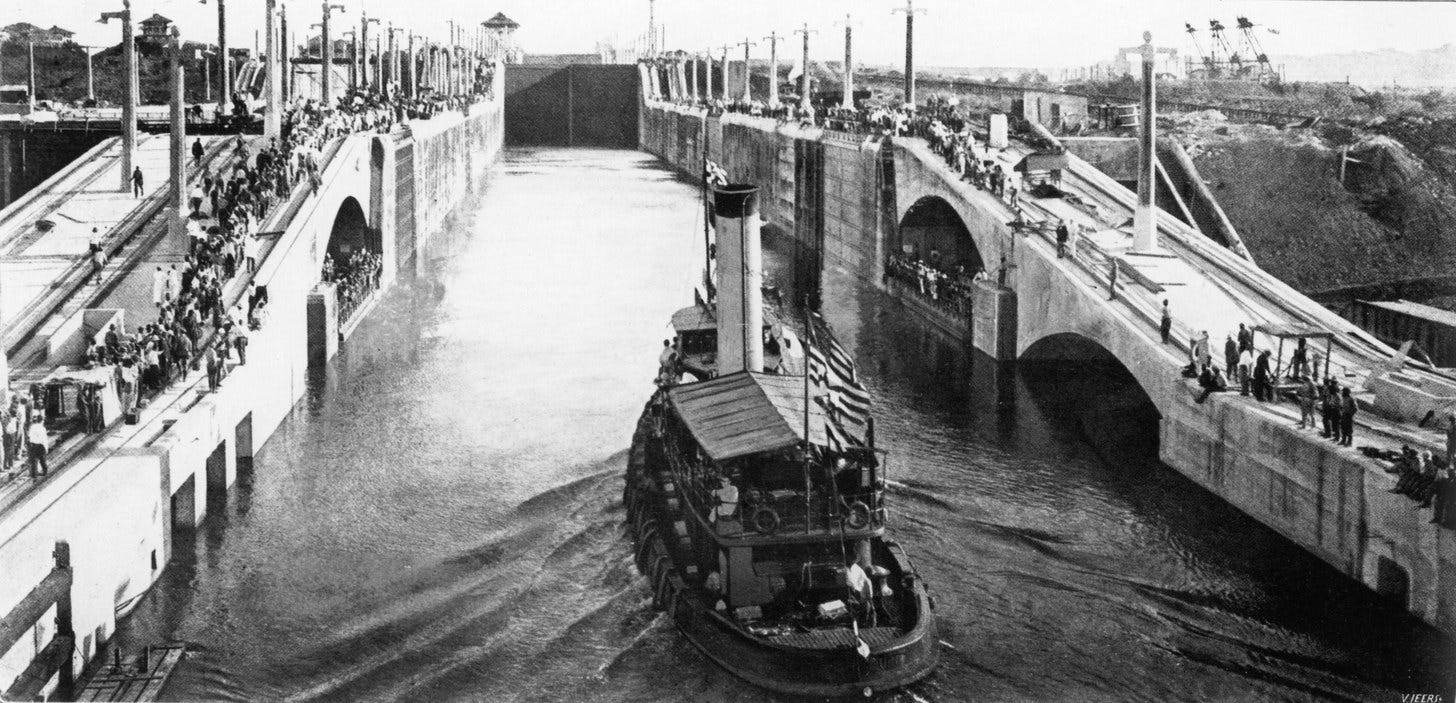
The SS Ancon left the Atlantic side a little after seven in the morning, went up through the Gatun locks, crossed the lake, ran the Culebra Cut, dropped down through Pedro Miguel and Miraflores, and came out into the Pacific that afternoon. Nine hours, for a voyage that had meant eight thousand miles around Cape Horn. It was meant to be one of the great celebrations of the age, with a procession of warships and heads of state and a world's fair on the isthmus. None of it happened. Austria-Hungary had declared war on Serbia eighteen days earlier, Germany was in Belgium, and every navy that might have sent a ship had other work. American engineers had moved close to 240 million cubic yards of earth and spent nearly four hundred million dollars, and counting the failed French attempt that came before it the canal had cost something like twenty-five thousand lives, most of them West Indian labourers who died of disease. The papers that carried the story put it inside.
1969: Half a Million People and No Fences
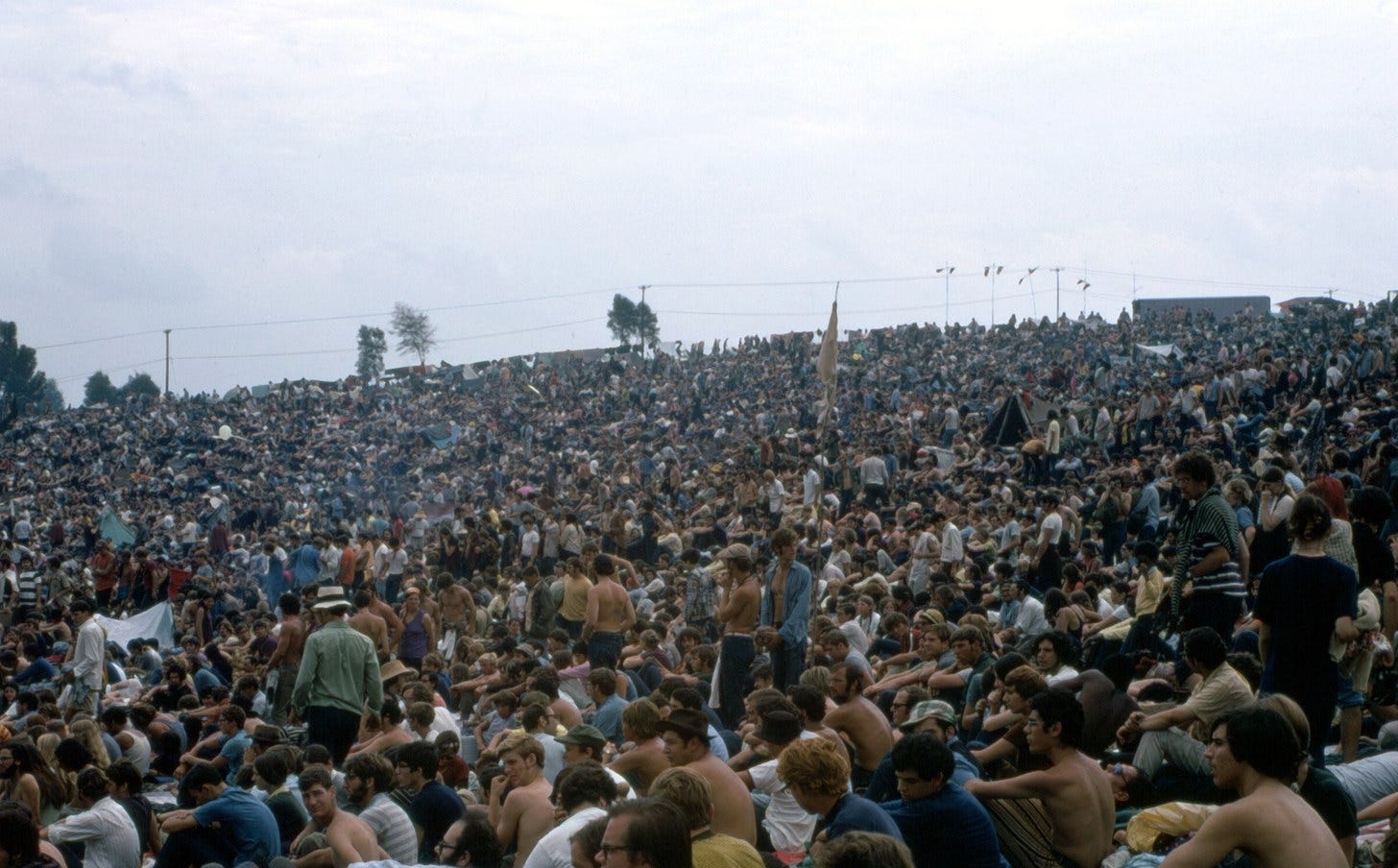
The Woodstock Music and Art Fair opened on Max Yasgur's dairy farm at Bethel, New York, six weeks after the town of Wallkill threw the promoters out and left them without a site. They had sold tickets for perhaps fifty thousand. Somewhere between four and five hundred thousand came, the roads seized solid for miles, and the organisers made the only decision available: they took down the fences and let everyone in for nothing, turning a business into a write-off and a concert into a landmark on the same afternoon. It rained hard and the site turned to mud. Thirty-two acts played across three days, Hendrix closing on Monday morning to a field that had mostly gone home. Yasgur, a Republican dairy farmer in his late forties with a heart condition, had rented his fields over the loud objections of his neighbours, and some of them never spoke to him again.
1947: Midnight, and Two Countries Where There Had Been One
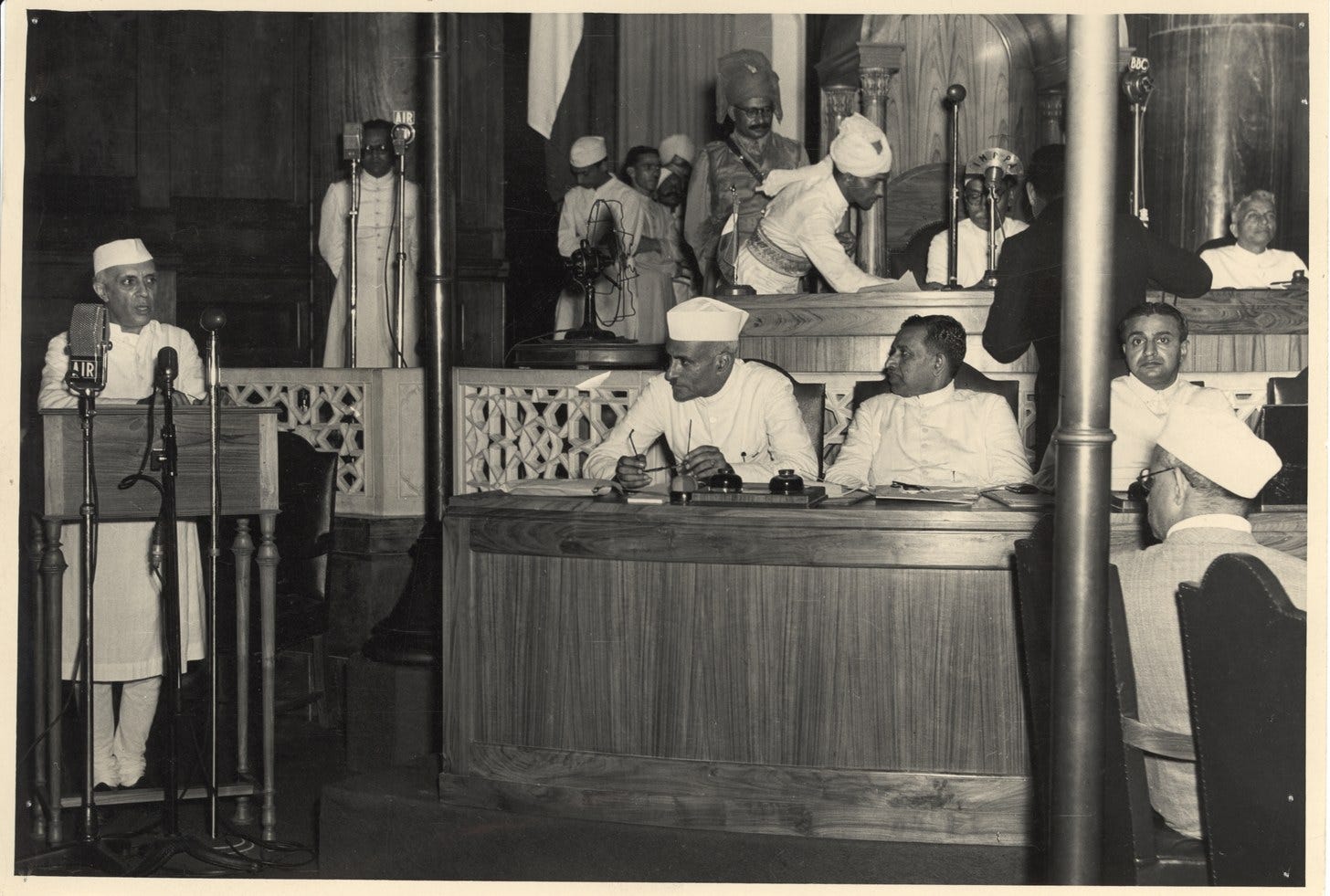
At midnight going into August 15, British rule in India ended and Jawaharlal Nehru rose in the Constituent Assembly in Delhi to say that at the stroke of the midnight hour, while the world slept, India would awake to life and freedom. Pakistan had come into being the day before. The line dividing them had been drawn in about five weeks by a British lawyer, Cyril Radcliffe, who had never set foot in India before he arrived to do it and who left the day the boundary was published, and its exact route was not announced until after the celebrations were over. What followed was one of the largest and fastest movements of people in recorded history: something like fifteen million crossed the new borders, and the estimates of how many were killed run from several hundred thousand to two million. Gandhi did not attend the celebrations. He was in Calcutta, fasting, trying to stop the killing there.
The full deep dive is about the leak. The Speedwell was refitted before the voyage with masts considerably larger than she had carried before, and a small ship under too much sail works her seams open and takes water exactly the way she did: fine in harbour, leaking within hours at sea, sound again once she was searched. William Bradford concluded her master had done it on purpose to get out of a year's commitment on a wilderness coast. We cover the evidence, what happened to the ship afterward under new owners, the beam that cracked in mid-ocean and how they saved it, why the Mayflower Compact was written in a hurry, and what the winter did to the eighteen married women who sailed. Start your free 7-day trial to read it.
Comments
Nothing yet. Say the first thing.
Sign in to join the conversation.