
The Visigoths are one of the most fascinating peoples in Spanish History. We know what they did, and where they lived, but… where is the Visigoth architecture they left behind? And what does Visigoth architecture actually look like?
History of Spain is the leading Spanish History publication in English, with over 4,500 curious weekly readers. Understand Spain in engaging English-language exclusive articles delivered weekly to your inbox!
When we think of architectural evidence of Spain’s past civilisations, the Visigoths are probably the hardest to find. You can witness today the grandeur of a giant Roman aqueduct in Segovia, a great mosque in Córdoba, a Muslim palatial city in Granada (The Alhambra), or a Medieval fairytale-like city in Toledo. You can also see 20th Century marvels like the Sagrada Familia in Barcelona or the Palacio de Telecomunicaciones in Madrid. But… where to see Visigothic architecture in Spain?
Before answering that question, let’s answer another one first:
Visigoth architecture refers to the churches and buildings associated with the Visigoths, the society that ruled the majority of the Iberian Peninsula between the 6th and the 8th Centuries, from the fall of Rome until the Muslim Conquest of 711.
When we talk about the Visigoths, we usually refer to the Visigothic Kingdom of Toledo, which ruled the majority of the Iberian Peninsula and was headquartered in Toledo. They were Christians, first Arian, and then Catholics. So the temples they built were churches.
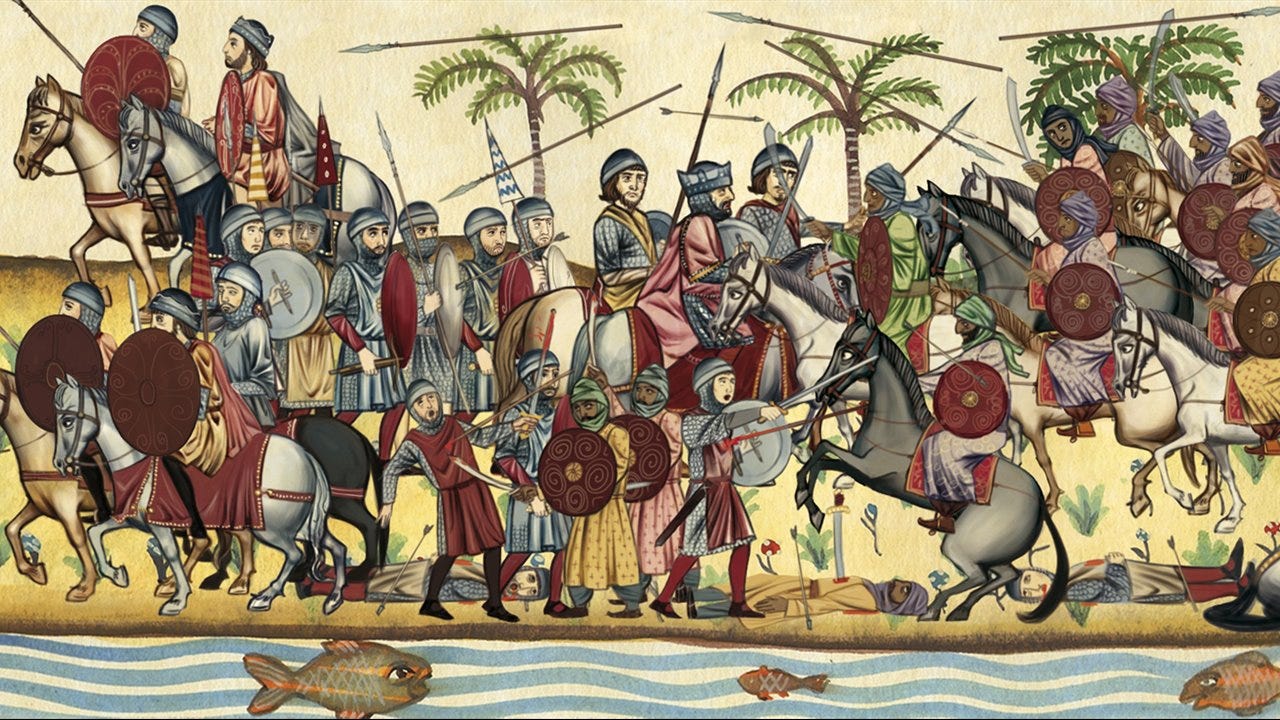
The Visigoths were Germanic people, but by the time they ruled Spain they were living inside a deeply Romanised and Christian world. Their kingdom inherited a landscape full of Roman buildings and infrastructure, Latin culture, Christian institutions and local aristocracies. Therefore, their architecture was not simply Germanic, but a blend of Late Roman, early Christian, local Hispanic and Germanic features. Doesn’t that sound like one of the most interesting mixes you’ve ever heard of?
But let’s try to provide a simple, summarised definition:
Visigoth architecture is the early medieval Christian architecture of Spain, between Rome and Al-Andalus in the Middle Ages; with a focus on the stone churches connected with the Visigothic Kingdom of Toledo and its cultural world.
Visigoth architecture is harder to recognise in Spain than it may initially feel. There is no single Visigoth look that you can spot, as it’s the case with Roman, Gothic or Islamic architecture. On top of that, many of the buildings the Visigoths built are no longer standing, underground, or were transformed into something else by the later societies that ruled their former territory.
However, there are still some features that are consistently repeated when we talk about Visigoth architecture in Spain. Let’s have a look at them:
This is the most recognisable feature of Visigoth architecture. Many people nowadays associate horseshoe arches with Al-Andalus, especially to the Great Mosque of Córdoba. Muslim Spain left behind many horseshoe arches, and many of them are spectacular, so it makes sense that this architectural feature is associated with it. But the Visigoths also used them, and did so first, although their use of horseshoe arches can feel more rudimentary than the polished, fine arches of Al-Andalus.
Contributing to the defensive and sober look of Visigoth buildings, we also have thick stone walls and small windows. These made their churches and buildings look robust, closer to a defensive structure like a castle than to a refined temple. Contrary to how other refined styles look impressive because of their ornamentation, Visigoth architecture feels plain and compact, looking like pieces of heritage that survived since very long ago.
I know many people may be surprised by this, but centuries ago, heritage preservation was not a thing. When people were building something and needed, let’s say a column, it was often easier to source it from an unused building from a former society than carving it new. I already wrote about the case when Muslims used two Roman tombstones as building blocks for the tower of Seville’s Cathedral, the Giralda.
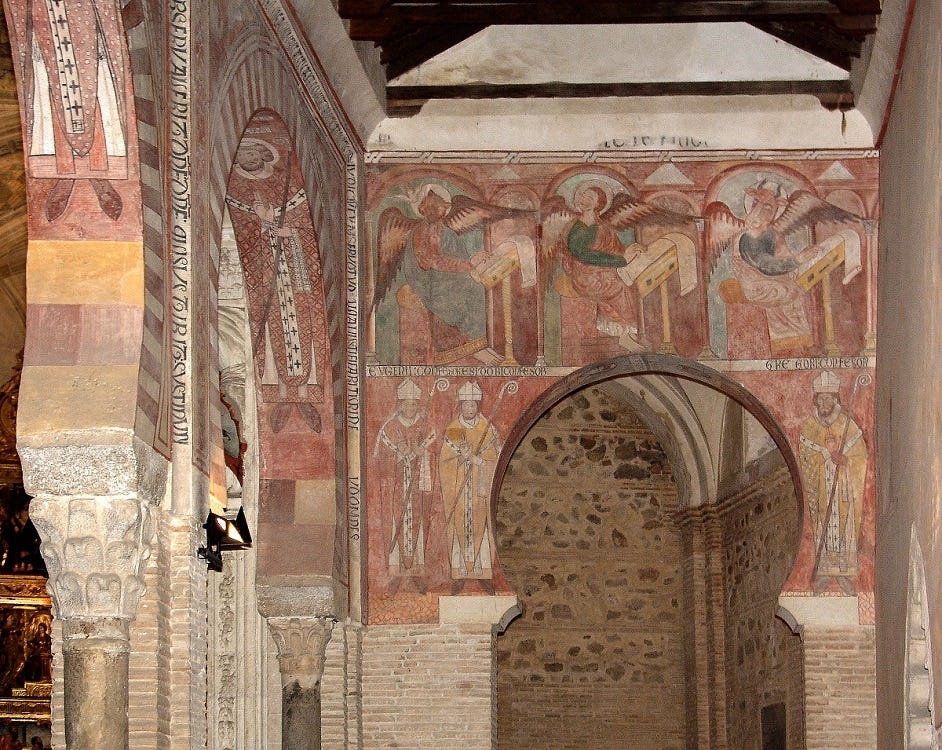
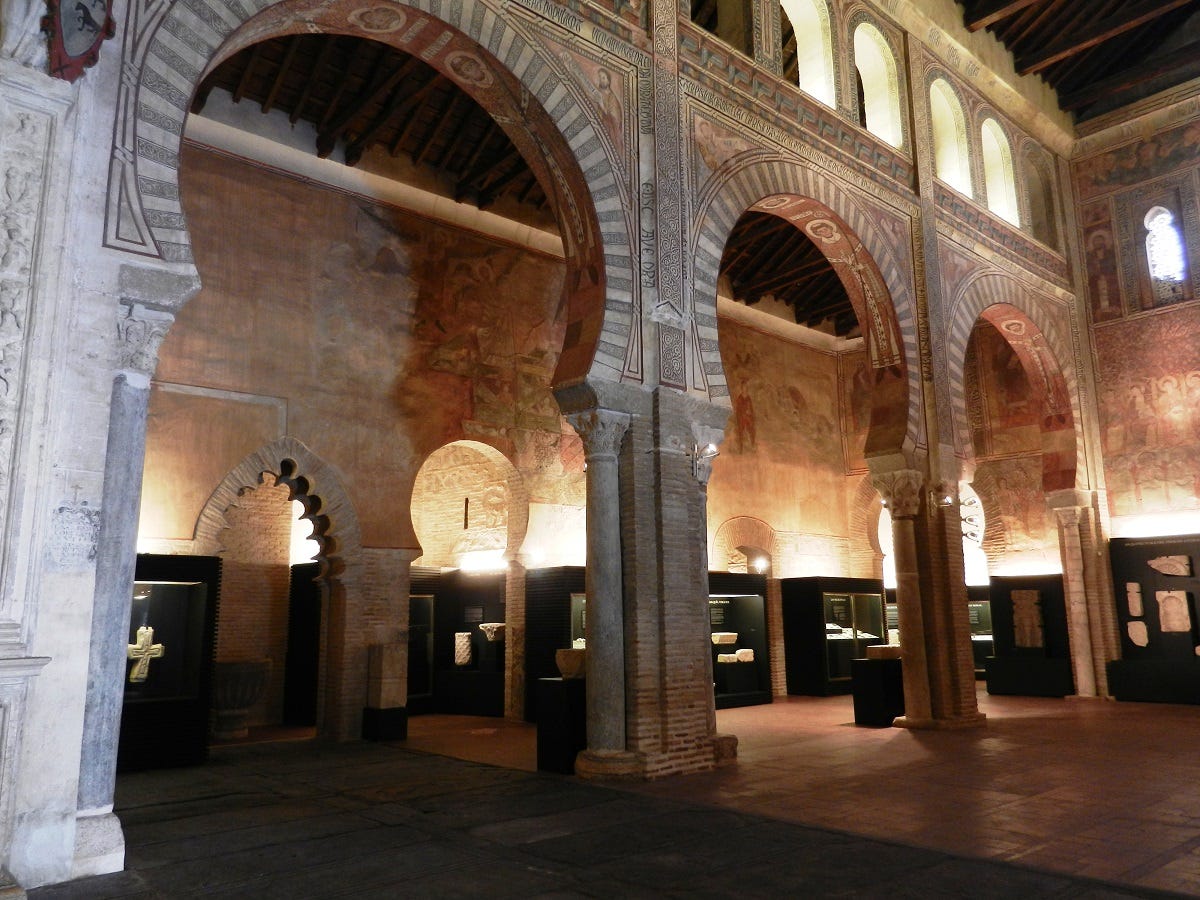
In the case of the Visigoths, the civilisation that preceded them was Roman Spain, known as Hispania. They inherited many of their buildings and infrastructure, so in many cases these were used as sources for building materials. One of the best examples of this is the San Román Church in Toledo. This church was built in 1221 after the Christians took the city from the Muslims. As building materials, they reused Roman and Visigoth columns. You can see them in the following photos:
Another feature that adds on to the simple and straightforward look of Visigoth architecture is the shape of the churches’ plans. In many churches in Spain, the buildings have a cross shaped plan, turning the cross into part of the architecture. But Visigoth architecture follows an older Roman and early Christian style, with churches having a more simple shape, usually rectangular. Again, if we consider that they had limited architectural advancements, and that their structures have a defensive look, a simple plan both makes sense and contributes to projecting that old and simple aesthetic.
On the other hand, the sobriety of the Visigoth churches made their interior more sacred, compared to the ornamental spectacles that we can find in gothic styled cathedrals in, for example Seville or Toledo. Even though these have incredible interiors, the fact that Visigoth architecture looked so simple turned the building into a particularly intimate temple, and the simple plan contributed to that.
While Visigoth architecture often looks quite plain, many buildings preserve simple carved decorations. These ornamentations are not as refined and sophisticated as the kind of carved decorations we can see in later Gothic or Andalusi architecture. Visigoth carved ornaments are much simpler, and can feel like an earlier stage of those.
It’s interesting to contrast this with Roman architecture and art, which was earlier than the Visigoth, but achieved an incredible degree of sophistication and detail. The reason to this shift into a less refined kind of carving decorations is probably that the Visigoths were Germanic people who arrived to a territory previously ruled by Rome, so although they somehow adapted to their new reality, their individual context was different to those sophisticated details.
After understanding what Visigoth architecture is and its key features, the next natural question is where to see some Visigothic buildings in Spain. And, let me tell you, that’s a really good question with an even more interesting answer:
As we mentioned above, the Visigoths ruled most of the Iberian Peninsula and had their capital in Toledo, which was so important for them that kings had to be crowned in Toledo for it to be official. They built churches, produced laws and shaped the future of medieval Spain through their Toledo councils, where for example they turned to Catholicism and, we could say, helped build a political and religious memoir that would be claimed later by Christian kingdoms during the Reconquista.
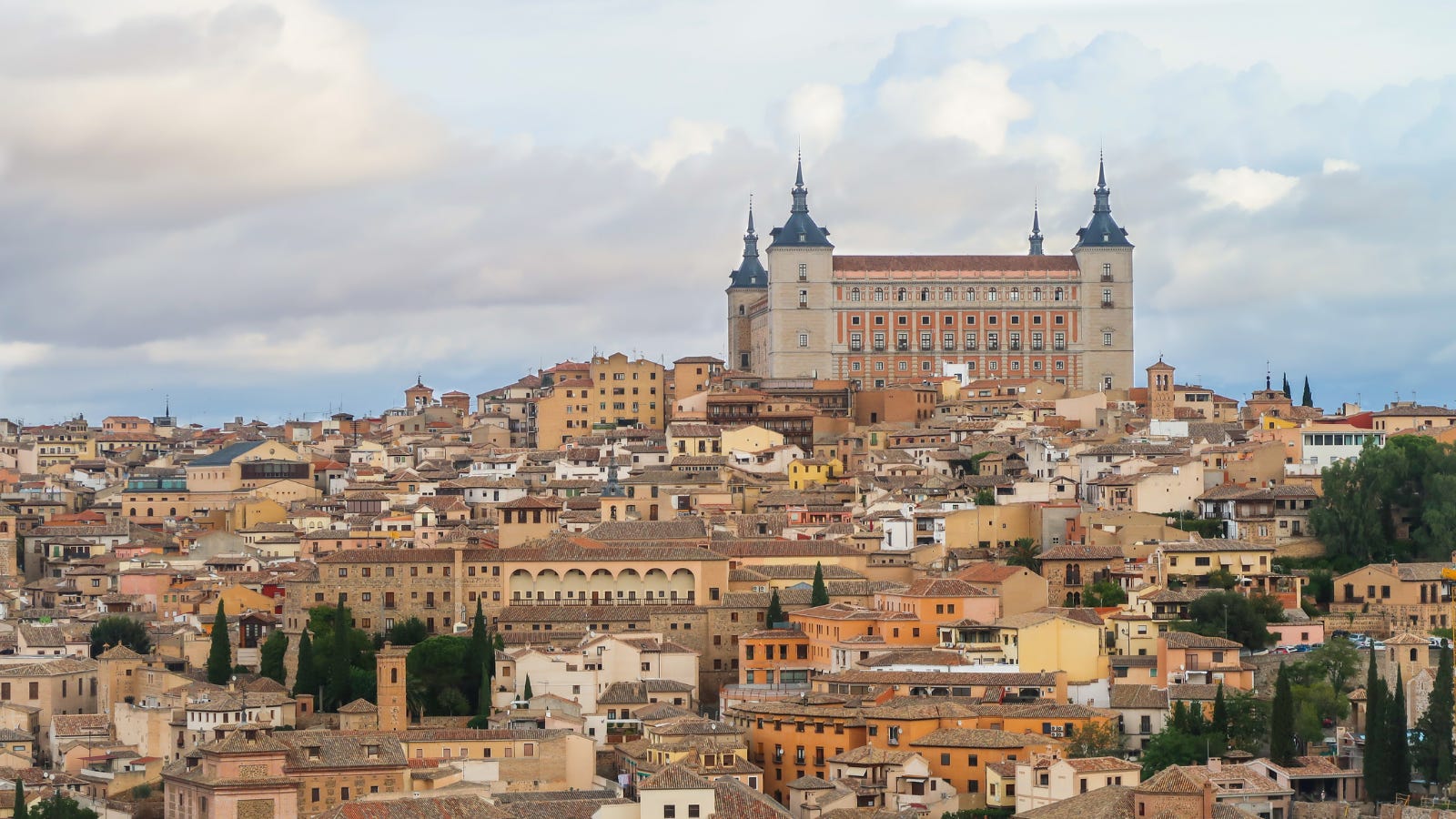
However, given their relevance and importance, it’s extremely hard to find their heritage. Of course Visigoth buildings are very old, dating easily over 1,400 years old, so it makes sense that they didn’t survive as much as later architecture from the Muslims, the Spanish Empire or the Renaissance. But we can’t only blame age, as we have older prominent structures standing in the middle of Spanish cities, dating earlier back to Roman Hispania. I think the best example is the Aqueduct in Segovia, which literally towers the city centre. On a side note, Toledo also had one, but it didn’t survive.
The answer for this lack of Visigothic buildings is a bit mysterious even today. Many of their buildings and churches were transformed or reused into different constructions, while others disappeared. But what makes this very interesting is that many scholars believe that the Visigothic layer simply lies hidden below the more visible layers that came later.
This is especially intriguing in Toledo, their former capital city. You can go on a stroll around the city’s old town, and see a Roman road, a Roman circus, Muslim walls, Mosques, Synagogues, Churches, Medieval constructions, Imperial crests, etc… But you won’t really see anything Visigothic. Why? It is believed that the Visigothic city was located right outside the old town, and it hasn’t been excavated. There is an area right off Toledo’s city walls called Vega Baja, where it is believed that the Visigothic capital is buried underground:
However, outside Toledo, we do have several churches and remains in Spain that help us understand what Visigoth architecture looked like. Let’s go through the most important examples:
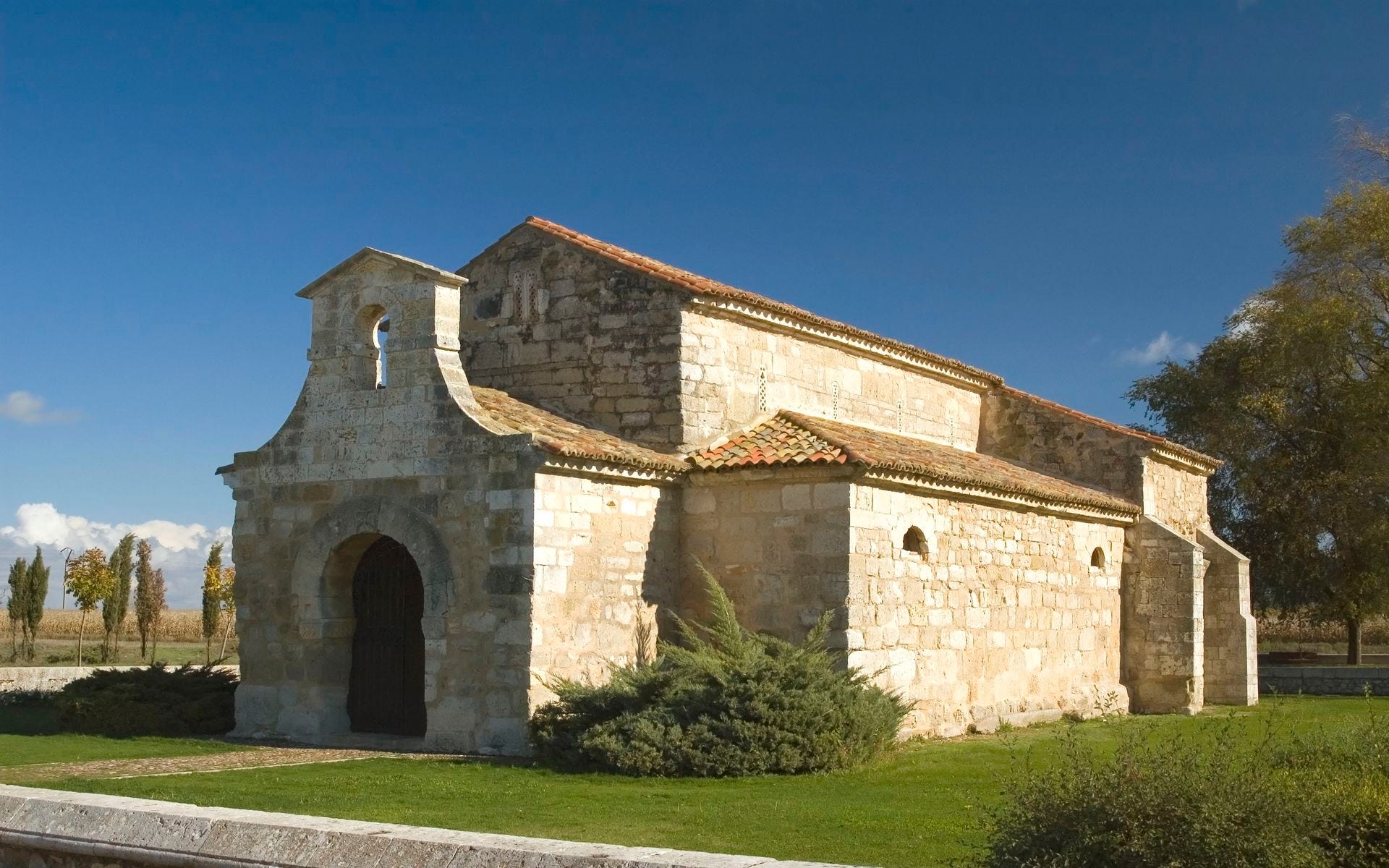
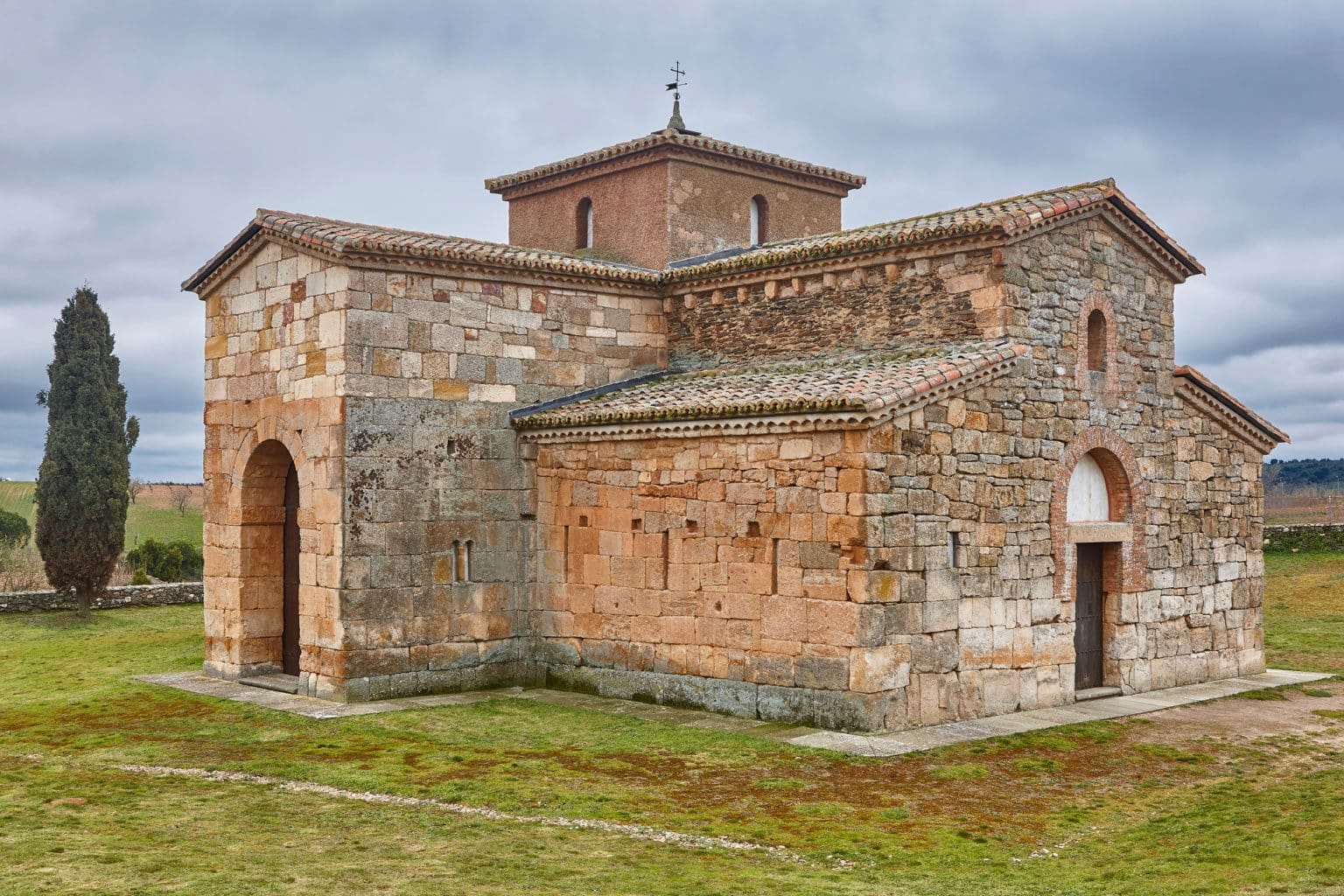
This church is probably the best example of Visigoth architecture in Spain. The temple is traditionally linked to Visigoth King Recesvinto, from the 7th Century, and displays many of the features we mentioned above that we associate with Visigoth architecture: horseshoe arches, reused Roman columns, and a simple and sober plan and stone structure. I already wrote about it more in depth in this article:
This is one of the most famous early medieval churches in the whole of Spain. Its carved decorations are a great reflection of this Visigoth feature that we mentioned above, with reliefs showing biblical scenes and motifs. This gives us an idea on the degree of development of stone imagery in these early Christian churches. Additionally, this church has a truly interesting story, as it was moved stone by stone in the 20th Century because of the construction of a reservoir.
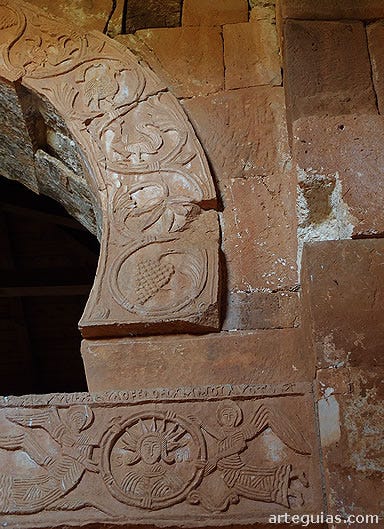
This is not a complete church, but the carved decorations in the remains of a former one. In it, we can see vegetal motifs and animal and symbolic figures, which all belong to the world of early medieval Spain.
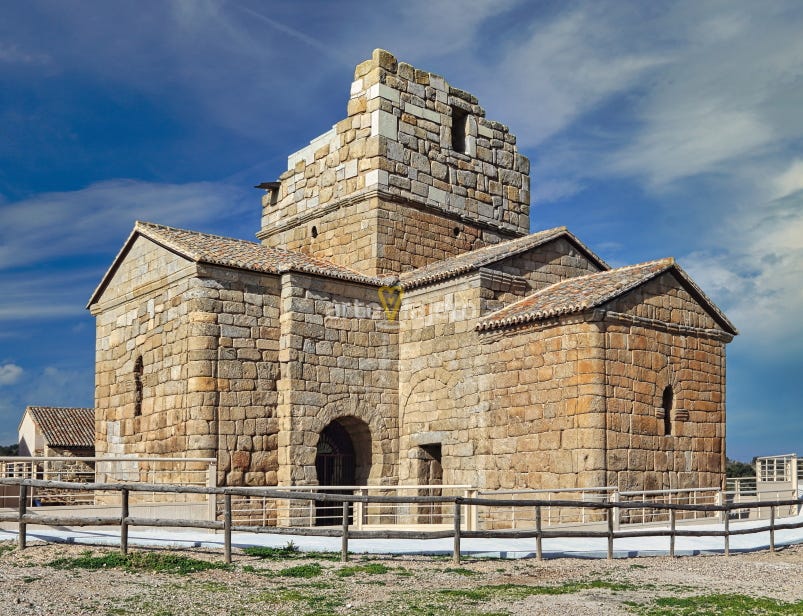
This church is located close to the former Visigoth capital city, Toledo. However, its classification as a Visigothic temple is difficult, as it is often also related to Mozarabic and pre-Romanesque architecture. The building has that austere look that characterises Visigoth architecture, but it’s not purely a Visigothic temple.
No posts
Comments
Nothing yet. Say the first thing.
Sign in to join the conversation.