
Spain has just won the World Cup, the world’s biggest sporting event, after a tense final against Argentina in which Spain’s composure stood above everything else. And while the obvious story behind Spain’s success is football, tactics, and a brilliant generation of players, I think there is another story hidden underneath it that explains how the right infrastructure and opportunities multiply the talent available.
A surprisingly large part of Spain’s football talent, almost a quarter of the team, comes from a small northern corner of the country with approximately 3 million inhabitants, or 6% of the total Spanish population: the Basque region and its surroundings. For people who follow Spanish football, this is not entirely surprising. Bilbao’s Athletic Club has spent more than a century building a team from a small local base, and turning that geographic and numeric limitation into a culture of development, resource-allocation, pride and belonging.
But centuries before Basque players were playing in the World Cup, Basque sailors were leaving small villages on the Bay of Biscay, rowing out in wooden boats, and hunting whales that weighed around forty tons. Later, they crossed the Atlantic to Canada and built one of the most impressive maritime industries of early modern Europe and America, in what could be considered the first oil rush, sourcing and trading whale oil barrels.
In this article, I am sharing a chapter from the book I am writing about Basque Whalers, in which I explain a particular aspect of the local culture and personality that helps explain why whale hunting was born in the Bay of Biscay, and also explain why there are so many professional football players from that very same region. The short answer is a cultural pattern that appears repeatedly in Basque history, focusing on training and relying on local talent. The long answer is in this chapter of the book:
This is Chapter 2 of the book. You can read the intro here, and Chapter 1 here.
This chapter was originally written in Spanish and has been translated and adapted into English with some edits of my own.
Once you understand the landscape of the Basque coast, it is not hard to imagine the kind of sailors it produced. This is a coast of cliffs and rain, populated by sudden storms and Atlantic waves. The sea in this corner of the world shaped the rocks and the shoreline, but it also shaped a way of life, a local temperament, and a certain attitude towards risk that is still recognisable today. And that attitude helps explain why the people of the Bay of Biscay were able to push their routes as far as Canada.
Survival in a coast like this one required skills, such as knowing how to row or fish. But that was not enough. When you live in a mood-swinging bay that can turn against you without warning, while you are far into the waters, individual ability becomes only part of the story. Success also depended on a series of skills that enabled for a crew to work together effectively and dynamically, in a natural way and without hesitation. Sailors needed to be capable on their own, but also capable as part of a team that could collectively act against the sea and the weather’s inclemence.
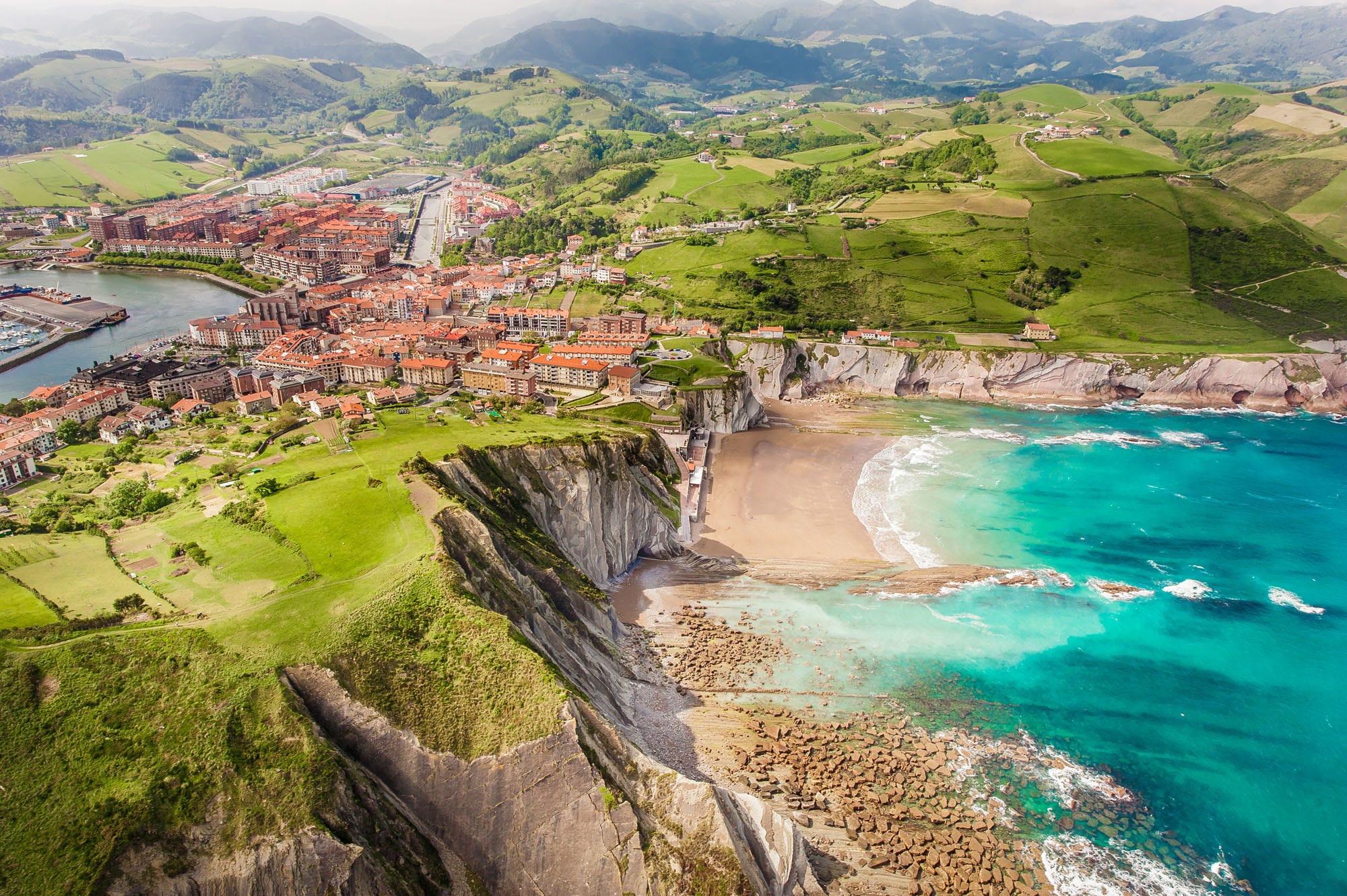
This need for people who could make part of these crews settled into a deep confidence and preference for what was local and familiar. And that confidence, rooted centuries and centuries ago in the local communities of the Basque coast, made its way until the present day. You can still se echoes of it in football with Bilbao’s team Athletic Club, as we will see later, as well as in the jokes that caricature and exaggerate the slightly boastful side of the Basque character. That same spirit travelled with Basque whalers from day one, when they rowed out to sea in their txalupas to face the giants of the ocean. Although it was even earlier, in the very idea that facing those giants was even worth attempting, that this overconfident spirit played a role in the region’s history.
In this sense, pride also had a deeper meaning than simple arrogance for men who sailed a rough sea on a daily basis. Pride worked almost like a badge, a kind of sign of quality that told others that you were the kind of man they would want beside when things turned harsh in the sea. A little boasting was more about stating what you could do than about showing off. And, for someone planning to go out into the rain and hunt a giant at sea, choosing the right companions could be the difference between returning with a price and never returning at all. If a man wanted to be welcomed into one of those crews, the others had to know he was capable and reliable, which is precisely what pride helped communicate.
If we take a look at whaling from this perspective and wonder why it developed so strongly, to the point of saying that professional whaling was born here, along a small stretch of the Cantabtian sea, Basque boastfulness may be one of the missing pieces that archaeology and documents cannot fully explain. It is an intangible factor that is easy to overlook when studying Basque whalers, but it may matter more than it first appears. The waves in the Basque coast did not carry anything special, and the sun did not shine any differently than it did a hundred kilometres along the coast. What set Basque whalers apart centuries ago, and footballers in the present day, is something much simpler than reflects more the way of doing things in a culturally isolated region than a proficient or superior ability. And pride may have played a big role in that way of doing things.
This proud and boastful spirit I’m mentioning did not disappear with the end of whaling. In fact, it was never even reduced to it. It was part of the local personality, and it followed local countrymen into the towns and industrial cities of the Basque Country. There is a word in Bilbao that captures this character particularly well: Bilbainada. Broadly speaking, a Bilbainada is something typical of Bilbao: something a person from Bilbao might say or do. It is interesting to note that this word links Bilbao so closely with that spirit that it almost treats it as what many people consider the city’s most recognisable trait. But what does it actually mean? And what kind of character does the word describe?
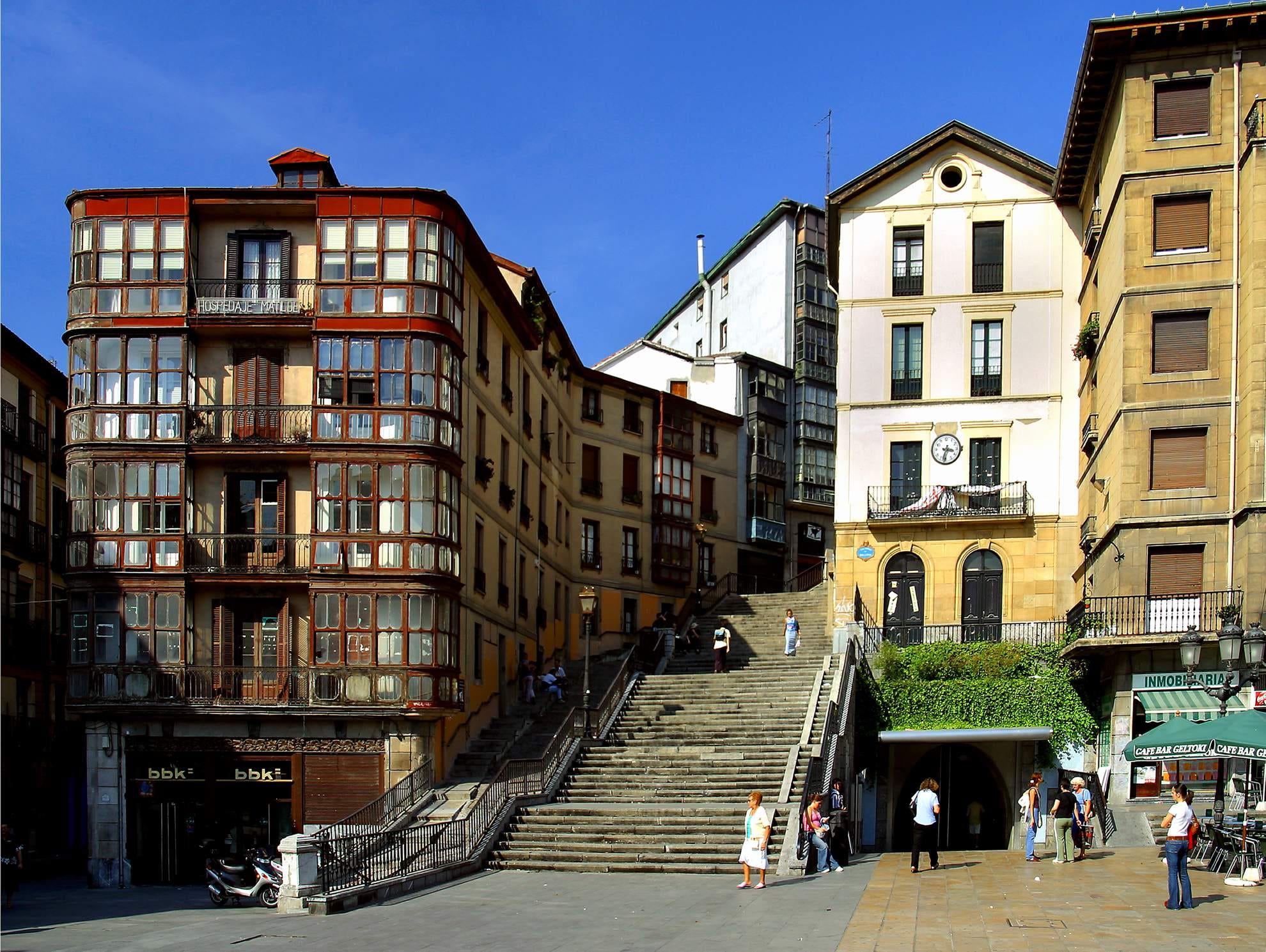
A Bilbainada is usually understood as a proud exaggeration, often wildly disproportionate. It is a way of talking about one’s own things on a grand scale, turning local self-esteem into humour. But the most interesting part is that a Bilbainada is not only a funny exaggeration. It is also a way of thinking big, with a little too much confidence, and of throwing oneself into undertakings that, from the outside, can look excessive, reckless, or simply impossible. In that sense, a Bilbainada is not only about exaggerating something after it has happened, but also about daring to do things that are already exaggerated from the very beginning, from the planning itself. And, of course, the reason the word appeared in Bilbao is quite straightforward: it names a local reality so recognisable that it needed its own word.
With the Bilbainada in mind, spotting a forty-ton animal swimming kilometres from the coast, and then choosing to climb into a small wooden boat with a few friends and a harpoon, and rowing towards it with the intention of killing it and towing it back to shore, is a Bilbainada in the purest sense of the word. The scene is so disproportionate and unreasonable that it could almost belong in a caricature or a strange comedy. Yet on the Basque coast, several centuries ago, it was the reality. It was of course a feat of courage, in an age in which tools and weapons did not set humans at a colossal advantage over the animals as it happened during industrial whaling. But looking back, we can also understand this as an act of excess that reflects the local spirit I am describing, the same spirit that would later be verbalised in the word Bilbainada.
If we keep following that historical line, crossing the Atlantic to Canada in the sixteenth century to repeat the same process on the other side of the world, building workshops a few metres from waters that remained frozen for much of the year, and returning home with processed whale oil, was the Bilbainada turned into a maritime epic. And although Bilbao gave the word its name, this excessive side of the Basque character was never exclusive to Bilbao; it was recognisable across much of the region. Stereotypes and jokes can be useful here, not because they offer accurate portraits, but because they let us glimpse a cultural trait through exaggeration. A joke only works if it distorts something people already recognise; if there were no small truth inside it, it would not be funny.
So, to understand something about the people who nearly five hundred years ago would end up chasing whales in Canada, it is worth pausing for a moment over a few Basque jokes. In many of them, the same logic appears repeatedly: the tendency to measure the world according to their own scale, to begin from the exaggerated, and to treat the disproportionate as if it were perfectly reasonable. Humour exaggerates, but it exaggerates something that had to be recognisable first in order to be funny or even worth telling.
In one of the best-known jokes, two Basques arrive on the Moon and look down.
“Can you see the Earth?”
“Yes.”
“And can you see the Basque Country?”
“Yes.”
“And the village?”
“Of course.”
“And the fronton?”
“Yes!”
“Then serve the ball already!”

The joke brings two recognisable features of the local character into absurdity. The first is the instinctive return to one’s own world. These two men are on the Moon, and instead of being fascinated by space or by the lunar surface, they are thinking about their village and the things they know: the fronton, the pelota court and home. The second side is the ease with which the impossible is treated as normal. They can see the fronton from the Moon, and instead of being amazed by that, they immediately assume that playing a match from there is also perfectly reasonable. They do not doubt for a second that their strength will allow them to send the ball all the way back to the village, which is also a hint on their exaggerated boastfulness.
That is a large part of the spirit of the Bilbainada: it is not only about exaggerating what has been done, but about conceiving exaggerated ideas as well, treating things as possible when, from the outside, they clearly are not. Naturally, both traits are exaggerated beyond all proportion in the joke, but the fact that someone could make up a joke like this, and that people could recognise what it was exaggerating, tells us something about the local character we are discussing.
There is another joke that points to the same sense of excess, this time through a refusal to properly measure the costs and consequences of things:
Two men from Bilbao walk into a bar.
One of them says to the waiter:
“Two red wines.”
Once the wines are served, one of the men puts a €500 note on the counter.
The waiter looks at him and says:
“Don’t you have another note?”
The man from Bilbao places another €500 note on the bar and replies:
“Well, your wine is a bit expensive here, isn’t it?”
Here, the spirit of the Bilbainada leads the man to ignore a completely unreasonable cost. Under ordinary logic, the price is absurd, as a wine glass in Bilbao should cost about €2 in 2026 prices. But in the joke, this calm familiarity with excess dulls the importance of the price that has to be paid. Something wildly expensive does not feel so excessive to them. From the perspective of whaling, I think a certain blindness to consequences may be necessary even to consider going out into the open sea to hunt a whale.
There is also a satire from El Mundo Today, a Spanish joking-fake-news website, that plays with Bilbao’s reputation for toughness. In the piece, a man from Bilbao needing anaesthesia for an operation is imagined almost as a shameful family disgrace. The joke is obviously exaggerated, but it rests on a recognisable trait of the local personality: the admiration in Bilbao for endurance, for putting up with discomfort without complaining, and for carrying on even in harsh conditions. Once again, that would be a useful quality if you intended to hunt a whale with a harpoon, or to work in a nineteenth- or twentieth-century steel mill.
I often remember that satiric piece because of a personal anecdote that I decided to share because I find it quite revealing and it captures this topic very well: A few years ago, before a minor surgery that my doctor had recommended, a friend from Tenerife jokingly asked me whether people in Bilbao used anaesthesia for operations. I laughed and told him, also jokingly, that of course we did not. Weeks later, after the procedure, I found myself sceptically asking the surgeon what painkiller he was going to prescribe, because nobody had mentioned anything about pain killers before giving me permission to go home. The surgeon, after conducting an operation in my calf that concluded with twelve stitches, looked genuinely surprised by the question and told me that it was nothing, and that if it hurt a lot I could take an ibuprofen. Of course they used anaesthesia on me before the procedure, but they thought that twelve stitches were not a good-enough reason to prescribe painkillers. I remember leaving the clinic slightly stunned, laughing to myself thinking that perhaps the caricature was closer to reality than it seemed. I would like to say I am exaggerating, but in my own experience, those really were the words of the surgeon who operated on me in Bilbao.
Of course, the jokes I mentioned above should not be taken as faithful portraits, because they are not that. But looking at the idea they distort can help us understand the reality beneath them. They describe a mixture of pride, toughness, and ease around excessive undertakings that looks funny from the outside. They do not explain the history of Basque whalers on their own, but they do help us understand the mental climate in which such a world could slowly come to seem possible. It was a world in which difficult things were attempted rather than admired from a distance, and where exaggeration often lay at the root of the decision to do something, not only in the way the story was later told.
This pride, between boastfulness and something deeper, went beyond being just a part of the local character. As mentioned above, in a coast where life often depended on skill and mutual trust, who you were mattered enormously. Identity and honour were not just forms of status, but the currency with which a man earned a place in a fishing, hunting, or trading expedition. Reputation told others whether they could trust you, whether they should sail with you, and whether they needed to treat you with respect.
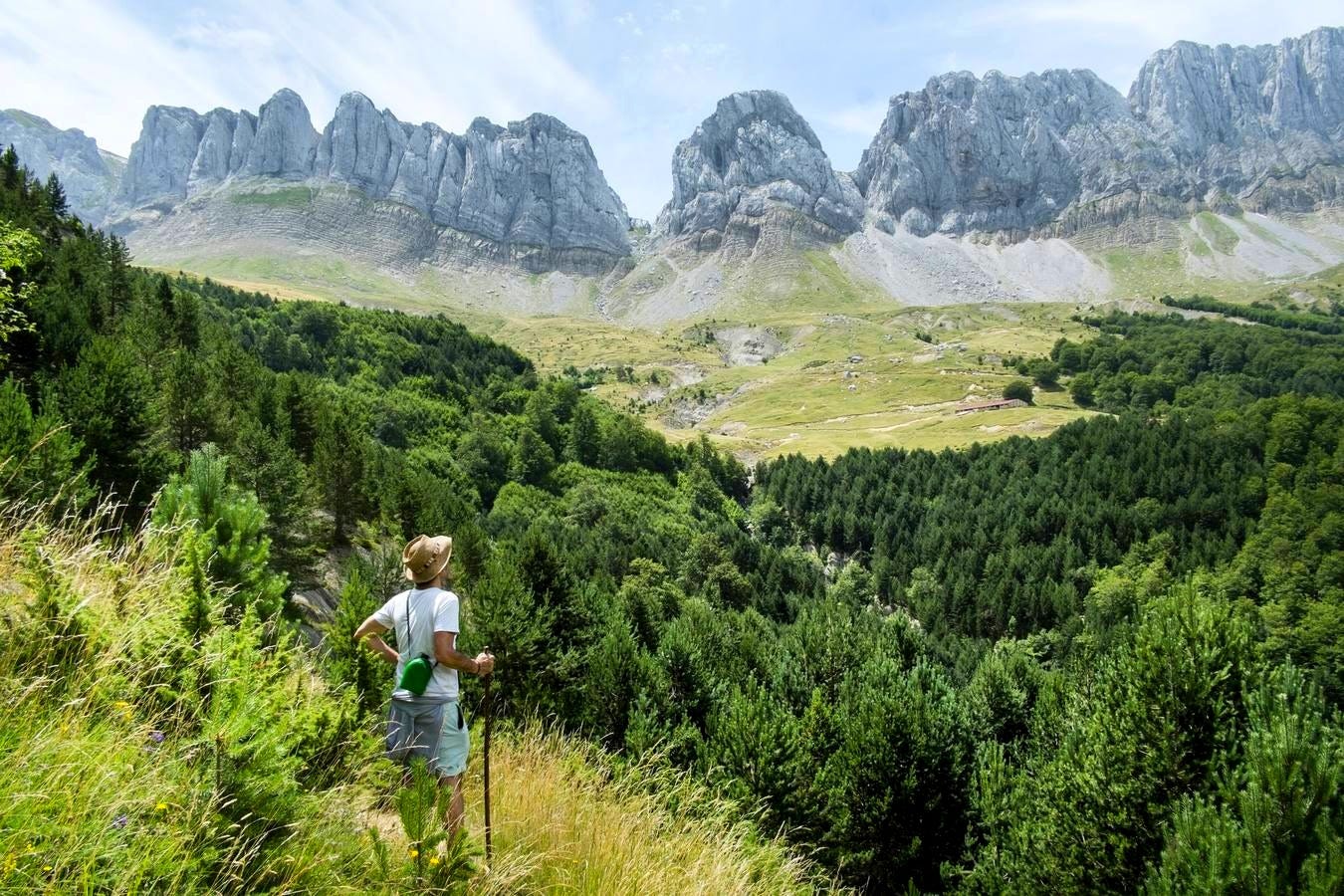
Even modern writers have seen Basque culture as especially sensitive to reputation. In Outliers, British author Malcolm Gladwell discusses the sense of honour in the mountains of the Basque Country, comparing it to the kind of concern for reputation that helped produce the famous feuds and shootouts of the American West. That concern had a practical basis: in places where farming was limited by rocky mountains and narrow valleys, people depended heavily on livestock that could adapt to those conditions.
To continue reading Chapter 2 — where we explore how Basque sheep herding, coastal reputation, and the “our own people” philosophy directly built both the 16th-century whaling empire and the 2026 World Cup champions, you can upgrade your subscription today at a special price until the end of July, as we are celebrating History of Spain’s one year anniversary.
Comments
Nothing yet. Say the first thing.
Sign in to join the conversation.