
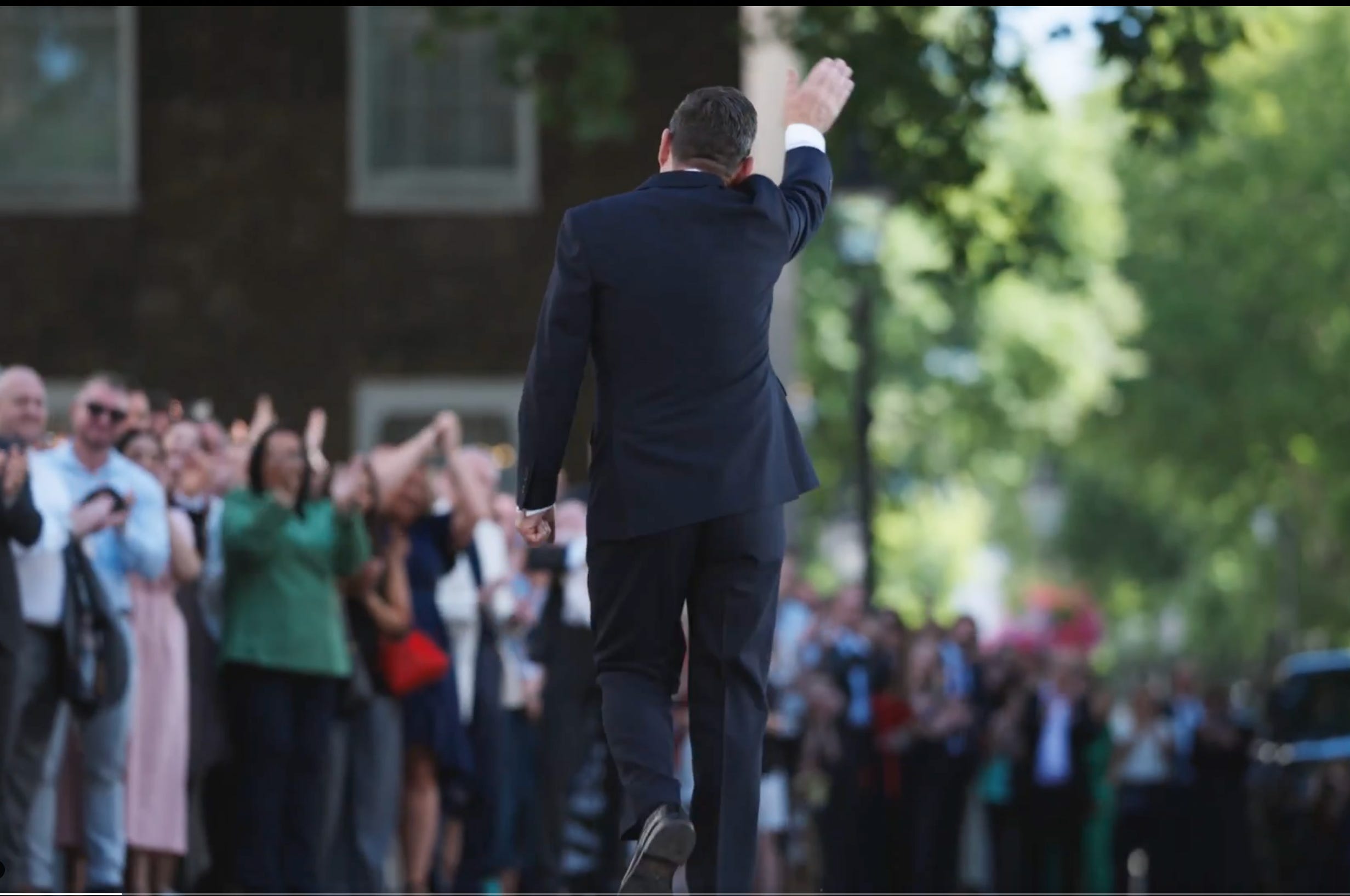
First it is police officers. Then captains of national sports teams. Next come wunderkind MPS, high-flying ambassadors, headteachers, Cabinet members, consultant cardiologists, and, finally, prime ministers and presidents. Few things speak more of the march of time than seeing younger people occupy positions of seniority.
Aged 56, Andy Burnham is the third occupant of 10 Downing Street who was born after I was, the others being Liz Truss, who is now 50, and Rishi Sunak, who is still in his mid-forties. Something Burnham said this week just before striding purposefully through the most famous front door in global politics hit me with a force. Rebuilding trust in politics, he said, “requires my generation of politicians to raise our game.”
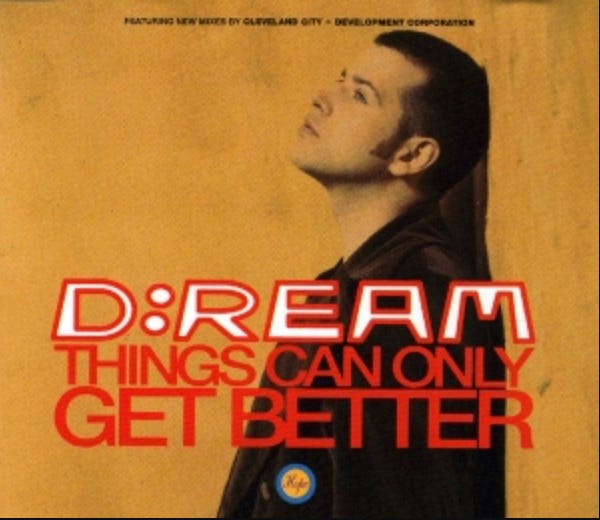
He’s right, of course. Our generation has made a real hash of things, both those in the arena, and those heckling from the terraces. And, regrettably, I saw it coming. Decades ago, during the phase of undergraduate life when I was struggling to kick the habit of two episodes of Neighbours a day, I remember thinking that our pimply cohort was too unserious and too self-indulgent. Too certain, as well, that things could only get better, to borrow from the D:Ream anthem which came out in the year I left university and which was repurposed by Tony Blair as a campaign song when he became prime minister four years later.
Demographers identify those born between 1965 and 1980 as Generation X. Perhaps a better moniker would be the end of history generation. After all, many of us graduated or entered the work force at a time when the Berlin Wall had just fallen and we no longer had to sweat big stuff such as defending democracy from the forces of tyranny or impending nuclear armageddon. It was a more unthinking and complacent time. D:Ream were surely onto something.
Vanity Fair dubbed the 1990s “the tabloid decade” because it served up, in no particular order, Bill Clinton’s affair with Monica Lewinsky, Elizabeth Taylor’s marriage to her seventh husband, Larry Fortensky, Pamela Anderson and Tommy Lee’s sex tapes, Tonya Harding, Anna Nicole Smith, John Wayne Bobbitt and his penis-severing wife, Lorena, the O. J. Simpson trial, and Donald Trump’s divorce from Ivana and affair with Marla Maples. There were so many distractions. Did the President of the United States wear boxers or briefs? How did a former professional wrestler, Jesse “The Body” Ventura, become Governor of Minnesota, one of the most sensible states in the union?
The Nineties, however, were pregnant with the problems that beset us now: an ever more globalised economic model, transitioning from a manufacturing to an information economy, that left too many people stranded in a no-man’s land between the old and the new. Back then, Bill Clinton boasted of building a bridge to the 21st century, but to those who lived in America’s old industrial heartland it felt more like a bypass. Nor did it help, of course, that Clinton deregulated Wall Street, letting derivative traders run amok, and did not want to sheriff Silicon Valley, which was full of tech bros wanting to break things.
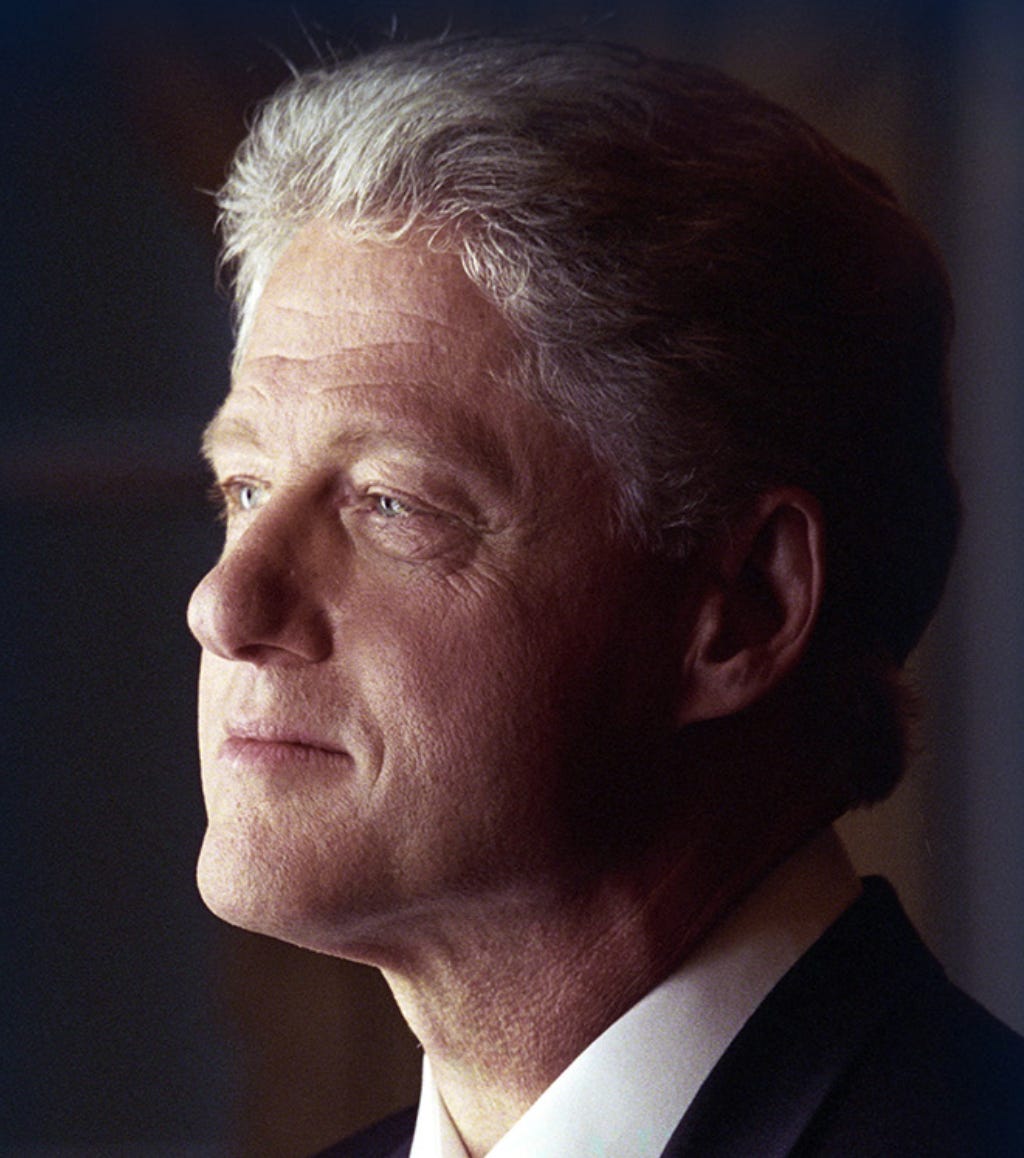
Perhaps my generation’s only saving grace is that we didn’t make as monumental a hash of things as Clinton and his fellow Baby Boomers, especially in the United States. At the same time the USSR was imploding, boomers pushed aside members of the Greatest Generation, the Americans who fought alongside each other in World War II, and who understood the difference between real warfare and political combat. Having a common enemy in the Soviet Union had forged a sense of patriotic bipartisanship. When the Cold War ended, and the new generation arrived in greater numbers in Washington, an iron curtain descended between Republicans and Democrats.
The Baby Boomers, led by New Gingrich on the radical right and Clinton in the pragmatic centre, had spent their formative years fighting the culture wars of the 1960s and early 1970s. For them, politics was a zero sum game. Bipartisanship was for losers. Literally so for Republicans in the House of Representatives who had not been in the majority, as Gingrich frequently reminded them, since the 1950s.
An added problem, again felt most strongly in Washington, is that political Baby Boomers have been so reluctant to join the ranks of the superannuated. Both Joe Biden and Donald Trump celebrated their eightieth birthdays in the White House, the only presidents ever to do so. Even in 2020, they were the oldest presidential candidates in U.S. history. “With hindsight what is most shocking about Joe Biden’s debate with Donald Trump on 27 June 2024,” writes the academic David Runciman in a review of Samuel Moyn’s new book, Gerontocracy in America: How the Old Are Hoarding Power and Wealth, and What to Do about It, “is not how old Biden seemed but that he managed to make Trump appear relatively young.”
The problem is just as acute at the other end of Pennsylvania Avenue on Capitol Hill. Nancy Pelosi was aged 82 when finally she had to relinquish the speaker’s gavel. Her then deputy, the House Majority Leader, Steny Hoyer, was a year older. Senator Dianne Feinstein, who died in September 2023, had recently celebrated her 90th birthday. Republican senator Chuck Grassley, the oldest Senator, was born in the first year of FDR’s presidency. Mitch McConnell is aged 84, and has recently been forced to pose for proof of life photographs from his hospital bed. Though sprightly by comparison, the Democratic Senator Leader, Chuck Schumer, is 75. Bernie Sanders will be 89, god willing, when his Senate term expires.
The average age of the U.S. Senate is 64, which is a year or so lower than the record of 65.3 set at the start of the 117th and 118th congressional sessions which commenced in 2021 and 2023. For historical context, the average age of the 56 signers of the Declaration of Independence was 44.
Is there an optimal age for a president or prime minister? America’s youngest elected president, John F. Kennedy, was just 43 when he urged his compatriots to ask not what their country could do for them but what they could do for their country. Yet for all his dynamism, glamour and youthful elan, he was widely seen by Washington insiders as callow and wet behind the ears. During his first year in office, Nikita Khrushchev beat him up at the Vienna summit, an encounter which encouraged the Soviet premier to press ahead with the construction of the Berlin Wall. Back in Washington, he was bullied by former Senate colleagues, many of them segregationist southern Democrats who chaired so many major committees. The foreign policy establishment, especially after the bungled Bay of Pigs operation in 1961 which was supposed to lead to the ouster of Fidel Castro, looked upon him as a lightweight.
Barack Obama was 47 when he took the oath of office, but arguably his rival for the Democratic nomination, Hillary Clinton, who had just entered her sixties, was better prepared and equipped to be president. Sometimes I wonder what would have happened if their roles had been reversed, and in 2016 Donald Trump had faced Barack Obama. That said, as the late Senator Ted Kennedy once told the then junior Senator from Illinois, as he urged him to take on Clinton in the 2008 primaries: “You don't choose the time, the time chooses you.”
The Australian prime minister Anthony Albanese is 63, an ideal age, one would have thought, when a politician had accrued worldly wisdom and the requisite level of maturity. But it didn’t sound that way when he appeared recently on a podcast and was asked to play a game of “shag, marry, date.” Initially he deflected, but when pressed whether he would marry, “shag” or date the pop star Kylie Minogue, he answered “all of the above.” Afterwards , he apologised profusely, but a sixty-something prime minister had sounded like a sophomore at college.
In Democratic politics, two of the most eye-catching politicians are New York Mayor Zohran Mamdani and New York congressman Alexandria Ocasio-Cortez. Both are in their thirties.
Perhaps we are tougher on our peers and fall into the trap of mythologising politicians from the past. During his first two years in office, it is often forgotten, Ronald Reagan looked like a one-term presidency. After a bad showing in the 1982 mid-terms, the New York Times wondered whether the Republicans might dump him ahead of the 1984 election, which he won with 49 states. But there does seem to be a stature gap. Andy Burnham maybe a breath of fresh air compared with Keir Starmer but he does not do so well when put alongside Labour giants of my youth such as Harold Wilson and Denis Healey, who, intellectually, were on a different plain. Curiously, the “King of the North” is actually the same age as Margaret Thatcher was when Argentina invaded the Falkland Islands. Let’s hope that Britain does not have to fight a war, but does he have what it takes to be a wartime leader? To stand up to Vladimir Putin or to pushback against Donald Trump? Or perhaps part of his appeal is that he comes across as an anti-Thatcher.
Maybe, he is the best my generation of Britons can offer. Certainly, I would prefer Burnham to a student politician I encountered on my first and only visit to a debate at Oxford’s fabled Union Society, that finishing school for the Westminster-bound elite. Dressed in a tweed three-piece suit, and addressing the chamber with a comically plummy ex cathedra air, here was a young man clearly destined for high office. And this he achieved when he became Lord President of the Council, whatever that is, and Minister of State for Brexit Opportunities and Government Efficiency, whatever that was. His name? Jacob Rees-Mogg.
Comments
Nothing yet. Say the first thing.
Sign in to join the conversation.