
It is early February 1461, and two medieval armies are about to clash near a stone wayside cross in Herefordshire. A hard frost covers the ground, and the water meadows north of Kingsland are marbled by frozen pools left by the winding River Lugg. It is almost dawn, and the only sound in the dim half-light is the steady march of an army following an ancient Roman road skirting the Welsh Marches. Well-trodden highways in England and Wales are barely recognisable in the winter months. Yet, this marching army is purposefully advancing to intercept an invading force that could easily influence the course of the Wars of the Roses.
The leader of the army, Edward, Duke of York, is motivated by revenge, while his prey, somewhere up the road, is driven by national pride and personal ambition. The Yorkist heir to the throne is not yet nineteen, but he commands an army for the first time. His force comprises English and Welsh border troops led by well-known Marcher lords, while opposing him is a combined army of Lancastrian sympathisers and foreign mercenaries mustered by Henry VI’s half-brother, Jasper Tudor, Earl of Pembroke, and a court favourite, James Butler, Earl of Wiltshire.
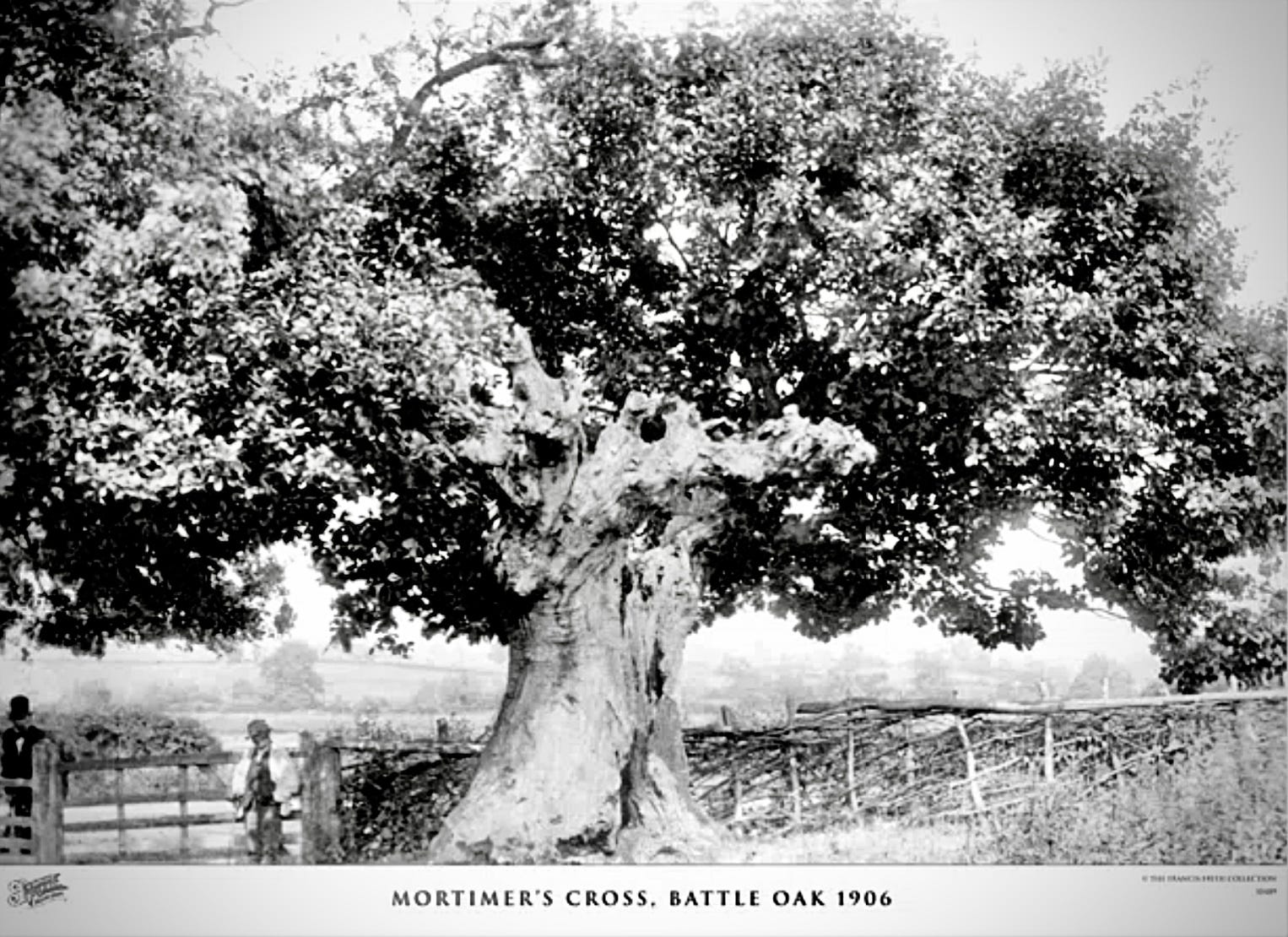
What happened next between the English border town of Hereford and Wigmore Castle has been lost to history, despite it being considered a key event in the Wars of the Roses. Even the location where Edward, Duke of York (later Edward IV), achieved this decisive victory over the Welsh Lancastrians remains a mystery due to a lack of contemporary evidence. Therefore, given this restriction, it is natural for writers to fictionalise events with a narrative similar to my introduction above. We are far removed from 1461, or more accurately 1460 (according to the medieval calendar) and time has offered little insight into how this battle came about or how it was fought.
However, I have been working on a theory based on contemporary evidence and multidisciplinary research that sheds light on this legendary encounter.
This article aims to explain what happened at Mortimer’s Cross on that frosty day in early February. It discusses the location of the battle, the actual date of the encounter, a timeline of events, and reasons why the Yorkists achieved a decisive victory against Pembroke’s and Wiltshire’s forces. A more in-depth analysis of the battle will be presented in a forthcoming book that I hope to publish in 2026. However, in the meantime, here is a taster of my research so far, excluding some of the more academic evidence.
So, why has the truth about the battle of Mortimer’s Cross fallen through the cracks of history?
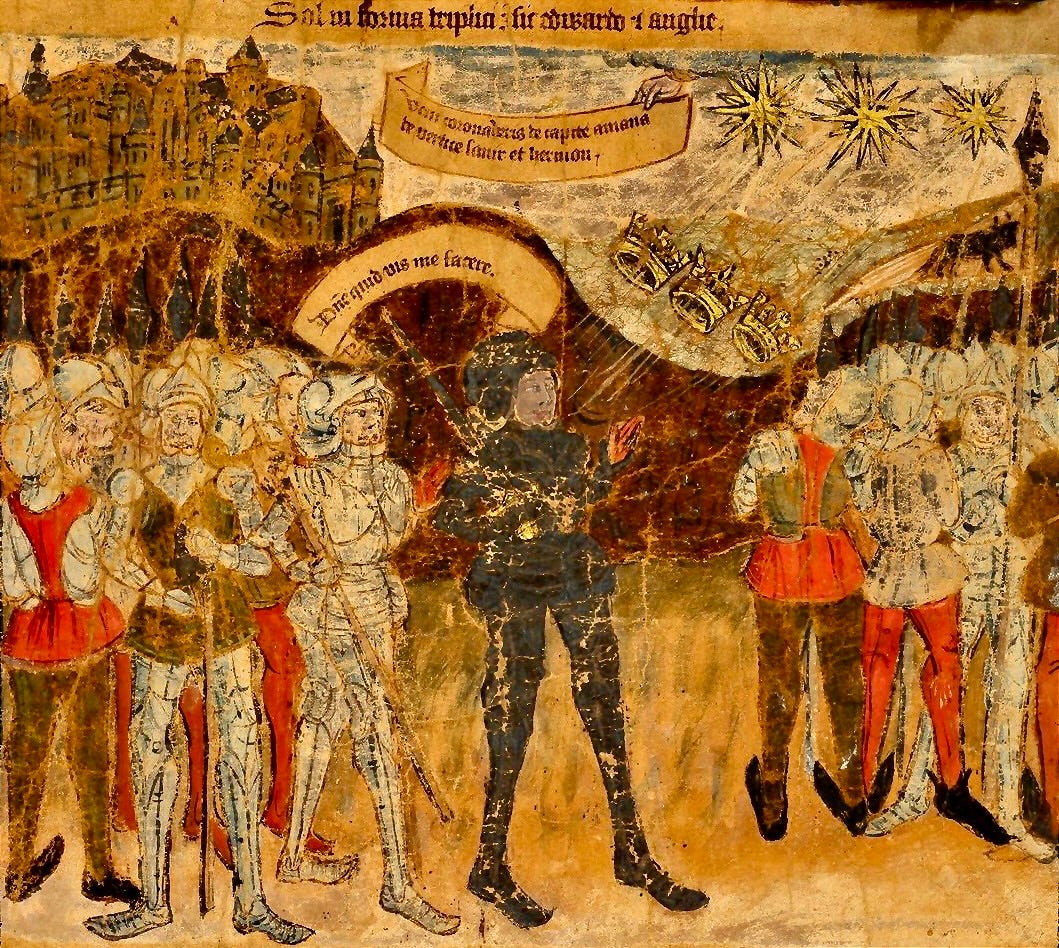
There are three main reasons for this oversight, and the most prominent is that the battle is best remembered for a strange atmospheric phenomenon that appeared in the Marches on a particular date in early February 1461. The peculiar appearance of the ‘three suns in the firmament shining full clear’1 (or in modern terms, a parhelion) has blatantly overshadowed any other information contained in contemporary chronicles. Consequently, any strategy or tactics concerning the battle have blurred due to the vivid imagination of some historians.
Another reason why contemporary writers glossed over the battle is that it occurred between the catastrophic Yorkist defeat near Wakefield in December 1460 and the climactic Lancastrian bloodbath at Towton three months later. Therefore, what was once known about Mortimer’s Cross became a minor event. In short, after almost six centuries of conjecture by historians, the events of early February 1461 have been forgotten because of other more newsworthy events.
This is surprising, since Edward, Duke of York (later Edward IV), achieved his first independent victory against the Lancastrians at Mortimer’s Cross. Had he lost the battle, it would have meant the end of the House of York and its aspirations for the English throne. In short, the conflict was a pivotal and decisive moment for the Yorkist dynasty, as it led to a significant change in the monarchy when Edward was acclaimed King of England on 4 March 1461. Indeed, the battle of Mortimer’s Cross sits awkwardly within the grand narrative of the Wars of the Roses for some modern historians because it was steeped in myth and conjecture soon after it was fought.
The third reason for the lack of evidence about the battle involves the topography and nomenclature of Mortimer’s Cross itself. The battle took place in rural Herefordshire, far from the medieval political centres of London, Coventry or York, and beyond the reach of many chroniclers – even Welsh poets, who had a stake in the outcome. There is next to nothing mentioned about the battle by the bards Guto’r Glyn or Robin Ddu. Additionally, it was not fought near a major abbey focused on historical writing, such as St Albans, and therefore, only one contemporary source may have known about the event, leading to others copying and embellishing the truth.
So much of what we know about Mortimer’s Cross was repeated by writers, and I will not focus on these interpretations here or later accounts by imaginative Tudor chroniclers. Similarly, I will not cite modern historians. However, I will quote contemporaries who did include unique aspects of the battle and campaign in their chronicles, making it possible to underpin what might have happened at Mortimer’s Cross with some factual evidence. The bulk of this research is contained in Part 2 of this article. The purpose of Part 1 is first to understand the background to the story.
In some ways, this reappraisal dispels many myths about the battle by presenting an alternative scenario supported by a multi-disciplined approach to history. That is, I have applied written contemporary evidence, topographic research, archaeology, and military probability – a favourite of the great battlefield detective Alfred H. Burne, who refrained from including Mortimer’s Cross in his books because of a lack of evidence.2
Because of Burne and other historians, Mortimer’s Cross may have been lost in the recesses of history. Still, it was of immense national importance at the time and deserves to be placed firmly alongside the more well-known battles of the Wars of the Roses, such as Towton, Barnet, Tewkesbury, and Bosworth. Admittedly, Mortimer’s Cross was a smaller battle by comparison, but it was fought during a harsh midwinter campaign and marked the emergence of Edward, Duke of York, as a capable field commander with a unique charisma. However, the battle could have easily been the place of Edward’s downfall rather than his crowning victory.
If the battle was such a landmark event, why are there no official records of Edward’s victory?
Regrettably, there are no extended narratives of heroism or records of rousing speeches before the battle of Mortimer’s Cross, no grand declarations of victory in Edward IV’s first parliament in 1461 (other than a passing mention). Therefore, the ‘official’ silence may be due to the well-known general loss of written evidence in the crucial years of 1460-61; a problem affecting not just this battle but many others in an England faced with government disparity, civil war, and hollow crowns.
However, despite the apparent negativity surrounding the event, I believe the battle can be firmly situated within the landscape of the Wars of the Roses, and what occurred immediately before and after the encounter can be traced with the help of extant sources and local topography. Major and minor medieval roads are key to the story, as noted by the latest battlefield survey, conducted between 2018 and 2022, along with mileages, logistics, old maps, and local place names readily available to historians.3 In addition to these, the aims of the personalities involved are crucially important if we wish to uncover the battle’s anatomy, and, due to space, this area will be covered in more depth in my forthcoming book.
But can we be that certain about what happened before the battle?
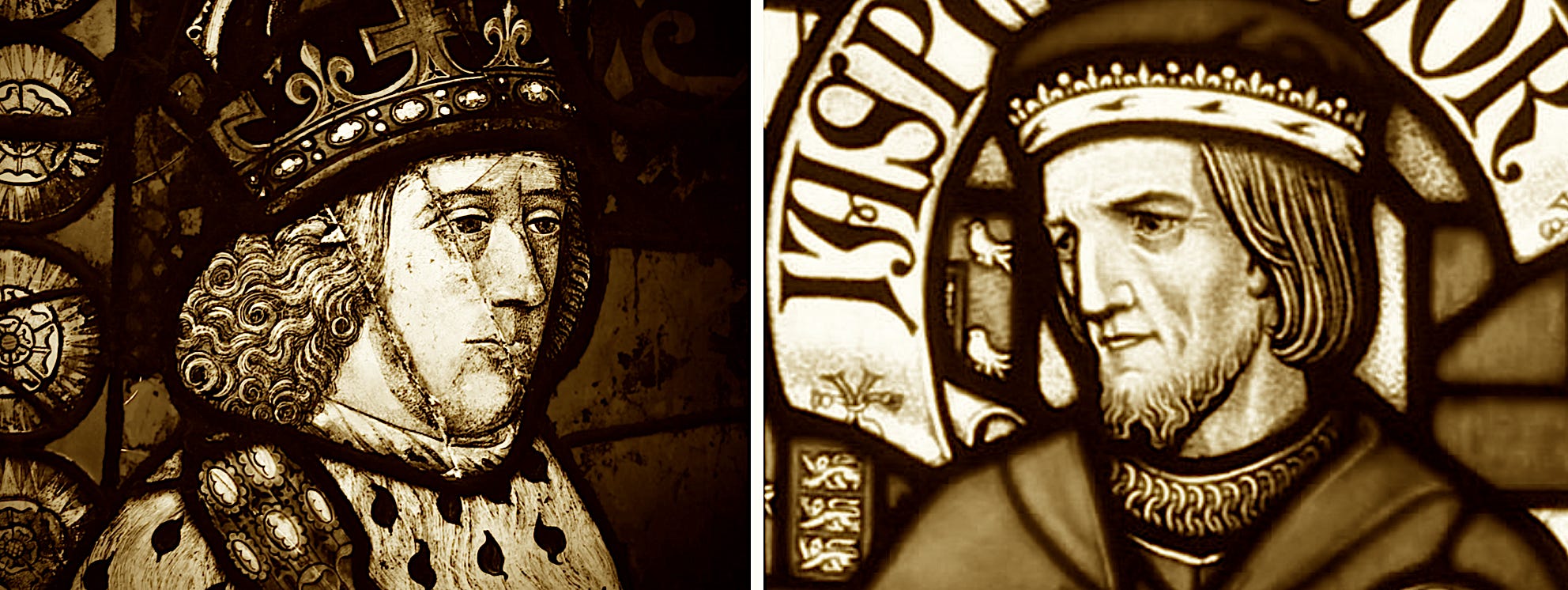
The factual background history of the battle is clear-cut. In January 1461, the House of York faced a desperate dynastic crisis. Richard, Duke of York – the father of Edward, Earl of March – had been killed near Wakefield along with his second son, Edmund, Earl of Rutland, and other notable Yorkist lords were executed at Pontefract in the aftermath. Whether their decapitated heads were placed on spikes over Micklegate Bar in York as a warning to others of treason is immaterial – the repercussions on the House of York were far-reaching for those who remained alive. Richard of York’s cause and his claim to the throne, according to the much-maligned Act of Accord, now rested wholly with Edward of March (now Duke of York), aided by his ambitious northern cousin Richard Neville, Earl of Warwick, who occupied London along with the captive and weak-willed Lancastrian king Henry VI.
Previously, Warwick had been tasked with guarding the city, while Edward was sent to recruit troops in the Welsh Marches for his father. However, after York’s death, Henry’s French queen, Margaret of Anjou, instigated Lancastrian recruitment in the north and Wales to protect her son’s inheritance. In Tenby and Pembroke, this mobilisation was led by Jasper Tudor, Earl of Pembroke, along with his father, Owen, and the Earl of Wiltshire, who had been recruiting abroad since October. Jasper’s intended mission was to cross into England from Wales, join Margaret’s forces marching south from their victory at Wakefield, and catch the Yorkists in a pincer movement, destroying Warwick and Edward’s armies in the process. Therefore, what followed at Mortimer’s Cross was more than just a successful defence of the Welsh Marches by Edward – it was the difference between dynastic revolution on the one hand, and attainder, exile or death on the other.
By defeating Jasper Tudor and the Earl of Wiltshire, Edward hoped to neutralise the main Lancastrian attack from Wales and prevent the recapture of Henry VI by the queen. Edward’s victory in the Marches achieved this aim decisively, allowing him to march on the capital unopposed and lay the groundwork for his glowing acceptance of the crown by the city. His acclamation as King of England by London on 4 March 1461 was the ultimate accolade for his victory at Mortimer’s Cross and the impetus for a further campaign with Warwick in the north that culminated in the destruction of the Lancastrian army at Towton on Palm Sunday, the same year.4

So, why were the three suns so important, and who saw them?
Apart from the strategic elements of Edward’s victory, Mortimer’s Cross also had significant psychological and symbolic consequences for the House of York. Edward’s decisive leadership at a young age earned him credibility among his Yorkist supporters and Marcher lords. According to biased sources, he utilised the rare optical phenomenon of the triple suns to boost Yorkist morale, claiming that the ‘vision’ of the suns was a sign of divine favour from God the Father, the Son, and the Holy Ghost.5 Edward’s famous emblem, the ‘Sun in Splendour’, soon became a clarion call to arms in the Wars of the Roses, with victories often being remembered for their heraldic or emblematic symbolism and rallying cries in battle.
However, unlike Bosworth, there was no immediate dynastic turnover at Mortimer’s Cross, and Edward’s victory was more a consolidation of power to make dynastic change possible. The three suns caused a shift in momentum due to their symbolic significance, and the religious explanation of the spectacle instilled morale into Edward’s troops at a time when his authority and claim to the throne could have easily been compromised. According to the chronicles, the Lancastrians were unable to devise a similar morale-boosting idea, as I will argue, they did not witness the parhelion, contrary to the established history that overshadows the battle (see Part 2).
Why investigate the battle if we have such a decisive historical outcome?
Over the last twenty years, a renewed interest in the battlefield of Mortimer’s Cross has altered our understanding of what occurred there. While the exact location of the engagement is still hotly debated by historians, recent surveys, systematic metal-detecting and other topographical projects, chiefly by G. Foard and T. Partida in 2022, have helped identify key conflict areas along the old Roman road from Hereford to Mortimer’s Cross and in the fields between Kingsland and the River Lugg.6 Other local archaeology over the years has unearthed concentrations of late medieval battlefield debris consistent with the era. However, no exact battle site has been claimed by the above conflict research in the final analysis.
Part 2 of this article examines how Edward led the Yorkist army into battle at Mortimer’s Cross, how he utilised this victory to shape his future as King of England, how the Lancastrians missed a vital opportunity in the Marches of Wales, and how the physical and political geography of the area can influence the way we view fifteenth century battles. As mentioned, my investigation combines archaeological evidence, documentary analysis, and a comprehensive reappraisal of the sources, some of which have never been published before, to tell the story of Mortimer’s Cross in a new way. It is a natural part of the process to advance battlefield research, and armed with new evidence, I hope to draw the battle out of the historical void created by Wakefield and Towton, explain when the legendary attribution of the three suns occurred, and place the conflict firmly in the landscape and chronology of the Wars of the Roses.
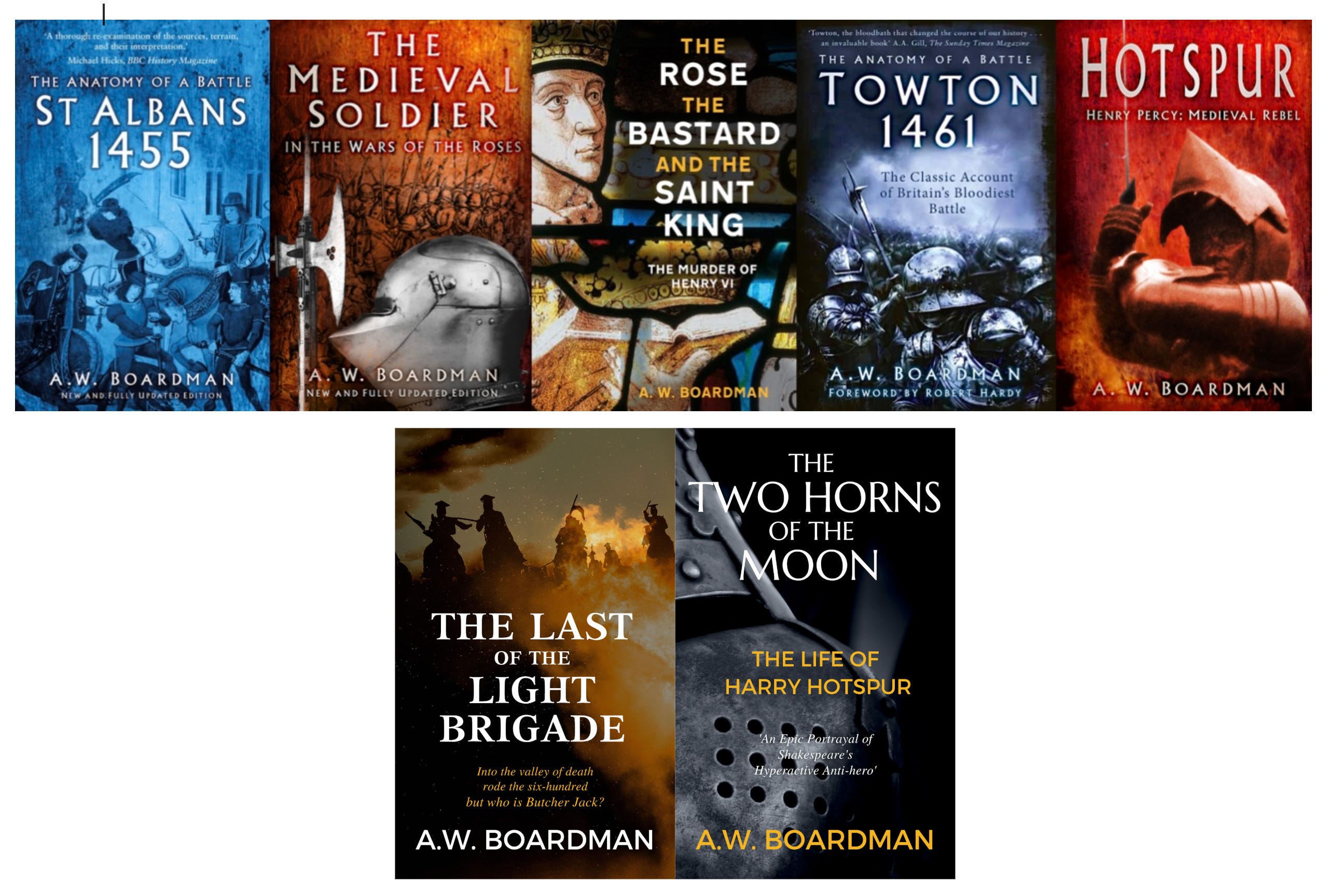
If you enjoyed my post, please leave a comment and share my work. In the meantime, if you are a fan of the Wars of the Roses, here are some of my latest books set in the period, along with two historical novels to read at bedtime! Reviews on Amazon are always appreciated.
J.S. Davies, ed., An English Chronicle of the reigns of Richard II, Henry IV, Henry V, and Henry VI, 1856, p. 110.
A.H. Burne, The Battlefields of England and More Battlefields of England, 1950-1952.
See G. Foard and T. Partida, The 2018-2022 Investigation of the Battle of Mortimer’s Cross, February 2022.
For the Towton campaign, see A.W. Boardman, The Anatomy of a Battle: Towton 1461, 2022.
For the significance of the three crowns, see S. Drimmer, A Political Poster in Late-Medieval England: British Library, Harley MS 7353.
See above for the latest battlefield survey by G. Foard and T. Partida.
No posts
Comments
Nothing yet. Say the first thing.
Sign in to join the conversation.