
In recognition of America’s 250th anniversary, I am sharing a reworked version of research I completed as an undergraduate student 27 years ago, originally produced with extensive footnoting.
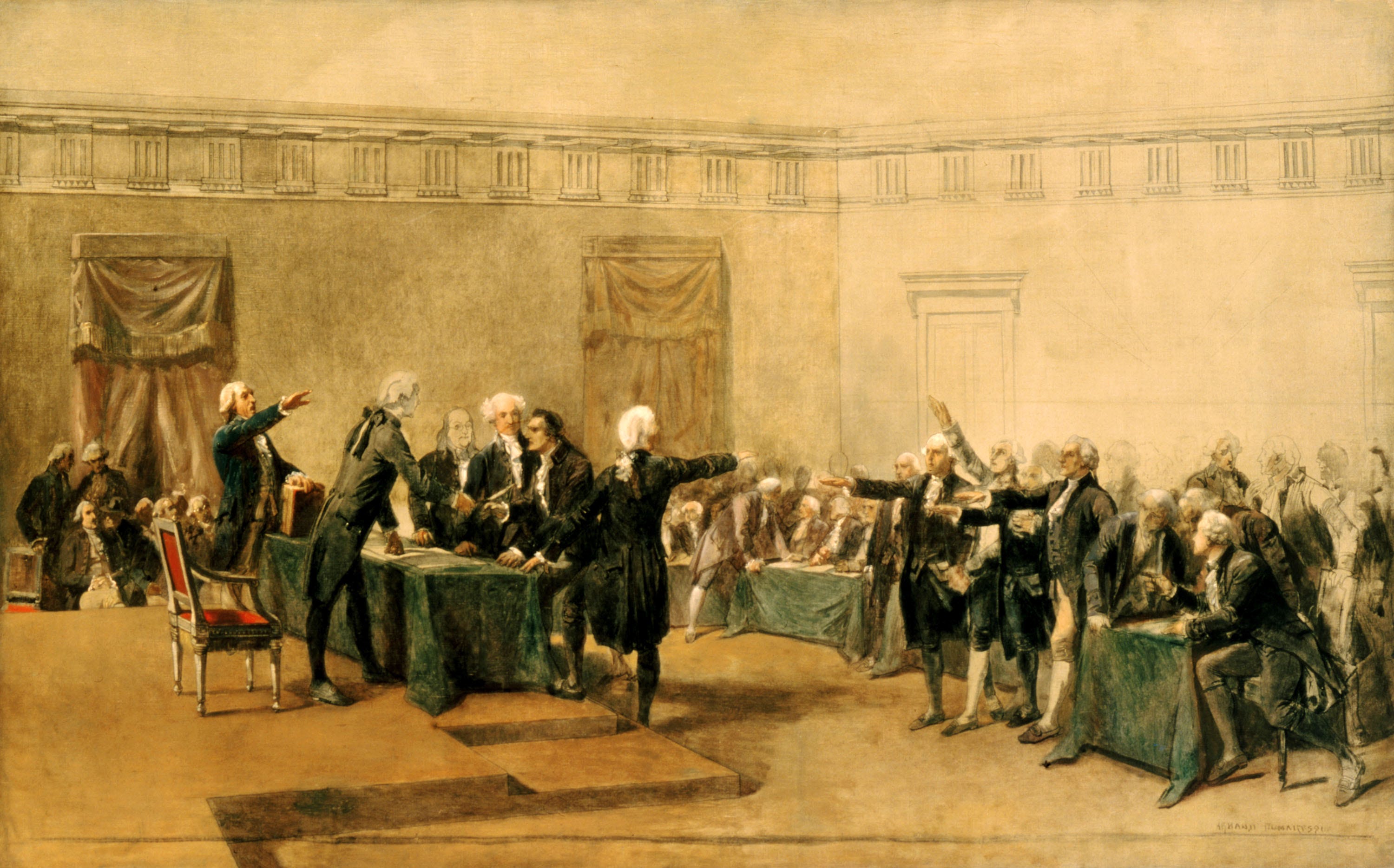
Two hundred fifty years ago, Americans celebrated the adoption of the Declaration of Independence as though the colonies had spoken with one voice. The reality was far more complicated. When the Continental Congress approved the final wording of the Declaration on July 4, 1776, it concluded weeks of intense debate over one of the most consequential questions in American history: Should the colonies declare independence immediately, or should they wait?
That debate began on June 7 when Virginia delegate Richard Henry Lee rose before Congress and introduced a resolution declaring that the colonies “are, and of right ought to be, free and independent States.” The proposal was hardly unexpected. John Adams later remembered that independence had been under discussion for more than a year. Yet knowing that independence was likely and agreeing that the moment had arrived were two very different things.
By the summer of 1776, Americans themselves remained deeply divided. Historians estimate that roughly one-third of the population actively supported the Patriot cause, while about one-fifth remained loyal to the British Crown. Many colonists occupied the uncertain middle ground, waiting to see how events unfolded. Inside the Continental Congress, however, the debate looked quite different. The principal opponents of Lee’s resolution were not Loyalists hoping to preserve the British Empire. They were moderate Patriots who accepted that independence would eventually come but questioned whether declaring it in June 1776 was the wisest course.
Recognizing this distinction changes the way we understand the road to independence. The Declaration itself became one of history’s great statements of political philosophy, rooted in natural rights and republican ideals. The congressional debate that preceded it, however, centered far less on abstract political theory than on practical questions. Would a declaration strengthen or weaken the American war effort? Would France and Spain rush to America’s aid, or hesitate? Should the colonies first establish functioning governments and a national confederation before announcing themselves to the world as sovereign states?
The men who debated Lee’s resolution largely agreed on the principles of liberty and self-government. Their disagreement lay in strategy.
The Case for Immediate Independence
Richard Henry Lee framed the question in both ideological and practical terms. Speaking on June 8, the day after introducing his resolution, he reminded delegates that they faced a choice between preserving liberty or surrendering it forever. If successful, Americans would stand alongside the defenders of liberty in ancient Greece and Rome. Future generations, he believed, would honor them as guardians of a just and civilized republic.
Yet Lee devoted surprisingly little of his speech to philosophical ideals. Instead, he emphasized the practical necessity of declaring independence without delay.
After a decade of what he described as the “tyrannical proceedings” of British ministers, Lee argued that reconciliation had become impossible. Britain had ignored colonial petitions, dismissed legitimate grievances, and responded to resistance with force. Americans therefore faced only two alternatives: submission or independence.
Lee believed timing mattered. Since separation from Britain had become inevitable, delaying the declaration served no useful purpose. Indeed, it only weakened the American cause. “The sooner the better,” he insisted. To postpone independence after years of British aggression would squander a rare opportunity created by widespread outrage against Parliament and the Crown.
Foreign affairs occupied the center of Lee’s argument. European nations, particularly France and Spain, were watching events in North America closely. They could not openly assist rebellious colonies that still claimed allegiance to the British king. An independent nation, however, could negotiate commercial treaties, military alliances, and diplomatic recognition.
Every day that Congress delayed, Lee warned, foreign governments saw America as hesitant and uncertain. Why would European monarchs risk war with Britain for a people unwilling to declare themselves independent? As long as Congress hesitated, “foreign princes can neither esteem nor succour so timid and wavering a people.”
Lee also argued that independence would transform the war at home. A declaration would inspire soldiers, strengthen civilian morale, encourage legislatures to act more decisively, and convince military officers that they fought not for redress of grievances but for a new nation. In his view, hesitation itself had become dangerous because uncertainty paralyzed every aspect of the American cause.
Critics warned that independence would provoke Britain into even greater military efforts. Lee dismissed this concern. Britain already regarded armed resistance as rebellion. Whether Congress formally declared independence or not, the ministry had already committed its full strength against the colonies. Nothing would fundamentally change Britain’s determination to crush the rebellion.
No delegate defended Lee’s position more forcefully than John Adams. Through letters written during June 1776, Adams systematically answered the objections raised by more cautious delegates.
One common concern held that a declaration would unite Britain behind the war. Adams believed precisely the opposite. Britain, he argued, was already as united as it could become. Declaring independence would instead deepen divisions within Britain by encouraging those who opposed the ministry’s policies and increasing political turmoil at home.
Another objection centered on foreign alliances. Critics feared America would become dependent upon France or Spain. Adams rejected this argument as well. Foreign governments already understood that Britain treated the colonies as open enemies. Americans were effectively acting as an independent people already. Formal recognition simply acknowledged political reality.
Adams did not envision surrendering American independence to European monarchies. Rather than military dependence, he sought commercial partnerships. Independence would allow Congress to send diplomats abroad, negotiate treaties, and establish normal relations with other nations. He repeatedly urged Congress to dispatch ambassadors overseas as quickly as possible. Once independence was declared, Adams believed France and other European powers would eagerly open trade with America and provide desperately needed supplies for the war.
Domestic considerations also strengthened his case. Independence would encourage each colony to establish republican governments, strengthen civil authority, and give legislatures greater confidence in supporting the war effort. Loyalist opposition could be addressed more effectively, military production could expand, and the machinery of government could finally operate with the certainty that came from nationhood rather than rebellion.
Adams harbored no illusions that independence would end the fighting. He understood that the hardest years of the Revolution still lay ahead. The document would not conclude the struggle. It would simply define its purpose.
Thomas Jefferson’s notes from the congressional debates reveal that other supporters echoed these same practical arguments. Independence, they maintained, merely recognized a political reality that already existed. Parliament had never possessed legitimate authority over the colonies, and King George III had dissolved the colonists’ allegiance by waging war against his own subjects.
Supporters also believed public opinion was moving rapidly toward independence, even in the hesitant middle colonies. Waiting for unanimous agreement among thirteen separate governments would accomplish little because unanimity was unlikely ever to exist. Leadership, they argued, required Congress to move first. As one delegate declared, “The people wait for us to lead the way.”
Perhaps most importantly, supporters feared time itself. France might soon intervene against Britain, but only if America first declared itself an independent nation. Every day spent debating postponed the diplomatic recognition and foreign alliances that many delegates believed were essential to winning the war.
Joseph Hawley of Massachusetts expressed these concerns with particular urgency. Without independence and a continental government, he warned, the army could not be sustained, commerce would collapse, and Americans might eventually abandon the Revolution altogether. His message was simple and direct: independence could not wait. It was the only path that offered hope of preserving both the Revolution and the new nation it sought to create.
The Case for Delay
Not every Patriot believed Congress should move so quickly.
The most influential critic of Lee’s resolution was John Dickinson of Pennsylvania. Few delegates had done more to resist British policy before the Revolution. His “Letters from a Farmer in Pennsylvania” had made him one of the best-known defenders of colonial rights.
Dickinson later summarized his position. He had not opposed independence itself. Rather, he opposed declaring it “at the time when it was made.” Congress unquestionably possessed the authority to declare independence, he acknowledged, and independence itself was just. The issue was one of prudence, not principle. America should assume “her station among the sovereigns of the world” only after its foundations had been firmly established at home and favorable conditions existed abroad.
According to John Adams, Dickinson assembled every argument that had circulated in Congress, newspapers, and pamphlets into a lengthy speech delivered on July 1. Although the speech itself was never published immediately, Dickinson later preserved its substance in a document known as his “Vindication,” allowing historians to reconstruct his reasoning.
Like the supporters of Lee’s resolution, Dickinson concentrated almost entirely on practical considerations.
His first concern involved diplomacy. Supporters assumed that France and Spain stood ready to embrace an independent America. Dickinson regarded this confidence as wishful thinking. European powers pursued their own interests, not America’s. Before taking an irrevocable step, Congress needed to know how France viewed independence and whether it would actually commit military and financial support.
From Dickinson’s perspective, declaring independence without first securing foreign commitments was an enormous gamble. Rather than encouraging an alliance, it might offend France by forcing its hand before it was prepared to act. Worse still, if France declined to intervene, America would find itself isolated—having permanently severed ties with Britain without gaining a powerful ally in return.
He believed the proper sequence should be exactly the reverse of what Lee proposed. Congress should first explain its grievances to European governments, determine their willingness to assist the American cause, and secure recognition and alliances whenever possible. Only then should independence be proclaimed.
Dickinson also doubted that independence alone would persuade France to intervene. Victories on the battlefield would do more to convince France than eloquent resolutions adopted in Philadelphia.
Nor did he dismiss Britain’s likely reaction. While supporters argued that Britain had already committed everything to suppressing the rebellion, Dickinson feared a declaration would eliminate whatever political divisions still existed within Britain. Independence, he warned, might unite competing factions behind a common determination to crush the colonies once and for all.
Foreign affairs represented only half of his concerns. Dickinson believed Congress was attempting to build the roof before laying the foundation.
If the colonies became independent states, where were their constitutions? Where was their national government? Where was the confederation that would bind thirteen sovereign states together?
Independent governments, he argued, required functioning political institutions. Otherwise America would present itself to Europe as a collection of separate republics with no constitutional bond uniting them. Such an arrangement, Dickinson argued, had no historical precedent. Foreign governments would naturally hesitate to recognize such an unstable political experiment.
Before declaring independence, Congress should first complete the work of establishing state governments and creating a continental framework capable of holding the new nation together. Only then would independence rest upon a secure political foundation.
Dickinson also feared the consequences at home. Without established governments and a formal confederation, independence might divide rather than unite Americans. Many colonists remained uncertain about breaking permanently with Britain. A stable constitutional framework could reassure them that independence offered order instead of chaos. Once Americans saw governments capable of protecting their liberties and maintaining stability, they would embrace independence far more willingly.
There was also the practical question of state boundaries. Several colonies maintained overlapping western land claims, while vast territories beyond existing settlements remained unorganized. Dickinson believed these disputes should be resolved before independence transformed them into conflicts among sovereign states. Settling boundary questions afterward, he warned, might prove “extremely difficult, if not impracticable.”
In his correspondence with Mercy Warren, Dickinson revealed another dimension of his thinking. Even in 1776 he retained a faint hope—however unrealistic—that British ministers might yet abandon the disastrous policies that had driven the colonies toward revolution. Once the king rejected Congress’s final petitions, Dickinson admitted reconciliation had become impossible. Nevertheless, his instinct had always favored exhausting every peaceful alternative before embracing permanent separation.
France remained another source of uncertainty. Still recovering from the costly Seven Years’ War, could France actually sustain another conflict with Britain? Dickinson was unconvinced. Nor was he certain that France or Spain welcomed the emergence of a large republican nation bordering their American possessions. Monarchies, after all, had little reason to celebrate the birth of a successful republic.
Edward Rutledge of South Carolina echoed many of these concerns. Writing to John Jay shortly after Lee introduced his resolution, Rutledge emphasized that opponents of immediate independence did not reject alliances with France or the creation of a confederation. Indeed, they strongly supported both. Their disagreement lay entirely in the order of events. To Rutledge, independence should come last, not first.
Declaring independence before establishing diplomatic relationships would alert Britain to American intentions while providing no guarantee of foreign assistance. Meanwhile, the colonies themselves remained politically fragmented. Each colony still acted largely on its own initiative. In such a “disjointed state,” Rutledge argued, America possessed little credibility abroad.
Postponing a declaration, would allow time for completing plans for a confederation, negotiating treaties, and preparing the new nation for the responsibilities that independence would bring. Delay, in his view, strengthened rather than weakened the American cause.
Thomas Jefferson’s notes on the congressional debates listed James Wilson, Robert R. Livingston, Edward Rutledge, John Dickinson, and others among those who opposed immediate action. Yet he carefully noted that they opposed only adopting independence “at this time.”
According to Jefferson, one of the opponents greatest concerns centered on political unity. Several colonies, particularly in the middle colonies, had not yet authorized their delegates to vote for independence. Pennsylvania, New York, New Jersey, Delaware, and Maryland all contained substantial opposition. If Congress moved too quickly, hesitant colonies might refuse to cooperate, weakening the union just as Britain prepared its largest military campaign of the war.
Waiting a short time, moderates believed, would likely solve the problem. Public opinion was changing rapidly. Colonial assemblies were reconsidering earlier instructions against independence. Pennsylvania itself appeared ready to reverse its previous opposition. Once Congress possessed firm assurances from abroad and greater unity at home, however, these delegates believed independence should proceed without hesitation.
Their disagreement was never about whether America ought to become independent. It was about whether June and July of 1776 represented the right moment to cross that irreversible threshold.
In the end, supporters of Lee’s resolution secured the immediate declaration they sought. Over time, they also saw crucial foreign support emerge from France and Spain—though, as Dickinson had anticipated, decisive foreign military assistance arrived only after American success on the battlefield.
The debate over independence was not a struggle between patriots and loyalists, but a disagreement among revolutionaries over timing and risk. The decision ultimately made in July 1776 did not resolve these tensions so much as shift them into new arenas—war, diplomacy, and nation-building—where many of the same concerns continued to matter. In that sense, independence was not the inevitable outcome of consensus, but a contingent choice made under pressure, with consequences that no delegate could fully foresee.
No posts
Comments
Nothing yet. Say the first thing.
Sign in to join the conversation.