
In olden times, when the wind strolled in the pines, when fleas cut your hair and bees told tall tales, when I rocked my granny soft and slow in her cradle, there was—and then again there wasn't—a queen whose heart had hardened like ice over a churning stream.1
One sparkling winter's day, the queen looked to forget her troubles by going hunting with her courtiers. In the depths of the forest, at the foot of the mountain, by a pure spring, they saw a bird fly up onto a branch and begin to sing.
It was the loveliest bird the queen had ever seen. Its feathers were the deepest of greens and reds and the richest of grays, it flew in swooping lines of perfect elegance, and when it began to sing, she felt a joy so sweet it ached.
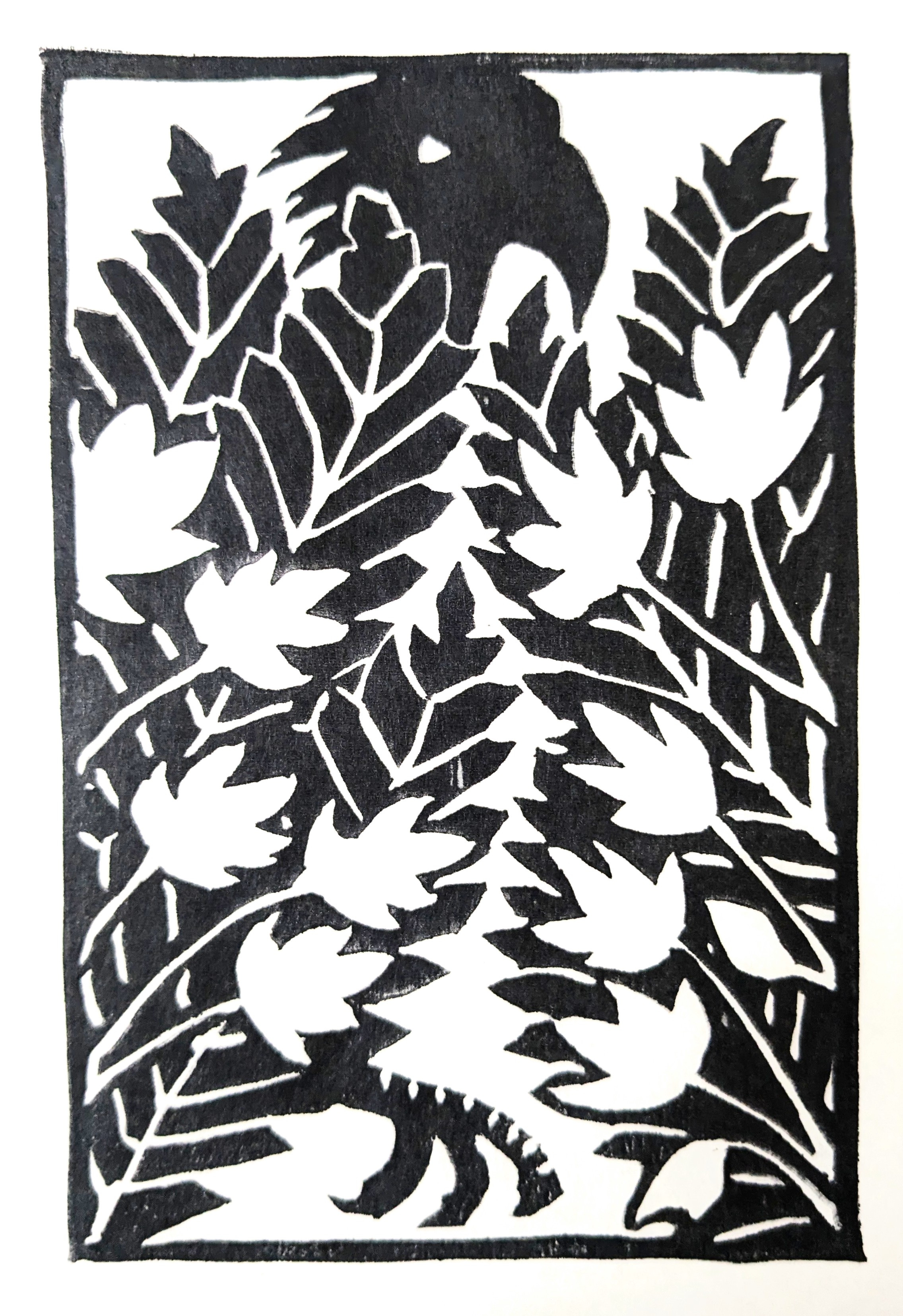
“If only someone could catch this bird,” the queen said, “I could feel such joy every day.” As the queen's lightest wish was a command, two of her courtiers lured the bird to the ground with oats and trapped it in a net. They brought it back to the palace and released it inside the covered garden.
Every day the queen would walk in her covered garden to see the bird and hear it sing. But every day her feeling of joy grew smaller and smaller, and in a week's time she felt none at all. She could not understand why, because the bird's feathers were still richly colored, its flight was still elegant, and its song was still sweet.
“This bird no longer pleases me,” she said to her courtiers, “perhaps it would go well with our supper.” As the queen's lightest wish was a command, the bird was taken to the chief cook of the palace kitchen, who sweated over it all the rest of the day. But that evening the queen was disappointed to find the bird's flesh bland, and even the cook's rich sauce couldn’t make it delicious.
That night the queen's stomach hurt terribly, she tossed and turned on her feather bed, tossed and turned, shivering and sweating with a fever. In strange dreams the wild bird flew to her with the face of a man and spoke: “I tried my best to bring you joy, please forgive me.”
“Oh God, what sickens me?” the queen cried out, “Is there any hope?”
“My dear,” said the bird with the face of a man, “you have a lesser sickness and a greater sickness. The lesser is easily cured, you need only call in the court physician to give you purgewort.”
“And the greater,” the queen asked, “can it be cured?”
“Every sickness has its cure,” said the bird. “To cure the greater sickness, you must go in secret, just as you are, to the pure spring, at the base of the mountain, in the depths of the forest, and there pick the purgewort yourself. But you must not return to the palace until you find out why I failed to bring you joy here.”
Hearing this, the queen awoke and slipped out of her bed. She thought to wake one of her serving maids and then remembered that she must leave in secret. She thought to put on a cloak and then remembered that she must go just as she was. So she slipped quietly out of the palace through a secret tunnel, wearing only her shift. The winter night was bitter cold but she burned with fever.
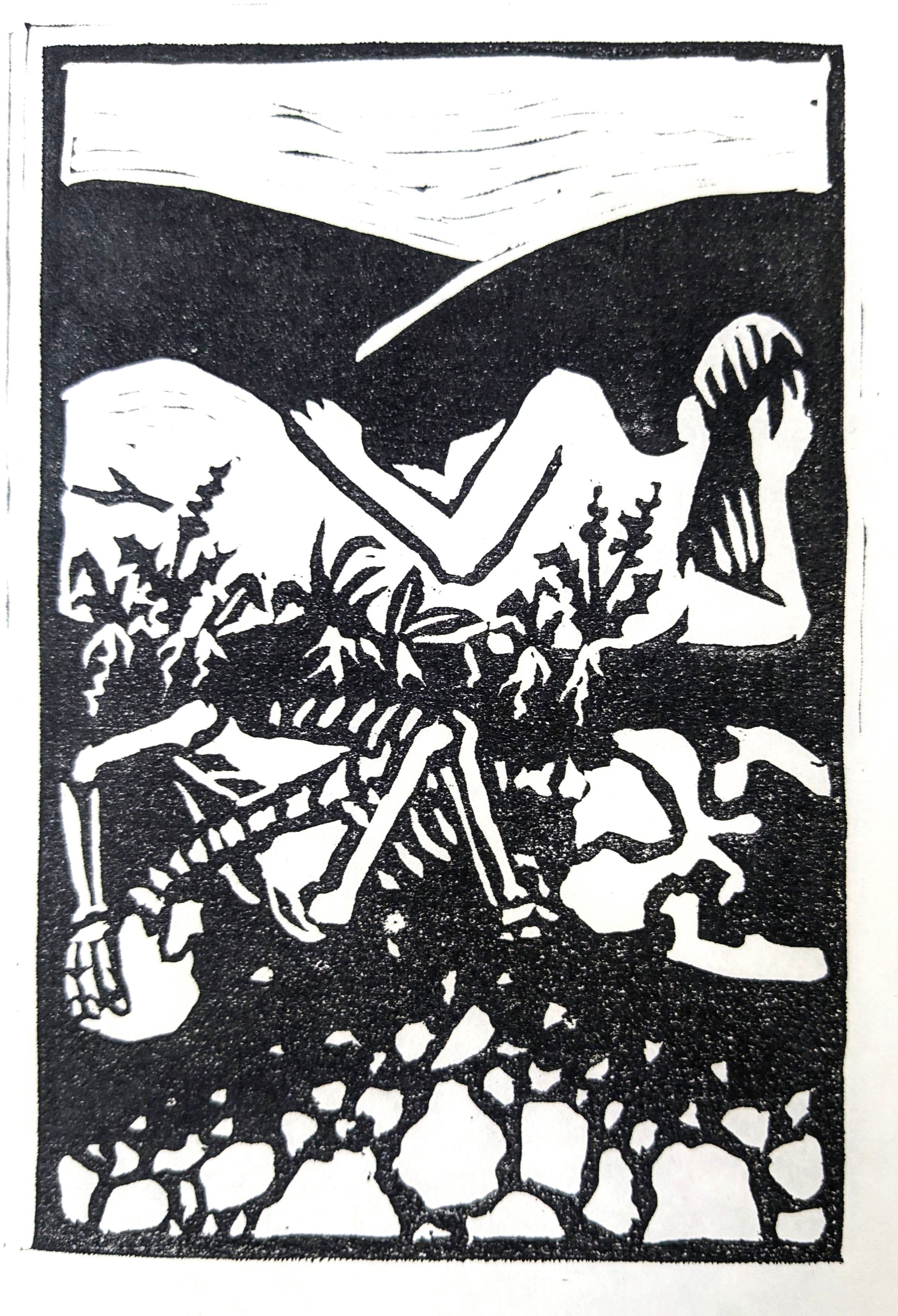
The queen wandered by moonlight, into the depths of the forest, all the way to the foot of the mountain, until she came to the pure spring. Growing there beside it she found a rank clump of purgewort. The queen picked a few leaves and ate them. They tasted unspeakably bitter and foul, but she knew she must swallow the medicine. Soon her belly gripped tight and she fell on her hands and knees and retched into the bushes until she was empty. Then she lay down, there by the pure spring, and fell asleep.
When she woke up, the sun was rising red among the bare branches. A woodman was squatting beside her. He had the same face as the bird in her dream, and he was dressed in patched and faded woolen clothes that might have once been green and red and gray. The woodman tried to speak to her but she was too weak and frozen to answer him, so he picked her up and carried her in his arms to a tumbledown hut on the mountainside, laid her down on a pallet of straw by the stone fireplace, and covered her with the furry pelt of a wild beast.
“I must go cut wood now,” the woodman said, pointing to the axe at his belt. “There's water in yon stone jar and logs by the fire. I'll be back at sundown.”
The queen lay warm under the fur and looked at the glowing embers on the hearth and the motes of dust where the sun shone through cracks in the wall. Soon she fell into a deep and blessed slumber. She woke up when the woodman returned, and he boiled water to make her a bowl of gruel. She was so hungry that she forgot she was a queen and ate it up so quick it burned her tongue.
Every day the woodman gave her simple food and fresh water from the pure spring, and before long she was able to walk on her own in the forest. She wore some of his old clothes, which were ragged but kept her warm enough if she stayed in the sun. One morning, stepping out of the trees into a clearing, she felt the same joy as when she first saw the wild bird, so sweet it ached.
When the woodman came home that night, he looked for a long time at her face in the firelight. “When first I found you,” he said, “you were pale and sickly and your face was hard as a stone, but now I see you are more beautiful than I thought. What you see here is all I have, but if you are not afraid to live on so little, I would be happy to take you as my wife.”
“When first you found me,” said the queen, “I thought you were a poor man with few possessions and even fewer words, but I have found you are kind and honest and more clever than I thought. Since I came here in my shift, you did not recognize me as your queen, but if you are not afraid to live among courtiers in a palace, I would be happy to take you as my husband.”
So the woodman rubbed goose fat on his pots and his metal tools, nailed shut the door of his tumbledown hut, and followed his queen to the palace. The court had been in turmoil and was overjoyed at their queen's return. After the wedding feast, the queen shared her feather bed with the woodman, who was now her prince consort.
The moon waxed and waned, waxed and waned, and one day the queen noticed that all her joy was gone again. Her face had grown hard with power, and her prince consort's face had grown soft with idleness and rich food.
“Oh if only I could have back that wild bird,” she said one day, “and feel such joy again.” As the queen's lightest wish was a command, skilled hunters combed the forest night and day to find another such bird. Time and again they would catch one and bring it to their queen, but none of them were anything like the one she wanted. Finally, the chief cook of the palace kitchen asked to come into her presence.
“Majesty,” said the cook, “when you ordered that bird to be cooked, one of the kitchen girls plucked it and made its feathers into a fan. When the feathers lost their beauty to grease and grime, she gave the fan to her daughter to play with. It is not the bird you wanted, and it is an old thing far too ugly to be fit for a queen, but I have brought it hoping it might please you.”
The fan was blackened and bedraggled, hardly any trace was left of the wild bird's rich colors, but it gave the queen a taste of hope. “If only these feathers could be made into a dish for my table,” she said. As the queen's lightest wish was a command, the chief cook retired to sweat over the preparation of this unheard-of dish.
That evening, the queen grimly finished her bowl of feather pudding, which tasted of nothing but the expensive spices the cook had added to cover the shame of the sorry feathers. That night the queen’s stomach hurt terribly, she tossed and turned on her feather bed, tossed and turned, shivering and sweating with a fever. In strange dreams the wild bird flew to her with the face of the woodman, cocked its head, and looked at her silently with one eye.
“You must help me,” the queen cried. “I did as you said, but my greater sickness is worse than ever!”
“Have you found out,” said the bird with the woodman's face, “why I failed to bring you joy in your palace?”
“I had forgotten that part,” said the queen. “But how can I know? Since it was you who failed to please me, won't you yourself tell me why?”
“I can tell you,” said the bird, “but still you will not understand.”
“Tell me, I beg of you,” said the queen, who had never begged for anything in her life.
“As you wish,” said the bird. “When you found me in the forest, my feathers reflected the most lustrous green leaves of the holly tree, the deepest blood red of its berries, and the richest grays of its bark. My flight was elegant because I chased the wind and fled from the hawk's talons. My song was lovely because I spent my nights listening to the stars chanting the name of God. It was the holly tree, the wind, the hawk, and the stars that brought you joy, not me.”
“Why then,” said the queen, “did you bring me joy at first in my covered garden, so far from the forest?”
“Because,” said the bird, “I carried the forest with me in my heart. But you see, the forest is so big and my heart is so small. In the palace, my feathers began to reflect the green of emeralds, the red of rubies, and the gray of the cold stone walls. In the palace, no wind blew for me to chase, and the falcons were all tamed with hood and glove. In the palace, I couldn’t hear the stars, for they sing so softly. I could only hear diamonds chanting the greed and fear of merchants and thieves. When my heart had filled up with dead stones, it was those you heard in my song and not the holly tree, the wind, the hawk, and the stars.”
“Now I understand,” said the queen, “but then why do I still suffer from the greater sickness?”
“Because you have not yet understood,” said the bird. “Empty yourself and go again into the forest.”
At this the queen awoke and called for the court physician to bring her a dose of purgewort.
As the sun rose red through budding branches that glistened with dew, the queen walked into the depths of the forest, to the foot of the mountain, where the pure spring welled up. She was alone and cold and hungry. She sat there all day long, looking at whatever caught her fancy and drinking from the spring whenever she grew thirsty. She looked at the holly tree. The thorns on its glossy leaves broke the sun into a shower of sparks, its last remaining berries dripped from its branches like heart's blood, and its bark was richly scarred and wrinkled with age. She felt the wind on her face and saw the hawk wheeling in the sky, crying out harshly. When the sun went down, she thought she could hear the stars, as faint as faint can be, chanting the name of God.
Just before dawn, the loveliest bird you can imagine flew up onto a branch and began to sing.
This intro is loosely borrowed from traditional forms in Turkish folktales: “Evvel zaman içinde, kalbur saman içinde, pireler berber, develer tellal iken, ben anamın beşiğini tıngır mıngır sallar iken, bir varmış, bir yokmuş…” meaning literally “In old times, when the sieve was in the straw, when fleas were barbers and camels were town criers, when I rocked my mother’s cradle slowly (kathump-kathump), there was one, there wasn’t one…”
I was inspired to begin the story in this whimsical way while translating another story from Turkish (and also by the many enthusiasms of my friend Giray), but the rest of it is original, translated from the language of my heart.
No posts
Comments
Nothing yet. Say the first thing.
Sign in to join the conversation.