
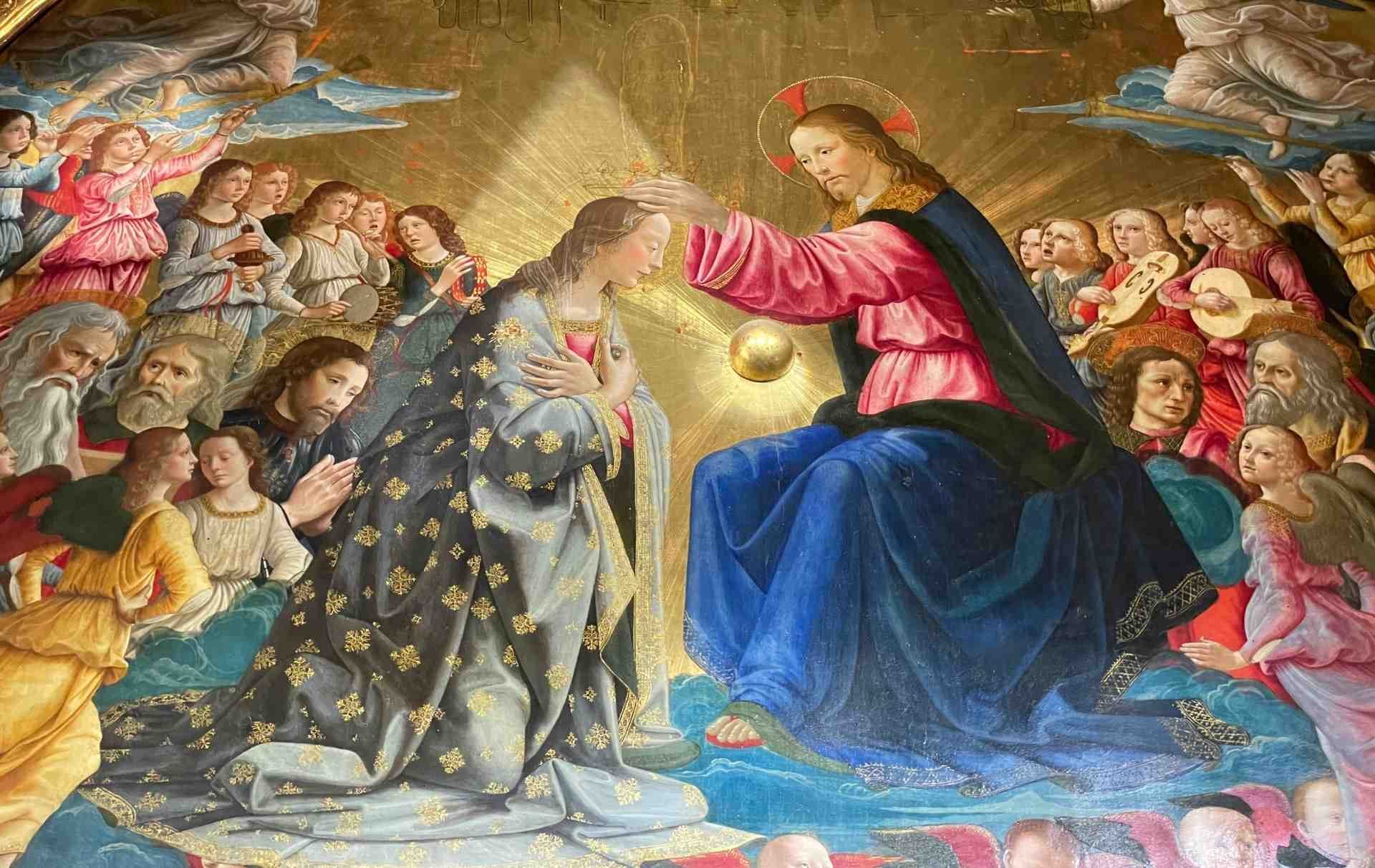
Throughout the Christian world, east and west, August 15th1 is the day we remember the death or “falling asleep” of the Blessed Virgin Mary. In the west it’s called the Feast of the Assumption and commemorates the moment she was assumed, or taken up, body and soul into heaven at the end of her earthly life. This event, which underscores Mary’s purity and her role as the Mother of God - the Theotokos in Greek - has always been a central doctrine in Christianity but was formally defined as dogma by Pope Pius XII in 1950.
Despite the lateness of the dogmatic definition, the commemoration of the Virgin’s holy death is of the most extreme antiquity. In the second century, the account of the bodily ascent of the Most Holy Virgin Mary to Heaven is found in a document attributed to Meliton, Bishop of Sardis. In the fourth century, Saint Epiphanius of Cyprus refers to the tradition about the “falling asleep” (Dormition) of the Mother of God. In the fifth century, Saint Juvenal, Patriarch of Jerusalem, told the holy Byzantine Empress Pulcheria: “Although there is no account of the circumstances of Her death in Holy Scripture, we know about them from the most ancient and credible Tradition.”
In today’s post for all subscribers, free and paid, I thought we could look more closely at some depictions of this event, and the differences of theological emphasis between east and west.

I hope you will enjoy and benefit from this repost, an examination of the tradition of the Dormition, both its theology and how this event is depicted by various Christian traditions. It is free for all readers today, the Feast of the Dormition, (and the opening of the annual August holiday, Ferragosto, in Italy) 2026.
Blessed feast, and Buon Ferragosto.
New here? Start here.
The Sacred Images Project is dedicated to the history, theology and practice of Christian sacred art. Through essays, guided Reading Rooms, videos and other resources, we aim to recover the visual language that shaped Christian civilisation for more than a thousand years and make it accessible to artists, students and anyone who wants to understand it.
If you’ve only just discovered the project through Google, a recommendation, or a shared article, click the Start Here button below to get the big picture and find the best place to begin.
Become a member
The Sacred Images Project is a unique source of thought on sacred art, and a permanent reference library for its history, theology and practice.
Free subscribers receive regular public essays, news and updates.
Paid subscribers get the more substantial research: long-form essays on the history and theology of Christian art, extra materials below the paywalls with serious looks at ancient primary sources, close examinations of individual works and artists.
Subscriptions support the research and writing that keeps the whole project going.
Paid members receive:
Weekly subscriber-only essays and in-depth series
Full access to the Reading Rooms and growing archive
Downloadable resources, high-resolution images and other member extras
Membership in the Ars Sacra Association and future members’ benefits
Annual membership: $75, 30% off the monthly rate.
This painting is one of our local treasures in the small Umbrian town where I live.
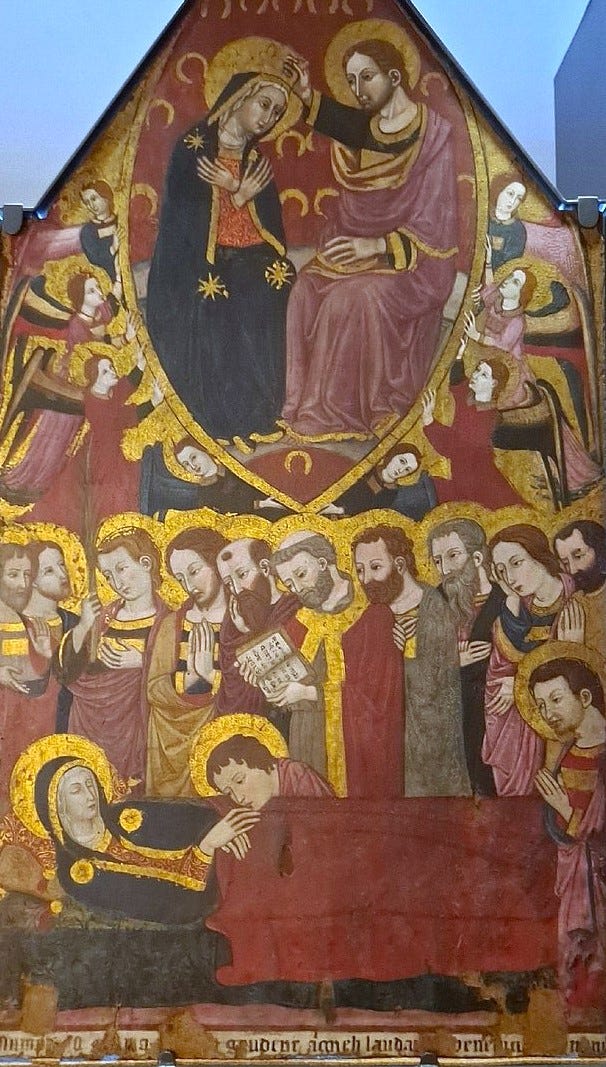
Throughout the middle ages, the Assumption and coronation of the Virgin was one of the most popular subjects for sacred art. There are really a never-ending parade of depictions, in every style you can name, from the earliest possible Christian times. So, rather than just randomly choose a few from the heap, I thought I’d highlight one I’m personally rather fond of.
The great Narnian Ghirlandaio is a painting very difficult to photograph, in its dark room. They keep you some feet away from it with a platform built to resemble an altar, to give an idea what it might have looked like in place.
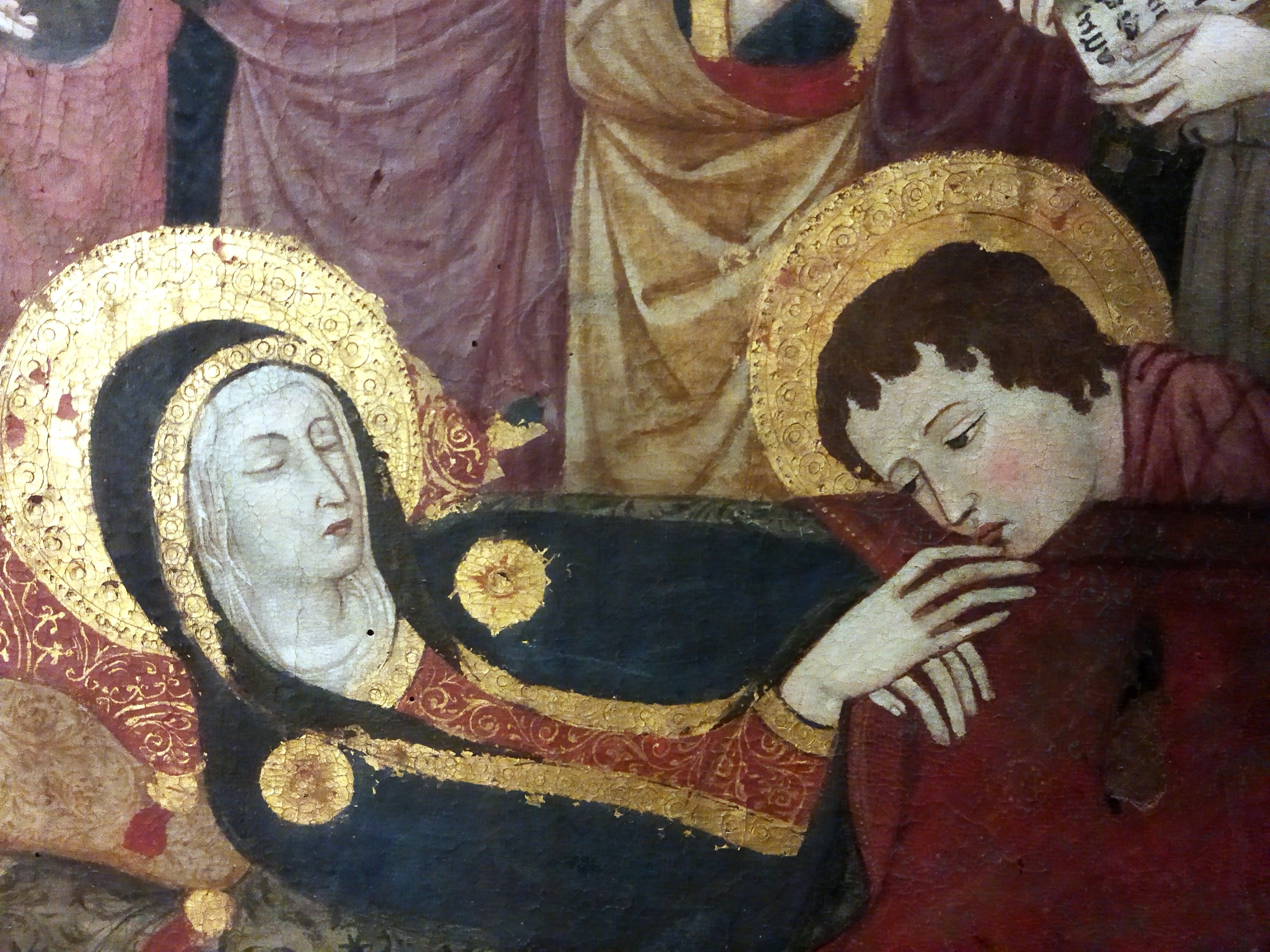
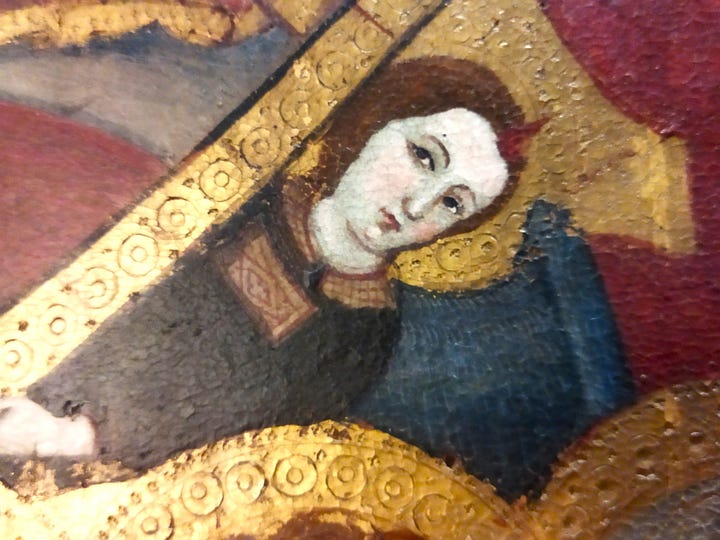
But other works are much easier to get up close to. I love this little panel of the Dormition and Coronation by a painter of the 14th century known to us only as “The Master of Narni”. It has such delicate charm and simplicity that I thought I’d love to do a set of miniature icons based on it, so I took a lot of close up photos of it one day.
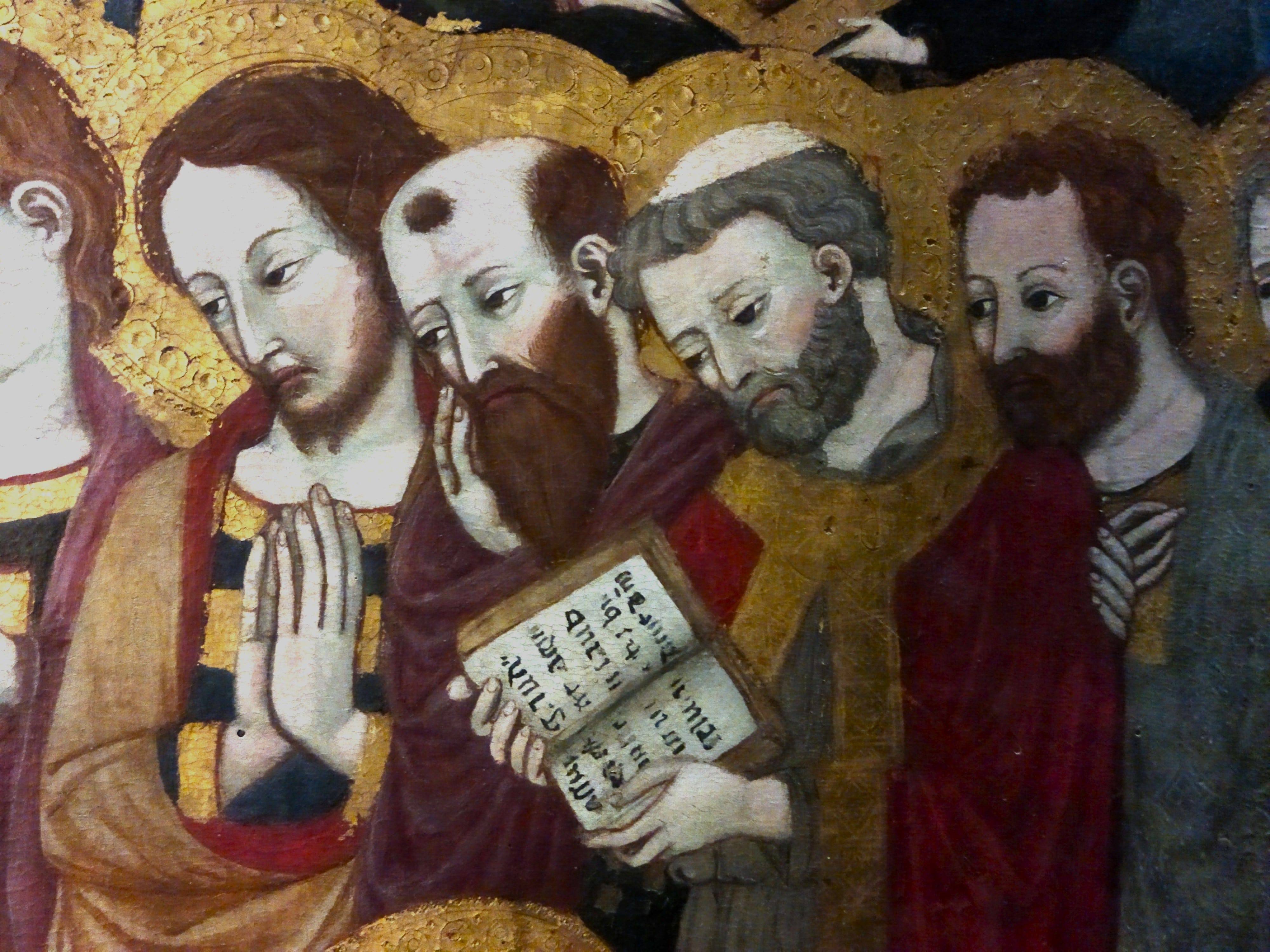

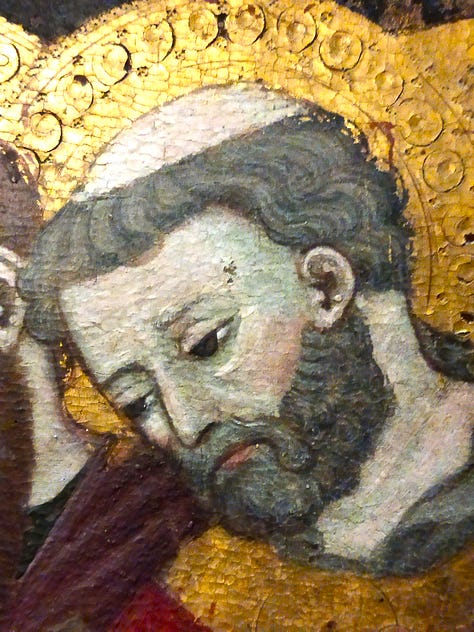
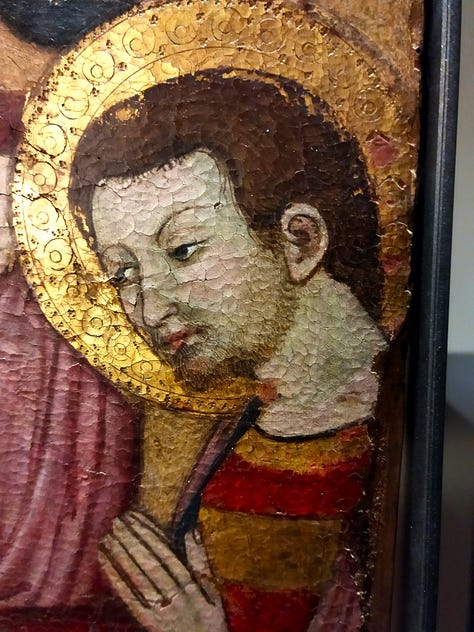
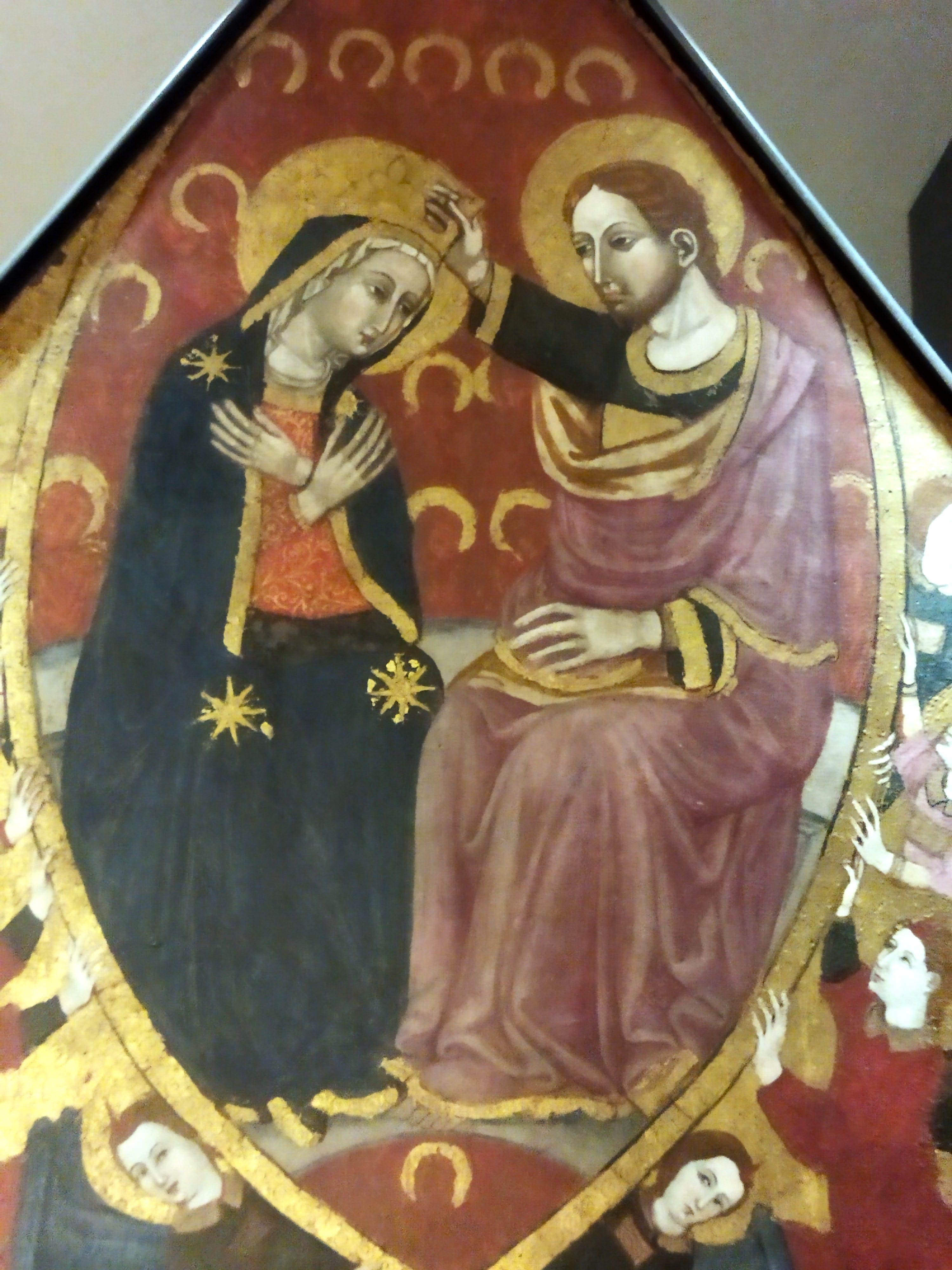

You can’t do better than Dom Gueranger to understand the meaning of a particular feast:
Being a mere creature, she could not deliver herself from that claim of the old enemy; but leaving her tomb filled with flowers, she mounts up to heaven, flowing with delights, leaning upon her Beloved. Amid the acclamations of the daughters of Sion, who will henceforth never cease to call her blessed, she ascends surrounded by choirs of heavenly spirits joyfully praising the Son of God. Nevermore will shadows veil, as they did on earth, the glory of the most beautiful daughter of Eve.
Beyond the immovable Thrones, beyond the dazzling Cherubim, beyond the flaming Seraphim, onward she passes, delighting the heavenly city with her sweet perfumes. She stays not till she reaches the very confines of the Divinity; close to the throne of honor where her Son, the King of ages, reigns in justice and in power; there she is proclaimed Queen, there she will reign for evermore in mercy and in goodness…
exerpted from the Liturgical Year.
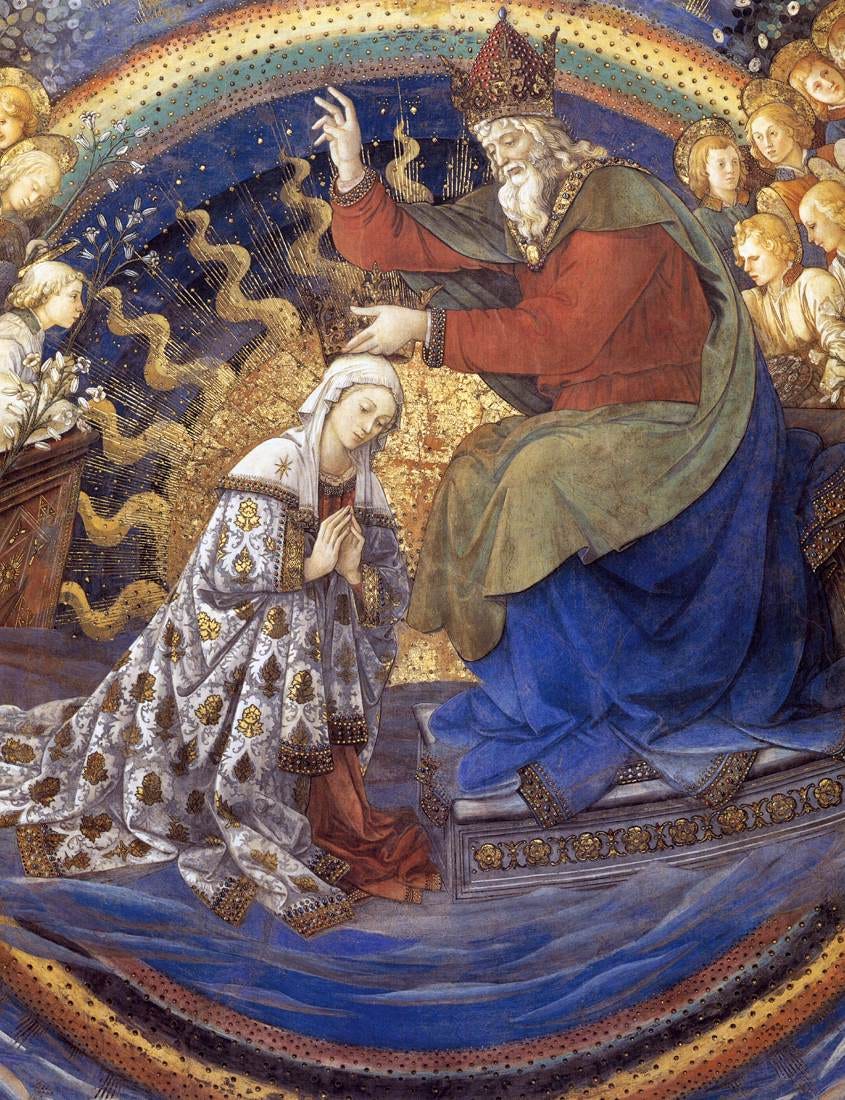
Before Pope Pius XII established the Feast of the Queenship of Mary in 1954, the Coronation of the Virgin was often depicted as the culminating moment of the Assumption. In this tradition, the Coronation is seen as the final glorification of Mary, following her Assumption into heaven.
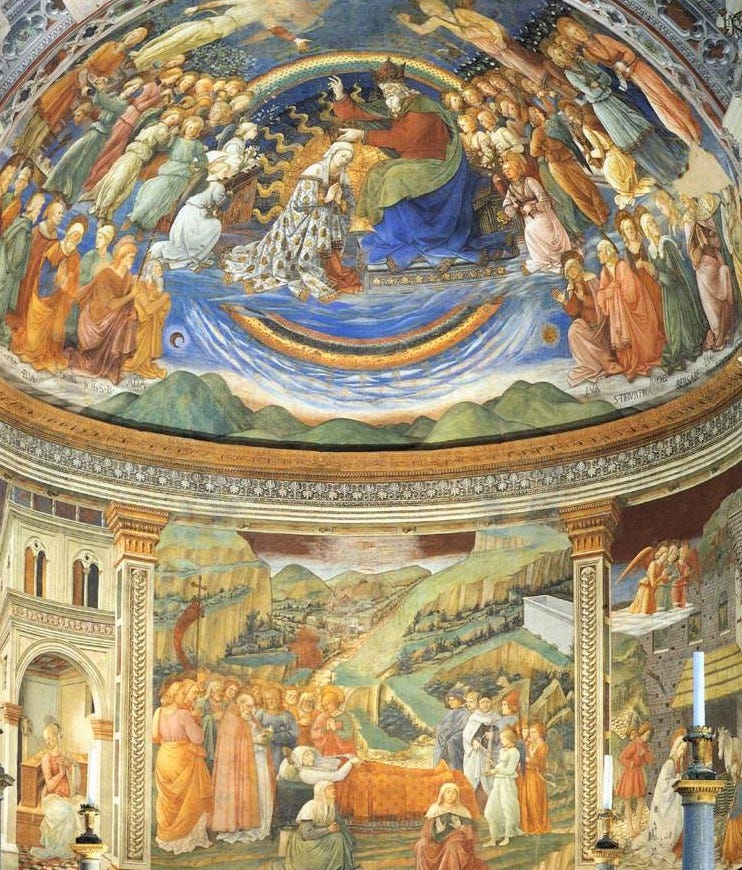
Artistic representations like those in the Spoleto Duomo reflect the theological connection between the holy death of the soul and the mystical coronation in heaven. The point of these events is to reflect on the goal of all Christian souls2.
These events in Mary’s life are intended as a model and a promise for all believers. Just as Mary was assumed into heaven and crowned, Christians hope to share in this glorification. The doctrine of the resurrection of the body and life everlasting holds that all who die in Christ will eventually experience a bodily resurrection and be united with God in eternal life.
Mystically, Mary’s journey reflects the spiritual journey of every Christian; death as a passage to eternal life, and the ultimate hope of sharing in divine glory. Mary’s unique privileges do not separate her from humanity but rather highlight the potential for holiness and the transformative power of God’s grace in the lives of all believers. These frescoes emphasise the idea that the death and Assumption leads directly to Mary’s coronation3, symbolising her unique role in the divine order.
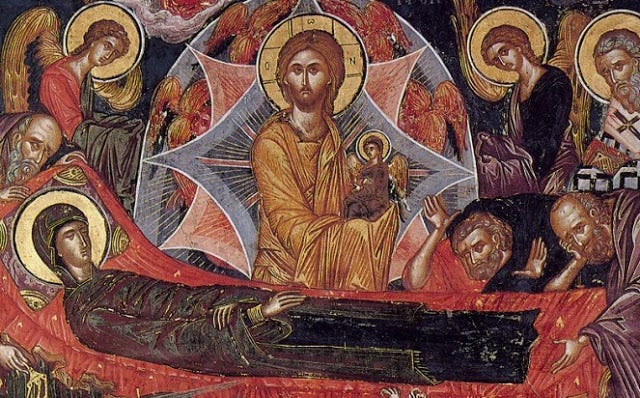
In the east, a slightly different emphasis
The Feast of the Assumption in the Catholic Church is celebrated on the same day as the Feast of the Dormition of Mary in Eastern Christian churches. While they share the same date and honour the end of the Virgin Mary's earthly life, the two feasts emphasise slightly different theological perspectives and traditions.
In the East, the Feast of the Dormition of Mary focuses on her “falling asleep,” referring to her peaceful death.4 “Dormition” reflects the belief in the east that Mary died a natural death5 but was then taken up, body and soul, into heaven. The feast is considered one of the Great Feasts of the Orthodox Church and is preceded by a two-week fasting period, known as the Dormition Fast.
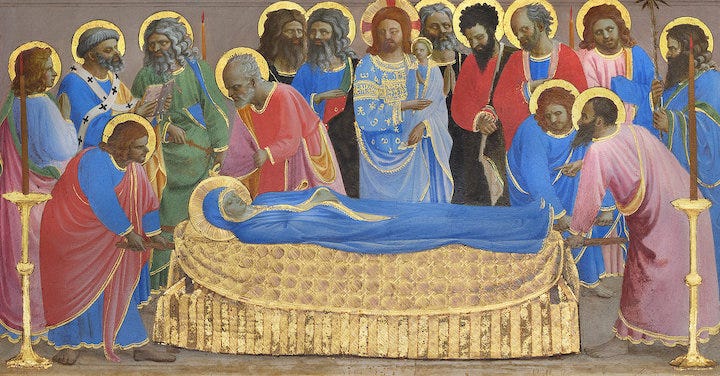
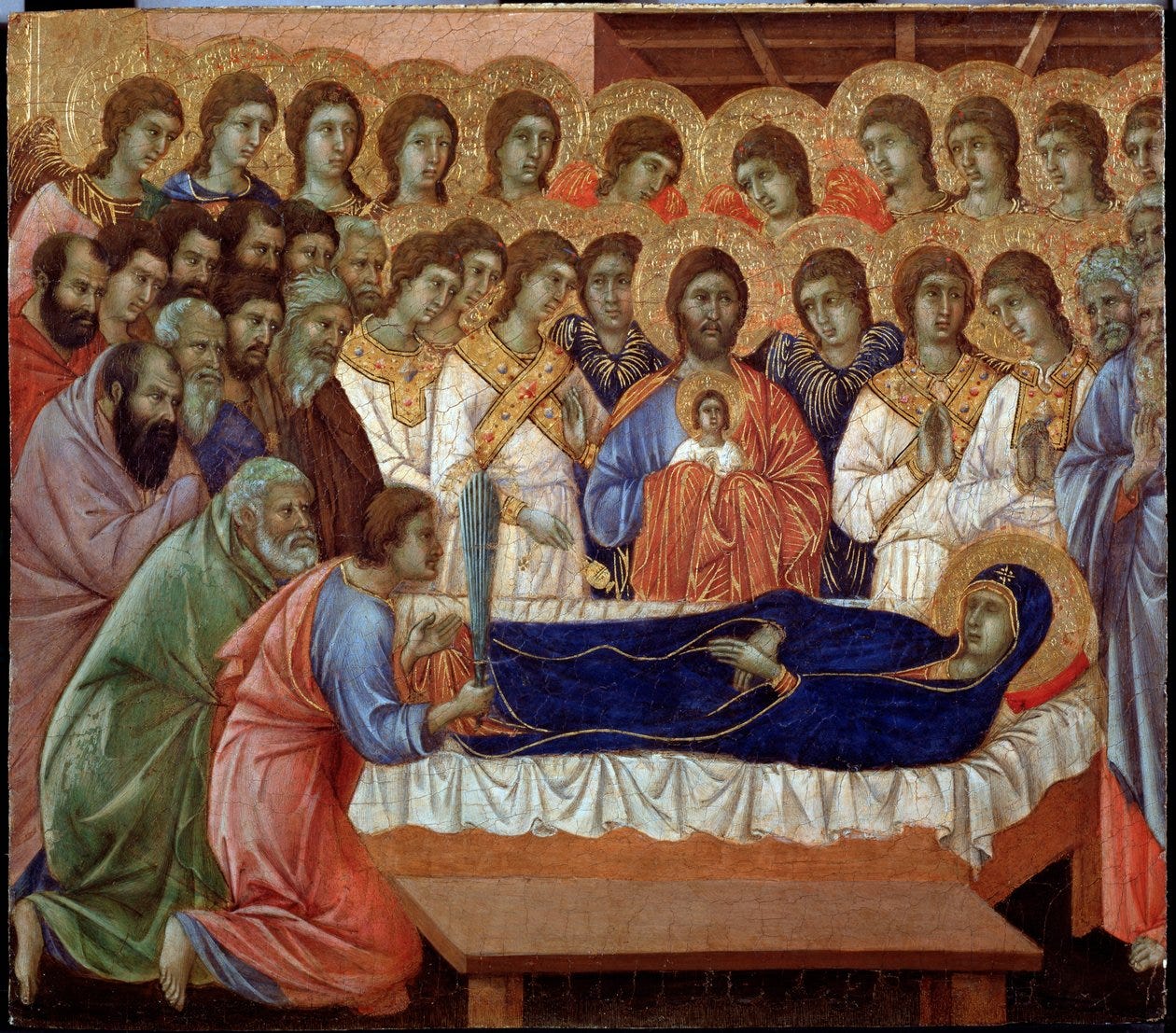
We saw above an example of a Trecento (14th century) Italian depiction of the Dormition and Coronation of the Virgin held by the Eroli museum here in Narni. This was the last moment in Italian sacred art where the eastern and western theological ideas were still largely undivided. But as you can see above with the much later Ghirlandaio and Lippi paintings, and with this by Fra Angelico, many of the Byzantine and theological elements are retained in western art until the humanistic naturalism of the Florentine Renaissance subsumed all western sacred art.
In Eastern Christian iconography, the Feast of the Dormition is still depicted strictly from the theological meaning of the event. The standard icon of the Dormition, or “Koimesis” in Greek, portrays her peaceful death, or “falling asleep,” lying on a richly adorned bed, signifying her royal status, passing from earthly life.
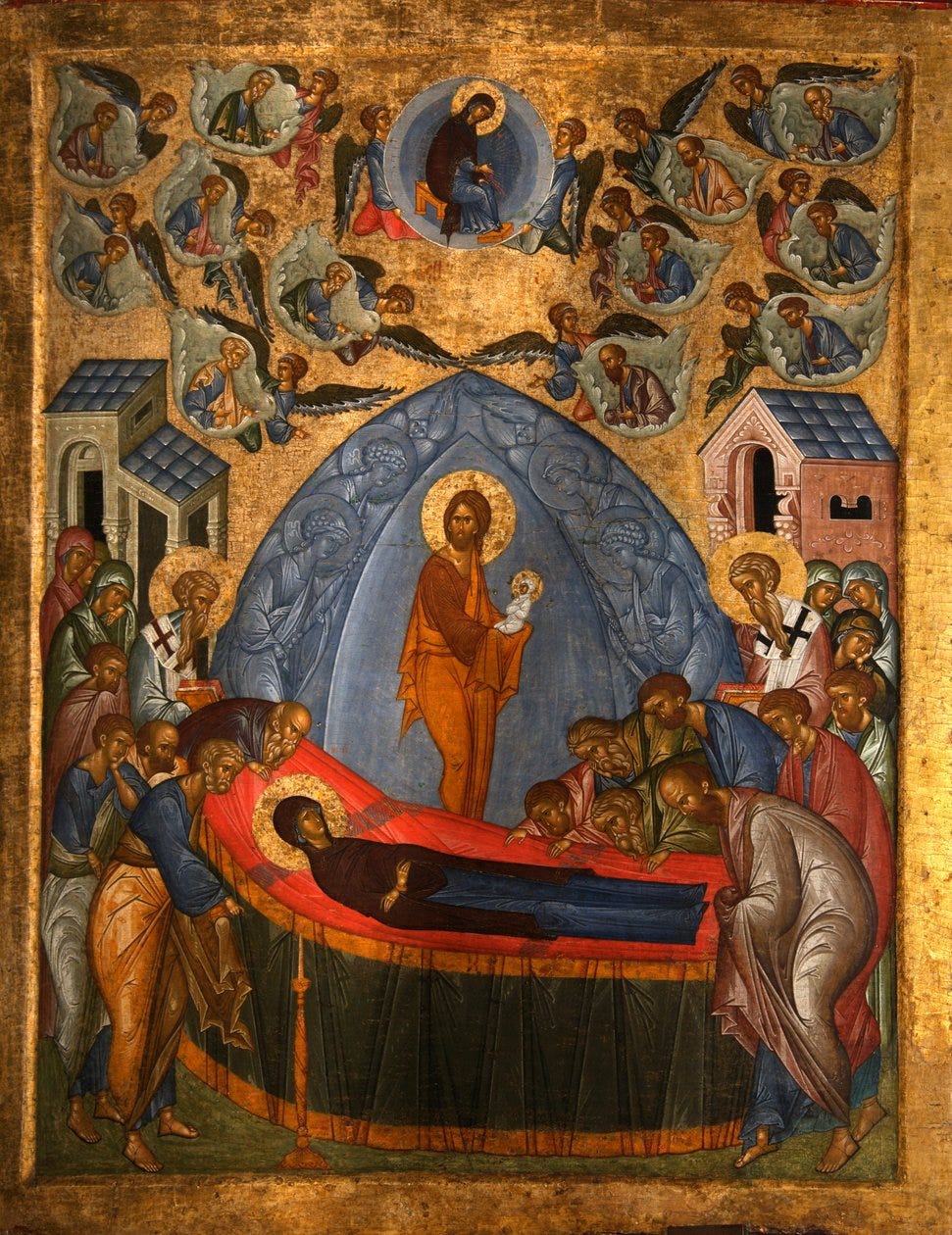
She is surrounded by the grieving Apostles who are understood to have remained with her throughout the remainder of her earthly life, especially St. John into whose care Christ explicitly gave His mother from the cross, as a replacement son. The Apostles and disciples are shown in various expressions of grief and reverence, reflecting the human sorrow of loss but also the hope of eternal life. The Apostle Peter is often depicted at the head of the bed, swinging a censer, and the Apostle Paul at the foot, both symbolizing their leadership in the early Church.
Above Mary's body, Christ is depicted in a mandorla (an almond or geometrically-shaped aureole of the “uncreated” light of heaven) holding a small, swaddled figure that represents the soul of Mary. The figure is often shown in white or gold, indicating its sanctity.
Often, angels are depicted above, sometimes accompanied by saints or figures from the Old Testament, such as prophets, further emphasizing the celestial significance of the event. The presence of these figures reinforces the idea that Mary’s Dormition is a moment of universal significance, celebrated both in heaven and on earth.
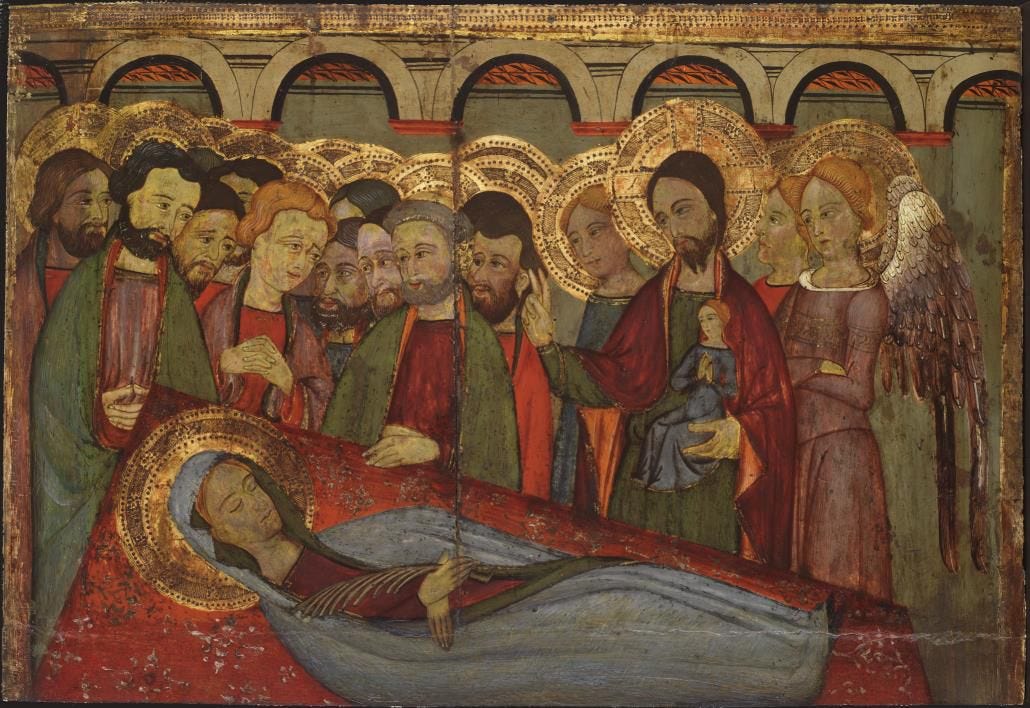
A detailed story of the last days of the Virgin Mary’s life are compiled from ancient sources and retold by Orthodox and Byzantine Catholics. The story includes the detail that she was visited by the Angel Gabriel a few days prior, and given a palm branch in pledge that she would be taken up. More of it can be read here. The story goes that the surviving Apostles were miraculously gathered “from the ends of the earth” and brought to Jerusalem, where the Virgin was spending her last days, to attend her deathbed, along with “a multitude of angels”.
In Italy, the Feast of the Assumption coincides with "Ferragosto," the national summer holiday in which Italian cities more or less shut down while everyone goes to the beach or the mountains to escape the last of the summer heat. Life resumes in the second week of September. The term “Ferragosto” originates from the Latin Feriae Augusti, meaning the “Festivals of Augustus,” which Emperor Augustus instituted in 18 BCE as a period of rest and celebration after the harvest.
In mystical theology, the human soul of everyone, men and women, is referred to as “she” to reflect the mystical spousal relationship between each of us with Christ.
There is a separate feast in the Catholic liturgical calendar that celebrates the Coronation of the Virgin Mary, on the octave of the Assumption, August 22nd. Established by Pope Pius XII in 1954 with the encyclical Ad Caeli Reginam, it proclaimed Mary as Queen of Heaven and Earth.
I very much appreciate the eastern Christian habit of referring to a Christian’s death as “repose.” “He reposed in the Lord…” Let’s do that, hey?
In the west the question of whether Mary actually died is left open, that is, not definitively determined or dogmatically defined. When Pius XII formally defined the dogma of the Assumption he deliberately left open the question of whether Mary experienced death. The dogma simply states that "the Immaculate Mother of God, the ever Virgin Mary, having completed the course of her earthly life, was assumed body and soul into heavenly glory." (emphasis added)
Western theologians and early Church Fathers believed that Mary, a fully human person, did indeed die before her Assumption. But another theological consideration focuses on her immaculate conception. Death is understood as a consequence of original sin, so some theologians speculated that Mary, being sinless, may not have been subject to death. The ambiguity in the dogma allows for a diversity of theological opinions and reflects the Church's understanding that the mystery of Mary’s Assumption is beyond complete human comprehension.
No posts
Comments
Nothing yet. Say the first thing.
Sign in to join the conversation.