
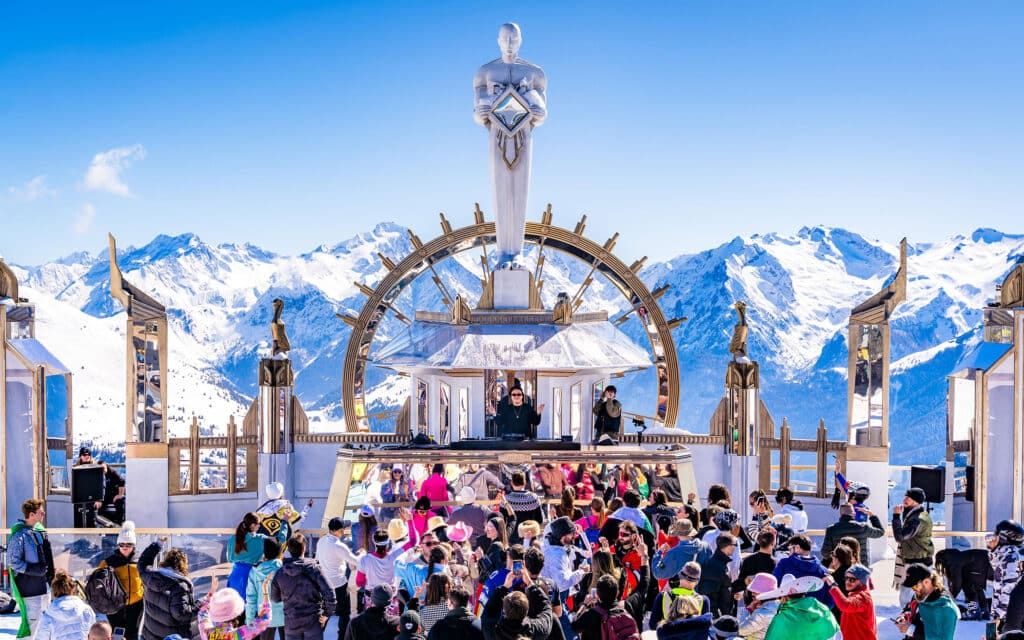
Tomorrowland Winter has confirmed that it will return to Alpe d’Huez from 20–27 March 2027, with pre-registration already open ahead of tickets going on sale. For thousands of people, securing a place will be every bit as important as booking a ski holiday, because the festival has become one of the biggest events on the winter calendar, attracting internationally renowned DJs to one of France’s largest ski areas. Twenty years ago, the idea of combining a major electronic music festival with a week on the slopes would have seemed like an unlikely experiment. Today, it feels entirely at home in the Alps.
That says rather a lot about the way skiing has changed.
Après ski has always been part of a winter holiday, but it has never stood still. The bars still fill as the lifts close, music still drifts across sunny terraces and ski boots remain the only acceptable footwear, yet the experience has broadened so much that two people can spend a week in the same resort and come home with completely different ideas of what après ski actually is. For one, it might mean dancing in front of a festival stage with ten thousand other people. For another, it is a quiet drink outside a mountain restaurant while the last skiers carve their way back towards the village. Neither experience is more authentic than the other. They simply reflect the extraordinary range of experiences that skiing now offers.
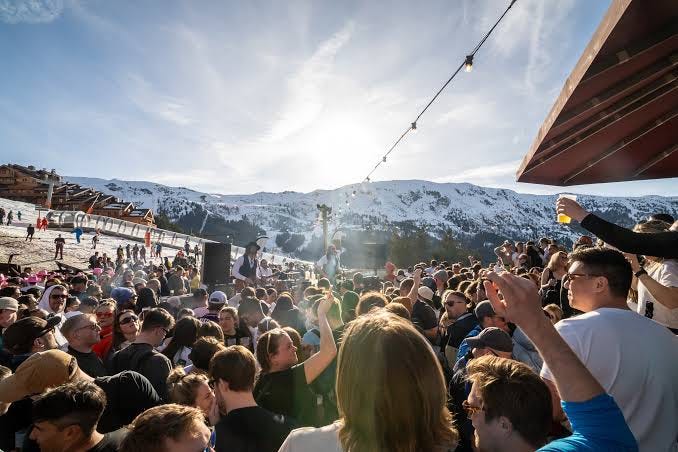
It is easy to assume that après ski has become louder, bigger and more commercial, but that is only part of the story. The traditional rituals haven’t disappeared at all. Austria’s umbrella bars are every bit as lively as they were thirty years ago, live bands still persuade entire terraces to sing songs they barely know, and there is something wonderfully democratic about a room full of skiers in helmets, goggles and ski boots forgetting entirely what they do for a living. The appeal has never depended on polished performances or expensive production. It has always been about shared enthusiasm after a good day in the mountains.
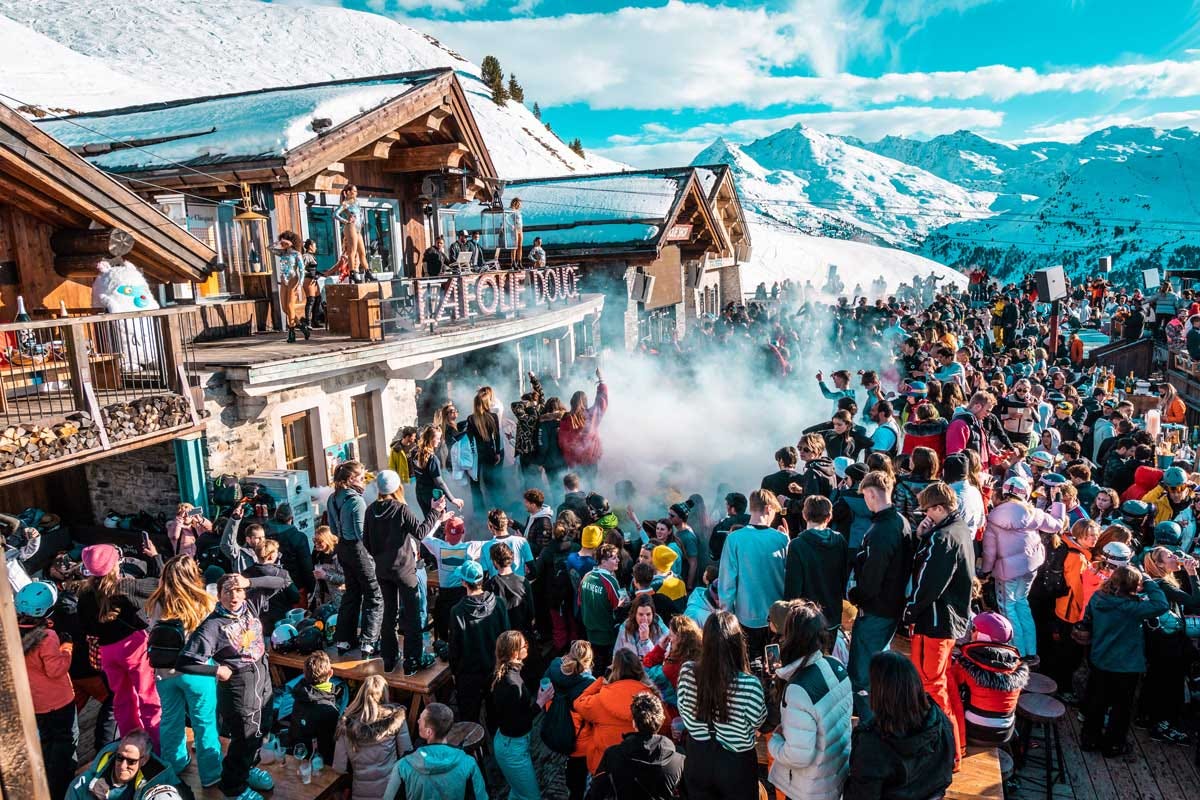
France gradually nudged the idea in a different direction. Venues such as La Folie Douce demonstrated that mountain entertainment could become an attraction in its own right, blending DJs, performers, dancers and spectacular alpine settings into an afternoon show that people actively planned their ski day around. Rather than stopping for a drink because they happened to be passing, skiers began timing their final runs so they could arrive before the music reached its peak. Resorts across Europe watched closely, and many adopted elements of the same formula, whether through resident DJs, sponsored events or increasingly ambitious entertainment programmes.
Italy has largely resisted that race for scale. There are certainly lively bars and late afternoons that drift happily into evening, but the emphasis often feels different. Long lunches remain an important part of the skiing culture, good food is rarely treated as an afterthought and conversation seems to last longer than the music. A plate of fresh pasta, a glass of Alto Adige wine and another half hour in the sunshine can be every bit as satisfying as standing shoulder to shoulder beneath a speaker stack.
Switzerland, meanwhile, continues to occupy several worlds at once. St Moritz embraces glamour with characteristic confidence, Verbier has developed an energetic social scene of its own, while countless smaller villages remain wonderfully understated. In many places, après consists of little more than a cosy hotel bar, a wood-burning stove and the sort of atmosphere that encourages people to linger over another drink because nobody is looking at their watch.
Taken together, those experiences make it surprisingly difficult to define what après ski now means. The phrase still conjures the same broad idea, yet the reality varies enormously from one valley to the next.
The arrival of festivals such as Tomorrowland Winter has undoubtedly changed the landscape. Rather than treating entertainment as something that begins once the lifts close, many resorts now build entire weeks around music, with internationally renowned DJs sharing the billing with the skiing itself. Tomorrowland may be the highest-profile example, but it is far from alone. Snowbombing in Mayrhofen, Rise Festival in Les Deux Alpes and an ever-growing calendar of mountain music events have all helped create holidays where the evening programme is every bit as important as the snow conditions.
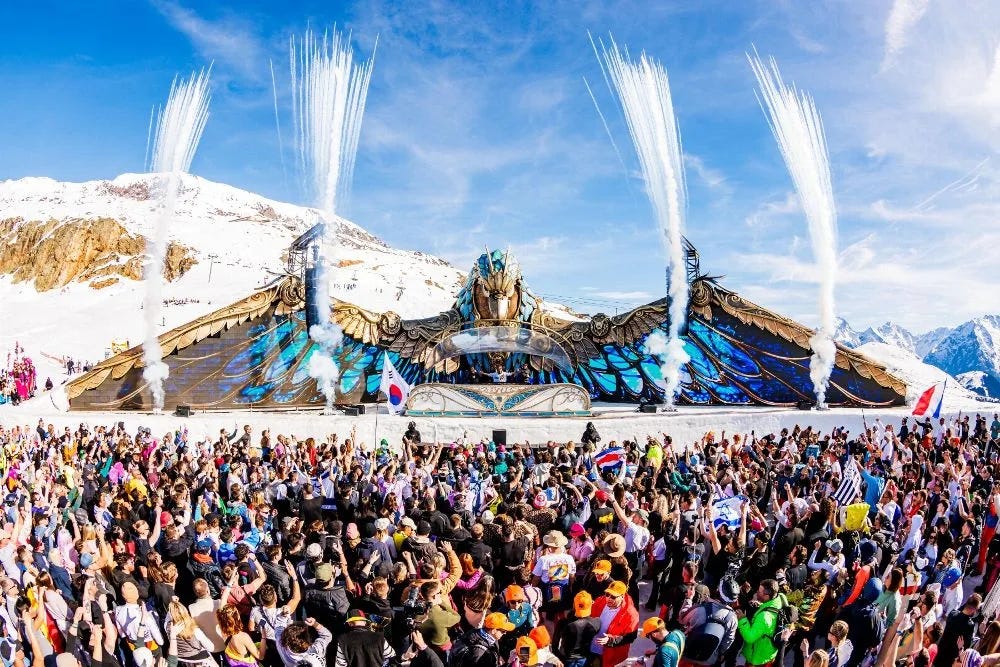
Social media has accelerated that evolution. Resorts are no longer competing solely on the quality of their lift systems or the extent of their ski area; they are also competing for attention. Fireworks above a packed terrace, a saxophonist performing against a backdrop of snowy peaks or a headline DJ playing to thousands of people naturally makes for compelling video. Those images travel quickly and have become a powerful marketing tool, introducing a new generation of skiers to resorts they may never have considered before.
At the same time, the quieter side of mountain life has lost none of its appeal. In fact, there is an argument that it has become even more precious. A tiny family-run restaurant serving homemade food, an old wooden hut tucked away above the tree line or a sunny terrace where conversation is the loudest sound can feel wonderfully refreshing in an era when so much of the online conversation focuses on spectacle. The Alps have always offered both experiences, and perhaps the greatest strength of modern skiing is that travellers no longer feel obliged to choose one over the other.
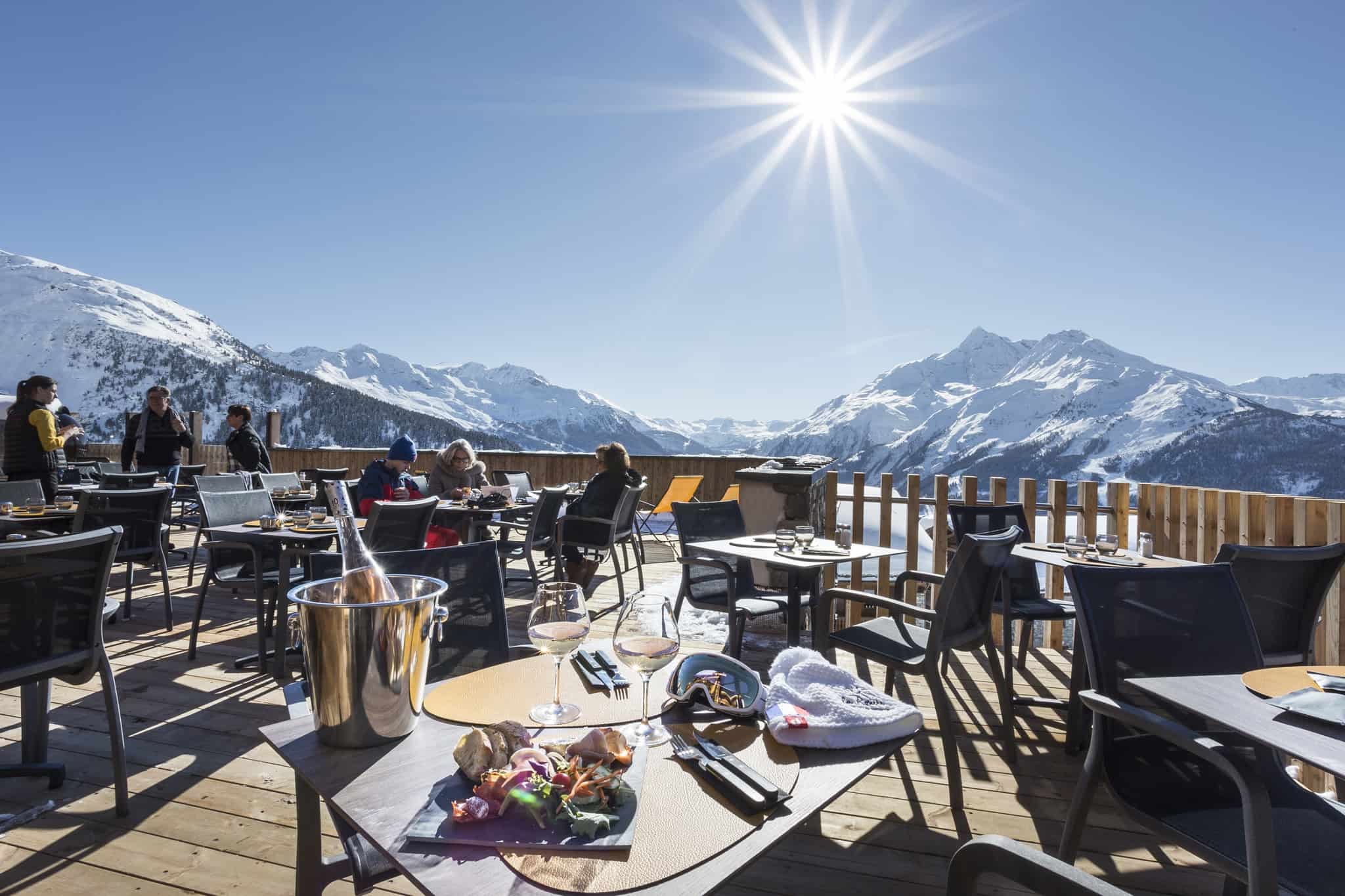
That breadth of choice is ultimately what defines après ski today. Some people happily organise an entire holiday around festival line-ups, while others are searching for villages where the loudest sound after four o’clock is the church bell echoing across the valley. Neither approach is more authentic than the other because Alpine resorts have never stood still. Every generation has shaped the mountains in its own way, whether through new lifts, better restaurants, improved accommodation or entirely new forms of entertainment. Festivals are simply the latest chapter in that continuing story, and they sit comfortably alongside traditions that have been bringing skiers together for decades.
Perhaps that is the biggest change of all. Après ski is no longer a single tradition that every skier experiences in roughly the same way. It has become an umbrella term that encompasses everything from world-famous music festivals to sleepy mountain cafés, elegant hotel bars, family-run restaurants and bustling Austrian umbrella bars. The skiing still provides the common thread, but what happens afterwards is increasingly shaped by personal taste rather than local custom.
For some, Tomorrowland Winter represents the ultimate way to celebrate a week in the mountains. Others will happily spend the same week searching for quiet restaurants, hidden terraces and long lunches with uninterrupted views of the Alps. The reassuring thing is that there is room for both, and perhaps that is the strongest sign yet that skiing continues to evolve without losing the qualities that made people fall in love with it in the first place.
Festival dates: 20–27 March 2027
Location: Alpe d’Huez, France
Official tickets & pre-registration:
https://winter.tomorrowland.com/
Festival packages & accommodation: https://winter.tomorrowland.com/en/passes-packages/
What does the perfect après ski look like to you? Is it a packed Austrian umbrella bar, an afternoon at La Folie Douce, dancing beneath the lights at Tomorrowland Winter, or simply a sunny terrace with good food, good company and one last drink before heading back to the chalet? Let us know in the comments below.
No posts
Comments
Nothing yet. Say the first thing.
Sign in to join the conversation.