
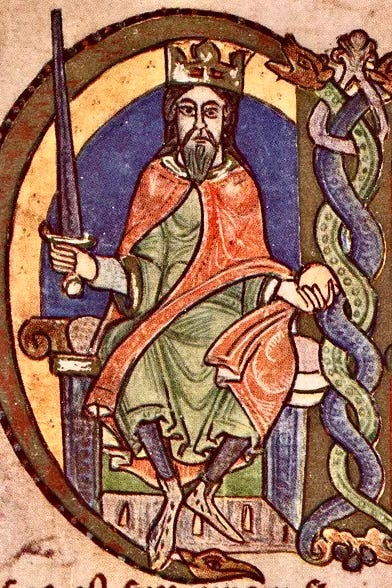
Southerners are often a bit confused about which side of the Border Cumbria lies on. One of the people responsible for the uncertainty is a highly unusual 12th century king of Scotland called David I.
In his youth David was a penniless and landless princeling, the eighth son of Malcolm III. It seemed unlikely he would amount to anything. Yet David rose to become one of Scotland’s greatest kings – and a saint to boot.
This happened because he had a great stroke of luck. The English King Henry I married his sister, Princess Matilda in 1100. At her prompting, Henry made her seventeen-year-old brother his greatest protege, training him as a knight and grooming him to rule. Of course, Henry had an ulterior motive for doing this. He wanted to use David as a tool to control the bothersome Caledonians.
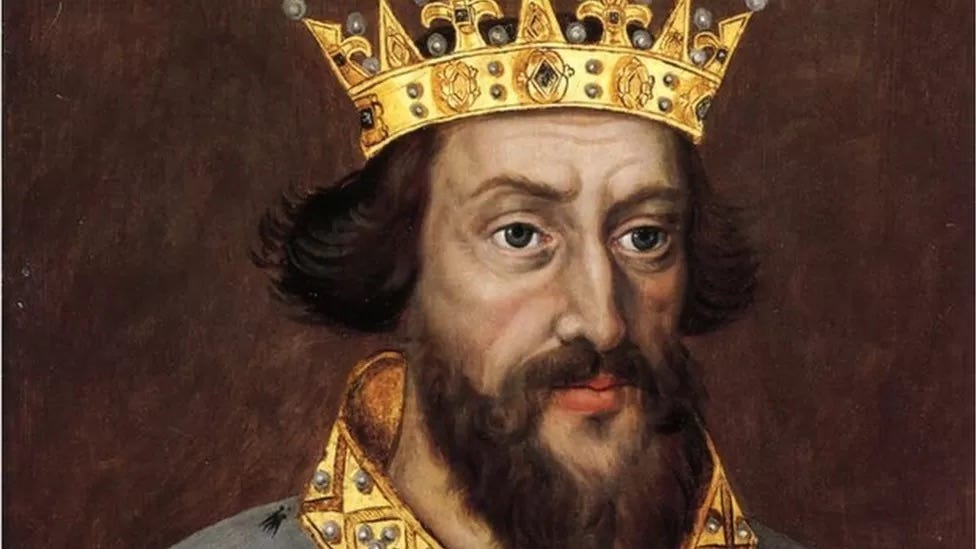
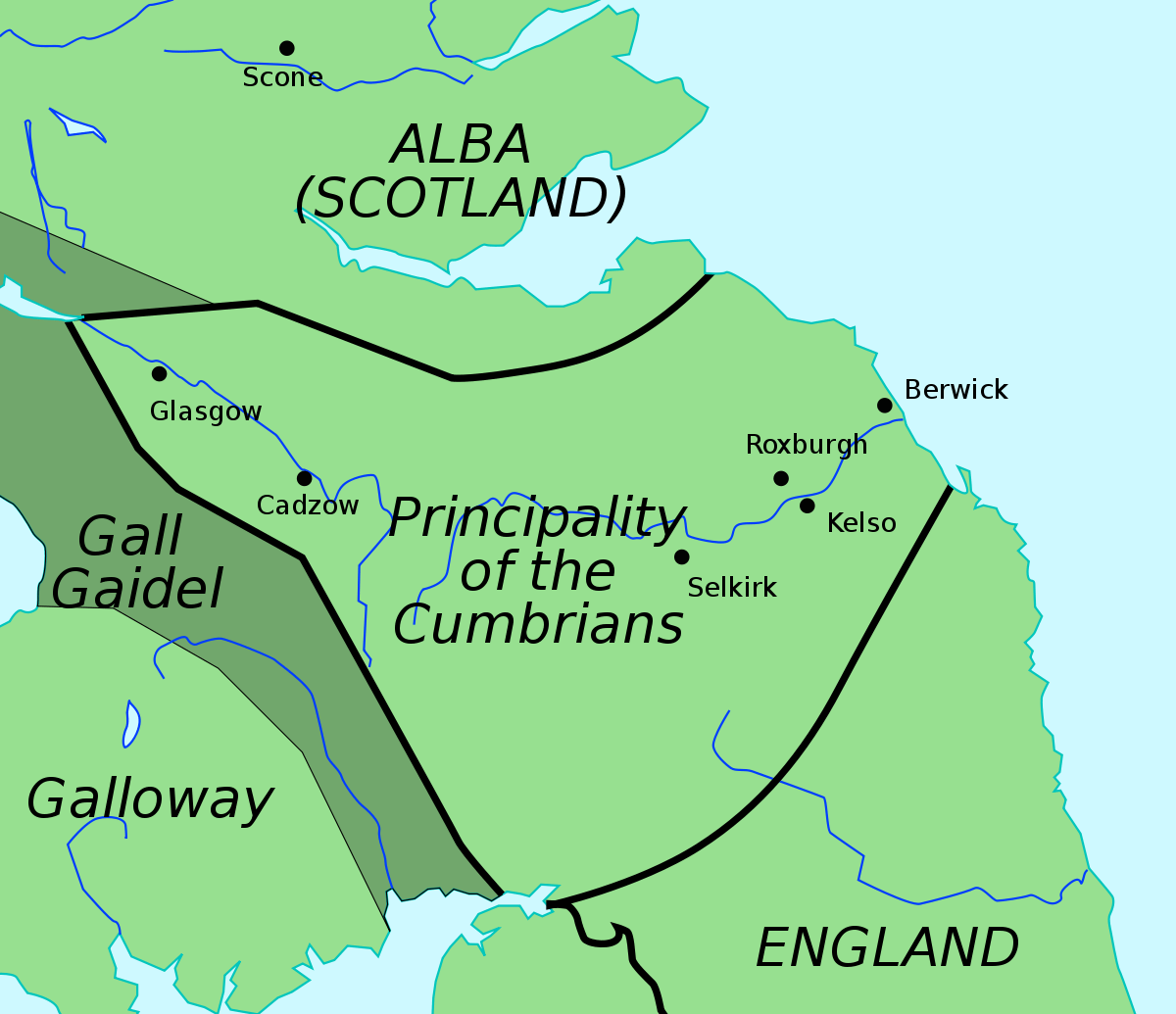
The English king bullied the Scots into making David the “Prince of the Cumbrians” with lands in southern Scotland extending from Glasgow to the north bank of the Solway. That created a buffer zone which stopped Scottish raids on England. Henry’s success in effectively inserting the maverick David onto the Scottish line of succession is a unique event in British history.
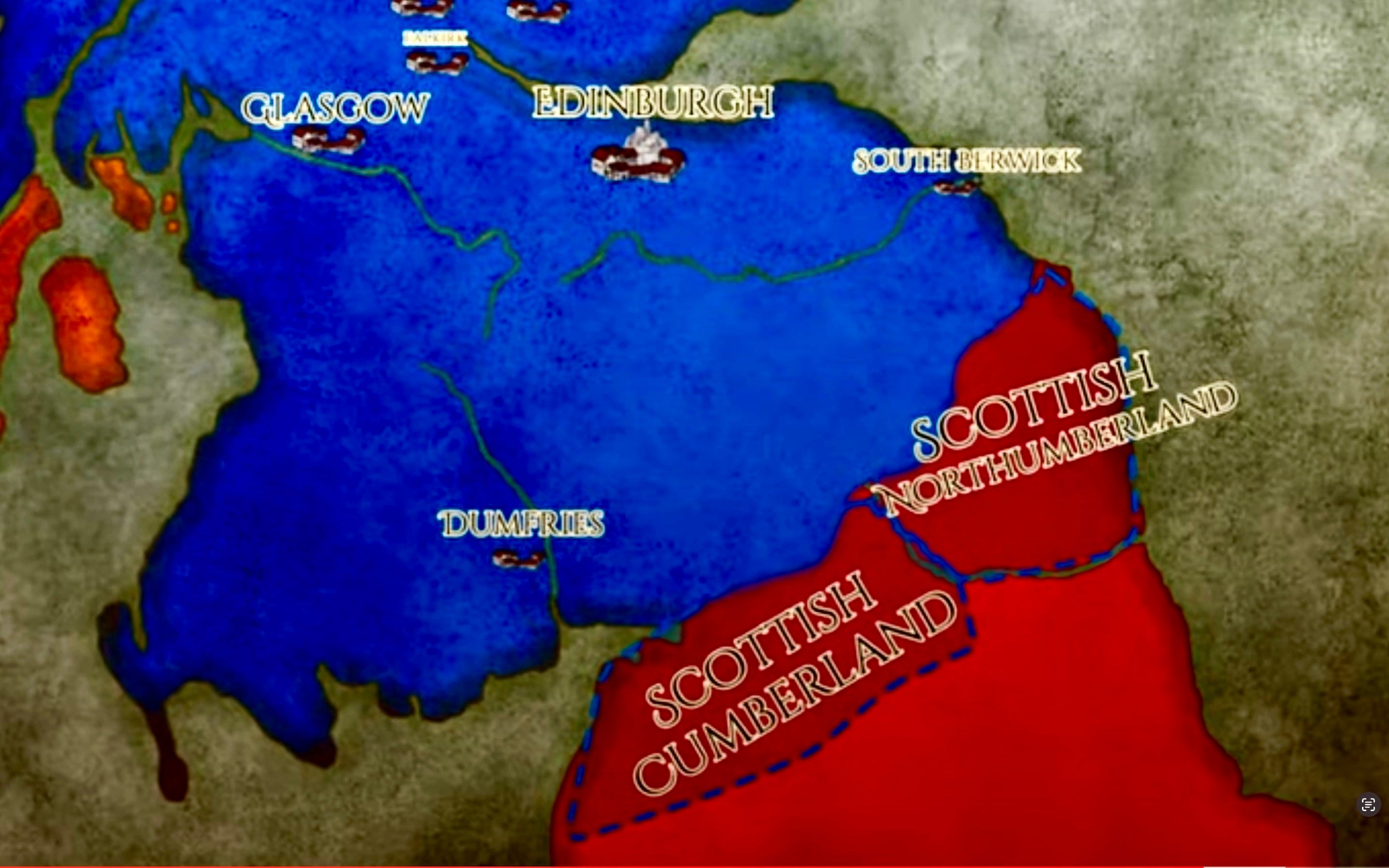
When Henry died and civil war broke out in England, David turned the tables. He switched from being an ally of England blocking Scottish territorial ambitions in England to grabbing large parts of Cumberland and Northumberland for Scotland and ruling them for 18 years. David also commandeered England’s Carlisle Castle and massively reinforced it as Scotland’s southern military headquarters. The way the enormous fortress looks today is pretty much the result of David’s rebuilding programme.
So how did the runt of the Scottish royal litter end up making such a huge impact on the north’s history?
When he was born this sixth and youngest son of Malcolm III, no one thought David would ever be important. Young David was so low in the dynastic pecking order he had seemingly no hope of ever wearing the Scottish crown.
But his fortunes were transformed when King Malcolm was ambushed while invading Northumberland in 1093. He was controversially killed by Robert de Mowbray, Earl of Northumbria, probably in the tiny coastal village of Alnmouth. The death of a king outside a formal battle was against the rules of chivalry.
David’s aggressive uncle Donald made himself king, forcing David, then aged nine, and his brothers to flee for their lives into exile in England.
Then the English King William II, better known as Rufus the Red, died in a suspicious hunting accident in the New Forest. His brother Henry seized power. He married Matilda and took her brother David into the privileged crowd of noble youths being trained as knights in the royal household.
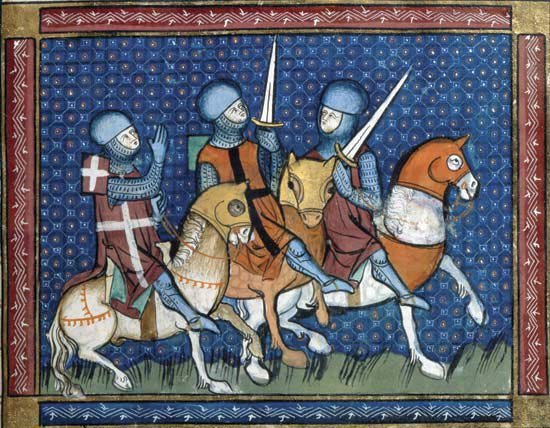
It seems Henry soon realised the potential advantages of having David around. The youth could be used as a lever to control the Scottish king. Boosting David’s status was all part of Henry’s policy of raising up “New Men”, or minor gentry, who he could use to dilute the influence of obstructive conservative nobles. The snobbish chronicler Orderic Vitalis sneered that they were nobodies “raised from the dust”.
At Henry’s court, David became saturated in Anglo-Norman culture and he received a crash course in worldliness. The unsmiling, bullock-like Henry was all business. He was one of the least sentimental men ever to rule England. He did not recruit David into his elite out of the goodness of his heart. The English king aimed to use the boy as a tool to get control of his Scottish rivals. David had become Henry’s greatest protege.
As William of Malmesbury put it, David was “a youth more courtly than (his brothers) who, polished since boyhood by intercourse and familiarity with us, had rubbed off all the rust of his Scottish barbarism.”
The next stage in David’s advancement came when then Scottish King Edgar, David’s oldest brother, died in 1107. The next brother in line, Alexander came to the throne. Alexander soon expressed extreme reluctance to hand over what Edgar had promised David: lands including Roxburghshire, Selkirkshire, Berwickshire, Peeblesshire, Lanarkshire and Tweedale extending from Glasgow to the north bank of the Solway and the title princeps Cumbrensis, "Prince of the Cumbrians”.
Henry was furious. He was determined to install his protege David as prince of Southern Scotland, thus creating a vital buffer zone north of the border with England. The aim was to end centuries of damaging raids by aggressive Scottish kings and greedy Caledonian bandits. But Henry was far more militarily powerful than Alexander. He threatened to send an English army into Scotland and stop the coronation. Alexander backed down and David bloodlessly came into his inheritance.
David’s credit stood very high with Henry at this point and the status of the Scottish king Alexander very low. This is illustrated by the patronising language that appeared in the Anglo-Saxon Chronicle describing this episode. The chronicle suggests Alexander’s accession to the throne of Scotland depended on English approval: “…as king Henry granted him…” Alexander was so much under Henry’s thumb that he personally fought on the English side in a 1114 battle against Gruffudd ap Cynan, the King of Gwynedd (North Wales), a unique event in British history.
The lands David acquired as Prince of the Cumbrians represented the northern half of the ancient Kingdom of Strathclyde which had existed between the sixth century until 1030. At its fullest extent, Strathclyde (known as Cumbra-land and, in Latin, Cumbria) had included what became Cumberland and Westmorland. But the Scottish royal clerk who recorded David’s good fortune was careful to stress that he had only received the bit of Cumbria north of the border: “he was not in truth lord of the whole Cumbrian region (or kingdom).” This, of course, did nothing to dampen David’s ambition to build on this achievement.
This is an extract from a forthcoming book. You can read more like this in my latest book The Trophy at the End of the World. You can pick up a copy at The New Bookshop, Main Street, Cockermouth, at the Moon & Sixpence cafe at Lakeside, Keswick, Bookends in Keswick and Carlisle, and Sam Read in Grasmere.
Or you can get a copy instantly here:
https://www.fletcherchristianbooks.com/product/the-trophy-at-the-end-of-the-world
Comments
Nothing yet. Say the first thing.
Sign in to join the conversation.