
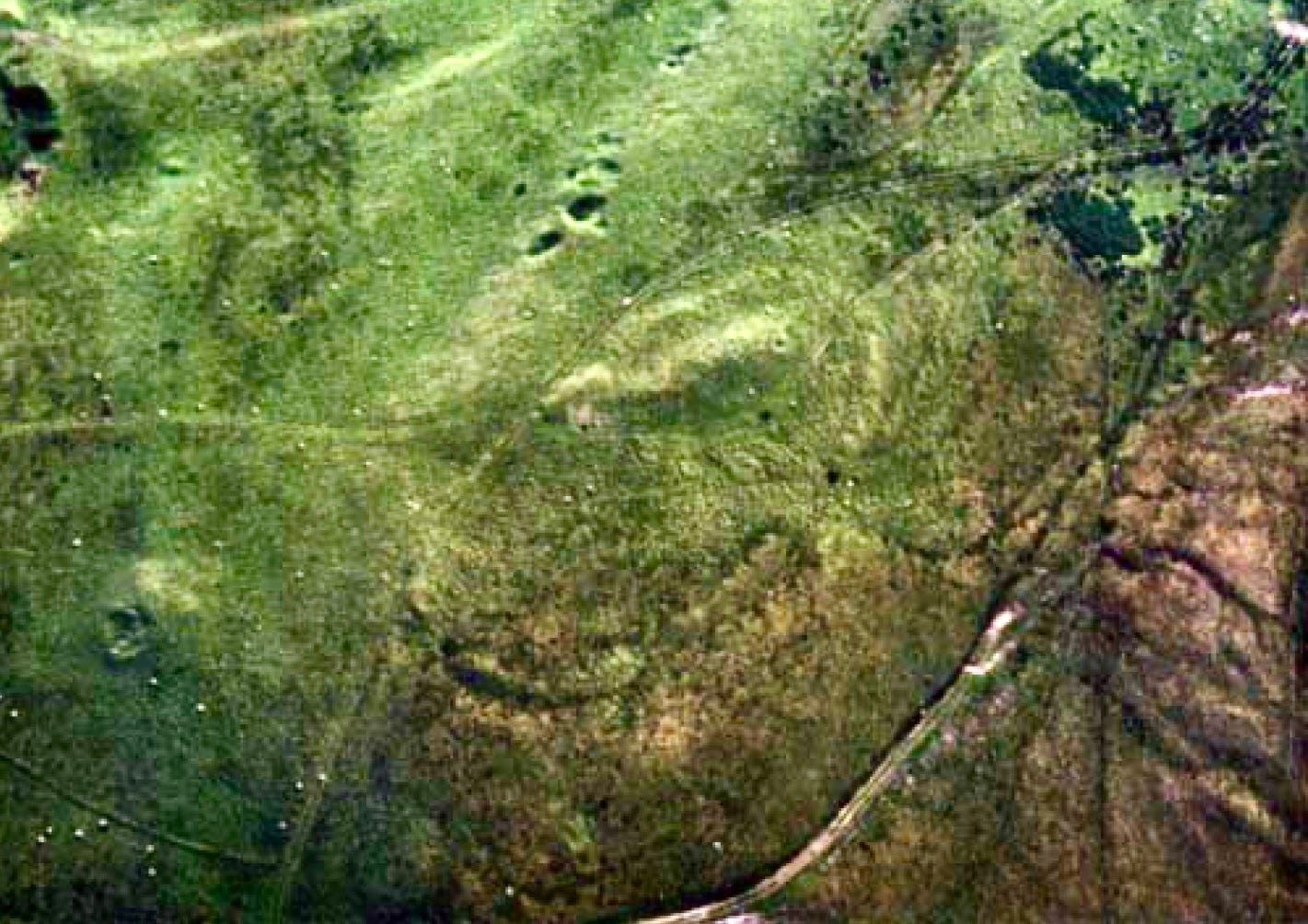
An English Heritage team launched a drone over Bassenthwaite Lake - and spotted an unsettling clue about Cumbria’s Stone Age.
They saw a strange elongated oval shape enclosing an acre of land. It was surrounded by a tell-tale bank and a ditch. It dawned on them the embankment must originally have been topped by a massive palisade wall made of tree trunks.
This was the first Neolithic causewayed enclosure ever discovered in Cumbria. Such structures do not automatically imply conflict. But many of those found elsewhere in Britain do show clear evidence of violent attack. Hundreds of flint arrowheads have been discovered concentrated at entrance gateways, burned timber palisades, and unburied individuals in the ditches bearing fatal skeletal trauma. So the discovery in Cumbria has changed the minds of senior experts who previously imagined a more placid lifestyle prevailed.
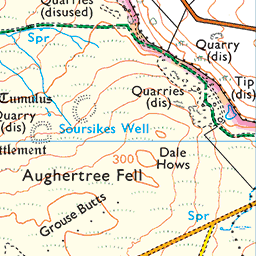
The ring lies on top of Green How, a prominent hill on Aughertree Fell near Uldale. At the time the enclosure was built five thousand years ago, it represented a very rare clearing on the heavily-wooded fellside. The discovery was revealed in a paper called “A probable Neolithic causewayed enclosure in northern England” produced by archaeologist Peter D. Horne and his team.
So, what is so special about this discovery? Well, traditionally, academics have explained this kind of feature away. They were cattle enclosures, trading centres or religious sites visited only occasionally by Stone Age farming families, the experts thought. In other words, they were used for peaceful, social purposes. They wouldn’t be much good for defence, the experts said.
But, more recently, as archaeological digs have unearthed more evidence of weaponry, the nature of these sites is being reassessed. As Professor Rick Shulting of Oxford University put it, experts have been guilty of “pacifying” the Neolithic period by deliberately choosing to interpret evidence as benign in a misguided attempt to remain objective.
“The role of violence in the Neolithic period in Britain, indeed in European history in general, remains poorly understood. With some notable exceptions…the tendency has been to downplay or ignore the role of interpersonal violence in structuring both society and individual experience…archaeologists, largely through omission, have pacified the past,” he wrote in his paper analysing fatal fractures in Neolithic skulls.
He said a major stumbling block has been an alleged of evidence but this absence was “more perceived than real.” Gradually, specialists are looking again at Neolithic sites. “The last 15 years or so has seen something of a resurgence of interest in the documentation and interpretation of evidence for warfare in the British Neolithic,” Shulting said.
Green How is a fascinating example because it sits on the highest point of a 1,000 foot fell. The oval dips away from the summit, so the interior of the structure would be invisible to an advancing enemy, yet the enclosure commanded panoramic views, especially towards the Solway Plain and Solway Firth.
Green How’s geographical position and regional context point to a notable potential for Neolithic conflict. Because large-scale excavation has not yet happened on this newly discovered site archaeologists have yet to recover the human skeletal remains or arrowhead clusters needed to confirm whether physical combat occurred. But these discoveries are becoming increasingly common in the south of England.
Sitting at 321 meters elevation, this enclosure in Cumbria is tilted across a prominent ridge commanding panoramic views over the Solway Plain and Solway Firth.
Archaeologists are convinced the territory was periodically a war zone because the region hosted one of Stone Age Britain's most important manufacturing sites, the Langdale axe industry, where the inhabitants quarried, polished and exported thousands of highly sought-after greenstone axes. Green How was positioned near key corridors for moving livestock and trading goods. In early farming societies, competition over cattle, grazing rights, and prestige goods like stone axes was a primary driver for raiding and inter-group skirmishes.
What is more, recent surveys across Early Neolithic North Western Europe have revealed that over 10% of skeletal remains show evidence of weapon injuries. These were predominantly injuries to the skull caused by blows from axes and clubs, as well as arrow penetration wounds.
While Green How is likely to have been founded as a seasonal ceremonial and trading site it existed in an increasingly volatile landscape where regional wealth mainly held in the form of cattle herds could make prominent gathering places prime targets for raiding.
The volcanic greenstone axes quarried at Great Langdale were for a long time regarded by archaeologists purely as timber-clearing tools, currency for peaceful trade or diplomatic deals. But more recent studies across Britain show that stone axes were actually the primary weapon for killing enemies during this era. Controlling the high-altitude quarries and transport corridors in Cumbria meant the local tribes were wealthy, powerful and influential. Therefore, they were sitting on critical military and economic assets that had to be defended.
The acidic, peaty soils of the Lake District rapidly dissolve human bones, leaving almost no local skeletal remains from the 4th millennium BC when axe making was at its peak. But archaeologists look at studies carried out elsewhere in Britain and North western Europe. These increasingly reveal early farming societies were far more violent than previously assumed.
As forest clearing expanded and livestock herds grew, pastoral societies were more and more plagued with inter tribal raiding. That forced communities to build their settlements in ever-higher locations to protect their animals. From this position of strength, they attempted to negotiate peace alliances during regional gatherings. Ironically, handing out polished axes was one of the most useful ways of buying off aggressors.
So, experts do not imagine the Lake District was the scene of continuous, formal warfare, but rather a landscape where the constant threat of violent raiding actively shaped where people lived, traded, and built monuments.
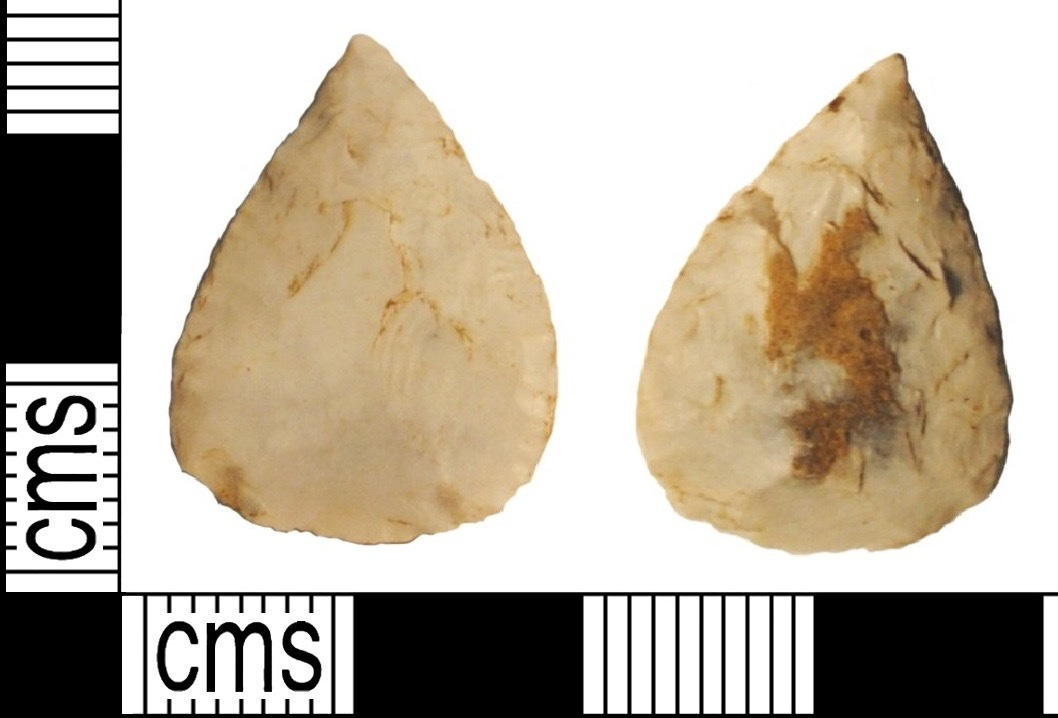
Further evidence that Neolithic people fought each other has been found on the Cumbrian West Coast. Widespread scatters of leaf-shaped flint arrowheads, the type which experts say were designed for interpersonal warfare rather than hunting, turned up in 2002. One example in particular was found in a coastal inlet of Walney Channel near the Duddon Estuary. Leaf-shaped arrows were designed to maximise blood loss in humans when fighting close up.
The Green How enclosure is not unique. Sixty-nine other causewayed enclosures have been identified in Britain, but the vast majority are in the south of England. Until now none was known to exist in the north. The discovery of Green How has raised expectations that more Cumbrian enclosures will be spotted.
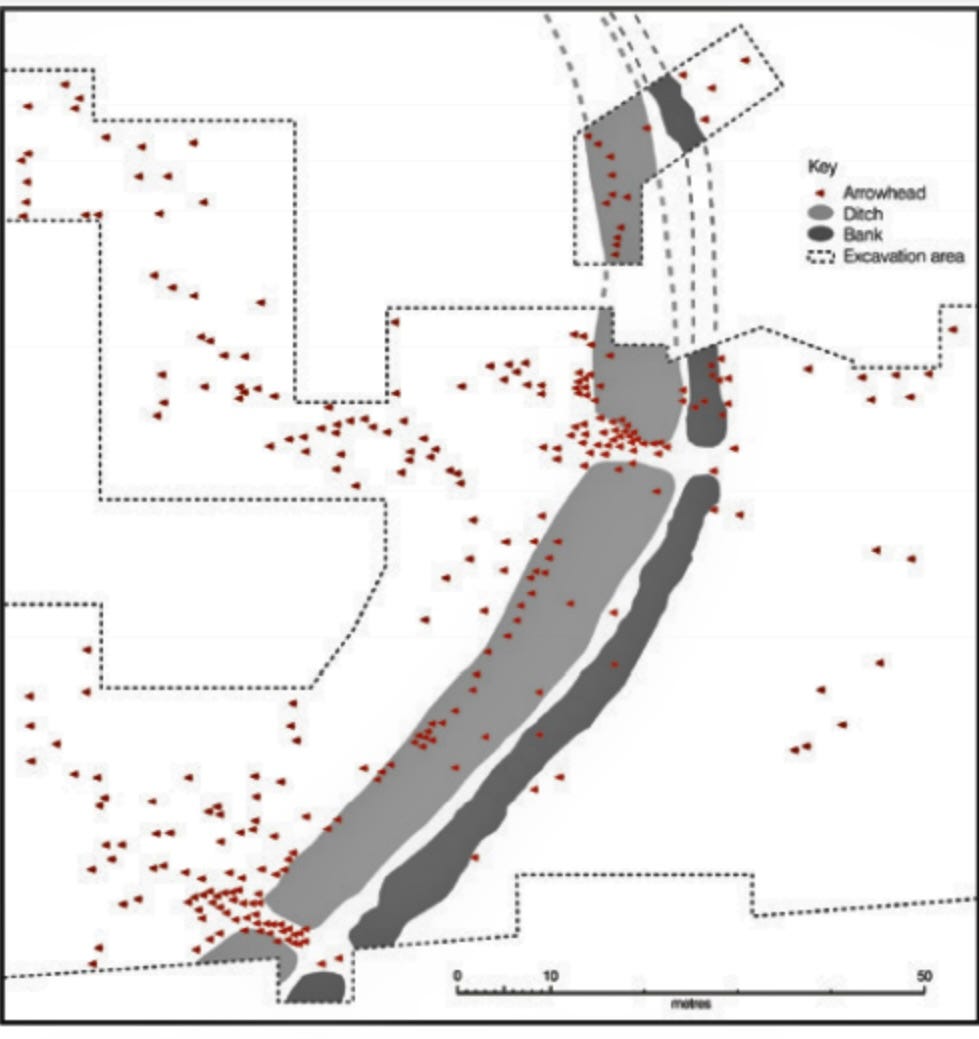
The idea that causewayed enclosures were always peaceful changed after evidence emerged that one at Crickley Hill, Gloucestershire, had faced a deadly attack in the Stone Age. Crickley had at least three gateways and it was surrounded by a huge palisade of tree trunks.

But it was attacked. Hundreds of leaf shaped arrowheads were found in the area of two entrances and the palisade had been burned down somewhere between 3490-3450 BC.
Another Stone Age enclosure may have existed on the good farmland of the Solway Plain near Aspatria. An excavation at Plasketlands has unearthed a palisaded Neolithic enclosure or monumental structure, which raises the prospect that conflict took place between Stone Age farmers.
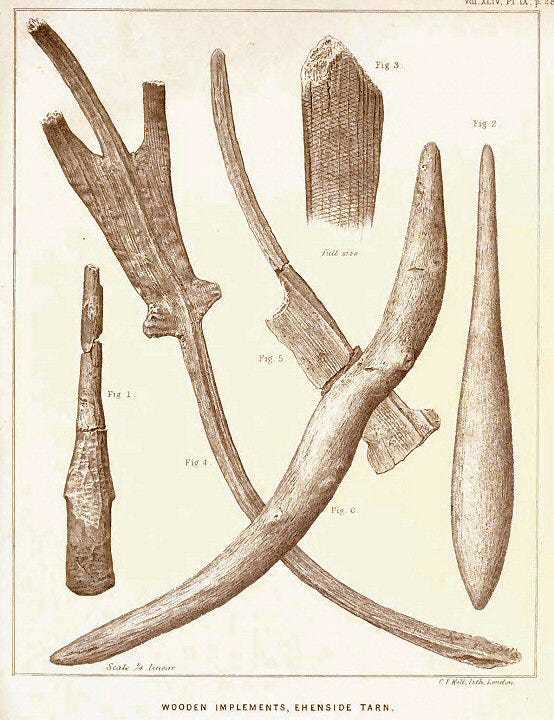
Although evidence for Neolithic violence has rarely been found in the region, it is not unknown. A pair of very hefty clubs was found after a farmer drained Ehenside Tarn near Whitehaven. A range of wooden items that would normally have decayed was preserved by being submerged in the oxygen-free moisture for 6,000 years.
One club was covered in a carefully carved lattice pattern and the other was a bowling-pin shaped cudgel. Neolithic Cumbrians did not keep these bludgeons for amusement. They were necessary and deadly serious weapons.
-
Read the full story of how farming brought violence to Neolithic Cumbria in a new book called Secrets of the Lost Kingdom.
You can pick up a copy from the New Bookshop on Main Street, Cockermouth. They are also available at the Moon and Sixpence, Lakeside, Keswick. You can get them at Bookends in Keswick and Carlisle, or Sam Read in Grasmere.
Or you can buy it instantly here:
https://www.fletcherchristianbooks.com/product/secrets-of-the-lost-kingdom
No posts
Comments
Nothing yet. Say the first thing.
Sign in to join the conversation.