
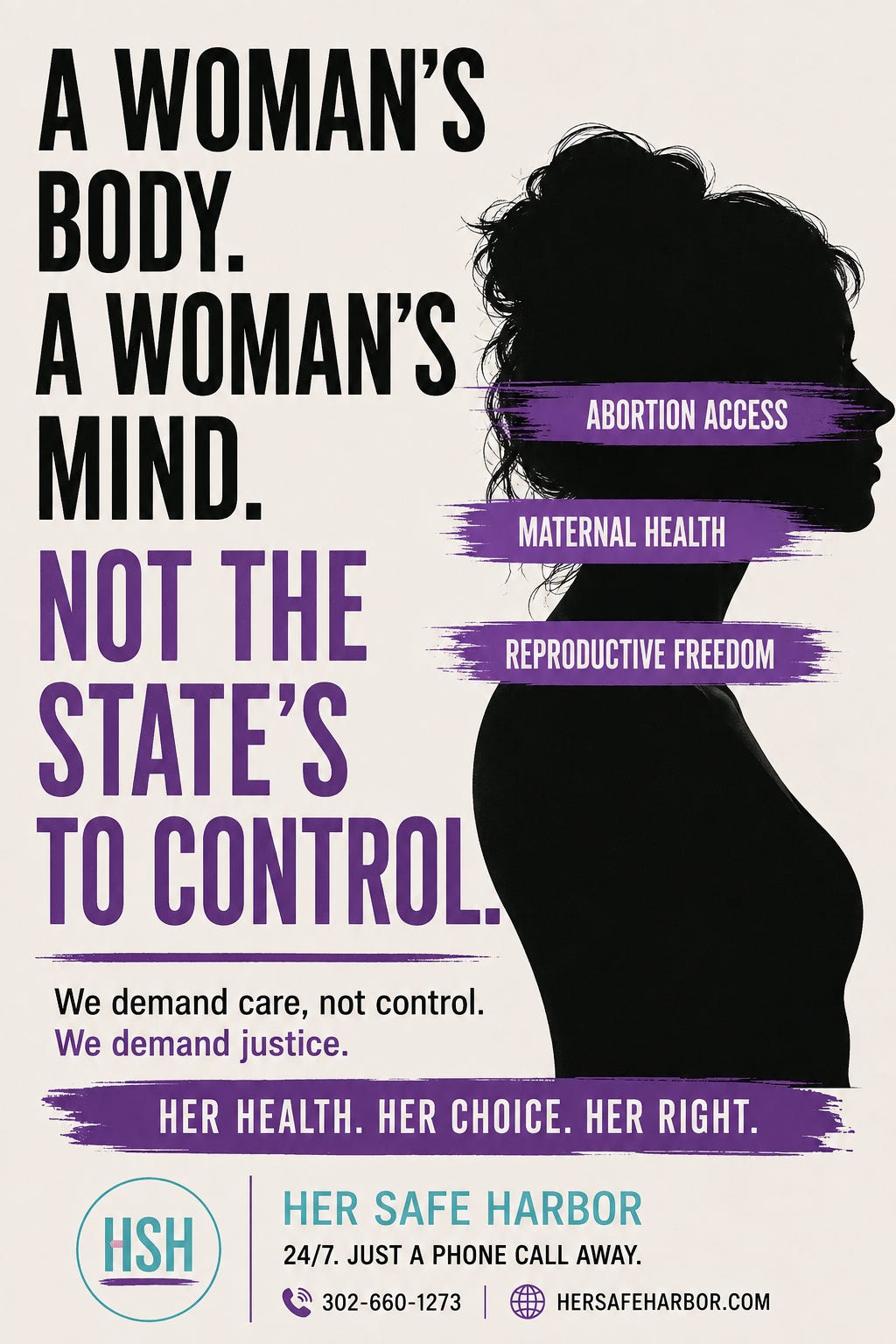
The legal system is executing a calculated, violent overreach into the domain of women’s autonomy, leveraging carceral power to criminalize biological realities and healthcare crises. From the systemic strip-mining of reproductive rights via anti-abortion laws to the punitive prosecution of mothers experiencing severe maternal mental health emergencies, the state’s directive is clear: female bodies and minds are public property to be policed, controlled, and broken.
This is not a series of isolated legal events; it is a synchronized institutional effort to codify patriarchal control by weaponizing medicine against women.
At the core of both abortion bans and the state’s handling of severe postpartum psychiatric collapse is a deliberate, ideological rejection of clinical science. Anti-abortion statutes systematically erase the complex, high-risk physiological realities of gestation, treating a pregnant person’s body as an instrument of the state.
In identical fashion, the carceral apparatus minimizes the neurochemical realities of postpartum psychosis. Rather than recognizing a catastrophic, medically documented rupture from reality, prosecutors pathologize the victim. They reframe an acute medical emergency as calculated, cold-blooded malice. By translating severe, involuntary mental illness into criminal intent, the legal system strips women of their humanity. It reduces profound medical vulnerability to simple, punishable depravity.
This institutional violence relies on enforcing rigid, highly gendered social expectations. The legal and political systems act as mechanisms of moral enforcement, demanding total female compliance with idealized, traditional roles.
Women who claim reproductive freedom are vilified for rejecting compulsory motherhood.
Mothers who suffer devastating psychiatric breaks are demonized for shattering the patriarchal myth of the flawlessly coping, self-sacrificing caregiver.
The state explicitly weaponizes the cultural expectation of the “perfect mother” to secure convictions and pass restrictions. If a woman deviates from these rigid domestic archetypes, her suffering is criminalized. Her autonomy is extinguished, and her survival is treated as an existential threat to the social order.
This legal violence does not occur in a vacuum; it is actively sustained by mainstream media and true-crime sensationalism that serve as public relations arms for the carceral state. News outlets consistently deploy high-engagement, clickbait narratives that flatten complex healthcare crises into consumable tales of “monstrous” women and “calculating” killers. By prioritizing sensational court maneuvers over systemic medical context, the press strips away the nuance of reproductive healthcare access and psychiatric emergencies. This media framing manufactures public outrage, legitimizes aggressive prosecutions, and conditions the public to accept the surveillance and punishment of women’s bodies as a necessary form of justice.
Both crises expose a profoundly hypocritical infrastructure that offers zero structural support while demanding absolute, lethal accountability. The state refuses to guarantee accessible healthcare, universal childcare, or adequate postpartum intervention. Yet, it stands entirely ready to deploy the full weight of the carceral state when women break under the weight of its neglect.
We must call this what it is: systemic misogyny disguised as justice. It is the preservation of patriarchal hegemony through the explicit criminalization of female bodily and mental autonomy. We do not need more policing; we need a radical dismantling of a system that punishes women for the crime of being human.
The state wants this conversation quiet. We are making it loud.
Analyzing the intersections of structural misogyny, the carceral state, and reproductive healthcare takes time, deep research, and total independence. We refuse to compromise our analysis for corporate sponsors or ad networks.
If this perspective challenged you, informed you, or gave voice to your anger, consider upgrading to a paid subscription today.
At Her Safe Harbor, we believe every woman deserves access to evidence-based reproductive healthcare delivered with compassion, privacy, and respect. We provide confidential telehealth reproductive healthcare, clinician support, and accurate medical information because healthcare decisions belong between a woman and her medical provider—not politicians or prosecutors.**
What your support makes possible:
- 🔴 Independent reporting on reproductive healthcare and women’s rights
- 🎙️ Long-form investigations into attacks on bodily autonomy
- 💬 Educational resources grounded in evidence, not ideology
- ❤️ Direct support for women seeking compassionate reproductive healthcare
Her Safe Harbor
24/7. Just a phone call away.
📞 302-660-1273
🌐 HerSafeHarbor.com
If you believe every woman deserves access to evidence-based reproductive healthcare, please consider sharing this article or supporting our work. Every donation helps us continue providing care, education, and support to women across the country.
Comments
Nothing yet. Say the first thing.
Sign in to join the conversation.