
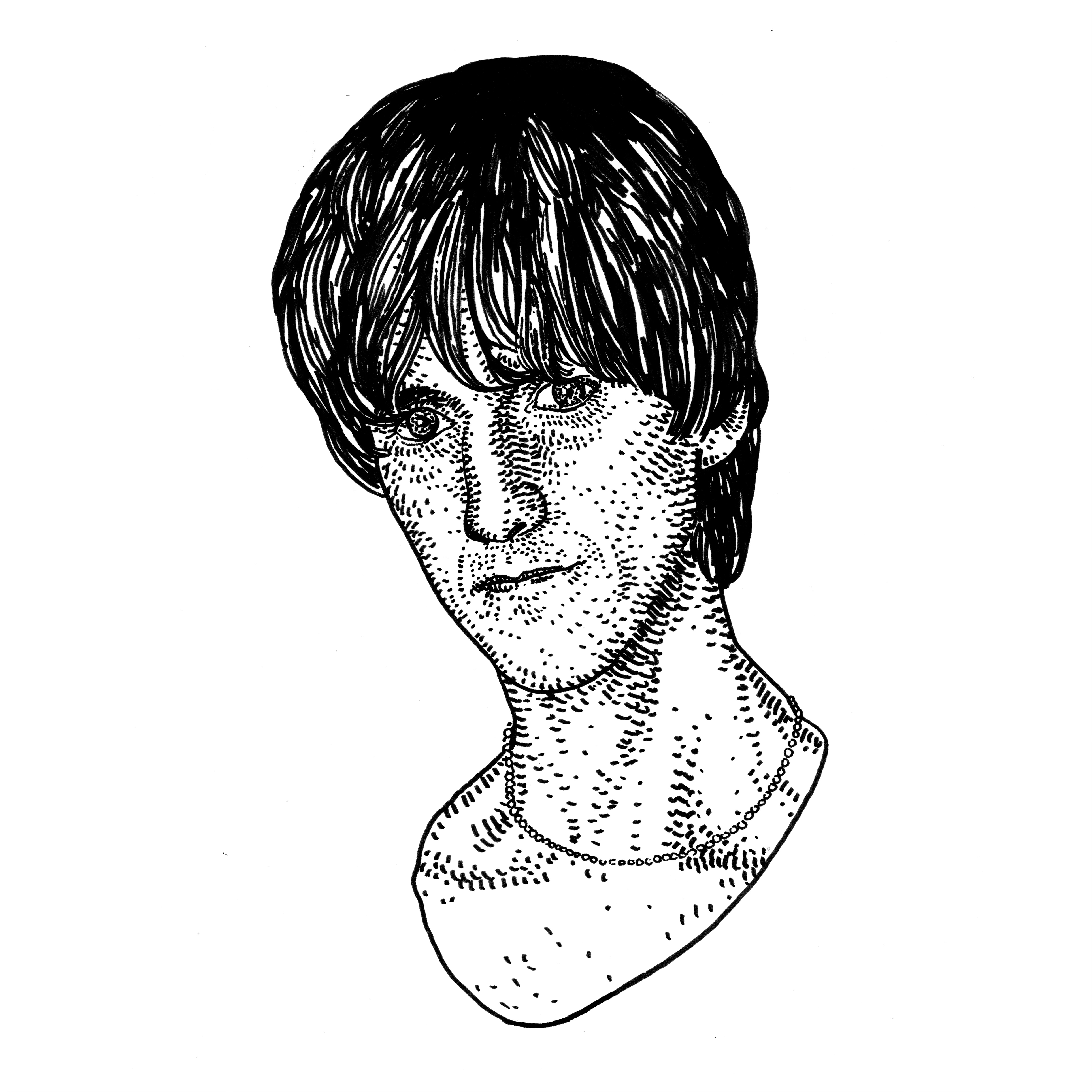
The Durutti Column formed in 1978 in Manchester, amongst the first acts on Factory Records, and is shorthand for the work of guitarist and occasional pianist and vocalist Vini Reilly, “often accompanied by Bruce Mitchell on drums and Keir Stewart on bass, keyboards and harmonica.”
Reilly’s work is pure Factory, a handshake between the modern and the antique, both technical and baroque, emotional and stoic. Its vastness can be hard to navigate. Which way is up? Durutti Column tunes are amongst the most herb’d songs, I’d reckon. I will fact-check this at a later date, but it is Sunday music nonpareil. For more Factory lore, I recently covered Peter Saville too.
Always Now: 'Ambient Gravitas' from Peter Saville
·
Apr 19
“Yes, the typography is a constant tilt at perfection; the placing of objects within a frame is supernatural and that sense of colour... But you need to talk to Peter to understand why Renaissance Popes would have employed him and never counted the cost. He is an analyst of culture and his own …
Durutti is one of the bands that have entered a new cultural vanguard alongside The Blue Nile and Prefab Sprout, sensitive and classy pop-not-slop (a Bullion concept) for aspirational listeners. We are in a Durutti renaissance for sure, with a new album (and a great Paste feature) and copious new shoutouts (Blood Orange sampling TDC on his last record, etc.).
In some ways, Vini is more Factory than even Joy Division; his footprint is wide and growing. Tony Wilson would exclaim at every turn:“I mean, it is basically a guitarist augmenting his guitar with other instruments and probably the finest instrumentalist in Europe, if not in the Western Hemisphere.”
Their special relationship is captured in one of my favorite scenes from Michael Winterbottom’s 24 Hour Party People (2002), depicting the still-struggling Haçienda club (FAC 51) during an empty gig, with Vini Reilly (played by Raymond Waring) playing quietly to the empty, expensive room. When he finishes, Tony Wilson (Steve Coogan) claps loudly as if to fill the space, reminding Reilly that he makes beautiful music. It is that tenderness, that solidarity, that keeps artists (and the rest of us) moving forward in times of quiet despair. Prepare to be cold, as we often say here, things will change.
Reilly’s deification was not certain, but his music has survived because of true fandom, microsites, and devoted labels. He has survived strokes, bankruptcy, and other injustices, with fans coming to his aid and support at every turn. It was imperative that we shine a light on this living legend and attempt to navigate the vast Durutti catalog. But how?
Who will guide us through this vast discography? Who better than Los Angeles-based recording artist and philosophy PhD (focused on the “metaphysical problem of nihilism”), Tom Krell? Krell, who also has a stack called false world entered our collective consciousness under the elusive How to Dress Well alias within the thrilling blog era with Love Remains in 2010 and is now six albums deep into “experimental R&B, post-rock, noise, and ambient music.” I’ve been a fan of Tom’s for a long time and asked him to remix/cover Matthew Dear back around Black City and was thrilled by his triumphant return with 2024’s I Am Toward You (you can hear the Durutti Column, particularly in “Song in the Middle” and “A Secret Within the Voice”). He is currently working on his next album.

by Tom Krell, How To Dress Well, Writing from Los Angeles.
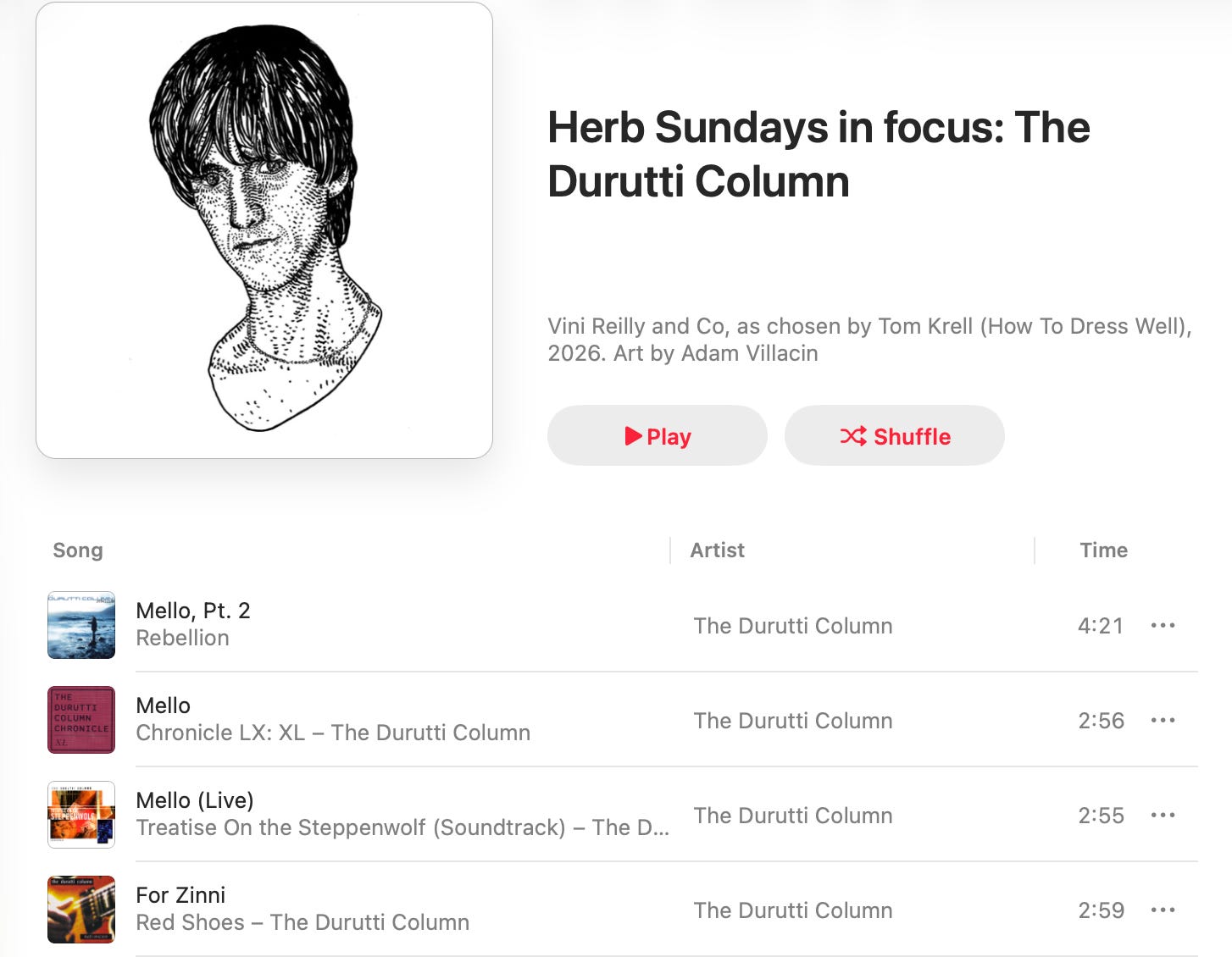
I feel about The Durutti Column how some people must feel about Phish (I’ve never listened, so this is a leap). What I’m thinking of, I guess, is a relationship to a catalog: the same piece coming back years apart, reshaped enough that knowing the differences becomes its own private fluency. Where a Phish jam is a band working out a live variation in real time, The Durutti Column’s versions are rooted in the long-arc evolution of one artist, a guitarist foremost by most critics’ lights, Vini Reilly, returning to an idea across decades and different records. “Dry” hits hard as fuck because you already know the lead melody from “Otis.” “Mello” shows up as arpeggiating synth futurism on one record and lo-fi home-recording glow on another, over a decade apart. Let’s not forget that the first true DC album (on Tony Wilson’s Factory Records) was called The Return Of The Durutti Column. This logic of turning and returning, of the belated origin, is a big part of what makes this music infinite to me. That dynamic is part of what I’m trying to point up with this playlist.
There’s 46 songs here, which is significantly more than the 30 Sam requested, but significantly less than the 169 I initially sent him. About 3 years ago I made a playlist called “The truly great DC songs aka the DC All Day Challenge”: something like twelve hours of songs from across the entire catalogue. Put it on at 9am and let it run though. What you learn doing this is that “The Durutti Column” isn’t really one band. On every release, Vini Reilly changes the whole palette and logic: a minimalist post-punk instrumentalist in 1980, a chamber-classical composer against his own will in 1984 (he’s called that music “a joke,” said the classical turn was entirely Tony Wilson’s idea, not his, but it’s gorgeous so as a fan idc), then the drum machine becomes really important by the mid-80s, and he becomes the greatest sampling collagist in music history by the late-80s, then an accidental predecessor to Far Side Virtual-style plastic muzak in 1990, twenty years early and way less irony-pilled. Sometimes it’s folk music, sometimes it’s chamber music, sometimes it’s dub. Most of the time, it’s all of this and also something else. Every album is a different band (even when it’s the same crew) with the same anchor, Vini Reilly, who is so much more than a guitar player. So, ya, this playlist is super long, but it’s not the 12+ hour one (dm me if you want that one). A couple things I focus on that Reilly doesn’t get enough credit for. First,
This year we got an incredible new DC album, and I intentionally left it off of this playlist. It should be listened to in full, on its own, because it’s one of the best records of 2026. VR’s longtime producer Keir Stewart and drummer Bruce Mitchell built the new record with Vini to keep him making music through his health issues, forty-six years in. In 2024 I put out my sixth LP, the first one of the second decade of my career. I pray I’m still doing this in 20 years, that would be unspeakably incredible. What a life in music.
Here’s some notes on the whole playlist:
1, 2, and 3: “Mello” — three versions, thirteen years apart.
1. Mello, Pt. 2 — Rebellion (2001)
2. Mello — Chronicle LX: XL (2014), sparser and more lo-fi than the Rebellion sibling.
3. Mello (Live) — Treatise on the Steppenwolf (2003). The same idea reframed into the score Reilly wrote for a Glasgow theater company’s stage adaptation of Hesse’s novel.
4-5 aren’t explicitly versions, but the pulsing effect on the vocal samples make them companions in a way, in my minds
4. For Zinni — Red Shoes (1992). A dedication piece, almost certainly for clarinetist Zinnia Mitchell-Williams. I love that he does these dedications across his work, such a sweethearted gesture. Musically, this one is like Arthur Russell meets Belgian techno.
5. Abstract Of Expression — Fidelity (1996). The fuller, more finished version of what “For Zinni” is doing rougher, five years later, with operatic vocals folded into the electronica.
6. Chant — A Paean to Wilson (2010). Space-dub sample jam, RIYL Hype Williams or RAP.
7-8 reuse the same kit of parts in two very different directions.
7. Love Is A Friend — Someone Else’s Party (2003). A genuinely moving sung Reilly piece.
8. Keir — A Paean to Wilson (2010). Reilly’s own named tribute to his producer, one of a set of dedication pieces (Bruce, Mike, Keir, Alan, Neil, Anthony) on disc two of this record.
9. Believe in Me — Sex and Death (1994). A truly perfect pop song. Sex and Death was produced by Stephen Street who is the Morrisey/Smiths-world thread running through the DC catalog. This song is a massive HTDW inspiration– it seems obvious to say this, but there’s music one loves and music one takes direct creative inspiration from, this hits that latter button for me super hard. 10-11 All That Love and Maths Can Do — two versions, one lush and baroque, one more mournful.
10. All That Love and Maths Can Do — Without Mercy (1984)
11. All That Love and Maths Can Do — Red Shoes (1992)
12. Portrait for Paul — At Twilight (2016). Great drum programming plus chorused-out shredding.
13. Stuki — A Paean to Wilson (2010). This one… fuck. It’s so incredible. At first it’s like Oberheim DMX drum programming and VR’s guitar and some chimes, ninety seconds of simplicity and emotion, then the sickest sample of all time hits and it becomes the most unique pop song you’ve heard. Sort of feels like Chuquimamani Condori / DJ E. This might be the best song in the world, TBD.
14. prayer — A Night In New York (2003). A piano-Durutti entry, sounding like Ihor Tsymbrovsky. This is a live recording? What?! So good.
15. Street Fight — Circuses and Bread (1986). The political valence of the band’s name is important and comes to the fore here. The mournful brass is John Metcalfe playing live so good.
16. Mercy Dance (Live Version) — Domo Arigato (1985). Dinosaur L / Zummo / Arthur Russell bag, genuinely live off the 1985 Japan performance.
17-19: Tomorrow — three versions.
17. tomorrow — A Night In New York (2003)
18. Tomorrow — Circuses and Bread (1986)
19. Tomorrow (Live Version) — Domo Arigato (1985). On this trio VR sounds almost like David Tibet aka Current 93 at times.
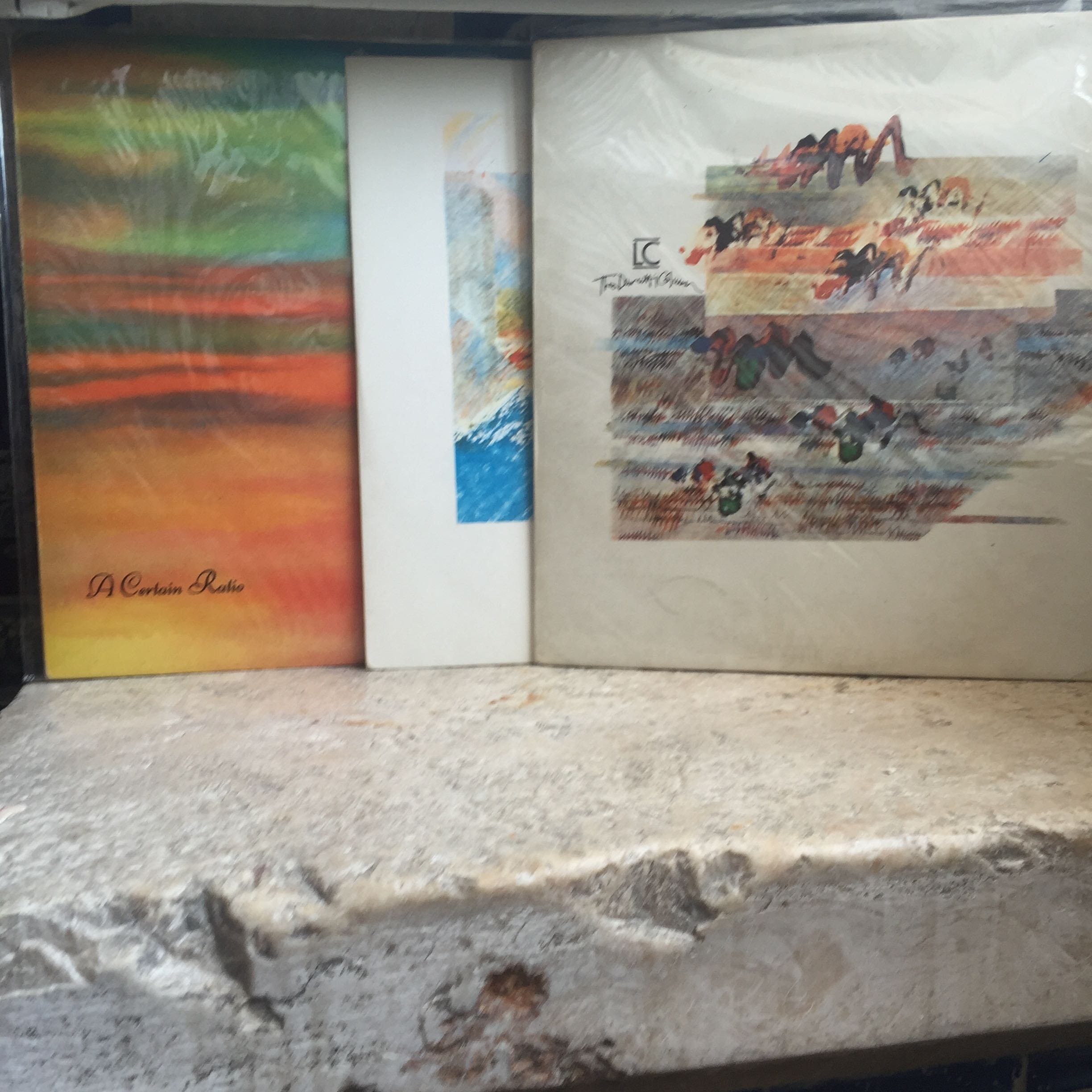
20. Portrait For Frazer — LC (1981). I’ve listened to this song hundreds of times because it’s on a playlist I made called “Weekends Are Beautiful” that I played every weekend morning for years.
21. Dance II — Circuses and Bread (1986). Another ripping rock tune, the solo so sick, perfect distortion and reverb, carrying into Arthur Russell-esque brass-through-delay on the outro.
22-23: Two different tunes that somehow perfectly sample Marvin Gaye’s “What’s Going On”
22. Brother — A Paean to Wilson (2010)
23. The Truth — A Paean to Wilson (2010).
This sample of Marvin Gaye’s “What’s Going On,” on the record Reilly made grieving Tony Wilson, is just so stunning. What a bold and beautiful musical gesture.
24. I B Yours — Time Was Gigantic... When We Were Kids (1998). Sung by Eley Rudge, who carries most of this record and shows up all over the DC catalogue. This is a highly underrated tune too. I love this band.
25. Birthday Present — Sporadic Three (2007). Another perfect and heavenly DC song, just beautiful guitar playing. This record is itself a version, the third installment in the series of ‘Sporadic Recordings’: The Sporadic Recordings — 1989, Return of the Sporadic Recordings — 2002, partly an expanded reissue, and then Sporadic Three — 2007, a separate collection of 14 tracks— demos, archival stuff, outtakes. Crazy discography.
26-27: Dry / Otis — two dramatically different tunes that ‘version’ out one of the most iconic guitar lines in the DC catalog.
26. Otis — Vini Reilly (1989).
Dry — Dry (1991)
The solo on “Dry” sounds incredible, reprising and recontextualizing the long, meandering melody from one of the greatest and most famous DC songsGrace — Fidelity (1996). I read somewhere that this features samples from Mr. Vampire (1985), a Hong Kong ghost flick, specifically a scene where a spirit lures a man into her house, seduces him, then lets him go once she can’t bear to stay. Maybe grace means mercy freely given. VR is always playing with these concepts in a beautiful way. This one is just an incredible spacious techno tune. something that abuts the Liquid Colors universe my friend CFCF.
Future Perfect — Fidelity (1996). A perfect, futuristic pop song. Eley Rudge again, this time singing over a bubbling acid synth line. Reminds me of Ingus Baušķenieks or like AC Marias in a way.
Fridays — Obey the Time (1990). Digital muzak made completely sincerely, twenty years before James Ferraro’s Far Side Virtual irony-pill. 90s DC is funny and very sick.
English Landscape Tradition (Live Version) — Dry some more Far Side Virtual-predecessor sounds, like what if Metheny was in Penguin Cafe Orchestra but also it was undeniably Vini?!
Arpeggiator — The Guitar and Other Machines (1987). Literally just a different band from what most people think of as DC. I think this is after Tim Kellett and John Metcalfe had just left to do Simply Red, leaving Reilly and his collaborator Bruce Mitchell and a Yamaha sequencer and that DMX drum machine, and they built a crazy lush, layered record. It’s super kitschy and bold, with big twists and turns. It’s got like a Michael Nyman vibe to it at points too, which I love.
For Suzanne — Fidelity (1996). This always feels like a slow-mo George Michael instrumental to me. Great sampling, ketamine-vibed late-80s R&B.
Beautiful Lies — Sex and Death (1994). A species of DC I can only describe as conventional music from a different planet. What if Los Thuthanaka made a record with the Cranberries type beat. Or something.
35 and 36: Party — two polar opposite versions.
35. Party (The Version) — Chronicle LX: XL (2014). A melancholic home-recording glow. Possibly the most beautiful thing in this whole catalog. Super wasted and mushy and maudlin vibes.
36. Party — At Twilight (2016). Plays almost like a Jonathan Richman version of the same song. That plain, unguarded, no-polish vocal delivery instead of the more ambient, zoned-out pop take.
Anthony — Sex and Death (1994). Insanely inventive songwriting and sampling, beautiful trumpet tone. I love how many of his songs feel like they invent their own sui generis structure.
It’s Your Life, Babe — Time Was Gigantic... (1998). Insanely beautiful, Burial music before Burial, staggering levels of profundity, etc. etc. Massive HTDW inspo here.
Mercy Theme (Live Version) — Domo Arigato (1985). First-thought-best-thought Arthur Russell / Zummo core, and yes, actually live, from that 1985 Japan set.
They Work Every Day — Vini Reilly (1989), so, this is the record where Reilly first went all in on vocal samples. Still haven’t identified exactly what the samples are on this one, so cool.
For Rachel — Time Was Gigantic... (1998). An accidental predecessor to 1010benja’s “the world ain’t dry enough,” which is my favorite song of 2026. This song, unsurprisingy: VERY GOOD.
Misere — Vini Reilly (1989). I think this samples Joan Sutherland on here — the album samples her elsewhere. How did he write this? Was he jamming to her operatic singing or did he write the guitar part and fit the sample in? Incredible.
miss haymes — A Night In New York (2003). Such original music. I genuinely don’t know who else makes anything like this and I know no one else sounds like this LIVE.
Somewhere — Someone Else’s Party (2003). Sounds like Wojciech Bąkowski at first, sick rapping singing. He’s doing that on the 2026 record too. Some of the best lyric writing in the whole catalog is in here: “I get surprised when you become vicious, I have to close my eyes”--- incredible lyric. He says “I’m thinking of music, it’s filling my head” and the distorted guitar rips in. Just god tier music.
Response — Another Setting (1983). Dovetails with academic minimalism, Reich, and that whole world, from a record where Reilly turned hard toward chamber and classical arrangement.
Twenty Trees — Time Was Gigantic... (1998). This is one of the most goated songs of all time. Strong Peter Gabriel vibes too… Am I right that the tabla groove carrying the whole magisterial song is revealed as a tape loop at the very end?
Comments
Nothing yet. Say the first thing.
Sign in to join the conversation.