
In 2015, somebody paid $106 million for an office building at 2025 M Street NW in the West End. A 191,000-square-foot tower from the 1970s. Full of tenants. Loan in place. Standard institutional play.
Eleven years later, that building is in receivership. The anchor tenant, Radio Free Asia, lost its federal funding last year. The CMBS loan — that’s the mortgage that got sliced up and sold to investors on Wall Street — defaulted after maturing with a $53.6 million balance nobody could refinance. The building is expected to be fully vacant by January.
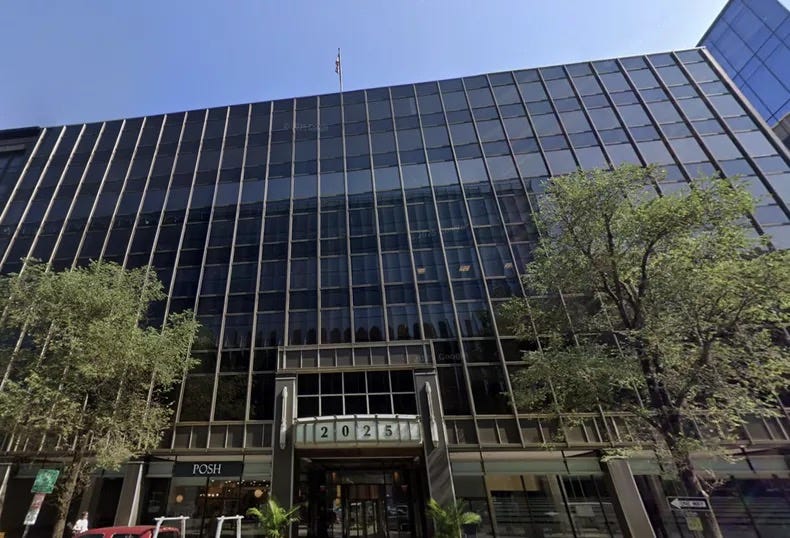
And now Avison Young is marketing it as a residential conversion. Two hundred sixty to 270 apartments. Three levels of underground parking. Eligible for DC’s Housing in Downtown tax abatement, which wipes out property taxes for 20 years.
I’ve been watching buildings like this my whole career. A decade ago, this would’ve been a tragedy. Today, it might be the smartest second act on M Street.
You know that feeling when you find an old car in someone’s garage, covered in a tarp, collecting dust? The paint’s faded. The engine hasn’t turned over in years. But the frame is solid. And you realize the car isn’t dead. It just needs someone willing to do the work. That’s 2025 M Street right now.
DC has so much office inventory sitting empty that the conversation has moved past “will tenants come back?” We’re at “what else can this be?” And that’s progress. Because I’ll tell you what doesn’t work — leaving a 191,000-square-foot building dark on a block where BXP is about to break ground on a brand-new office tower next door for Sidley Austin. You can’t have a ghost ship parked next to a $320 million new build. The math on that block doesn’t work until 2025 M finds its next life.
This matters beyond M Street. Empty commercial buildings don’t just sit there quietly. They drag down assessed values for every property around them. They kill foot traffic for the restaurant across the street. They make the block feel like something went wrong — even when everything else on the corridor is fine. If you own a business within three blocks of a vacant office tower, you’re already paying for it. You just don’t see the invoice.
What excites me about this deal is that it proves the conversion pipeline isn’t theoretical anymore. Brokers have evaluated over 50 office-to-residential opportunities in the DC metro in the last year. Most didn’t pencil out. This one did. The zoning already allows multifamily by right — meaning no rezoning fight, no two-year entitlement process. The parking is already built. The tax abatement is already on the books. That’s rare.
A landlord holding onto 2019 office rents in a building like this isn’t preserving value. That’s just watching the tarp collect more dust.
So here’s what I’d ask you: do you drive past a building every day that looks like it’s been holding its breath? What do you think it should become? Hit reply. I’m curious.
Until next time — Ed
No posts
Comments
Nothing yet. Say the first thing.
Sign in to join the conversation.