
Hello, dear readers!
Suddenly, it’s summer! The bees are buzzing, the wildflowers are flowering, and the sun is shining (at least, some of the time) here in northern Michigan. I’ve been out kayaking, paddleboarding, hiking, and, of course, reading. Here are my recommendations from the month of June.
I’ll be taking off the months of July and August, but “Book Muse” will be back in September. See you then!
Recommended Reading:
Yesteryear by Caro Claire Burke
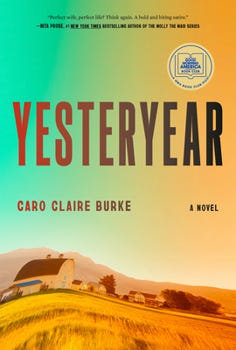
Yes, I know. Everyone is reading this breakout novel about a “tradwife,” a woman who becomes a social influencer by sharing her husband, four children, and a working farm (read a farm run by other people) online. Natalie, our main character, like Joanne Gaines and her Magnolia Farm, showcases and markets this lifestyle to her financial advantage. Then she wakes up one morning at the farm, but suddenly it is the 1850s. She has become a true “tradwife.” And she really doesn’t like it.
Told in a series of flashbacks, the novel twists and turns in clever ways. The author does a great job of twisting your emotions as well. Natalie is an extremely self-centered and selfish character, but there are fleeting moments where you will feel some sympathy for her situation. It’s a trick, you know, for a writer to create an unlikeable character that you still want to invest in as a reader.
Claire Burke has some interesting things to say about gender, feminist theory, and the way that we perform our lives for others. I’ll admit, the ending of the novel disappoints; it’s far too pat and rushed to be satisfying, but the book is worth a read—and a good conversation afterwards.
The End-of-the-Line Club: A Diary by Fleda Brown
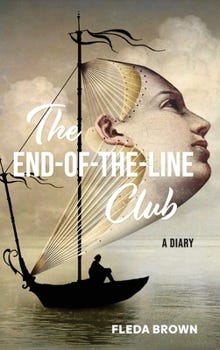
I was lucky enough to read a draft of this book in March, and I just finished re-reading the published version last night. Wow.
Brown’s newest book is a diary about her move from a condo into a retirement community. At least, that’s the basic premise. But The End-of-the-Line Club is much more than this. It’s a guidebook, one that shows the transition from the world of constant motion and engagement into a smaller, quieter, more liminal space. Don’t get me wrong—Brown is still very much alive, and she writes with clarity, humor, and unflinching honesty. Her writing is, like most published journals and diaries, a thoughtful mix of recording and reflection. And because Brown is a gifted poet, the language is crisp and the details of her days are filled with vivid details.
But she is aware that this is the “end of the line,” a place where we will all arrive. It’s a place that is unknown territory to most of us. It’s a place that, frankly, makes us uncomfortable to consider. This book offers a glimpse into this world and allows us to see how Brown’s days unfold. In this version, her life unfolds in small moments because she chooses to pay attention. And you should pay attention to The-End-of-the- Line Club. This book is a gift, one that is worth accepting with grace.
Also Read:
Everything Happens for a Reason: And Other Lies I’ve Loved by Kate Bowler
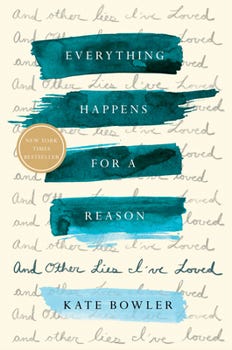
In this memoir, Bowler, a Professor of Divinity at Duke University, recounts her diagnosis and treatment for stage IV cancer. She explores her frustration with people who try to explain her fate through the “prosperity gospel,” where bad things happen to those of us who can handle it, and good things happen to those of us who deserve it. And here’s the thing: she writes with humor, candor, and a great deal of practicality. I’m now smitten with this author—and I think you will be too.
Oh, and it sparked a podcast named “Everything Happens,” which is worth a listen.
The Things We Never Say by Elizabeth Strout
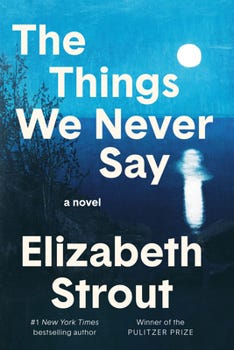
Elizabeth Strout never disappoints. In this novel, she gives us Artie, a history teacher who is contemplating suicide, almost dies, and then reconsiders his life and relationships. It is a small story. Strout doesn’t write engaging plots, nor are her descriptions remarkable (“The sky is beautiful,” he thought.). But she gets you inside the life of an average person and helps you see how he, how each of us, is extraordinary.
When Women Were Birds: Fifty-Four Variations on Voice by Terry Tempest Williams
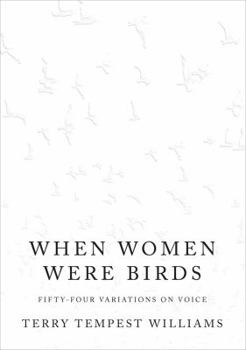
When Williams’ mother dies, she leaves behind 54 journals. When the author opens the journals, she discovers each page is blank: her mother wrote nothing in any of these books. This leads Williams on a quest: what do these pages really say? What might they have said? This is a lyrical memoir that weaves Williams’ life with her memories of her mother, one that will stay with you long after you finish When Women Were Birds.
No posts
Comments
Nothing yet. Say the first thing.
Sign in to join the conversation.