
It has taken me several weeks to write this article because every time I wrote the ground beneath my understanding moved. It’s telling that it has taken me the longest out of the 30 I’ve written since Mark died to feel and form it into words. My subconscious is still unearthing that which it would rather not tell.
Two weeks ago I was ready to quit because what was within me was intolerably difficult. But leave what? My teenager’s school exams, our family mini-break, my son’s injured knee, my paid work, the usual routine … It had all accumulated into “too much” and there was nothing I could do about it. I could see no exit door.
My life, in moments, can sometimes be too heavy to bear. I can become submerged by our existence. The true problem, the fault-line in our bedrock, is unfixable. There’s nothing notably wrong (other than my husband is not here). Nothing unusual, no major issue, no failure, not a thing to be fixed. We’re simply living our lives, without Mark.
The kids were being brilliant, my conditions of employment hadn’t changed. Life was as I’d planned it and for weeks I’ve felt overwhelmed by resentment.
Ordinarily this feeling might be described as, “Irritation at circumstances beyond my control”. Except this pressure had more life-force than that statement could ever muster. I was a storm ready to break. If you’d stood within a metre of me, you would have felt the seething vibes from below my surface.
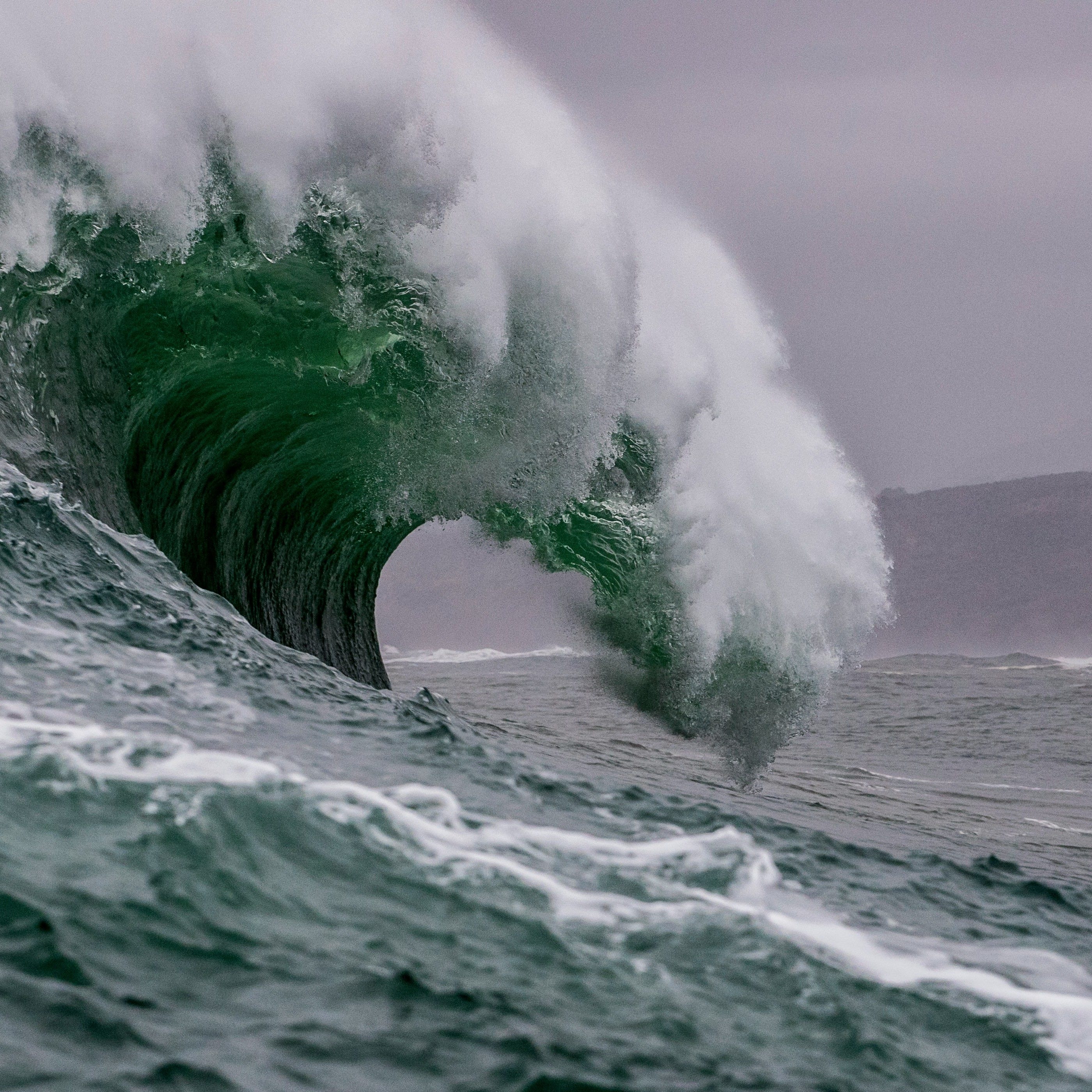
I tried but failed to placate my increasing pressure. The source was bigger than me. Building like a tsunami across an ocean. It was nobody’s fault, there’s no-one to blame. And as a result the pressure accumulated over days and weeks into unmanageable responsibility. Although my part of our parenthood is now substantial, I’m committed to not carrying more than my share. And I will not take my feelings out on my kids. It would be an injustice, multiplied by a cruelty to put my anger on them. They’re each being themselves, whilst they also grieve. That’s a good thing.
I protect them as much as is reasonable and I unconsciously protect most people from this depth of feeling. I move between my parenting mask and my professional mask. Holding with strength is a habit of a lifetime. No accusation nor liability, that’s just the way it is, or the way I am. I try to mitigate for it, but I’m only human, I have limitations and old habits are hard to break. Especially when they’re the ocean you swim in.
This disturbance was caused by the Universe, Life or Who-Knows-What-To-Call-It. A tsunami is caused by a massive underwater displacement. It's an earthquake or a landslide under the ocean, strong enough to move a column of water from the seabed to the surface. Whereas tidal waves are driven by gravitational shifts in shallow waters, a tsunami is a giant movement which grows in height when it reaches the shore because its vertical mass has nowhere to go.
So what do you do when a tsunami is coming for you?
I felt that I had nowhere to go because no place felt big enough or strong enough to put my resentment. I used a conversation with a colleague to voice the tip of my feelings. She's a professional, she can handle it. Within minutes my whole awfulness was gushing out. After almost an hour of listening, she kindly asked, “And how’s your support system?”
My brain emptied.
My inland was flattened, only a devastating backwash remained. I could think of nothing to say at my emptiness. I felt immediately, horribly guilty. I can’t do it alone, I know that. In my bones I know we have many, many people who care for us - I believe that we are loved with all my being. People want to help me and I want to be helped. My support system is not empty, it’s almost full. Yet in that moment I couldn’t see or feel that support. My truth was vacant.
Afterwards, I took some time to reflect on the void. I was shocked at my own (illogical) sense of abandonment. I realised that my problem is not not-having support, it’s not using the support which I need to maintain my new sea level.
I called another friend, a widow and lovely listener. We agreed that the word support had begun to change its meaning in widowhood. I became curious about why I was so defensive around it. Is it because I don’t want to accept help? Not really. Although, I hate feeling helpless, I also definitely don’t want to make things more difficult than they are.
I’ve lived in true helpless. I know what hopelessness is, better than most, it doesn’t frighten me as much as it used to. I spend most of my time looking for effective optimisations and ways I can be sustained. I ask for help constantly, several times a day. This aversion is deeper than that. At a bedrock, identity level, I must believe that I can handle this alone.
I’m defensive around the idea of support because it risks my sense of autonomy. Am I stubbornly independent, impatient and controlling? Yes, probably. Yet self-authority is a fundamental element in my ability to survive widowhood. I can only accept the help which supports my belief that I can do this. Self-acceptance is everything. Support and self-authority are a paradox in this new version of me.
After the tsunami, I sat down with the word. Support comes from the Latin sub- meaning “from below” and portare which means “carry”. I read the dictionary definitions several times. Each re-reading gave me a new understanding of why this life is a strain on me. Bearing all or part of the weight of. Holding up. Giving assistance. Providing the necessary conditions to sustain life. Agreeing with; giving approval, comfort or encouragement. Being actively interested in; concerned for the success of. Suggesting evidence for or the truth of something. Allowing. Enduring. Tolerating. Helping in anyway.
I’m supporting everyone and everything, no wonder I feel that I need some more support. It’s both a verb and a noun; active and static, conceptual and concrete. My growth in giving support has left a gap in the support beneath me.
So what support do I need?
The professional coach inside of me made me get specific. I wrote a list in my journal, “Support is:”
financial
practical
caretaking
emotional
social
cognitive
professional
therapeutic
emergency
I immediately knew where the gap was biggest - number four. Emotional support is what my Mark gave me, in a way that nobody else has ever had the chance to give in my life. That’s why I married him. My friends are wonderful, my family are supportive, and I chose to spend my life with the person who understood me best of all. We talked, we used to talk about everything always. He listened, we talked, I listened, we talked more. Other people’s empathy is lovely, but a little bit lacking when a tsunami hits my front door.
It's nobody's failing that I still need active, committed, engaged, actual emotional support at a consistent frequency. Grief is growing me. What that looks like now Mark's not with me is unimaginable for me still.
If I knew how to do it I’d ask for help.
That he’s not here is a gap in all of my support systems. The emotional breach is the hardest to fill. My nervous system is still navigating his loss like it was yesterday. His goneness feels like days not years. The issue with solving my emotional slippage is that I don’t want to be in this sea; every cell in my body swims in avoidance. It’s easier for me to ride the tsunami than stop it.
At some point, in the usual undulations of everyday life in April, I began to miss Mark more than I realised. The only experience I can liken it to is when our babies were tiny. I’d feel resentful everyday that he went off to work, while I nursed and cared for our colicky babies. I couldn’t blame him, we chose our parenting arrangement. But I also couldn’t be happy for him when he got to leave. If he’d been here last week I’d have been viciously angry with him for leaving. But he’s not here, so who do I shout at? I went into my garden shed to let some scream out.
The ordinary is unfathomably deep. Like a river absorbed into an ocean, my resentful grief keeps coming. My surface rarely changes, so something invisibly drops underground to receive it. My “normal” state becomes “not safe”.
Anyone reading this who knows me well, will probably say, “Why didn’t you call me?” If I’d called perhaps they would have helped me to notice the pressure accumulating in my system. But I couldn’t feel it, so I didn’t call. I’d been tolerating, accepting, adjusting, enduring. Each micro-movement invisibly shifted my internal environment, until it became too heavy to live with. At the point when I needed to squall I was past making a phone call.
My grief doesn’t want to be seen or heard. My body has down-regulated the chemicals involved in connection to protect itself from its own pain. When I’m in pain I do not want to call someone so they can look at it, prod and poke it. I find most (not all) social connection depleting, because I have to work to create a sense of relatedness. For the first time in my life as an extrovert I don’t miss social connection. I need it and I suffer when I don’t schedule it, but it’s often an effort to do it. I can do it for work, I can do it for the children. And then if I’ve got the balance right I’ll have some capacity left to connect for myself. That balance between what I need socially and what I want emotionally is a complete unknown to me - an unusual experience after 47 years of being me.
Others might call it loneliness, but I can’t call it that because I don’t feel lonely. Alone? Definitely, and that’s OK for me. Bored? Mostly. Companionless is the best word I have for it. I’ve lost my person. It’s as awful and obvious as that. My heart wants to avoid further pain by not sharing its emotional load with anyone who’s not him and feeling that it’s not him. It protects itself by hiding, even from me and definitely from others.
We lived near a tsunami zone on the North Atlantic coast of America for several years. When we went to the beach for the first time, I saw this sign and thought, “Why are we allowed to be here?”
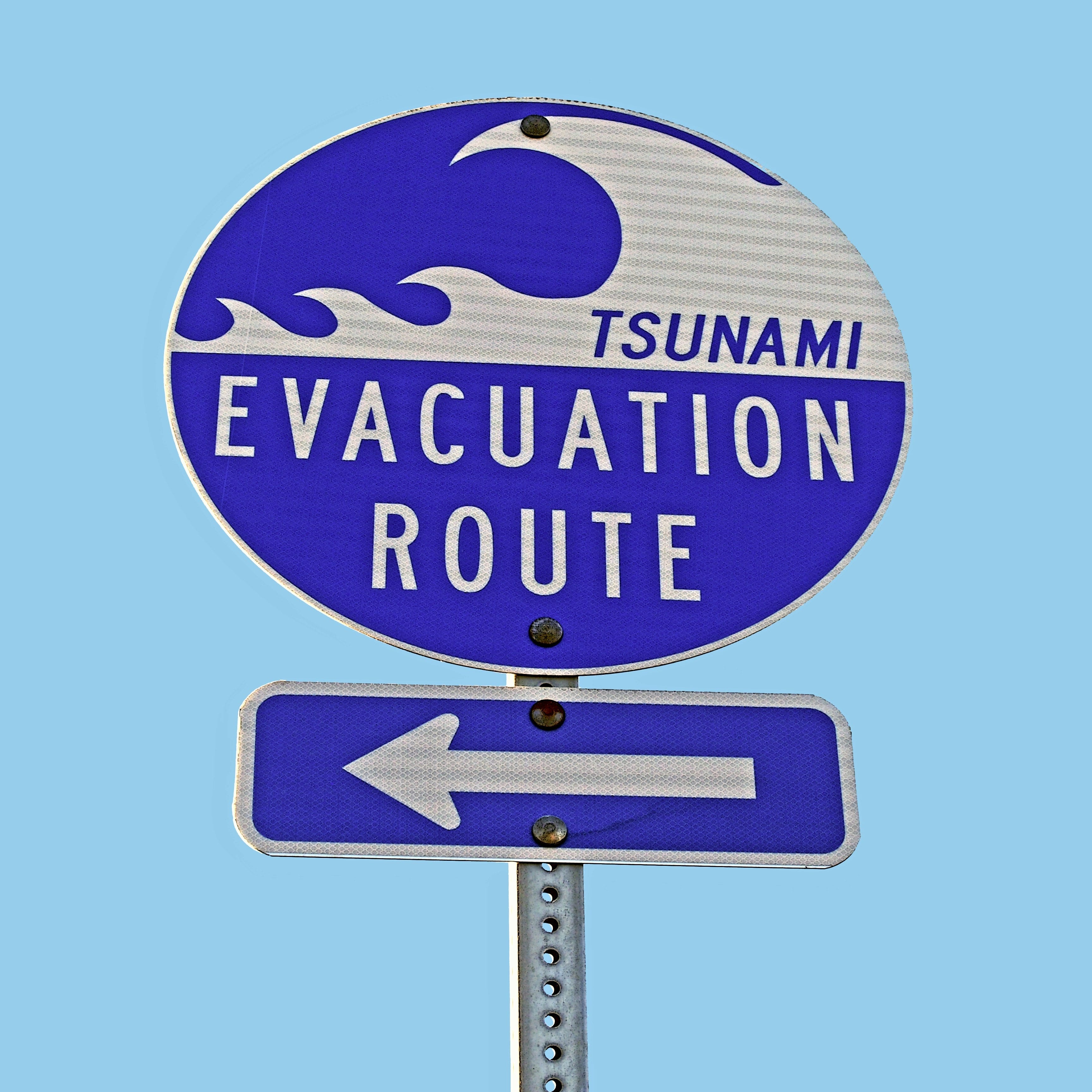
I wanted to leave immediately, but that would have ruined our family day out. So I stayed and worked on relaxing in the risk. There are no defences against a tsunami; the earth will quake. Survivors must run very fast to higher ground. You can’t climb high enough or hold on tight enough to survive. You’d better hope you make it inland before the wave hits.
Long-term sea level measurements are a reliable indicator of climate change. I think I need regular barometer measures which observe the difference between a “fine” day and a not-fine moment. Not from everyone, I don’t have time for constant phone calls or coffee chats, but somehow I need to be seen and measured. My nervous system needs to put it all down for a moment and regularly let it all out. Yoga is my best method of observing my own emotional pressure over the long-term. The sauna and cold-plunging helps too. This Substack has been one way to emotionally process out loud - it’s why I started writing. I’ve been to therapy, I’ll go again. It helps me to mentally process verbally, without judgement and with no urge for anyone to fix me. But these are not the only solutions which will sustain me over weeks, months and years of being at sea.
I need to learn to put my psychological load onto others in ways which don’t harm them. That sounds easy, but it’s hard for me to offload the weight of coping. My parenting mask is protective and necessary. I’ve been sharing my thoughts with my children more recently, when appropriate. “I miss Daddy right now, because he’d know how to fix this.” Perhaps others can listen to them, “What would you be telling your Dad about this right now, if he was here?” They need to offload too and I need less to be loaded onto me.
My professional mask oxygenates me. I love my work, I don’t want to take my mask off. But if it gets stuck on, I forget to be an unregulated version of myself - the one who has no clue how she’s feeling, and that’s not healthy.
I want to live on higher ground, who doesn’t. It’s not an option for me for a few years. I have to accept the risk-levels of widowhood and ride with them. I need help to notice the pressure, before the wave builds, because then I can learn to read the water. Perhaps others can read it with me. Next time I want to be seen before I go under.
Comments
Nothing yet. Say the first thing.
Sign in to join the conversation.