
Let’s talk about open loop hooks.
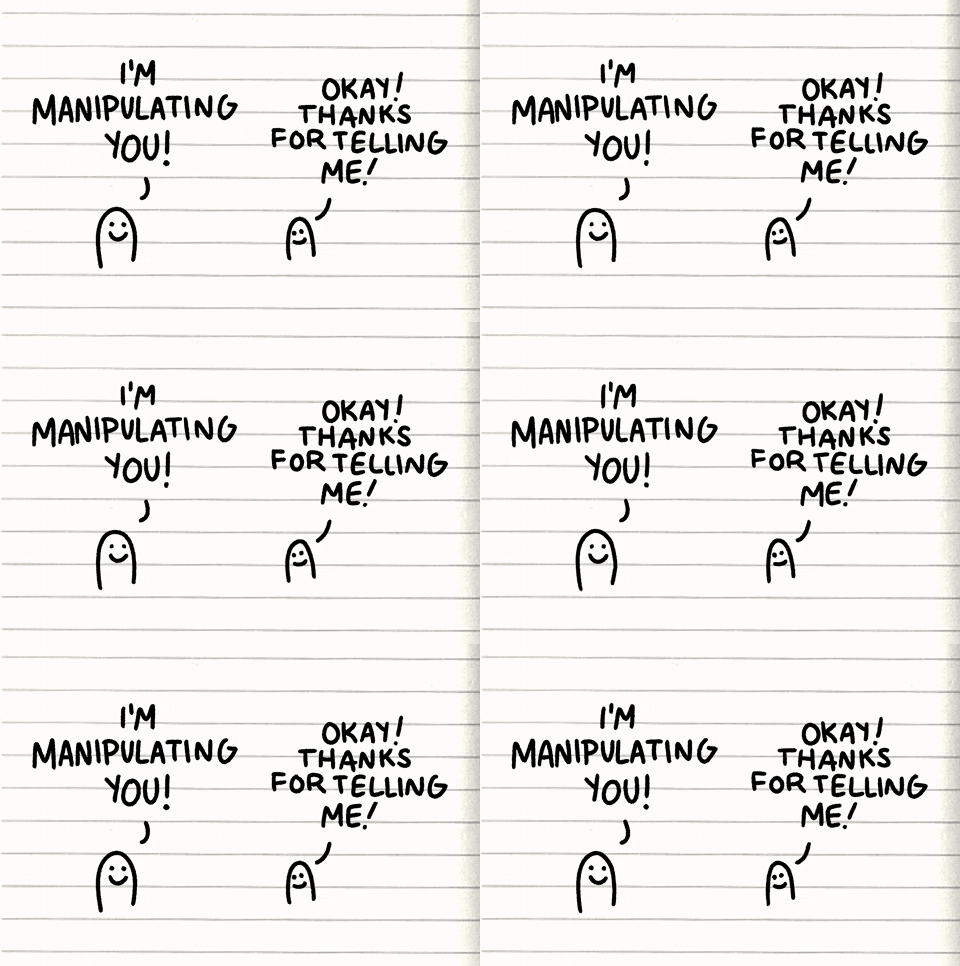
They’re one of the most effective tools we have to draw attention to our content, build curiosity, and keep people engaged. But if you’ve ever felt like using them makes you sound like a scammy marketer, you’re not alone. I get it. There’s a lot of clickbait out there, and no one wants to be that person.
But here’s the truth: open loops aren’t inherently manipulative. They’re a storytelling structure. And when they’re done with integrity, they can help you build connection and trust with your audience (without any of the ick.)
Let’s walk through how to use them well, when to close them, and how to structure your content in a way that keeps people reading, watching or listening, all the way to the end.
An open loop is an unresolved idea or unanswered question that you introduce at the beginning of a piece of content. It sparks curiosity and tension. Our brains are wired to seek completion, and an open loop plays directly into that instinct.
You’ve probably experienced it yourself - someone starts a story with “I almost gave up my business because of this one mistake…” and suddenly you’re pulled in. You want to know what happened, what changed, and what you can learn from it.
Open loops work because they create a gap between what your audience knows right now and what they want to know. That gap keeps them engaged, as long as you make sure to close it.
There are three key parts to this:
The hook (the open loop)
This is the initial line that promises something specific, interesting, or unresolved. It should feel emotionally relevant, personally resonant, or a bit provocative (enough to make someone stop scrolling or keep reading.)Maybe like.. “Here’s how an open loop hooks can change everything for your marketing…”
Comments
Nothing yet. Say the first thing.
Sign in to join the conversation.