
In the last 365 days I’ve published 98 articles on Substack, grown to over 17,000 subscribers organically and 97% of those subscribers found me here. And no, I don’t have a Substack about Substack.
When I started Really Rich nearly a year ago, I genuinely believed I’d already done the difficult part. I’d spent years building audiences elsewhere. People had watched my videos, bought products from me, followed my work, replied to emails. I wasn’t expecting every single one of those people to move across to Substack, but I thought a lot of them would.
I had well over 100,000 followers across social platforms and a big weekly newsletter of over 10,000 people grown largely through freebie opt-ins.
So when my email list halved and I only had 5 paying subscribers in the first month my ego took a big hit.
A few people came over, of course, but after a couple of months it became fairly obvious that I wasn’t going to build this publication by borrowing an audience I’d built somewhere else. If I was going to build something meaningful on Substack, I was going to have to build it here.
At the time, that felt quite frustrating. Looking back, I’m incredibly grateful.
Because if those subscribers had all arrived from Instagram or TikTok, I’m not sure I would ever have learned how this platform actually works.
Last month Really Rich gained over 5,000 new subscribers, and almost all of them discovered the publication here, not somewhere else.
That statistic has become one of the things people ask me about most. They want to know what happened. Whether there was one article that took off. Whether Notes suddenly exploded. Whether Substack featured me somewhere.
The honest answer is much less dramatic than that. Nothing suddenly happened.
I just stopped thinking that pressing publish was the end of the job.
I think a lot of us arrive on Substack carrying assumptions from other platforms.
On Instagram you create a post and the algorithm decides who sees it. On TikTok you upload a video and wait to see whether it gets picked up.
The content is the thing that’s distributed. Substack is different.
The article is still the most important thing you create. Without good writing there is nothing worth discovering. But publishing an article doesn’t automatically create discovery in the same way it might elsewhere. Instead, it creates an opportunity.
That’s quite a subtle difference, but I think it’s an important one.
That shift in thinking changed the way I approached the platform completely.
Instead of treating Substack as somewhere I visited once or twice a week to upload an article, I started treating it as somewhere I actually spent time. I read other people’s work. I wrote Notes because I had thoughts I wanted to share, not because somebody had told me I needed a Notes strategy. I recommended publications I genuinely enjoyed reading. I found myself leaving comments because I wanted to join conversations that interested me.
None of that felt particularly strategic at the time.
In fact, if you’d asked me six months ago which individual action was responsible for my growth, I wouldn’t have been able to tell you.
I still can’t. And I think that’s the point.
How did you find Really Rich? Not in a philosophical sense.
I mean literally. How did you end up here?
Maybe somebody recommended the publication.
Maybe one of my Notes appeared in your feed.
Perhaps someone restacked one of my articles.
Maybe you found me through another writer’s publication.
Maybe you followed me somewhere else first and eventually wandered across.
Or maybe, if you’re anything like me, you genuinely can’t remember.
I think that’s what’s interesting.
Because when I ask myself the same question about many of the publications I now read every week, I often can’t remember either.
I don’t remember the exact moment I subscribed. I just remember gradually becoming familiar with them.
That’s made me wonder whether we sometimes tell ourselves the wrong story about why people subscribe. We like to imagine there was one brilliant article. One perfectly written headline. One moment where somebody immediately knew they wanted to hear from us every week. Sometimes that probably is true. Most of the time, I suspect it isn’t.
Promotion is something you do to your own content. Discovery is something you make possible for other people. It’s an important distinction.
If you think your job is to promote your publication, it’s very easy to reduce everything to broadcasting links and telling people you’ve published another article. Every time you write something, the question becomes: How do I get people to click this?
If you think your job is to make your publication discoverable, the question becomes much more interesting. Where are people already spending time? How do they normally find new writers? What makes someone curious enough to click? What happens when they arrive?
Those questions lead you to completely different decisions.
This is how I think about Really Rich now.
Publishing the article is only one part of the system. The article gives somebody a reason to subscribe, but first they have to find it. That might happen because somebody recommended the publication. It might happen because they read one of my Notes. They may have seen me in the comments of another publication, or found an article because somebody restacked it into their feed. None of those things, in isolation, built Really Rich. Together, they created hundreds of opportunities for the right people to discover it.
That is the shift I want you to make this week as part of my Substack Summer Challenge.
You are not trying to become somebody who publishes brilliant articles and hopes the algorithm does the rest. You’re trying to build a publication that is easy to discover because you’re participating in the same place your future readers already spend their time.
By the end of this week, I want you to understand four things.
How readers discover new publications.
How Notes contribute to growth.
How conversations and recommendations compound over time.
And how to turn discovery into subscriptions once somebody lands on your publication.
That sounds straightforward. It isn’t.
Because once you understand how discovery actually works on Substack, you stop asking, “How do I promote this article?” and start asking a much better question.
How do I make it easier for the right people to find my publication?
If you’ve not yet joined us for the Substack Summer Challenge, you can upgrade below and jump in. We’re building Substacks together this summer, one small step at a time, and the group chat has become one of my favourite parts of the whole experience. If you’ve been sitting on the fence waiting for the right moment to start, this is it.
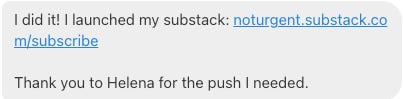
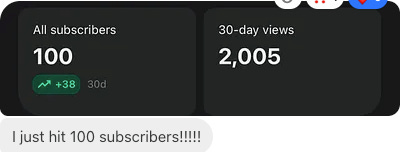
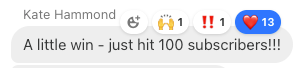
Here’s what’s already happened in the first two weeks:
Comments
Nothing yet. Say the first thing.
Sign in to join the conversation.