
The Hearth is the Heavy Table’s monthly recipe and home cooking newsletter, published with support from the Eastside Food Co-op. It’s available in full to all of our subscribers at or above the $5/month level.

For the past four or five years, we’ve had a white currant bush in the front yard of our little South Minneapolis bungalow. It hasn’t been particularly productive, probably because we keep running it over with the lawnmower. No malice involved: We just kept forgetting what it is.
This year, through thoughtfulness or poor lawn care, we managed to let the white currant bush grow and thrive, resulting in a surprisingly robust crop of fruit. Never having seen or handled white currants before, here are some initial insights.
The fruit is incredibly beautiful. I mean - look at these berries:
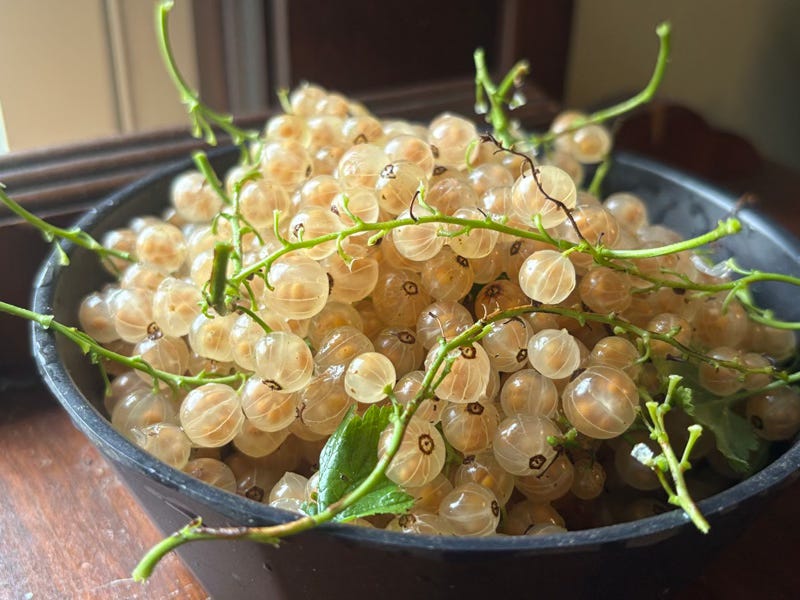
If you told me they’d been picked on an alien world, I’d kind of believe you.
The fruit is incredibly weird. Here’s a shot of our white currant liqueur in progress. What the hell is even happening here?! Again: feels like astrobiology. Or is that xenobiology? I don’t know. They look weird.
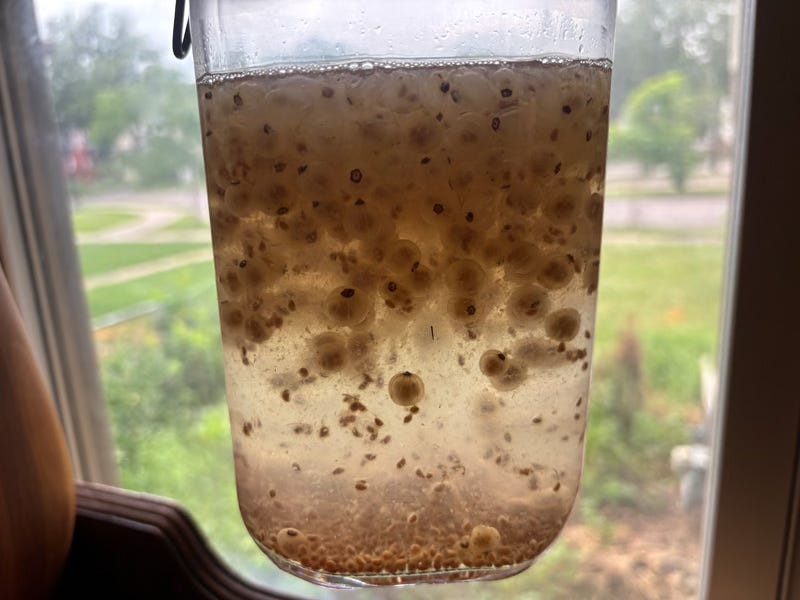
The berries themselves have a funky, earthy, perfumed sharpness that is intriguing without being unpleasant. They’re not bad, but they’re also not flavor slam-dunks like strawberries or raspberries. Ultimately we decided that all their depth might good in a homemade liqueur, so we followed the advice of a helpful-seeming blog and mixed in jar:
2 cups white currants, 2-1/2 cups vodka, 1 cup simple syrup
We gave the mixture a couple days to think about marrying all of its flavors. We subbed gin for vodka, which injected more bite and complexity to the finished liqueur, but the white currants were strong enough to shine even with the presence of the gin. With a splash of grapefruit juice and tonic, it made for a cocktail that was remarkably sophisticated and tasty. – James Norton
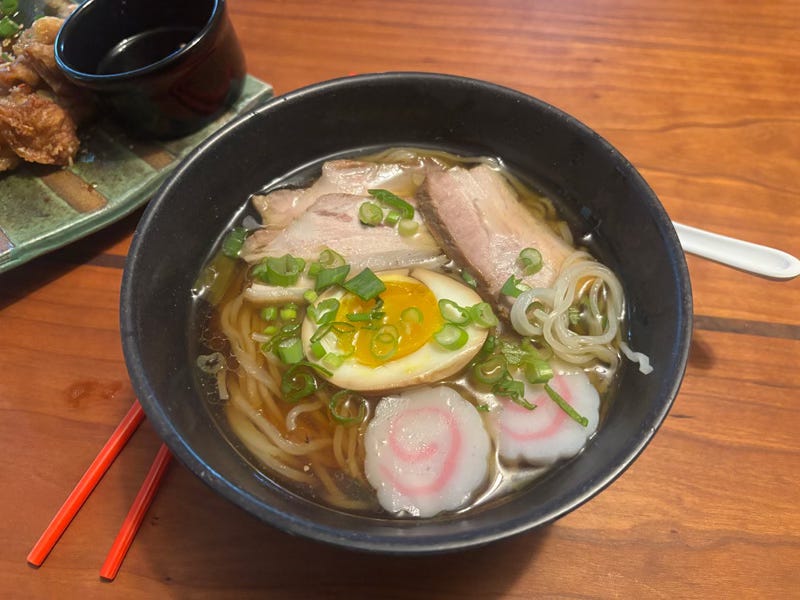
I would rather not disparage restaurant or package ramen, but, sadly, here it goes: most of it is serviceable at best. It’s simplicity itself to score edible package ramen or basically okay restaurant ramen, but getting something deep, complex, and memorable is an uphill fight, particularly now that Zen Box has shut its doors.
Shopping at a good local grocery store (we like Eastside Food Co-op, but others abound) and making your own ramen from scratch is a great deal more work than pouring boiling water over a brick of desiccated noodles. But it’s also a beautiful way to spend a day cooking, with the result of ramen that will wow friends and family members with depth of flavor, impact, and quality.
If you’re reading this newsletter, you probably love to cook - this particular set of recipes is a challenge that should engage and provoke you without breaking your spirit. I’ve made it on a few different occasions with good to really, really excellent results.
This ramen method is adapted from a book called Best-Ever Homemade Ramen, which deserves the lion’s share of the credit for the recipe and concept. Most of what I’ve done is sorting out the recipe into a step-by-step procedure that takes about 90-120 minutes of active cooking followed by six hours of marinating, followed by 30 minutes of simmering and assembly. If you’re fast in the kitchen, you might beat those times; I find with set-up and clean-up included, they’re reasonable for a skilled home cook.
One shopping note: Many markets don’t carry the lard that you need to make the recipe’s aromatic fat. (Don’t be confused by “pork fat,” which won’t work for this purpose.)
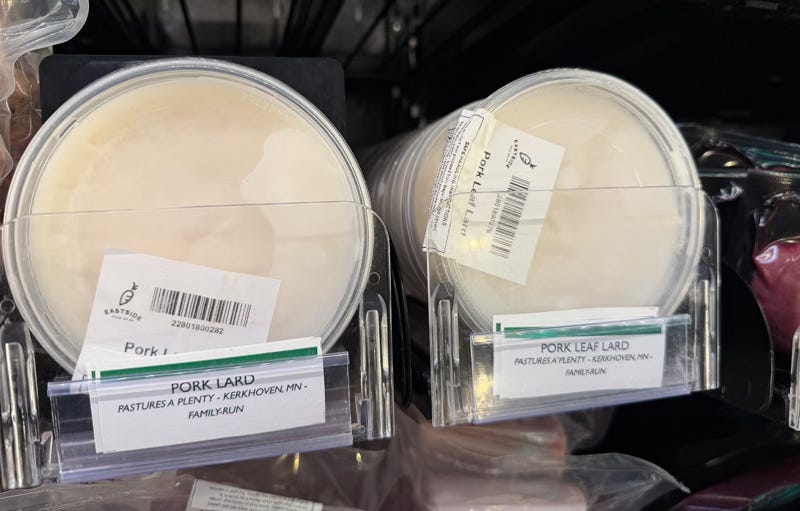
Eastside Food Co-op has two kinds of lard - leaf, which is more neutral, and regular lard, which is more “porky” - either will do for this recipe. Some Latin markets (like La Alborada on East Lake Street) also carry lard, labeled manteca de puerco.
The first thing you do is make your Shoyu Tare.
Makes about 4 cups
2 1/2 cups (600ml) dark soy sauce
1 1/3 cups (300ml) water
5 Tbsp mirin
2 Tbsp cooking sake
1 Tbsp sugar
One large green onion or small leek, green part only
1 clove garlic, peeled
2 slices ginger (about 2” by 3/4”)
Comments
Nothing yet. Say the first thing.
Sign in to join the conversation.