
Don’t live in absolutes, you told me.
But there is no solace in the shade, so how can I not? In Libya, everybody seems to know something I don’t. The day folds itself differently here. Streets empty and refill whilst I sit there, stuck in my sickly pool of sweat, and plastic chairs migrate across courtyards in pursuit of a shadow that is always moving, always withdrawing.
There is a large expanse of land, always shaded and hanging in shadow despite being beaten dry by the relentless sun. Worn brown faces smile wide brown smiles, gaps opening towards me, and in a sort of hallucinatory rawness they pull me in, hugging me and braiding my hair. Their good nature is matched by a severity that leaves me sore and out of place.
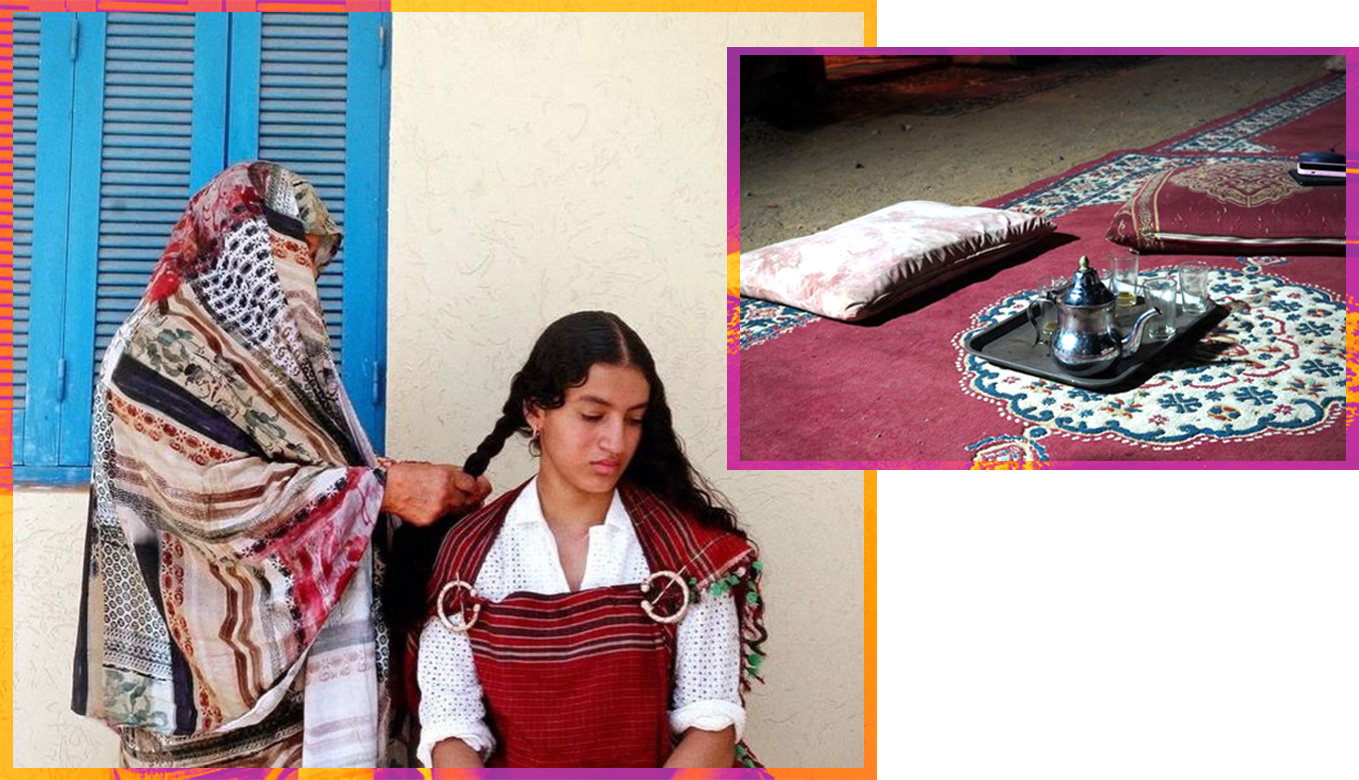
I try to talk to everyone in a language cut to their own understanding, but retreat, failing to find the right words.
The serious conversations wait until evening to begin. In the meantime, only small talk is made, and my skin crawls. I watch people disappear from the city and reappear hours later, carrying on as though nothing has happened. As though the day itself has not been split open.
Nobody calls it knowledge, nor do they share the burning desire to keep their Apple Calendar so tightly filled that there is barely a break between those little blocks of colour dictating my own life, barely a sliver of a gap to breathe, look down at my hands, and realise that time winds and unwinds.
Being so far for so long only teaches you to mistake distance for love. Or maybe love for distance. I am not quite sure. The heat makes it difficult to be sure of anything. Where is the line between the place your family left and the place waiting for you when you return?
Don’t live in absolutes, you told me again.
That intensity often feels intolerable, like the sun itself. So great, so important, sustaining even, as long as you don’t get too close. I grew up elsewhere, in climates that taught me to move directly through the world, where you cut the cloth of everyday life in one big, straight, ugly line.
Everywhere I look there are instructions that everyone else seems to understand. I’m here searching for them, as helplessly as you would be fishing your hands between sofa cushions looking for the TV remote that’s been in your hand this entire time.
I commit to the weeks of sagging heat in this small little room, in this small (but not so small) country. I commit to the prayers of the sun-kissed believers and listen to them the way one listens to ruins.
There is something about the people here, the way they always set the pace of our conversations, answering their own questions in their own way. I want to say it is an innocent certainty, as though they are not so much figuring things out as recalling knowledge from somewhere I have no access to.
They use yes-or-no questions to deconstruct the world’s inconsistencies and injustices, delegating me to the role of asking, “how do you know though?”
But now, when I ask who’s there, the question hangs.
Then it retreats, dissolving into the god-awful buzzing of the AC. When that stops working, we switch on the fans because the ceiling fans in the small little room are useless in July, successful only at churning heat.
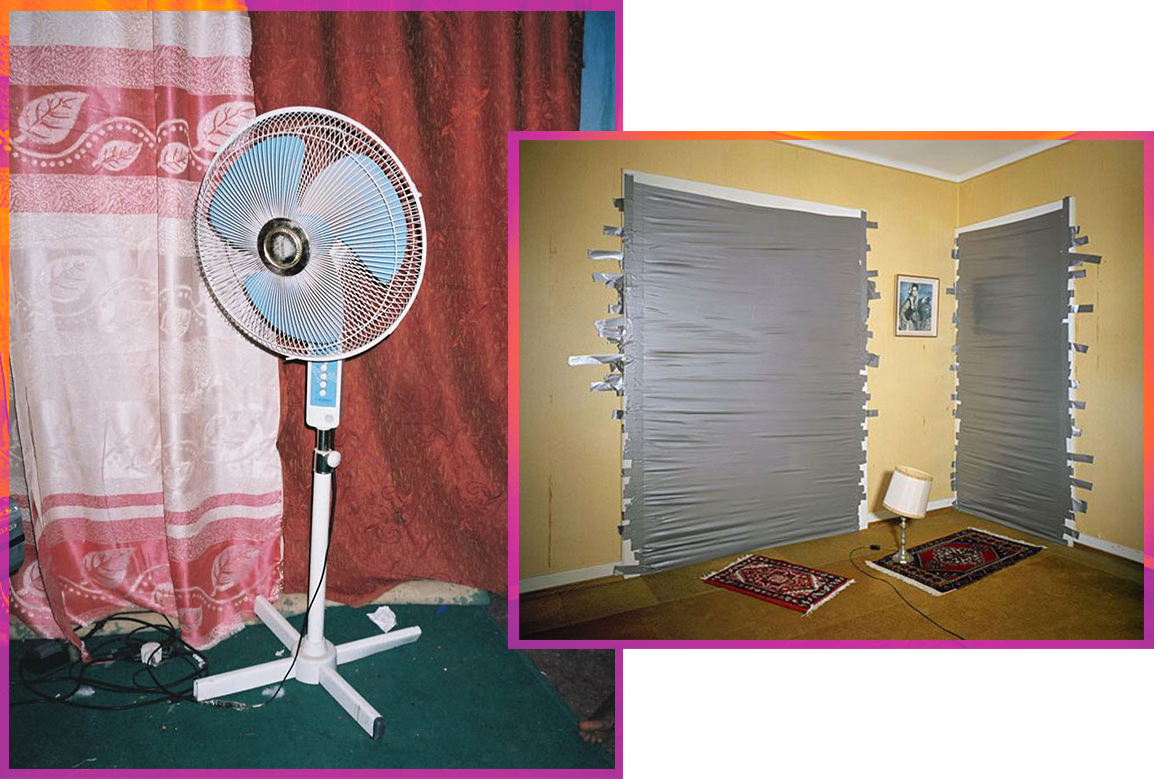
The bedroom I shared with a cousin I don’t really know grows hotter and thicker until I feel even further away from them. I look to you one more time. You smell like coffee and old cologne and something stale. Hair swallows your eardrums. White springs coil from your nostrils. Your eyes remain honeyed, diluted by water.
“Don’t live in absolutes,” you tell me.
In my discomfort with your vague advice, I attempt to shuffle out of the room.
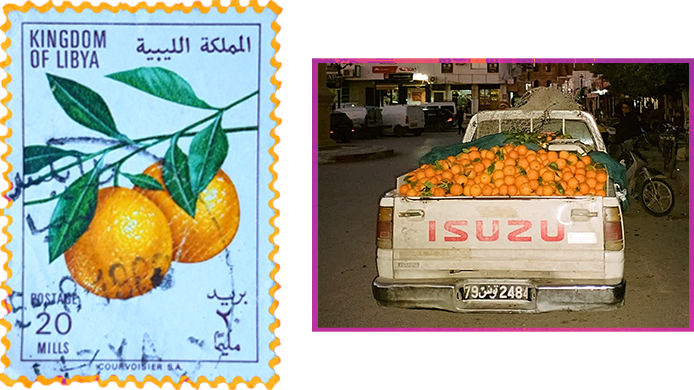
“You are not dismissed,” you say, before producing an orange as though it were a coin hidden up your sleeve. You tell us it was grown in the fields surrounding us. A Libyan orange—perhaps not an orange but an Orange. To eat it, you say, is to taste Libya itself. Then, almost immediately, you begin to question your own sermon. Would eating the Orange be disrespectful? Or was it better to consume his homeland so as not to let his homeland consume him?
You, my grandfather, loved these moments. You were the lecture-to-no-one-in-particular kind of professor. Long monologues drifted into the ether. You’d begin with one idea and somehow skid into a great ditch several stories away.
When I would furrow my brow in confusion, you’d press your thick lips into a line, your grey moustache swallowing them, as though to scold me.
“Recognise will and intellect are the same thing. Don’t weep, don’t wax indignant, but understand.”
I used to think you were talking about understanding people. Now I wonder if you were talking about places. I think of your mattress pushed into the corner of your room. Not centred, but tucked against two thick walls, where the afternoon light never quite reached. I never asked why it belonged there. Nobody did. It was simply where it had always been.
I have spent years looking for inheritance in surnames, in photographs, in the rhythm of a language that still catches in my throat.
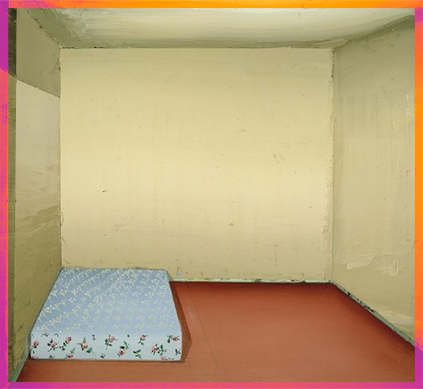
Maybe how a window is left ajar, how your chair is always randomly placed in the middle of the room, as you’d rely on it to help you pray to God. You were too weak to face the floor. Why a mattress settles into one corner and not another. The places where people pause before crossing a courtyard. The chairs that drift after the shade. The conversations that wait until evening.
Perhaps these, too, are inheritances. Perhaps belonging survives in these small negotiations with heat, in a spatial logic so deeply lived that nobody thinks to explain it.
Don’t live in absolutes, you told me. You have been trying to teach me to not choose between the inside or outside, between tourist and local. Between the place my family left and the place I keep returning to. Only to learn, eventually, where the shade will fall.
Comments
Nothing yet. Say the first thing.
Sign in to join the conversation.