
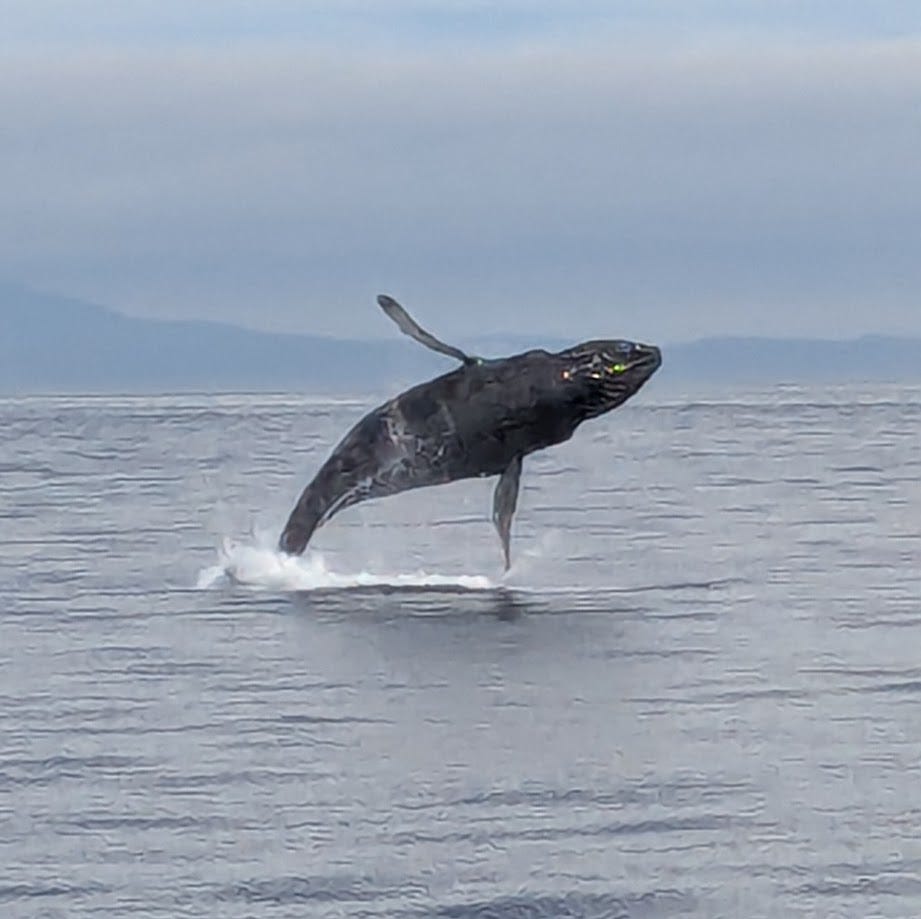
“I don’t know where we’re going today,” is how the captain of our whale-watching cruise greeted us passengers. He explained further, “No two trips are alike. The crew and I watch the seas and scan social media for reports of whale sightings and that’s where we go.” While a little unnerving at first, his reasoning made sense. Wild animals, even when having usual migration routes and nests, can still quite easily change course and do not hang out in the same area day after day after day.
Wildlife guides, by necessity, are comfortable with uncertainty. They know how to recognize animal tracks, droppings, and homes. But they cannot guarantee a sighting on any given animal. That’s why dolphin and whale-watching trips will offer a free make-up outing if you don’t see any on your particular excursion. It’s an uncertainty that these captains are comfortable with, based on reasonable expectations and reality of understanding the creature’s habitat and habits.
As a hospice chaplain, I find myself in another field where we know what to expect, signs of imminent death, and life expectancies of less than six months. Yet even the medical professionals making that prognosis qualify it with, “given typical disease progression.” What they cannot say, and are well-aware they cannot say, is if your disease will follow normal progression. Some of our patients improve, and are discharged from hospice. Others continue to gradually decline for a couple years, four times as long as the initial prognosis. No medical professional can predict with certainty which path any given person will follow. Yet those who work in hospice, those who work as end-of-life guides, seem more comfortable with uncertainty than most of the rest of the medical world.
Granted, we generally want certainty from our doctors. We want to know the specific diagnosis and what to do about it. The first can be done with a great deal of confidence; the second is more like hospice work: here’s the treatment that we know works best for most people. Will it work best for you, in particular? We won’t know until you try it. Sometimes we are part of the “most people” category; sometimes we’re not. Sometimes our guides can think more creatively; sometimes they’re stuck in one way of doing things, insisting on the same route.
Some ten years ago, my then-rheumatologist told me that “Nothing more can be done for you medically. It’s your busy lifestyle,” as for why I was experiencing so many flare-ups. I went to a new rheumatologist, and he explained that the efficacy of my main arthritis drug had worn off since I had been on it for ten years. Some of these biological medications were not intended for such long-term use. His opinion was that it was time to change drugs. I did, and was the better for it. For that reason, he remains my favorite rheumatologist out of all the ones I’ve seen since my diagnosis twenty years ago. Some guides will tell you that there is only one path. Others will say, I’ve got experience, I know the signs and what to look for, and I don’t know exactly where we’re going.
Comments
Nothing yet. Say the first thing.
Sign in to join the conversation.