
When Bob Dylan was 21 years old, he wrote the song, “Blowin’ in the Wind.” The lyrics accept uncertainty, not knowing, and never going to know, as “the answer, my friend, is blowin’ in the wind.” It’s a level of comfortability with ambiguity that most of us are uncomfortable with. As I wrote last week, we want to know. In fact, there’s a phrase: inquiring minds want to know.
Perhaps more so than at any time in history, we are a people who want knowledge and certainty. We want the assurance that we are right, that we know the answer, and that we know what to do in any given situation. Among the persons who are still more at ease with not knowing are artists. You are much more likely to find ambiguity in song lyrics, paintings, unresolved melodies, and poets or writers who don’t fill in all the gaps in the story (not plot holes, but unanswered questions).
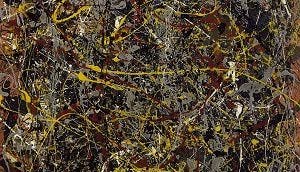
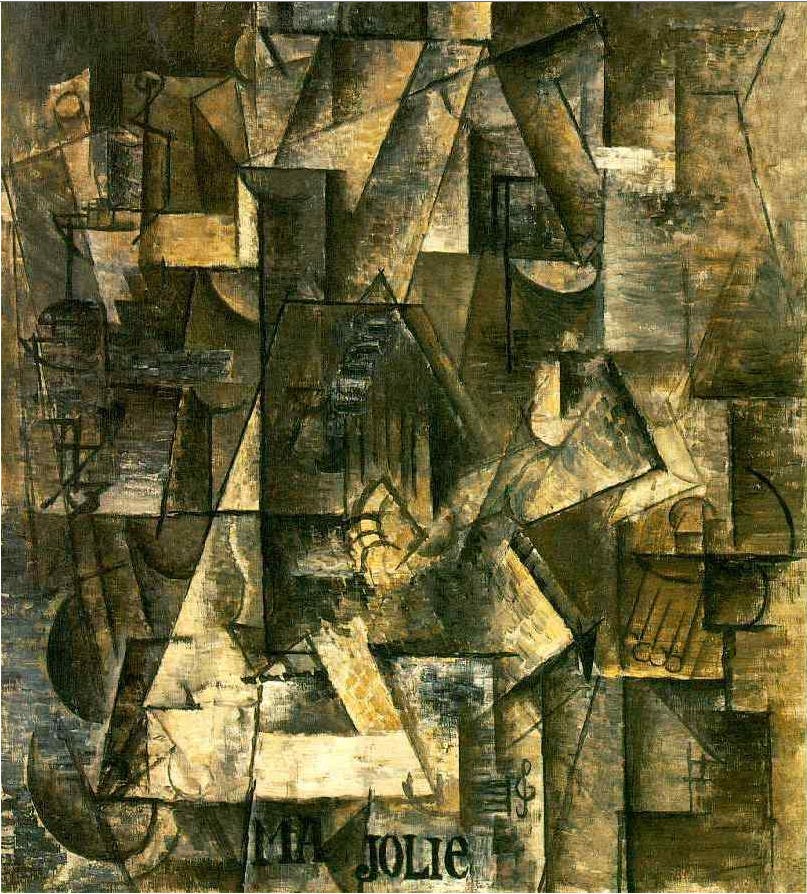
Not everyone likes abstract art because we generally want to know what we’re looking at and be able to identify the subject of the artwork. It takes more time and imagination to look long enough at a painting where it’s not immediately clear what we’re looking at and create our own interpretations and wonderings. Jackson Pollock’s abstract expressionism and Pablo Picasso’s cubism are examples of this type of art.
Finally, I would also place yogis in this category as well. A good yoga teacher is a bit of an artist and certainly comfortable with not knowing, as they will offer a variety of modifications to any given pose. They place knowing within each person and do not presume they know what will feel best for anyone else’s body. Offering alternatives to the practice of yoga is helpful for me because, with my arthritis, I don’t always know how any given position will feel until I try it. I appreciate the flexibility yogis offer because the goal is to stretch your body in ways your particular body needs; the goal is not uniformity or a particular set of movements. Therefore, there’s a level of ease with uncertainty within any yoga practice, as you approach as a student of your own body, each time.
When I discussed this with my sister, who’s a yoga teacher, she noted that offering modifications empowers the individual and decreases resistance to the practice of yoga over all. She also shared in that the Yoga Sutra, two of the tenets describe comfortability with uncertainty. One is the Ishvara Pranidhana (Surrender to the Divine Mystery), which, in the surrender, seeks to cultivate acceptance that there are things you will never know. The second is Vairagya (Detachment / Letting Go), which is releasing the outcome of your actions. It says the mind craves certainty because it gets attached to specific outcomes.
For example, I could write a Substack post that goes viral and will get read and widely shared and lives will be transformed because of it. (Yes, that’s tongue-in-cheek.) Instead, I write, as an artist, what I feel led to write, the ideas that come in mind, I’d say through the Spirit, and the ones that I can flesh out enough are the ones I write and post. Then I have to let go of any outcome, and let the answer blow in the wind.
Comments
Nothing yet. Say the first thing.
Sign in to join the conversation.