
It’s George.
Aldehydes are organic compounds that contain a carbonyl group (C=O) in which the carbon atom is double-bonded to oxygen, single-bonded to a hydrogen atom, and single-bonded to another atom or group.
Their general formula is R–CHO, where R can be hydrogen or a carbon-containing group.
The simplest aldehyde is formaldehyde (HCHO), where R is also hydrogen.
In all other aldehydes, R is a carbon-containing group (alkyl, aryl, etc.
Acetaldehyde (CH₃CHO) is the next simplest and the one produced by both alcohol metabolism and certain gut microbes.
Now certain aldehydes play essential physiological roles, for example:
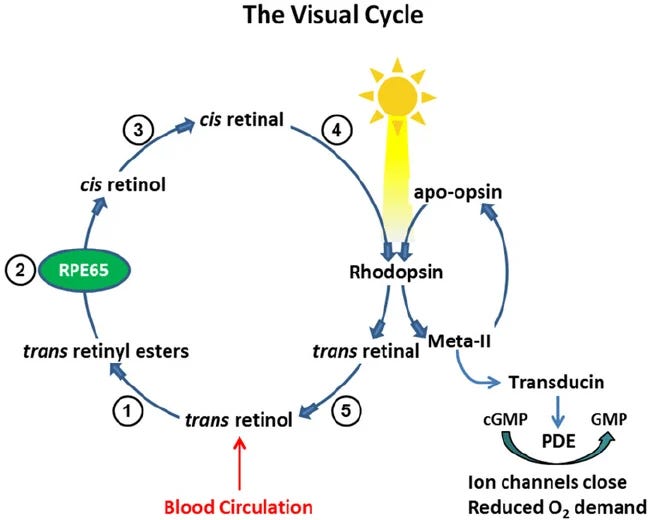
Retinal (also called retinaldehyde) is crucial for vision.
This is the aldehyde form of vitamin A.
It binds to the protein opsin in the retina to form rhodopsin (and related photopigments). When light hits it, retinal changes shape, triggering the signal that allows us to see.
Pyridoxal phosphate (PLP) which is crucial for transamination, decarboxylation and amino acid metabolism overall.
PLP is the active form of vitamin B6.
Aldoses (sugars that contain an aldehyde group in their open-chain form).
The most important is glucose (an aldohexose).
In its open-chain form it has a free aldehyde group.
Other aldoses such as glyceraldehyde, ribose, and galactose also participate in metabolic pathways.
But other aldehydes, such as formaldehyde or reactive α,β-unsaturated aldehydes formed during lipid perxidation, can be reactive with the classic examples being:
4-Hydroxy-2-nonenal (4-HNE)
Malondialdehyde (MDA)
Acrolein
4-Hydroxy-2-hexenal (4-HHE)
4-Oxo-2-nonenal (4-ONE)
Crotonaldehyde
Other alkenals such as 2-heptenal, 2-octenal, and 2-nonenal
So not all aldehydes are bad and some play essential, beneficial roles in the body while others are highly reactive and can be harmful when they accumulate.
The difference comes down to the specific structure, concentration, location, and how well the body can metabolize or clear each aldehyde.
For example, i will proceed and assume that most people who read this have experienced a hangover in their lives, and as you can probably remember, it is not a pleasant experience to say the least, because, well, your body is fighting quite hard to get rid of a poison.
A significant player in the overall symptoms you were experiencing during that time, was acetaldehyde.
Acetaldehyde is one of the most reactive and overlooked compounds produced in the human body.
It is a metabolic byproduct/toxic intermediate formed when the liver breaks down alcohol and is produced when yeast and certain bacteria ferment sugars in the gut.
This is partly why if you have a pathogen overgrowth, you can struggle with symptoms that feel exactly like a low grade hangover or very intense brain fog.
Yet most people with chronic gut issues have never heard of this toxin.
Now high levels of it can cause a lot of issues since, as a small aldehyde with an electrophilic carbonyl group, it readily attacks nucleophilic sites on biological molecules (amino groups, thiols, DNA bases, etc.).
For example, it forms adducts with proteins, DNA, and other macromolecules, generates reactive oxygen/nitrogen species, promotes lipid peroxidation, induces oxidative stress, inflammation and much more.
These are also some of the mechanisms that underlie many hangover-like symptoms after alcohol intake or during certain pathogenic overgrowths.
In the liver, alcohol dehydrogenase (ADH) first oxidizes ethanol to acetaldehyde.
Aldehyde dehydrogenase (mainly the mitochondrial enzyme ALDH2) then converts that acetaldehyde into acetate, which is far less toxic.
Now when it comes to microbial production, Candida, along with several other fungi and common gut bacteria, actively produce acetaldehyde as an intermediate byproduct when they ferment carbohydrates like glucose.
During glycolysis (the breakdown of sugar), these microbes convert pyruvate into acetaldehyde before further reducing it into ethanol.
The primary yeast species and fermenting bacteria responsible for producing trace amounts of acetaldehyde in the human digestive tract include:
Candida albicans, glabrata and tropicalis
All of these are highly capable of generating acetaldehyde from dietary sugars (especially albicans through its pyruvate-bypass pathway).
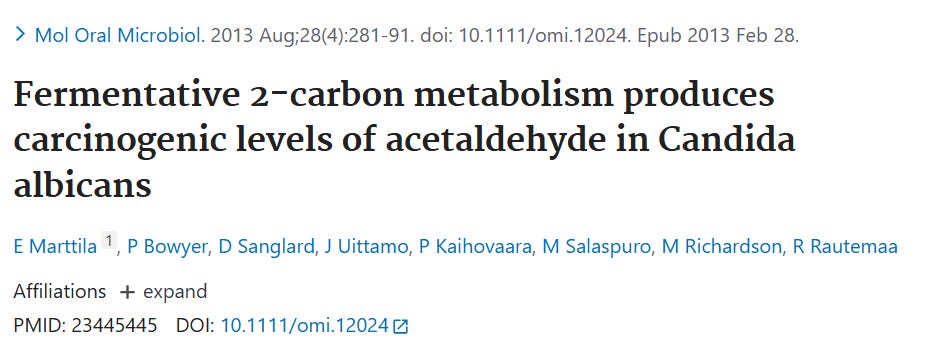
To understand just how problematic they can be, there’s a significant positive association between the ability of Candida to metabolize alcohol to acetaldehyde with their ability to promote oral cancer development.
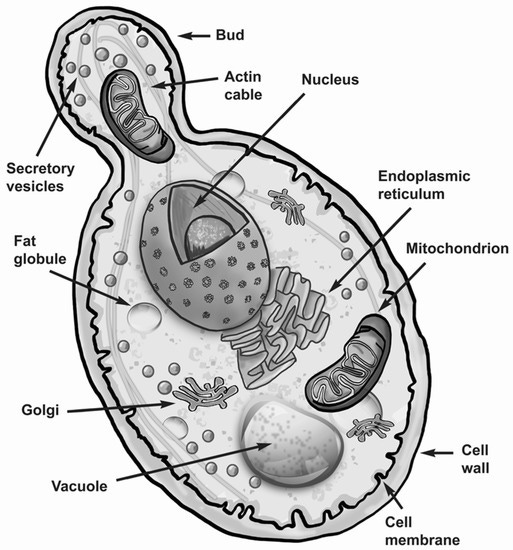
Saccharomyces cerevisiae.
This one is commonly known as baker’s yeast and is a single-celled fungus that we use to make bread rise, brew beer, and make wine.
It’s also in our gut microbiomes and since it can rapidly ferment simple sugars into acetaldehyde and ethanol, it is frequently implicated alongside Candida in auto-brewery syndrome.
Lactobacillus acidophilus.
This one is a common lactic acid bacteria strain used in probiotics that creates acetaldehyde via carbohydrate shunt pathways.
Lactobacillus casei.
This one is another common gut resident that can accumulate acetaldehyde in its growth environment because it makes this chemical faster than it breaks it down (its production enzymes outweigh its conversion enzymes).
Lactobacillus fermentum.
Now this one is also found in our guts and fermented foods.
It metabolizes sugars into lactic acid, carbon dioxide, acetic acid, and ethanol, rather than exclusively producing acetaldehyde or being a primary gut producer of it.
Weissella confusa.
This one is a facultative anaerobic, Gram-positive lactic acid bacterium also found in fermented foods and our gastrointestinal tract.
It ferments various sugars primarily into lactic acid and acetic acid, and is notable for synthesizing high yields of exopolysaccharides like dextran.
Some streptococcus species such as Streptococcus mutans and Streptococcus salivarius.
While primarily colonizing the oral cavity, these bacteria frequently transition into the upper digestive tract/gut, converting glucose into acetaldehyde through microbial oxidation.
Enterobacteriaceae such as Klebsiella pneumoniae.
And finally, certain pathogenic or opportunistic coliform bacteria in the gut possess fermentation pathways that generate mixed acids, ethanol, and intermediate aldehydes from carbohydrates.
Let’s say you have an overgrowth of acetaldehyde-producing yeasts and bacteria, and you eat some table sugar.
Your body and the microbes must first convert that sugar into the simple monosaccharides that the fermentation pathways actually use.
Yeasts and bacteria cannot ferment large, complex carbohydrates directly into acetaldehyde.
They can only perform the chemical steps of fermentation on literal simple sugars like glucose and fructose.
So first and foremost, table sugar is a disaccharide made of one glucose molecule linked to one fructose molecule (lactose, for example is glucose + galactose).
In your mouth and especially the small intestine, your own enzymes break these down:
Sucrase splits sucrose → glucose + fructose
Lactase splits lactose → glucose + galactose
Amylases and other enzymes break starches down to glucose
The resulting monosaccharides (glucose, fructose, galactose) are normally absorbed into your bloodstream through the small-intestinal wall.
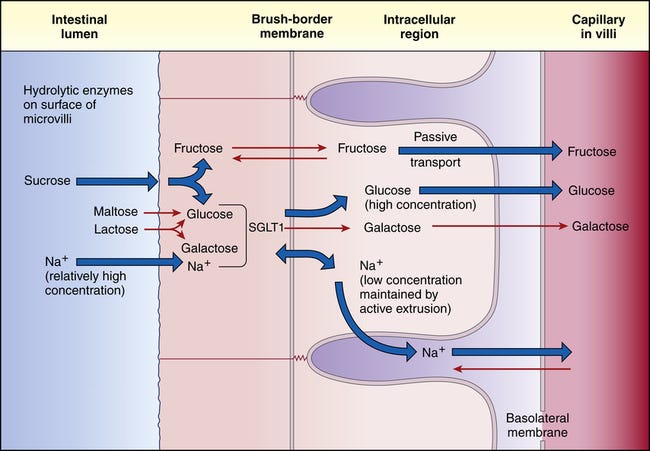
Now if you eat a large amount of sugar, or if its absorption is incomplete, some of the sugar, still as disaccharides or already as monosaccharides, escapes into the large intestine (colon).
Once it is there:
Many gut microbes have their own enzymes that can further split any remaining disaccharides into monosaccharides.
The microbes then take up those monosaccharides (glucose, fructose, etc.) and ferment them.
Once these microbes take up the monosaccharides, these enter glycolysis (primarily the Embden–Meyerhof–Parnas (EMP) pathway in many gut organisms, or alternatives like the Entner–Doudoroff (ED) or pentose-phosphate (PP) pathways in others).
The EMP pathway is the main one and used by saccharomyces cerevisiae, Candida species, Aspergillus species, Cryptococcus neoformans, and essentially all other pathogenic fungi.
It breaks down one glucose into two pyruvate molecules, produces a net gain of two ATP molecules and does not require oxygen.
The ED pathway is almost exclusively used by certain gram-negative bacteria.
It yields only one ATP per glucose molecule and requires specific dehydratase and aldolase enzymes.
The PP pathway, is present and active in all fungi and yeasts.
It runs in parallel with EMP rather than replacing it.
Its main roles are the generation of NADPH and production of ribose-5-phosphate for nucleotides and cell-wall components.
Overall just keep in mind that the net result of glycolysis for one glucose is:
2 pyruvate
2 ATP (energy for the microbe)
2 NADH (reduced cofactor that must later be re-oxidized)
Now the next step is the key one: the conversion of pyruvate to acetaldehyde.
Microbes do this in two main ways:
1. Classic alcoholic/ethanolic fermentation
This is the pathway mainly used by yeasts such as Saccharomyces and Candida (and by a limited number of bacteria).
Pyruvate is decarboxylated by the enzyme pyruvate decarboxylase (PDC).
This reaction releases carbon dioxide (CO₂) and produces acetaldehyde.
PDC requires the cofactor thiamine pyrophosphate (TPP, a form of vitamin B1).
Importantly, human cells completely lack this enzyme.
We convert pyruvate to acetyl-CoA instead, only these fermenting microbes can turn pyruvate directly into acetaldehyde.
The acetaldehyde is then quickly reduced to ethanol by the enzyme alcohol dehydrogenase (ADH): acetaldehyde + NADH + H⁺ → ethanol + NAD⁺
This step serves two purposes:
It neutralizes the reactive and toxic acetaldehyde.
It regenerates NAD⁺ from NADH.
Regenerating NAD⁺ is essential, without it, glycolysis would stop because the cell would run out of the oxidized cofactor needed to keep breaking down sugar and producing ATP.
2. Bacterial routes via acetyl-CoA
This route is common in mixed-acid fermentation, heterolactic fermentation, and pathways used by many Enterobacteriaceae, some lactic acid bacteria, and other gut species.
In this pathway, pyruvate is first converted into acetyl-CoA (usually by the enzyme pyruvate formate-lyase under anaerobic conditions).
Acetyl-CoA is then reduced to acetaldehyde by an aldehyde dehydrogenase activity (often part of the bifunctional enzyme alcohol-acetaldehyde dehydrogenase, known as AdhE).
However, acetaldehyde can accumulate or leak out of the cells when:
The ADH step is slower than production
Oxygen conditions are microaerobic (near the mucosa) rather than fully anaerobic.
Downstream conversion to acetate is limited.
Certain yeasts produce high levels from glucose under low-oxygen conditions.
Some microbes can also reverse the ADH reaction (oxidize ethanol back to acetaldehyde) under more aerobic conditions, but the primary route from dietary sugar is the fermentative path above.
Now a fair question to ask is why microbes do this?
Why go in all this trouble?
Well under the low-oxygen environment of the gut, oxidative respiration is limited (or impossible).
Microbes therefore use fermentation to generate ATP via substrate-level phosphorylation in glycolysis.
To keep the process running, they must re-oxidize the NADH produced during glycolysis back to NAD⁺.
Reducing acetaldehyde to ethanol is one efficient way to do this (other options include making lactate, succinate, etc.).
Acetaldehyde itself is toxic to the microbes, so they normally convert it rapidly (incomplete conversion or release leads to local accumulation that the host can absorb).
Now let’s dive into how the body clears it, some neglected enzymes, targeted supplements that can help clear it faster, how to undo some of the damage it has done and more.
Comments
Nothing yet. Say the first thing.
Sign in to join the conversation.