
Kazakhstan’s President Kassym-Jomart Tokayev seized on a bilateral forum in the Russian city of Omsk to urge President Vladimir Putin to freeze the war in Ukraine and return to negotiations. Sitting on the same stage as Putin at a press conference, Tokayev described the conflict as a war between states rather than a civil war, a notably bold formulation that challenged Moscow’s portrayal of the fighting as rooted in divisions within a single historical people. He proposed returning to negotiations based on earlier talks in Istanbul, backed by security guarantees from major powers. The Kremlin later rejected the idea, saying Putin had explained Russia’s military position to Tokayev and that any freeze was impossible unless Moscow’s conditions were met. The exchange was unusually direct, but came during a meeting that otherwise underlined the depth of the relationship. Russia is now Kazakhstan’s largest investor, bilateral trade is approaching $30 billion and both governments promoted new transport, logistics and infrastructure projects. The episode therefore looked less like a rupture than a rare public disagreement between closely aligned partners.
Kazakhstan resumed oil exports through the Caspian Pipeline Consortium after attacks on tankers forced an almost week-long suspension along the country’s most important export route. Shipowners had become reluctant to send vessels to the consortium’s Black Sea terminal near Novorossiysk, prompting it to stop accepting crude and Kazakhstan to cut production as storage filled. Reuters news agency cited an industry source as saying output fell to around 1 million barrels a day earlier this week, less than half the June average, before loadings resumed. The disruption also alarmed buyers. One Romanian economist warned of possible fuel shortages because Kazakhstan supplies around two-thirds of the country’s crude imports. The pipeline carries more than 80 percent of Kazakhstan’s oil exports. Analysts argued the brief stoppage should remain manageable, but repeated or longer disruptions would reduce export earnings, strain the budget and further expose Kazakhstan’s lack of comparable alternative routes.
Authorities in Kazakhstan froze assets belonging to the operator of the troubled Kashagan oilfield as they began enforcing a disputed 2.3 trillion tenge ($4.8 billion) environmental fine. The move came after a deadline for voluntary payment expired earlier this month. North Caspian Operating Company says it is not required to pay while the dispute remains before international arbitration and has cited an interim order opposing enforcement. The consortium has consistently rejected allegations that it breached sulphur storage and other environmental rules. Kazakhstan had already increased pressure by having state-owned oil and gas company KazMunaiGas, which holds a 16.9 percent stake in the project, agree to pay its share of the penalty, even as the foreign shareholders continued to contest it. The asset freeze marks the latest escalation in a dispute that has dragged on for four years.
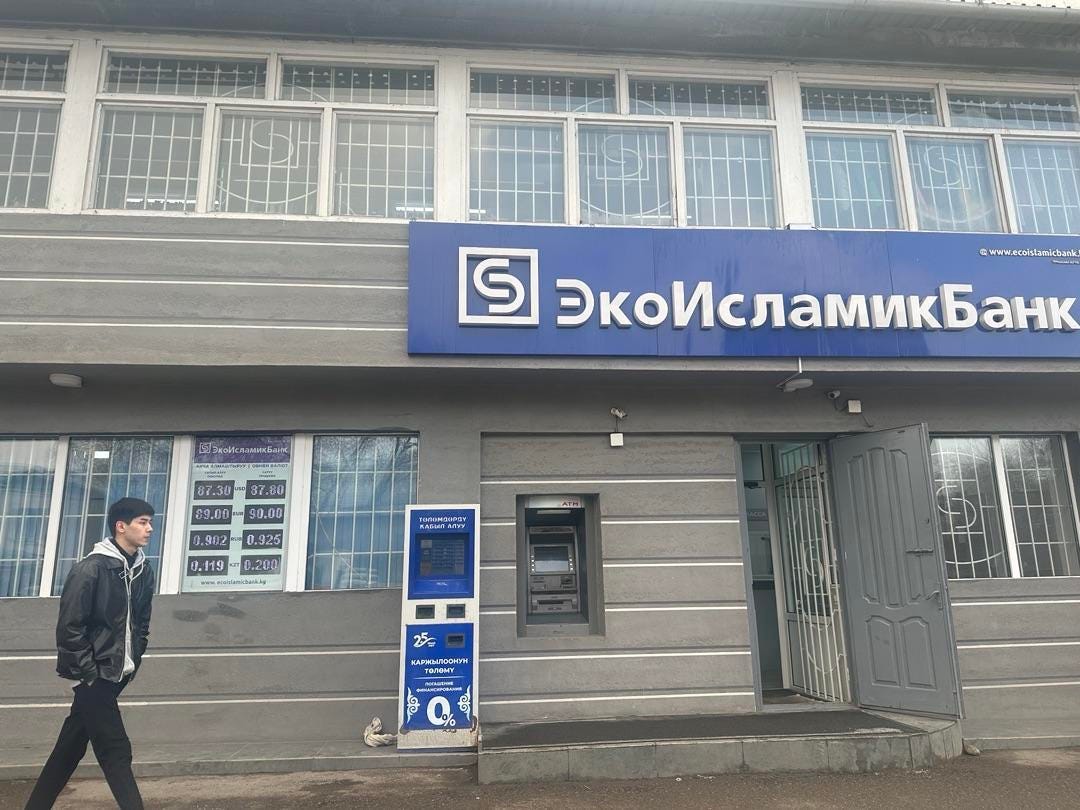
The European Union sanctioned a bank and three companies registered in Kyrgyzstan over alleged support for Russian financial and military-industrial networks, prompting Bishkek to dissolve the companies within days. EcoIslamicBank was barred from transactions with EU operators because it is connected to a Russian financial messaging network used as an alternative to SWIFT. Nova Project, Rama Group and Shisan were placed under tighter export controls for entities accused of supporting Russia’s military-industrial complex or helping circumvent sanctions. The EU did not specify their activities. In a separate step, Kyrgyz authorities revoked the licence of an unnamed cryptocurrency company. Crypto platforms registered in Kyrgyzstan have increasingly drawn scrutiny for processing transactions linked to sanctioned Russian actors and offering routes around restrictions on conventional banking. EcoIslamicBank denies servicing sanctioned clients. The central bank says its domestic operations remain stable despite temporary disruption to some international transfers.
Comments
Nothing yet. Say the first thing.
Sign in to join the conversation.